Politics
Tariffs Raised Consumers’ Prices, but the Refunds Go Only to Businesses


You probably won’t receive a huge tariff refund.
The largest businesses stand to reap the biggest bucks as the Trump administration begins to return more than $166 billion in duties deemed illegal by the Supreme Court. Even though President Trump’s trade policies have led to higher prices for companies and consumers, many families aren’t in line to benefit directly from the coming refund checks.
The discrepancy is a reflection of the nation’s complicated import laws — and the ever-fluid nature of Mr. Trump’s trade war.
When the government applies taxes to foreign goods, it charges the firms and brokers that bring those items into the country. Those costs proved substantial during the president’s first year back in office, after he imposed a set of so-called reciprocal tariffs on nearly every U.S. trading partner.
But a majority of justices on the nation’s highest court struck down those duties in February, forcing the administration to pay back much of its coveted tariff revenue. As a result, the government owes refunds to the importers on its record books — meaning companies, in many cases — even if those businesses ultimately shifted the costs of Mr. Trump’s taxes on to their customers.
The beneficiaries may include retail giants, such as Costco, Gap, Home Depot, Kohl’s, Lowe’s, Target and Walmart. For some, analysts estimate that the refunds may total into the billions of dollars apiece, leaving them with a choice of whether to keep the money or share it with consumers, even if indirectly in the form of future discounts.
But almost none of those U.S. retailers commented by Thursday on their exact plans. Only Costco promised previously to pass savings on to customers, without explaining how, as the buy-in-bulk company faces one of a series of class-action lawsuits from furious Americans who believe they are owed refunds.
Heather Boushey, who served on the White House Council of Economic Advisers under President Joseph R. Biden Jr., described the refund process as a “windfall for businesses,” some of which foisted the tariffs on consumers.
“American families,” she added, “are certainly the losers.”
That could turn the tariff refunds into a divisive political issue, at a moment when a majority of voters have already expressed dissatisfaction with the president’s handling of the economy. Democrats have demanded that the administration return the money to families, but Mr. Trump has opposed returning the money at all — and he suggested this week that it would be “brilliant” if companies chose to forgo repayment.
The White House did not respond to a request for comment.
For more than a year, Mr. Trump has insisted that foreigners, not Americans, have shouldered the financial burden of his punishing global trade war. But the data has always told a more complicated story, one in which Americans have actually been left to pay a substantial toll.
One measure from the Federal Reserve Bank of New York, published in February, estimated that nearly 90 percent of the economic burden from Mr. Trump’s duties had fallen on U.S. companies and consumers. Its findings prompted an unusually harsh rebuke from the White House, which attacked the report’s economists for a conclusion at odds with the president’s beliefs.
Mr. Trump’s tariffs have also threatened to cut into families’ finances. Studying Mr. Trump’s latest rates in April, the Yale Budget Lab, a think tank, estimated that his policies could cause prices to rise as much as 1.1 percent in the short run, which would translate to an annual loss in income of about $1,500 per household. But it cautioned that its analysis rested on a set of assumptions about how Mr. Trump’s rates might evolve.
After Mr. Trump unveiled his highest duties last spring, companies in particular tried a variety of tactics to blunt the financial impact. They slowed imports, reduced staff, paused development, renegotiated deals with suppliers or absorbed the bite of tariffs into their bottom lines. And in some cases, they raised prices.
The costs of Mr. Trump’s trade war proved so staggering that some businesses sued in a bid to recover their money even before the Supreme Court ruled on whether the president had acted illegally. The official refund process commenced only on Monday, and by the government’s own count, the task ahead is monumental. By early March, there were more than 330,000 importers that had paid illegal tariffs on more than 53 million entries, customs officials said.
Some of the refunds may be significant. Walmart, for example, may stand to recover more than $10 billion in previously paid tariffs, according to an analysis this month from Citi Research. Target could be due more than $2 billion, Nike could receive $1 billion, and Home Depot could see a more than $500 million refund, the report found.
Paul Lejuez, a managing director at Citi Research who focuses on department stores, said the estimates did not include interest owed by the government on those refunds. He cautioned that the figures were imprecise calculations derived partly from companies’ financials.
Still, Mr. Lejuez said he expected retailers to face pressure soon from consumers, who want to see companies “show some signs of giving back.”
At least three, FedEx, UPS and DHL, have said they intend to share tariff refunds directly with customers. Frequently, the shipping giants pay tariffs as the official importers for shipped goods, but pass along the charges to the consumers, who placed the orders. Each said it would help customers recover money.
Other businesses have been more circumspect. At an April forum hosted by JPMorgan, John David Rainey, an executive vice president at Walmart, said he expected the big-box retailer to “certainly avail ourselves” of any refund process. But he offered few clues on Walmart’s plans for the money.
“We’ve absorbed a lot of that,” he told investors at the time, referring to the president’s tariffs. “In some cases, we had to pass along that price increase to customers.”
The lack of clarity has prompted some unsatisfied consumers to take matters into their own hands. In recent weeks, they have filed class-action lawsuits against FedEx, UPS and other brands, including Costco and Temu, the low-cost online marketplace, according to state and federal court records.
The lawsuits generally seek to recover money directly for shoppers, claiming that companies do not deserve to profit twice — first by raising prices on consumers, then from collecting federal tariff refunds plus interest.
“The consumer, for all intents and purposes, pays the tariff,” a set of lawyers argued in their lawsuit against Costco, filed in March. They asserted that the company’s pursuit of a refund “constitutes unjust enrichment at the expense” of customers.
David French, the executive vice president of government relations at the National Retail Federation, a lobbying group, said it would be difficult for companies to try to return money directly to consumers because executives cannot simply look at a tariff and “pull out a specific price increase from a retailer’s array of goods.”
But he said he expected some companies to try to give back in other ways. “It may not be a specific item on a receipt that says, ‘This is a tariff refund,’ but you’re going to see the money returned to customers in many cases,” Mr. French said.
Echoing the sentiment last month, Ron M. Vachris, the chief executive of Costco, told shareholders that his retailer would try to “find the best way to return this value to our members through lower prices and better values.” He also said that Costco did not “pass the full cost” of tariffs on to its members, and that calculating the “exact impact” of duties on prices was difficult.
Mr. Trump’s tariffs are expected to change again, as the White House looks to resurrect its previous sky-high rates using another set of trade powers. The president has already imposed a temporary, across-the-board tariff of 10 percent on most imports, using a provision of law that has been challenged in court.
The expected losses from tariffs still represent a sharp departure from the gains that Mr. Trump had once promised to Americans. Initially, the president had said he would return some of the money collected from his duties to families in the form of a rebate check. The idea never gained much traction even among Republicans in Congress, yet the president still pledged repeatedly to offer “a nice dividend to the people,” as he sought to shore up support for his economic agenda.
Mr. Trump does not appear to have mentioned the idea since losing at the Supreme Court, yet many Democrats have started to demand that his administration compensate families.
On Thursday, a group of Democratic lawmakers including Representatives Steven Horsford of Nevada and Suzan DelBene of Washington asked the top executives of Walmart, Target and other companies to ensure the coming tariff refunds “reach those who ultimately bore those costs.”
“American families felt the impact of these tariffs in everyday life,” they wrote in a letter. “The question of how refunds are distributed is one of corporate accountability and economic fairness.”



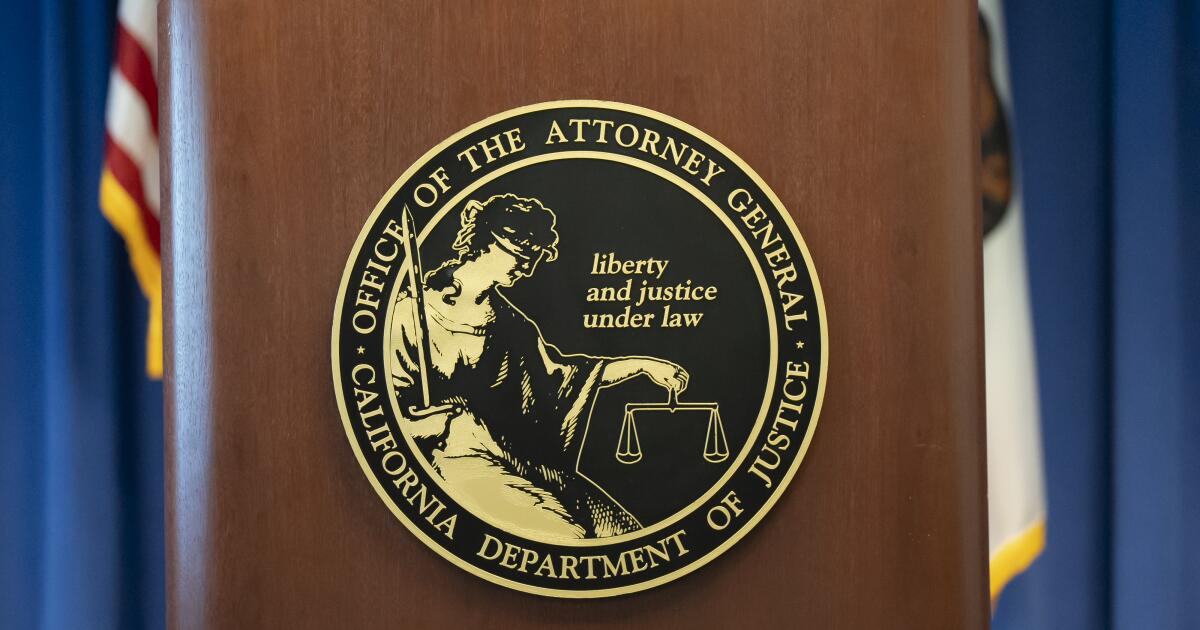
The federal government agreed to temporarily hold off on construction of a planned Immigration and Customs Enforcement facility in Northern California.
The voluntary pause until Sept. 9 comes after the California Atty. Gen. Rob Bonta and Santa Clara County officials sued the Trump administration last month to block the facility from being developed near Gilroy. The lawsuit remains ongoing.
“This pause in the construction, demolition, and development at the site of the challenged ICE facility is a significant step towards protecting our people, our communities, and our environment while the case remains ongoing,” Bonta said in a statement Monday night.
The Department of Homeland Security, which oversees ICE, didn’t immediately reply to a request for comment.
State and local officials believe the facility will be used for short-term detention of up to 150 people at a time, though ICE denied that it would be a detention center.
Community members and advocates for immigrants swiftly opposed the project. ICE has consistently looked to increase its detention capacity in California, where eight detention centers can now hold a combined 9,000 people, though the state has long been a thorn in the agency’s side.
The halt is part of a compromise between both sides involved in the legal action. After the state and county submitted a request for the court to temporarily halt the project, a hearing was set for Oct. 7.
Now, state and federal officials jointly requested that the court move up the hearing by at least a month. The agreement also extends how much time the federal government has to respond.
A federal judge signed off on the agreement Monday night.
The lawsuit, filed in U.S. District Court in San José, alleges that the leased land is zoned exclusively for agricultural use and that the federal government violated laws requiring state and county notification, as well as procedural steps before beginning construction.
Supreme Court justices are asking lawmakers on Capitol Hill to increase their 2027 budget, with most of the additional funding earmarked for security. Ann E. Marimow, a New York Times reporter, explains why the justices say these measures are necessary to protect them from rising threats.

GOP scrambles to replace Sen. Lindsey Graham
Former Kevin McCarthy communications director Mark Bednar discusses the urgent political scramble to replace Sen. Lindsey Graham in South Carolina. He emphasizes President Donald Trump and Gov. McMaster’s need to quickly coordinate an interim appointment and rally around a strong Republican candidate for the impending special election. Potential candidates include Lt. Gov. Pamela Evette and Rep. Russell Fry, with warnings against infighting.
NEWYou can now listen to Fox News articles!
President Donald Trump teased who he may like to see as a long-term replacement for the late Sen. Lindsey Graham, R-S.C., as a special election to lock in a candidate for the seat fast approaches.
Private and public jockeying is already underway to snag Trump’s coveted endorsement in the special election, which is slated for Aug. 11, with two lawmakers already expressing interest in launching a campaign.
And as members of the South Carolina GOP congressional delegation and beyond line up for the race, the president hinted that he may already have a favorite: Rep. Russell Fry, R-S.C.
GRAHAM ALLY RIPS ‘THIRSTY’ REPUBLICANS JOCKEYING TO REPLACE LATE SENATOR
Sen. Lindsey Graham speaks with reporters aboard Air Force One with President Donald Trump and Secretary of Commerce Howard Lutnick on the way back to Washington, D.C., on Jan. 4, 2026. (Jim Watson/AFP via Getty Images)
“I think Russell Fry, a young congressman, is outstanding, and that could happen. I could see that happening,” Trump told Newsmax on Monday night. “I think he’s a very, very talented person.”
Trump backed Fry in his first bid for Congress in 2022, where he toppled former Rep. Tom Rice, R-S.C., in the primary. Rice was one of 10 House Republicans to vote to impeach Trump following the Jan. 6, 2021, riots on Capitol Hill.
‘THE HALLS OF THE SENATE ALREADY FEEL EMPTY’: TEARFUL THUNE HONORS LINDSEY GRAHAM AS SISTER TAKES HIS SEAT
“He took the place of somebody that was — I mean, he’s doing much better than the person that preceded him,” Trump said. “He’s been very popular in the state, so I think a name like Russell Fry is somebody you can watch out for and there are probably some others.”
Trump’s comments on Fry come after Politico reported that the lawmaker has been communicating with the White House about a run and was viewed as a top contender for the president’s stamp of approval. Fox News Digital did not immediately hear back from the White House or Fry on whether he’s being eyed for the special election.
LINDSEY GRAHAM’S SISTER APPOINTED TO SENATE AS GOP RUSHES TO PROTECT FRAGILE MAJORITY
Rep. Russell Fry, R-S.C., arrives for a House Republican Conference caucus meeting at the Capitol Hill Club in Washington on May 13, 2026. (Bill Clark/CQ-Roll Call, Inc. via Getty Images)
In the meantime, Trump threw his support behind Graham’s sister, Sen.-designate Darline Graham, to take over the lawmaker’s seat for the remainder of his term. South Carolina Gov. Henry McMaster appointed her on Monday, and she’ll be sworn in to the role Tuesday afternoon.
Trump said that he believed Graham would be there “only on an interim basis.”
CLICK HERE TO DOWNLOAD THE FOX NEWS APP
Meanwhile, Reps. Nancy Mace, R-S.C., and Ralph Norman, R-S.C., are eyeing the race, too. Norman has gone so far as to ask Trump for his endorsement.
Both Mace and Norman failed to clinch the GOP nomination for governor in South Carolina, which ultimately went to South Carolina Attorney General Alan Wilson, who toppled Trump-backed South Carolina Lt. Gov. Pam Evette.
-

 Technology5 minutes ago
Before you connect another smart TV, tablet or phone, lock it down
-
 Business11 minutes ago
Commentary: Trump greenlights California’s dumbest water project
-
 Entertainment17 minutes ago
‘Hail Satan? Not me.’ Charley Crockett fires satanic duo Twin Temple, so Jack White hires them
-
 Lifestyle23 minutes ago
It’s time for the night trip to the beach — the grunion are running
-
Politics29 minutes ago
After lawsuit, ICE pauses construction of Bay Area detention facility
-
 Science35 minutes ago
Anger grows in Boyle Heights as warehouse fire leaves stench, flies and vermin in its wake
-
 Sports41 minutes ago
Spain delivers surprise rout of France, clinches berth into World Cup final
-

 World53 minutes ago
US says latest Iran strike wave over, IRGC claims damage to US Naval HQ

