West
NYT columnist admits ‘something has gone badly wrong’ in West Coast states because of Democratic leadership

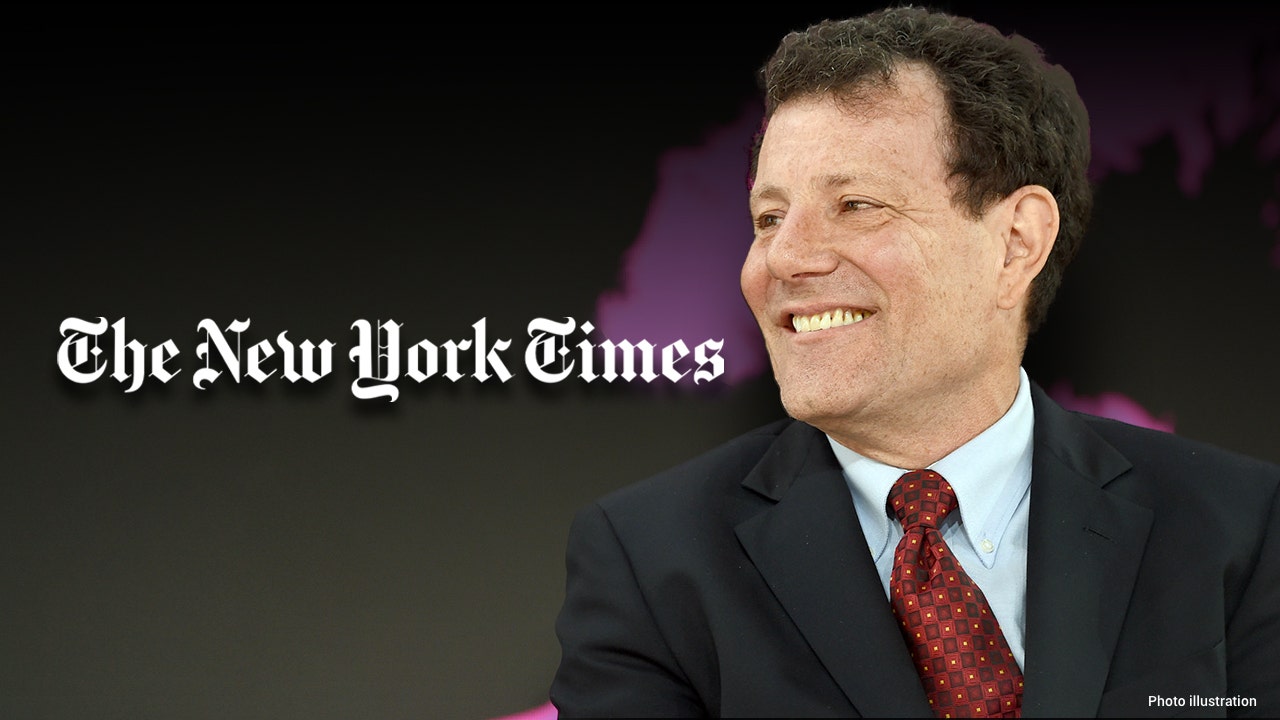
New York Times columnist and former Oregon Democratic gubernatorial candidate Nicholas Kristof admitted on Saturday that the West Coast cities is “a mess” because of Democratic Party leaders.
In a column for the New York Times, Kristof argued that “West Coast liberalism” is more focused on the intentions behind its policies rather than its outcomes. As a result, deep blue states like Oregon have major homeless and drug problems, “below-average” high school graduation rates, and high murder rates.
“But liberals like me do need to face the painful fact that something has gone badly wrong where we’re in charge, from San Diego to Seattle,” the columnist declared at the outset of his piece, adding that the West Coast offers “a version of progressivism that doesn’t result in progress.”
OREGON DAD ACCUSED OF DRUGGING GIRLS’ SMOOTHIES AT DAUGHTER’S SLEEPOVER GOT DIVORCED WEEKS AFTER INCIDENT
New York Times columnist Nicholas Kristof slammed West Coast Democratic Party leaders for turning their states and cities into a “mess.” (Photo by Jamie McCarthy/Getty Images)
Kristof, who was compelled by the Oregon Supreme Court to end his bid for governor in 2021 for failing to meet eligibility requirements, did clarify he does not believe this is a problem with liberalism across the board, and cited examples of how he believes Democratic states do better than Republican ones in general.
“Democratic states enjoy a life expectancy two years longer than Republican states. Per capita G.D.P. in Democratic states is 29 percent higher than in G.O.P. states, and child poverty is lower. Education is generally better in blue states, with more kids graduating from high school and college.”
“The gulf in well-being between blue states and red states is growing wider, not narrower,” he wrote, prompting him to conclude, “So the problem isn’t with liberalism. It’s with West Coast liberalism.”
He went on to point out major issues in California and Oregon, noting that blue states on the East Coast don’t have them.
“The two states with the highest rates of unsheltered homelessness are California and Oregon. The three states with the lowest rates of unsheltered homelessness are all blue ones in the Northeast: Vermont, New York and Maine. Liberal Massachusetts has some of the finest public schools in the country, while liberal Washington and Oregon have below-average high school graduation rates.”
CLICK HERE FOR MORE COVERAGE OF MEDIA AND CULTURE
Kristof added that mental health services for the youth have declined in West Coast blue states, while they have flourished at the other end of the country. Additionally, drug use is up in the west and down in “the northeast.” The murder rate is seeing the same corresponding dynamic as well, he noted.
He then offered his theories on why Democratic Party leadership appears “less effective on the West Coast,” stating, “my take is that the West Coast’s central problem is not so much that it’s unserious as that it’s infected with an ideological purity that is focused more on intentions than on oversight and outcomes.”
“Politics always is part theater, but out West too often we settle for being performative rather than substantive.”
EX-NEW YORK TIMES COLUMNIST NICHOLAS KRISTOF ANNOUNCES HE’S RUNNING FOR OREGON GOVERNOR
California Gov. Gavin Newsom was recently ripped by critics for describing California as a “national model” for combatting homelessness. (California Governor Gavin Newsom YouTube channel)
Kristof provided examples, like the fact that Oregon took money from an already “tight education budget” to put tampons in boys’ restrooms in elementary schools, “including boys’ restrooms in kindergartens.”
He also mentioned Portland setting up the “Portland Freedom Fund,” a volunteer group that pays bail for people of color. He explained how it paid bail for a man after he was arrested for allegedly threatening the life of his girlfriend. Once he got out of jail, he murdered the woman.
Kristof continued, noting that despite being inspired by anti-racist Critical Race theorists like Ibram X. Kendi, West Coast leaders have “impeded home construction in ways that made cities unaffordable, especially for people of color.”
“We let increasing numbers of people struggle with homelessness, particularly Black and brown people. Black people in Portland are also murdered at higher rates than in cities more notorious for violence, and Seattle and Portland have some of the greatest racial disparities in arrests in the country,” he wrote.
Driving the point home, he added, “I think intentions and framing can matter, but it’s absolutely true that good intentions are not enough. What matters is improving opportunities and quality of life, and the best path to do that is a relentless empiricism.”
At the end of the column, Kristof concluded, “We need to get our act together. Less purity and more pragmatism would go a long way. But perhaps the first step must be the humility to acknowledge our failures.”
Read the full article from Here


The San Francisco Giants have been around for more than 125 years. It’s hard to find something they haven’t done before.
It’s not quite as hard to find something they haven’t done since the team moved from New York to San Francisco before the 1958 season. But, on Saturday, the Giants managed it.
San Francisco lost to the Miami Marlins, 6-3, in the sloppiest game the Giants have played this season. That sloppiness was defined by two things. San Francisco pitchers hit four batters. San Francisco fielders committed four errors.
Per Justice delos Santos of the San Jose Mercury-News (subscription required), the Giants had never done that since they moved from New York. It was just the third time in franchise history, dating back to 1883 that the franchise had ever done that.
What Happened in Miami?
Rafael Devers committed a fielding error, which was his fifth of the season. Pitcher Trevor McDonald committed his second error of the season on a missed catch. Catcher Eric Haase had it worse. He had two errors, one on catcher’s interference and another on a throw.
As for hitting batters, McDonald dominated there. He hit three of them — Kyle Stowers, Leo Jimenez and Esteury Ruiz. Matt Gage also hit Jimenez.
Much of that action came in the fourth inning, when the Giants gave up four runs in game in which they were tied with the Marlins. Ruiz was hit by a pitch, stole second and then went to third on Haase’s throwing error. He scored on a single by Jakob Marsee.
Otto Lopez singled and that ended the day for McDonald, who took the loss. Gage walked Stowers to load the bases. Gage then got Xavier Edwards to ground into a double play, which scored a run but got the Giants two outs. It didn’t help.
Heriberto Herandez homered off Gage, making it 6-2. Gage allowed a single to Owen Caissie and then hit Jimenez with a pitch before San Francisco went to JT Brubaker. He got the final out, inducing a flyout by Joe Mack.
Only four of the six runs the Giants gave up were earned.
Now 14 games under .500, the Giants (31-45) will return home after Sunday’s finale with the Marlins and get a day off. After that, San Francisco renews its rivalry with the Athletics from Tuesday-Thursday, followed by a three-game series with the NL East-leading Atlanta Braves.
San Francisco is moving toward July and likely determining which players it wants to put on the trade market to either trim payroll or arrange its roster to try and turn things around in 2027.
Follow

At least seven people were injured in three crashes across Denver between Saturday night and Sunday morning, police said.
The Denver Police Department reported the first crash at 11:20 p.m. Saturday. Two people were injured in a two-car crash near West Colfax Avenue and Kalamath Street, on the edge of Denver’s Lincoln Park and Auraria neighborhoods, police said.
One person was injured in a separate crash involving a motorcycle in the 1200 block of Broadway in Denver’s Capitol Hill neighborhood, according to a post from the police department at 1:19 a.m. Sunday.
Paramedics then took four people to the hospital after a two-car crash near Yosemite Street and East 12th Avenue in Denver’s East Colfax neighborhood, police wrote on social media at 3:26 a.m. Sunday.
Additional information about the crashes, including the causes, was not immediately available on Sunday.
This is a developing story and may be updated.
Sign up to get crime news sent straight to your inbox each day.

Samoskevich should factor in someplace on the Kraken’s top three lines and potentially among their top two trios, bringing another right-handed shot on a team needing more of those. Top right-handed Kraken shooters include Jordan Eberle, Chandler Stephenson and Shane Wright among forwards and Brandon Montour and Adam Larsson on the defensive side, with Botterill agreeing another winger to let fly from the right side of the ice won’t hurt.
“You’re just trying to give options to (coach) Lane (Lambert) and the coaching staff,” Botterill said. “We pride ourselves on being a four-line team, so I’ll leave it up to Lane and the coaching staff on where Mackie fits into the mix and stuff. But we think that – especially with that right shot – we’ve talked a lot about getting more pucks to the net, more of a shooter mentality, and that’s certainly what Mackie brings.”
Samoskevich, a native of Newtown, Connecticut whose “Mackie” name evolved from a twin sister trying to pronounce his “Matthew” birthname as toddlers, brings above average speed to go with that right-handed shot. The 5-foot-11, 185-pounder is also known for his grit and a scoring touch that saw him notch 12 goals and 20 assists last season to follow up a rookie campaign when he scored 15 and added 16 assists.
The Kraken hope Samoskevich builds off those totals, especially if afforded more ice time than the 14:28 per game he managed last season with the defending two-time Cup champion Panthers. The restricted free agent earned $775,000 last season, and Florida would have needed to make a qualifying offer of $813,750 to extend him.
Botterill said he’s yet to speak with Samoskevich’s representatives about any extension talks or how his restricted free agency will be approached this summer.
“Those are things we’ll certainly look at with them,” he said.
For now, it’s a matter of getting Samoskevich acclimated to his new team. Having a former teammate around in top line centerman Beniers, who played his final Michigan season as a sophomore when Samoskevich was a freshman there in 2021-22, certainly won’t hurt.
“I just think that it’s easier from a familiarity standpoint coming to a new organization,” Botterill said. “It just makes the transition all that much easier. I know Matty speaks very highly of Mackie, his style of play and the person he is, too.”
-

 Los Angeles, Ca41 minutes ago
31st annual Rodeo Drive Concours d’Elegance provides perfect Father’s Day activity
-

 Detroit, MI59 minutes ago
3 Isaiah Stewart Trade Packages That Would Make Sense for Detroit Pistons
-

 San Francisco, CA1 hour ago
Giants Reach Franchise Milestone Never Before Seen in San Francisco
-

 Dallas, TX1 hour ago
Mavericks’ Potential 2026 NBA Draft Trade Down Target Revealed
-

 Miami, FL1 hour ago
Could the Heat bring Duncan Robinson back in a Deal for Giannis Antetokounmpo?
-

 Boston, MA1 hour ago
Volunteer rescuer seriously injured Friday helping unresponsive teenage hiker in NH – The Boston Globe
-

 Denver, CO2 hours ago
7 injured in 3 overnight crashes across Denver, police say
-

 Seattle, WA2 hours ago
Kraken Acquire Panthers Wing Mackie Samoskevich | Seattle Kraken

