Idaho
US serial killer with penchant for poetry to be executed after nearly 50 years


For nearly 50 years, Idaho’s prison staffers have been serving Thomas Eugene Creech three meals a day, checking on him during rounds and taking him to medical appointments.
This Wednesday, some of Idaho’s prison staffers will be asked to kill him. Barring any last-minute stay, the 73-year-old, one of the nation’s longest-serving death row inmates, will be executed by lethal injection for killing a fellow prisoner with a battery-filled sock in 1981.
Creech’s killing of David Jensen, a young, disabled man who was serving time for car theft, was his last in a broad path of destruction that saw Creech convicted of five murders in three states. He is also suspected of at least a half-dozen others.
But now, decades later, Creech is mostly known inside the walls of the Idaho Maximum Security Institution as just “Tom,” a generally well-behaved old-timer with a penchant for poetry. His unsuccessful bid for clemency even found support from a former warden at the penitentiary, prison staffers who recounted how he wrote them poems of support or condolence and the judge who sentenced Creech to death.
“Some of our correctional officers have grown up with Tom Creech,” Idaho Department of Correction Director Josh Tewalt said Friday. “Our warden has a long-standing relationship with him… There’s a familiarity and a rapport that has been built over time.”
Creech’s attorneys have filed a flurry of last-minute appeals in four different courts in recent months trying to halt the execution, which would be Idaho’s first in 12 years. They have argued Idaho’s refusal to say where its execution drug was obtained violates his rights and that he received ineffective assistance of counsel.
A three-judge panel of the 9th US Circuit Court of Appeals on Friday rejected an argument that Creech should not be executed because he was sentenced by a judge rather than a jury.
It’s not clear how many people Creech, an Ohio native, killed before he was imprisoned in Idaho in 1974. At one point he claimed to have killed as many as 50 people, but many of the confessions were made under the influence of now discredited “truth serum” drugs and filled with outlandish tales of occult-driven human sacrifice and contract killings for a powerful motorcycle gang.
Official estimates vary, but authorities tend to focus on 11 deaths. Creech’s attorneys did not immediately return phone calls from the Associated Press.
In 1973, Creech was tried for the murder of 70-year-old Paul Schrader, a retiree who was stabbed to death in the Tucson, Arizona, motel where Creech was living. Creech used Schrader’s credit cards and vehicle to leave Tucson for Portland, Oregon. A jury acquitted him, but authorities say they have no doubt he was responsible.
The next year, Creech was committed to Oregon State Hospital for a few months. He earned a weekend pass and traveled to Sacramento, California, where he killed Vivian Grant Robinson at her home. Creech then used Robinson’s phone to let the hospital know he would return a day late. That crime went unsolved until Creech later confessed while in custody in Idaho; he wasn’t convicted until 1980.
After he was released from the Oregon State Hospital, Creech got a job at a church in Portland doing maintenance work. He had living quarters at the church, and it was there he shot and killed 22-year-old William Joseph Dean in 1974. Authorities believe he then fatally shot Sandra Jane Ramsamooj at the Salem grocery store where she worked.
Creech was finally arrested in November 1974. He and a girlfriend were hitchhiking in Idaho when they were picked up by two painters, Thomas Arnold and John Bradford. Creech shot both men to death and the girlfriend co-operated with authorities.
While in custody, Creech confessed to a number of other killings. Some appeared to be fabricated, but he provided information that led police to the bodies of Gordon Lee Stanton and Charles Thomas Miller near Las Vegas, and of Rick Stewart McKenzie, 22, near Baggs, Wyoming.
Creech initially was sentenced to death for killing the painters. But after the US Supreme Court barred automatic death sentences in 1976, his sentence was converted to life in prison.
That changed after he killed Jensen, who was serving time for car theft. Jensen’s life hadn’t been easy: He suffered a nearly fatal gun injury as a teen that left him with serious disabilities including partial paralysis.
Jensen’s relatives opposed Creech’s bid for clemency. They described Jensen as a gentle soul and a prankster who loved hunting and spending time outdoors, who was “the peanut butter” to his sister’s jelly. His daughter, who was 4 when he was killed, spoke of how she never got to know him, and how unfair it was that Creech is still around when her father isn’t.
Creech’s supporters, meanwhile, say decades spent in a prison cell have left him changed. One death row prison staffer told the parole board last month that while she cannot begin to understand the suffering Creech dealt to others, he is now a person who makes positive contributions to his community. His execution date will be difficult for everyone at the prison, she said, especially those who have known him for years.
“I don’t want to be dismissive of what he did and the countless people who were impacted by that in real significant ways,” said Tewalt, the corrections director. “At the same time, you also can’t be dismissive of the effect it’s going to have on people who have established a relationship with him. On Thursday, Tom’s not going to be there. You know he’s not coming back to that unit — that’s real. It would be really difficult to not feel some sort of emotion about that.”



CALDWELL, Idaho (CBS2) — More than 2,000 Idaho Power customers in Canyon County are without electricity Wednesday evening as crews respond to an outage affecting Caldwell and Middleton.
Idaho Power reported the outage at 8 p.m. July 8, listing 2,163 customers impacted in the 83605, 83644 and 83687 ZIP codes.
The outage is expected to be resolved by 10 p.m. July 8; Idaho Power said a crew was dispatched and en route. The cause of the outage is not immediately known.

(KRON) — An Idaho man is recovering after a life-threatening rattlesnake bite during a family visit to Oroville, Northern California. Chris Howarth spent nearly two weeks in intensive care following the incident in his mother’s garden.
During his 12-day stay in intensive care, Howarth received 54 vials of anti-venom and multiple blood transfusions, split between six days at Oroville Hospital and six days after being flown to Stanford.
Six weeks after the incident, he is approximately 80% recovered.
Howarth initially believed the bites were a prick from a thorn or a “star thistle or one of those goat heads.” He described the sensation as feeling “like getting your blood drawn.”
“I think I got bit twice. I said ‘ow’ again and ‘ow’ again. It almost felt like getting your blood drawn,” said Howarth. Howarth also noted he “didn’t hear it at all” when his father went to inspect the area and observed the snake shaking its tail without making noise.
As his wife drove him to the hospital, his condition worsened.
“On the way there, he was started kind of feeling some numbness and tingling in his mouth and his tongue so I knew we needed to get to the closest hospital,” said Jenny Howarth.
Howarth is still experiencing lingering effects from the bite, including swelling, soreness and fatigue.
“My leg is still kind of sore and tender, my ankle still swells, I barely got able to tie a shoe just a few days ago and also still having lingering effects of fatigue,” Howarth said.
California’s Poison Control system has received 77 rattlesnake-related calls this year, with experts reporting encounters are occurring earlier and more frequently. Dr. Rafa Lima, an emergency physician at Kaiser Permanente in San Leandro, explained that rattlesnake venom “destroys local tissue and causes a lot of pain and swelling.”
Dr. Lima advised immediate medical attention for suspected venomous snake bites. “If you are bitten by a snake with a rattle or you suspect is venomous, you should really get care immediately,” Dr. Lima said.
He also dispelled common myths, stating, “There’s a common myth that you should just tourniquet up the wound and bind it and mobilize it, or even try to suck the venom out but all that does is delays the time to get treatment and the longer the venom is in the tissue, the worst prognosis.”
Howarth mentioned that the weather conditions were unexpected for a rattlesnake encounter.
“That day and even the day before, it kind of been cooler and it had been raining so we weren’t expecting to see a rattlesnake,” she said.
Howarth hopes his experience highlights that rattlesnakes pose a risk in garden areas, not just hiking trails, even during cooler weather. Howarth hopes to return to work next week.
Those who want to donate to a GoFundMe set up for Howarth can do so here.
All facts in this report were gathered by journalists employed by KRON4. Artificial intelligence tools were used to reformat information into a news article for our website. This report was edited and fact-checked by KRON4 staff before being published.
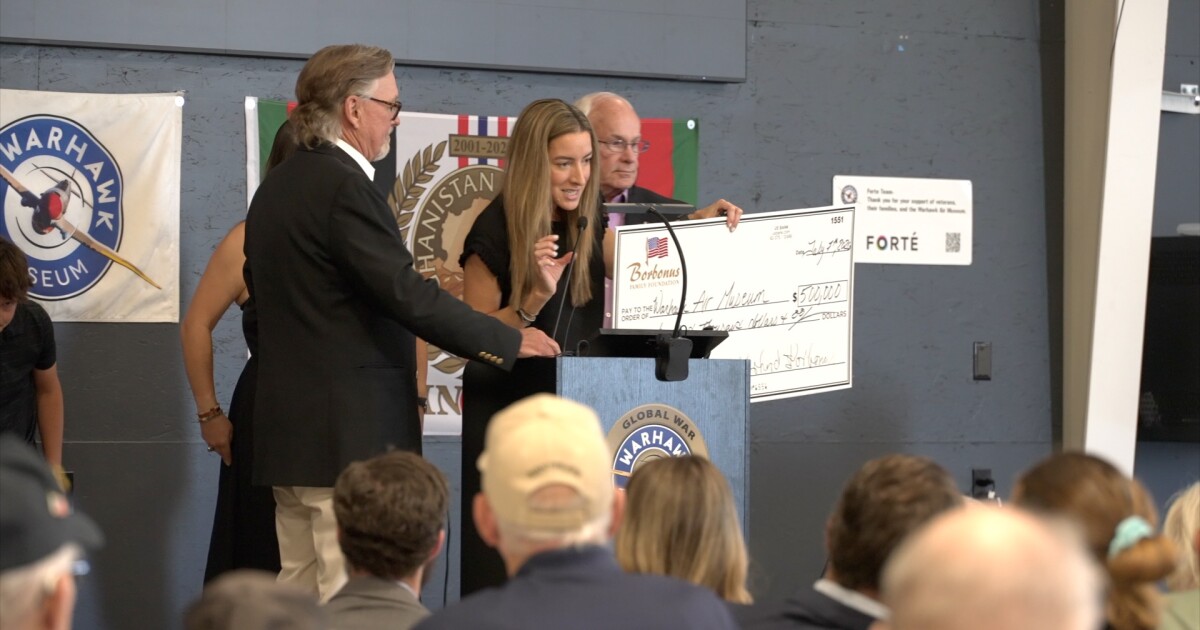
NAMPA, Idaho — Nearly 20 years after Idaho soldier John Borbonus was killed in Iraq, his legacy is continuing to serve fellow veterans.
The Borbonus Family Foundation, created in his honor, announced a $500,000 grant Tuesday to the Warhawk Air Museum in Nampa.
WATCH: One Idaho soldier’s legacy continues to serve fellow veterans
Warhawk Air Museum receives $500K grant honoring Idaho soldier John Borbonus
The museum says the unrestricted gift is its largest ever and will help cover operating costs as it continues to grow.
Executive Director Carson Spear says grants of this size often come with requirements to fund a specific project, but the Borbonus Family Foundation instead asked to use the funds where they are most needed.
Warhawk leaders say the funding will help preserve veterans’ stories and continue programs like the Kilroy Coffee Klatch, which brings together veterans from different generations each month.
RELATED | Kilroy Coffee Klatch brings veterans together at the Warhawk Air Museum
Vietnam veteran Emil Berry says the museum is more than a place to display history.
“It brings back memories, and also it helps the veteran, helps the military personnel. It’s just a special, very special establishment,” Berry said.
Borbonus’ sister, Alexa Borbonus, says Warhawk already preserves part of her brother’s story through a display dedicated to his service.
“The Warhawk Museum, they have a special place in our hearts,” Alexa Borbonus said. “They have John’s case on display now, and they provide a safe space for all our veterans in Idaho.”
RELATED | Skydivers honor fallen Boise soldier John Borbonus at annual memorial golf tournament
Sen. Jim Risch, who attended Tuesday’s announcement, said museums like Warhawk remind people that “freedom isn’t free” and help future generations appreciate the sacrifices made by those who served.
Following the announcement, the Borbonus family also donated John Borbonus’ challenge coin and the KIA bracelet worn by his family to Warhawk’s bar display, adding another piece of his legacy to the museum.
For Canyon County happenings, news, and more— join our Facebook Group: 2C Neighborhood News – Nampa, Caldwell, Middleton
This story was initially reported by a journalist and has been, in part, converted to this platform with the assistance of AI. Our editorial team verifies all reporting on all platforms for fairness and accuracy.
Send tips to Nampa neighborhood reporter Keith Burrell
Have a story idea from Nampa? Share it with Keith below —
-
World9 minutes ago
AI notetakers promise easy meeting recaps, but some professionals question their use
-
Culture51 minutes ago
Which Version of the ‘Odyssey’ Should You Read?
-
 Lifestyle53 minutes ago
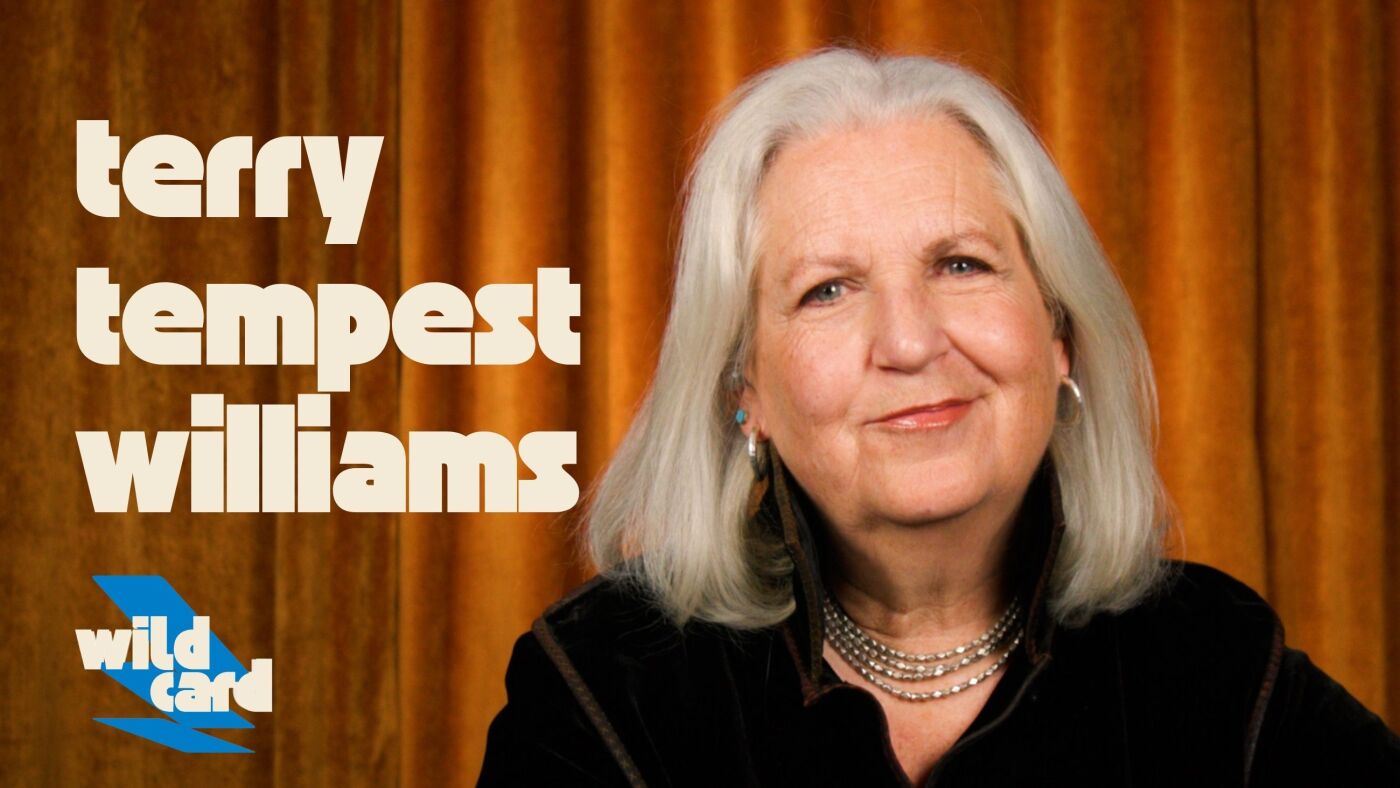
Terry Tempest Williams on why women with big ideas get labeled ‘crazy’ : Wild Card with Rachel Martin
-

 Technology1 hour ago
Google’s Nest Thermostat has hit its best price of the year
-

 World1 hour ago
Argentinian flight instructor jumps to death from plane, 22-year-old student forced to land alone
-

 Politics1 hour ago
Omar’s disclosures erased millions, leaving her with potential negative net worth. She won’t explain why.
-

 Health1 hour ago
Dr Oz links obesity to chronic disease surge, says GLP-1s can ‘jumpstart’ better health
-

 Sports1 hour ago
Pirates star pitcher makes unfortunate history after being taken out in middle of perfect game bid


