After a rough series in Tampa, Arizona comes home to hopefully get right again against the flailing Giants.
West
Energy experts blast failed billion-dollar DOE project as 'financial boondoggle,' 'disaster'

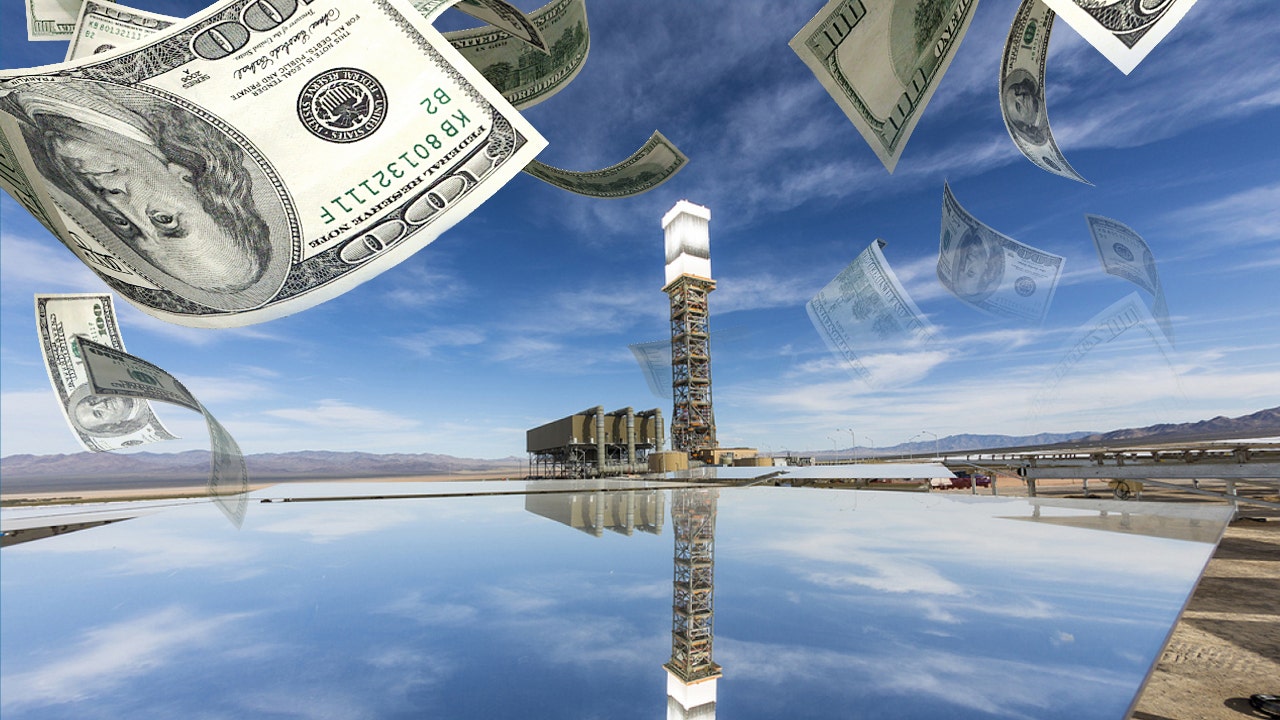
A major solar power plant project that was granted over a billion dollars in federal loans is on the road to closure, with energy experts blasting the project as a “boondoggle” that harmed the environment.
In 2011, the U.S. Department of Energy (DOE) under former President Barack Obama issued $1.6 billion in loan guarantees to finance the Ivanpah Solar Power Facility, a green energy project that consists of three solar concentrating thermal power plants in California.
The facility was touted by then-Secretary of Energy Ernest Moniz as an “example of how America is becoming a world leader in solar energy.” But after 10 years, the federally funded plant is now on track to close.
“Ivanpah is yet another failed green energy boondoggle, much like Solyndra,” Jason Isaac, CEO of the American Energy Institute, an American energy advocacy group, told Fox News Digital in a statement. “Despite receiving $1.6 billion in federal loan guarantees, it never lived up to its promises, producing less electricity than expected while still relying on natural gas to stay operational.”
ENERGY SEC. WRIGHT ISSUES DAY-1 ORDERS TARGETING OIL RESERVES, APPLIANCE RULES, ‘NUCLEAR RENAISSANCE’
Ivanpah Solar Power Facility (U.S. Department of Energy)
“Now, with its power contracts canceled, Ivanpah stands as a testament to the waste and inefficiency of government-subsidized energy schemes,” Isaac said.
Ivanpah consists of three individual units, two of which were contracted by Pacific Gas & Electric (PG&E) in 2009 and scheduled to run until 2039.
EXPERTS SAY FIRST WEEK OF ‘TRUMP EFFECT’ IS DERAILING GLOBAL CLIMATE MOVEMENT’S ‘HOUSE OF CARDS’
In January, PG&E announced plans to cancel its agreement with Ivanpah 14 years early, determining that “ending the agreements at this time will save customers money compared to the cost of keeping them through 2039” – ultimately putting Ivanpah on notice for closure.
“The Ivanpah plant was a financial boondoggle and environmental disaster,” Julia Dowell of the Sierra Club, an environmental activism group, said of the power plant.
The $1.6 billion loan to Ivanpah was delivered under former President Obama’s administration. (AP )
“Along with killing thousands of birds and tortoises, the project’s construction destroyed irreplaceable pristine desert habitat along with numerous rare plant species,” Dowell said. “While the Sierra Club strongly supports innovative clean energy solutions and recognizes the urgent need to transition away from fossil fuels, Ivanpah demonstrated that not all renewable technologies are created equal.”
This comes after another DOE-funded green energy project, Solyndra, went bankrupt in 2011 after receiving $535 million in federal loan guarantees from the Obama administration.
“Green projects have a long history of expensive taxpayer-subsidized disaster that is getting more so,” Steve Milloy, senior fellow at the Energy & Environmental Legal Institute and former Trump EPA transition team member, said in a statement to Fox.
Chris Wright, chief executive officer of Liberty Energy Inc., was recently confirmed to head the U.S. Department of Energy under the Trump administration. (Al Drago)
Milloy suggested that further green energy failures could come from projects funded by recent Democrat-backed legislation that aims to push the green energy agenda.
“Soon we will be looking at failures of larger magnitude than Green New Deal spending. No green project relying on taxpayer subsidies has ever made any economic or environmental sense,” Milloy said. “It’s important that President Trump stop the taxpayer bleeding by ending what he accurately calls the Green New Scam.”
Read the full article from Here

Continue Reading

The first Jesuit missionaries in Alaska sailed up the Yukon River in 1887. By the turn of the 20th century, the religious order of the Catholic Church had as many as 50 Jesuits in the state.
Now, only two remain. And by the end of June, there will be none.
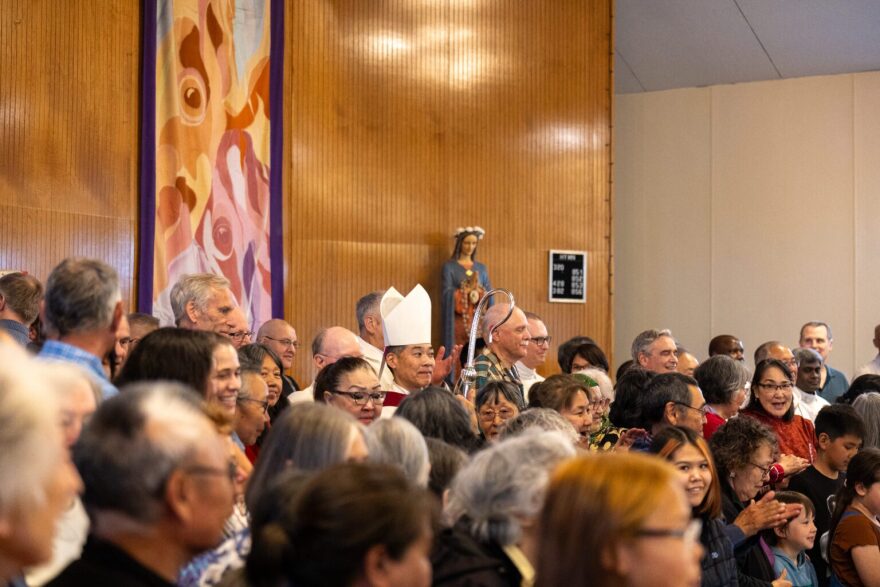
The Jesuits’ nearly 140 years in the state was honored at an event at Bethel’s Immaculate Conception Church on June 16. A procession of priests wearing long white gowns with red hems walked down the aisle to open the event. The Bishop of the Diocese of Fairbanks, Stephen Maekawa, thumped the ground with a shimmering silver staff known as a clozier as he approached the altar.
“My brothers and sisters, we gather together to celebrate this wonderful and blessed occasion to acknowledge the love of God and the work of God through the 139 year mission of the Society of Jesus of the Jesuit fathers,” Maekawa said to open the event.
A traditional Catholic mass followed, with readings in both English and Yup’ik. During the sermon, Maekawa acknowledged the vastness of the Fairbanks diocese, and the tremendous amount of work done by the Jesuits to establish it.
“All of the 46 churches of the Diocese of Fairbanks that we currently have were established by either the Jesuit fathers or by direction of a Jesuit bishop,” Maekawa said. “We have a long history of the Society of Jesus’ presence and ministry here in all of Alaska.”
The Jesuits are an order within the Catholic Church, akin to the Dominicans or Franciscans. They have a reputation for taking on some of the Catholic Church’s most remote assignments.
That missionary spirit brought the Jesuits to the Yukon River in 1887, where they built churches, schools, and ministries. Without their work, Catholicism may not have taken root in huge swaths of Alaska, particularly among Alaska Native communities.

But the Jesuits leave a complicated legacy. Their methods of converting Native people to the religion, particularly in the first half of the 20th century, created generational traumas still felt to this day.
Fr. Sean Carroll is the provincial of the Jesuits West Province, which oversees Alaska and nine other states.

“Thank you for all that you have taught us about who Jesus is and how to love and serve Him wholeheartedly,” Carroll said. “I also thank you for your patience with us. For there have been times when we have sinned and when we have hurt you.”
Missionaries, including the Jesuits, forcefully converted and assimilated Alaska Native people into Western culture and religion. Students at Jesuit-run boarding schools were forced to abandon their Native languages and physically punished when caught speaking languages other than English. Native dancing and drumming were also banned.
The Jesuits West Province maintains a list of 150 Jesuits with credible claims of sexual abuse against minors or vulnerable adults. A quarter of the accused Jesuits served in Alaska at some point in time.
“I ask for your forgiveness for all that we have done that was not rooted in Christ and love for Him, and for when we did not value your culture nor recognize the presence of God in you,” Carroll said.
Carroll gave the order to withdraw from the state last spring. A big issue was the recruitment of Jesuits willing to travel and serve in remote villages. He told the congregation that the Jesuits’ work would continue, just without a permanent presence.
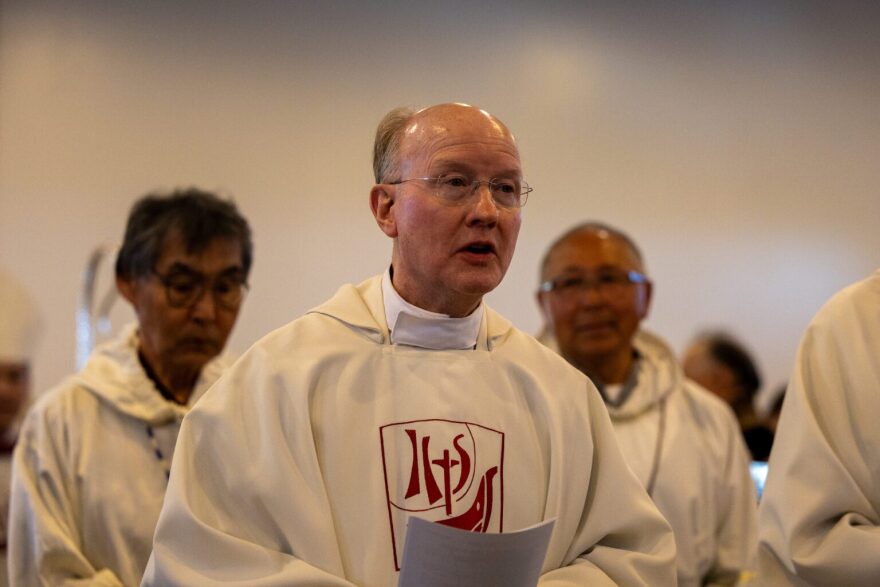
Fr. Rich Magner is one of the two remaining Jesuit priests in Alaska. His last day serving Chevak, Hooper Bay, and Scammon Bay is June 30.
“We all always knew coming in, or should have known, that we’re not going to be here forever. It’s going to be mission accomplished at some point,” Magner said. “And then we hand it off to the diocese that we’ve helped create, and so that’s a good feeling.”
Magner’s next stop is a Clinical Pastoral Education residency in Tacoma, Washington.
The other remaining priest, Fr. Tom Provinsal, first came to Alaska in 1968 to teach. A fond memory, he said, was meeting Elders that practiced traditional subsistence lifestyles.
“Some of the grandmothers, their fingers were just all bent with arthritis and stuff like that, you know, their whole lives they’ve been working out in the cold and the wet, doing food, sewing, all that kind of stuff,” Provinsal said. “I’d say I just feel very privileged to have come when I did come and to see that.”
Provinsal returned in 1975 as a priest and has served in the region ever since. After moving away, he plans to take a five month sabbatical. What happens next, he said, is in God’s hands.
Two lines formed in the aisle for communion at the end of the mass. After taking communion, Bethel’s Parish Administrator Susan Murphy gave a final thank you.
“It’s difficult to say goodbye to people who have been a part of our lives for so long,” Murphy said. “We know that you have done what was yours to do, and have taught us to do what is ours to do. We are grateful.”

Dominic Hunt, a Yup’ik deacon that flew in from Emmonak for the event, led the congregation through a final prayer.
“Bless them with your wisdom, that they may be a word of hope, a world in need. We ask this through Christ, our Lord. Amen,” Hunt said.
About 70 people posed for a photo on the altar – priests, deacons, parishioners, Elders and children — many of them smiling, some standing quietly.
The photo doesn’t tell the whole story. But it’s a moment when gratitude, grief, and memory all shared the same room.

To say that Arizona had a rough go of things while in Tampa is putting things mildly. After a dreadful road trip, Arizona limps home with a record one game below .500 . They remain third in the NL West, but that doesn’t tell the story of their postseason aspirations, as even the Padres (the second place team) are now 10.5 games out of first as the Dodgers are finally putting the daylight between themselves and the division in the manner that most expected them to. No, their path to October baseball runs through the Wild Card, and they remain three games back in that race, trying to charge down the St. Louis Cardinals while also dealing with the four teams between them and the Red Birds from Missouri.
This series is going to force Mike Hazen and his advisors to make some difficult decisions. Continuing to kick the can down the road is not really much of an option anymore. The fallout from those upcoming decisions could go a very long way towards dictating Mike Hazen’s trade deadline strategy. If Arizona wants to have any realistic hope of achieving playoff baseball this year, they need to leave this series at or above .500. They also need to get there without losing any more players to injury.
Tyler Mahle, RHP, 1-7, 5.49 ERA, 61 SO
vs.
Eduardo Rodriguez, LHP, 6-2, 2.27 ERA, 70 SO
Eduardo Rodriguez has been every bit the pitcher they thought they were signing back in 2024. Quite frankly, he has been Arizona’s best starting pitcher this season. Without his return to form, Arizona would likely already been sharing basement space with the Colorado Rockies in the standings. On the other side of things, Mahle is having himself a season to forget. Mahle’s win-loss record is not as indicative of his 12 starts as one might hope. In fact, it makes him look better than he has been. Sporting an ERA+ of 72, Mahle has never struggled this hard at any point in his professional career. The 31-year-old journeyman is coming to the point of pitching for his place on the 26-man roster. This would be an excellent game for the Diamondbacks to make a statement, having the lefty hitters pile on to put a dagger into the heart of the Giants from the outing. The sooner they can swat Mahle out of the game, the sooner thay can burn down the bullpen. Of course, that will mean Arizona will have to finally start having better performances hitting with RISP and taking walks, as Mahle still averages over five innings per outing, despite his struggles.
Landen Roupp, RHP, 5-7, 4.07 ERA, 95 SO
vs.
TBD
Despite some very pedestrian, essentially league average, results, Roupp is averaging a bit over six innings per start. This ability to pitch later into games is another reason for Arizona to do their best to get into the bullpen early in the first game against Mahle. Roupp is 0-2 in his last five starts. In the two losses, he was blown up. In the three no decisions, he held the opposition to two runs or fewer. Roupp does a fair job of limiting the free passes, so Arizona is going to need to be patient. Attacking early plays into Roupp’s ability to go deep. Making him work increases the chances of Arizona finding a crack to exploit. It will also continue to put pressure on San Francisco’s beleaguered bullpen.
To counter, Arizona will be turning to the ageless wonder, TBD. In this case, TBP is looking more and more like Brandon Pfaadt. Jose Barera remains in the rotation already. Mitch Bratt and Kohl Drake are ineligible to return to the 26-man roster unless another injury move is made. Brandon Pfaadt did not pitch during the series in Tampa. How long Pfaadt will be allowed to go (assuming it is him) remains to be seen, as he was only throwing around 50 pitches for a while there in Reno. It could be that Arizona tosses a bullpen game, or potentially uses Pfaadt as an opener before going to the bullpen. There are a lot of moving pieces involved here and the speculation is running rampant while Arizona is (at least currently) playing this decision close to their chest.
Trevor McDonald, RHP, 2-6, 4.94 ERA, 45 SO
vs.
Zac Gallen, RHP, 3-7, 6.15 ERA, 52 SO
Trevor McDonald, like the recently faced Drew Rasmussen, is stingy with the free pass. He isn’t much of a strikeout pitcher, but he simply doesn’t give away at-bats. When he is hitting his spots, it makes him 2023 Merrill Kelly dangerous. When he is missing his spots, he looks like present-day Merrill Kelly. There is a reason McDonald is sporting an ERA+ of 80. Arizona needs to ambush McDonald and put their foot down on the gas. If they can get to him early, Zac Gallen might be nearly irrelevant. On that note, the Diamondbacks will be sending struggling former ace Zac Gallen to the mound. In his last outing, he was mostly adequate against the Rays. He gave up a terrible first inning before settling in and cruising through the next five, albeit without the strikeouts. If that version of Gallen shows up, Arizona should be in a good place for this game. If the Zac Gallen of many other outings this season shows up, this game could become ugly for both teams.
At this point, there really is no primary player to watch. The questions greatly outweigh the answers right now. The players struggling, if they continue to struggle, will continue to weigh the team down. On the other hand, if Zac Gallen builds off his last outing and if the team can salvage the second game of the series, then this team continues to keep the playoff conversations alive. The Giants are having a terrible season and find themselves in much the same place as Arizona, needing to start looking at alternatives for future seasons.
The one exception to this might be Max Kepler. How long will the recently reinstated Kepler be given to make an impact. Even at his height, he was essentially an older version of Pavin Smith, who is already creating issues for Arizona. Kepler only has five plate appearances so far, so it is obviously early days. But it is hard to imagine that his leash is especially long. Look for him to either make an impact soon or to be sent to the DFA rejects heap.
This series presents Arizona with a great chance for a palette cleanser. They get to leave the AL East leading Rays in the rearview. They get to sleep in their own beds. They get to face one of the worst teams in the game right now. If Arizona takes two of three, they exit this series back at .500. If they can manage to dig deep and find their mojo in game two, they have a very good chance of sweeping this series, putting them back at two games over even as they prepare to host the NL Central leading Milwaukee Brewers. It will be important for Arizona to come out of this series on a high note as their next three series are against the Brewers in Phoenix and then the Padres and Dodgers, both in California.

OROVILLE — Bradley Scott Sayer was charged with two counts of first-degree murder and discharge of firearm with injury during his arraignment Thursday at the Butte County Superior Court.
Sayer, 18, is the suspect in the Chico library shooting on Monday in which two men were killed, and he could face life in prison. If convicted, Sayer is facing the highest penalty for capital murder with special circumstances, which would be life in prison without the possibility of parole. Butte County District Attorney Mike Ramsey, who is the prosecutor of the case, said the court is not seeking the death penalty.
Sayer was not given bail, as Ramsey said the court felt Sayer was “too dangerous.” Ramsey also said Sayer is on suicide watch in at the Butte County Jail.
“We felt that it would be too dangerous to let him go at this juncture,” Ramsey said. “He planned a mass shooting, and there’s no reason to believe that if he was let go, that he wouldn’t continue to do that.”
Sayer was staying at his father’s house, who was out of town, the day of the shooting, according to Ramsey. He then went to the closet in his father’s room and took two .22 caliber rifles and a 20-gauge shotgun, as well as several boxes of “No. 3 birdshot shells” before leaving for the library.
Sayer will appear in court next at 8:30 a.m. July 16 at the Butte County Superior Court, where he is expected to enter a plea. He is being represented by Roberto Marquez as retained counsel.
Autopsies
The Chico Police Department released a final update regarding the shooting case. The Butte County Sheriff’s Office completed the autopsies of both Jacob Cody Hull and Robert Johnson.
“The autopsies were completed; results indicate that both victims died as result of gunshot wounds. The wounds are consistent with a shotgun being used. The decedents will be turned over to their families who will be making funeral arrangements. The suspect remains in custody at the Butte County Jail being held in isolation,” Butte County Sheriff Kory Honea said.
-

 Milwaukee, WI3 minutes ago
Brewers, Salvation Army pack hundreds of lunches for Milwaukee children through Feed the Kids program
-

 Atlanta, GA6 minutes ago
New Venues in Atlanta for Summer 2026 Meetings and Events
-

 Minneapolis, MN10 minutes ago
Minneapolis City Council member Aisha Chughtai taking mental health leave for a month
-

 Indianapolis, IN18 minutes ago
State police arrest man in connection with two Monument Circle attacks
-

 Pittsburg, PA21 minutes ago
Tech community to Shapiro and Pennsylvania legislators: Wait on data center rules
-
Augusta, GA26 minutes ago
Louise Franklin Sheehan Obituary Jun 26, 2026 – Platt’s Funeral Home
-
Washington, D.C33 minutes ago
DC will pay $50,000 to man detained while protesting guard patrol with ‘Star Wars’ song, record says
-

 Cleveland, OH36 minutes ago
Cleveland Browns Legend Set for Induction into Greater Cleveland Sports Hall of Fame


