California
California professor arrested for allegedly tossing tear gas canister at ICE agents during raid on cannabis farm


A California professor was arrested for allegedly chucking a tear gas canister at ICE agents during a raid on a marijuana farm being investigated for child labor violations.
Jonathan Anthony Caravello — a math and philosophy professor at California State University Channel Islands — was arrested by federal agents conducting a raid at Glass House Farms in Ventura County on Thursday, ABC 7 reported.
US Attorney Bill Essayli posted on X that Caravello was arrested for “throwing a tear gas canister at law enforcement.”
Essayli said Caravello was charged with “a violation of 18 USC 111,” for allegedly “assaulting, resisting, or impeding certain officers or employees,” according to federal law.
The US attorney also denied claims that the educator was “kidnapped” by federal agents.
On Friday, the California Faculty Association shared that Caravello was “kidnapped” by federal agents after protesters and law enforcement clashed during Thursday’s raid.
The post claimed that “4 masked agents dragged Jonathan away into an unmarked reason without identifying themselves, without giving the reason for arrest, and without disclosing where they are taking him.”
However, a criminal complaint obtained by the Ojai Valley News revealed “dozens of protestors attempt to obstruct the execution of the high-risk search warrant” near Glass House Farms.
The affidavit claims that Caravello was seen holding a “megaphone” walking along the yellow police tape, “loudly playing a siren sound” towards agents.
Protestors then later began throwing “rocks” at government vehicles, causing “large-scale damage, including broken windows, broken side view mirrors, and frame damage to the vehicles.”
As the escalation continued, agents deployed tear gas among the protestors to disperse them. Caravello was allegedly caught on an agent’s body camera footage attempting to “kick the canister,” but missed.
“Caravello turned around, ran towards the canister, picked it up, and threw the canister overhand back at BP agents,” the complaint claims.
“A BP Agent reported that the canister was thrown at law enforcement and recalls that the canister came within approximately several feet above law enforcement’s heads.”
Caravello then allegedly left the scene, but about “two hours later,” an individual matching his description returned wearing different clothes, according to the affidavit.
After determining he was the individual who threw the canister, two border patrol agents attempted to arrest him just before 6 p.m., according to the criminal complaint.
“As BP agents arrested Caravello, they placed him on his stomach on the ground. BP Agent R.C. gave Caravello verbal commands to give law enforcement officers his arms but Caravellowould not comply and attempted to grab a BP Agent’s leg,” the complaint alleged.
“As BP Agent R.C. and other BP agents attempted to detain Caravello, Caravello continuously kicked his legs and refused to give the BP agents his arms.”
Caravello has since been released from custody on $15,000 bail, with an arraignment set for Aug. 1.
California State University Channel Islands released a statement following his arrest, ABC 7 reported.
“At this time, it is our understanding that Professor Caravello was peacefully participating in a protest-an act protected under the First Amendment and a right guaranteed to all Americans. If confirmed, we stand with elected officials and community leaders calling for his immediate release,” the statement read.
“The California State University remains committed to the principles of free expression, academic freedom, and due process, and will continue to monitor the situation closely.”
Federal agents said they served a warrant on Glass House Farms after it was accused of hiring and harboring undocumented workers.
More than 350 undocumented workers were arrested in the raids at its locations in Carpinteria and Camarillo on Thursday, the Department of Homeland Security said in a statement.
Officials said that “violent and dangerous criminals” were arrested during the operation, and “as of July 13, at least 14 migrant children have been rescued from potential exploitation, forced labor, and human trafficking.”
Officials also said that “more than 500 rioters attempted to disrupt operations,” leading to “four US citizens” being “criminally processed for assaulting or resisting officers.”
Glass House Farms is now facing alleged child labor law violations.
Glass House Brands stated in a press release that they complied with the federal warrants issued and “never knowingly violated applicable hiring practices and does not and has never employed minors.”
with Post wires



CALIFORNIA CITY, Calif. (KABC) — An Amber Alert was issued Friday by the California Highway Patrol for a 3-year-old child out of California City believed to be in imminent danger.
Emaria Peel, 3, was last seen Friday at about 7:17 p.m. in the area of Redwood Boulevard and 83rd Street in California City, according to police.
Authorities believe 31-year-old Charnay Mclin took Emaria. Investigators have not yet said what relationship, if any, Mclin has to the child.
The suspect was described as being 5 feet 9 inches tall, 185 pounds, with black hair and brown eyes.
The child was described as being 1 foot 6 inches, 20 pounds, with black hair and brown eyes.
Police believe they’re traveling in a gold-colored 2021 Kia Sorento with the California license plate: 36095DV
Mclin is considered armed and dangerous. Authorities wants anyone who sees them to call 911.
No further details were immediately known.
Copyright © 2026 KABC Television, LLC. All rights reserved.

A 17-year-old suspect has been arrested in Texas in connection with the deadly shooting after a high school graduation ceremony in Fairfield, California last month, police said.
Fairfield police said U.S. Marshals, accompanied by department detectives, served search and arrest warrants Friday morning at a home in the greater Dallas-Fort Worth area.
The teen was taken into custody without incident on suspicion of murder and related offenses.
Investigators said the suspect fled California and traveled to Texas within days of the June 3 shooting. He will remain in custody while awaiting extradition to Solano County.
The shooting happened after Sem Yeto Continuation High School’s graduation ceremony, which was held on the Fairfield High School campus.
Police said 18-year-old graduate Jamario Baker died at the scene. Three others – an 11-year-old child and two adults, ages 20 and 25 – were wounded.
Authorities have not released the suspect’s name because he is a minor.
Although an arrest has been made, police said the investigation remains active and detectives continue to pursue additional leads.
“While today’s announcement may provide a measure of relief to some, it does not lessen the pain felt by our community,” the Fairfield-Suisun Unified School District said in a statement.
Police plan to hold a news conference Monday at 4 p.m. to discuss the case and arrest.
Fairfield is a Northern California city about 40 miles northwest of San Francisco.

A California bill would let insurers monitor customers’ driving data in exchange for discounted premiums.
Assemblymember Tina McKinnor, the author of AB 311, said the digital monitoring, known as telematics, rewards good driving and would improve safety. In real time, telematics technology would track data such as speed, location and how a vehicle is being driven.
“We have to slow people down,” McKinnor said. “That is the whole purpose for this bill, is driver safety.”
A voter-approved law from 1988, Prop 103, required insurance rates to be based mainly on driving record, miles driven and experience. It made California the only state in the country to prohibit telematics.
McKinnor believes the law is outdated. She argued that her bill would also help good drivers who pay higher rates because of where they live.
“Where I live definitely brings my insurance up,” McKinnor said. “If we both drive the same way, we’ll get charged the same way, instead of by our ZIP code.”
California’s Department of Insurance and consumer groups oppose the bill, citing privacy concerns.
“We can’t look behind the algorithm and see what weight it’s giving to different criteria, which is a big problem,” said Jamie Court, president of Consumer Watchdog. “Auto insurance, otherwise, is transparent. This is why the Department of Insurance is opposed, because of the lack of transparency in the algorithm.”
The proposed savings in exchange for good driving might not be guaranteed. Telematics data from the Maryland Insurance Administration showed that 31% of drivers who opted into the program saw a drop in rates, 24% saw an increase and 45% saw no change to their premiums.
“This collects an awful lot of data about people, more than they know, and it’s like having Big Brother in your back seat,” Court said.
McKinnor insisted that drivers will not be forced to enroll in the program.
“It’s still opt-in in the other 49 states,” she said. “We’re not going to make this mandatory. It’ll be a per-volunteer situation.”
McKinnor’s bill passed through the legislature’s insurance committee. It’s expected to be presented to the full Senate in August.
-
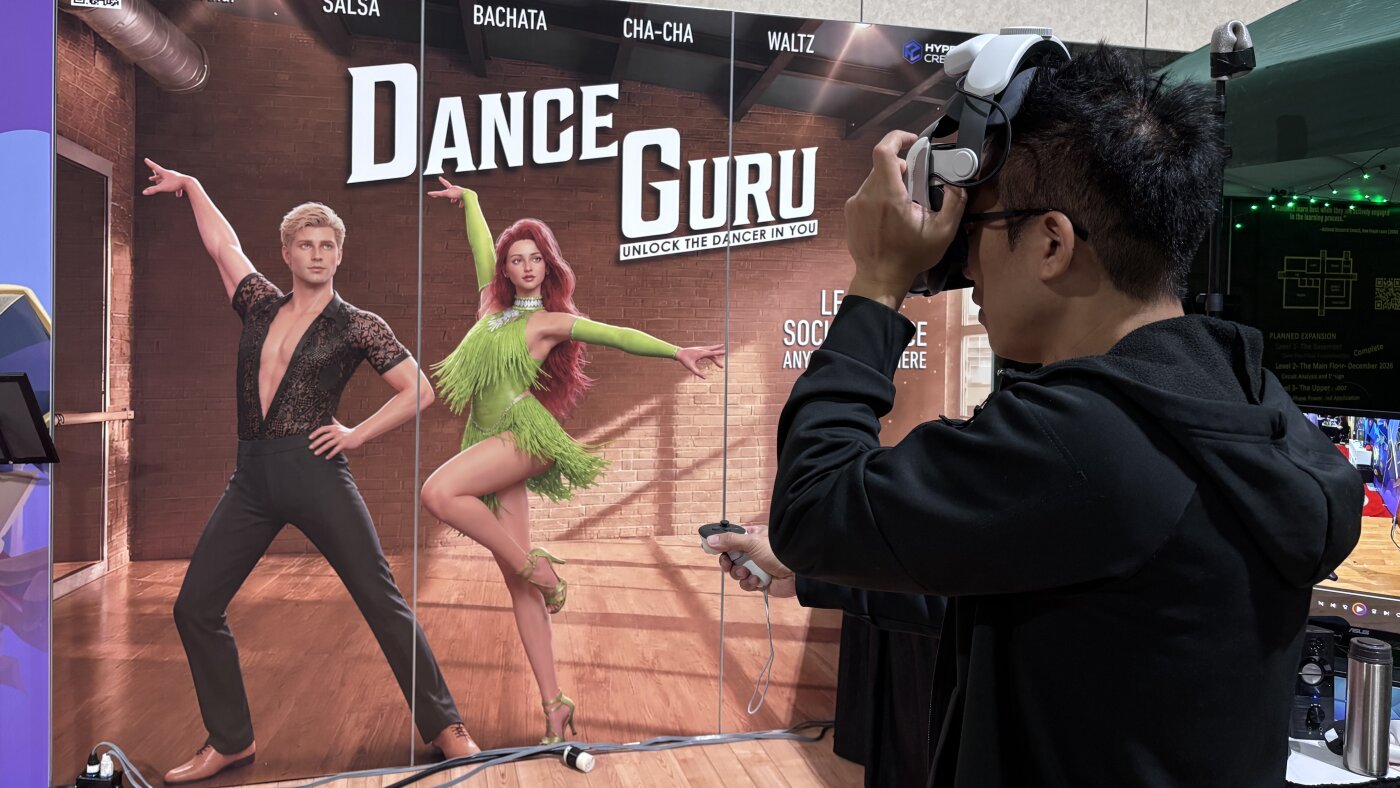 Lifestyle18 minutes ago
Shy on the dance floor? Virtual reality ‘partners’ aim to help you find your groove
-

 Technology30 minutes ago
Are you filthy enough for a $700 portable shower?
-

 World31 minutes ago
Former British MP and reality TV star Ann Widdecombe found dead; man arrested for murder
-

 Politics38 minutes ago
Trump takes unusual step, lets bipartisan housing bill become law unsigned amid SAVE pressure campaign
-

 Health45 minutes ago
Eating common dairy food every day may slow biological aging, study suggests
-

 Sports48 minutes ago
CM Punk to defend Undisputed WWE Championship against Cody Rhodes at SummerSlam
-

 Technology53 minutes ago
Would you pay $8,000 for a robot to fold laundry?
-
 Business60 minutes ago
Legendary Television City may be be sold in further blow to Hollywood

