South
Water parasite in England sickens more than 45 people, residents told to boil tap water before drinking

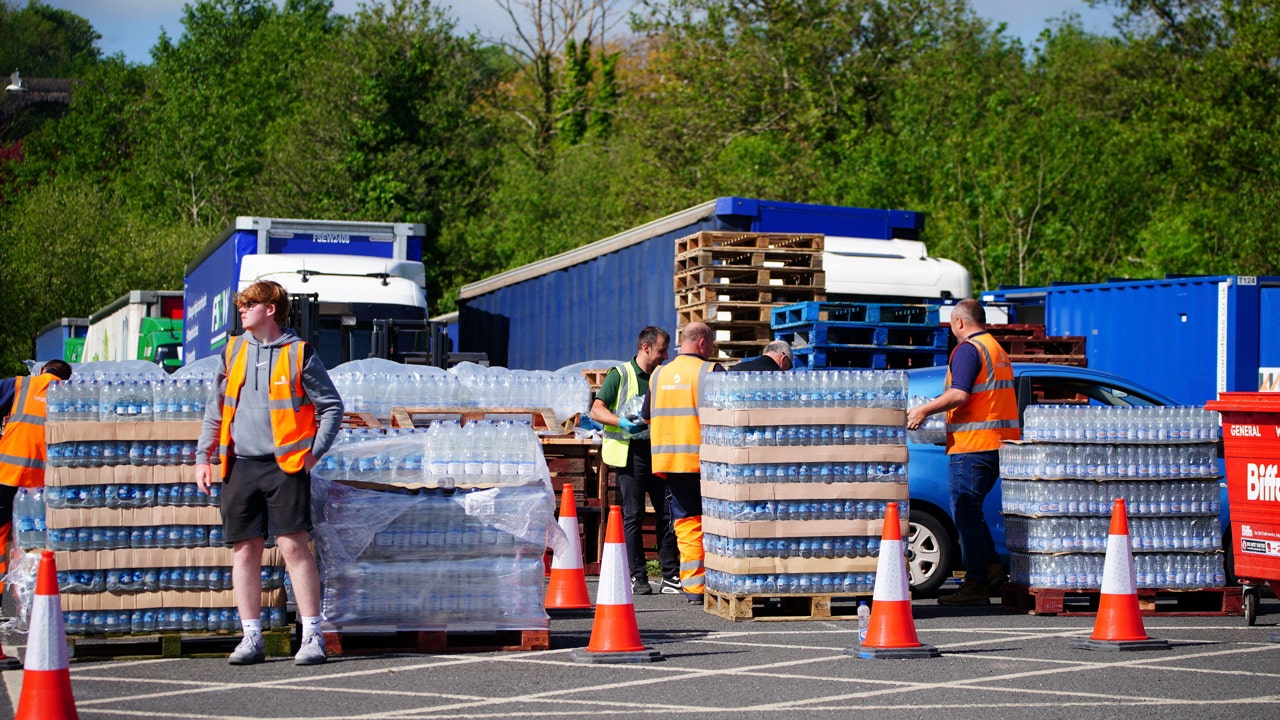
A scenic fishing village in southwest England was under instructions to boil its tap water for a third day on Friday after a parasite sickened more than 45 people in the latest example of Britain’s troubled water system.
Around 16,000 homes and businesses in the Brixham area of Devon were told to boil water after cryptosporidium, a microscopic parasite that causes diarrhea, was found in the water. At least 46 cases of cryptosporidiosis have been confirmed and more than 100 other people have reported similar symptoms, the U.K. Health Security Agency said. Cases can last more than two weeks.
South West Water’s Chief Executive Susan Davy apologized for the outbreak and said technicians were working around the clock to identify and fix the problem that may have come from a pipe in a cattle pasture.
POTENTIALLY FATAL DOG PARASITE FOUND IN PART OF COLORADO RIVER FOR FIRST TIME, HAVING SPREAD FROM OTHER STATES
“I am truly sorry for the disruption and wider anxiety this has caused,” Davy said. “I know on this occasion we have fallen significantly short of what you expect of us.”
The crisis is unrelated to Britain’s larger ongoing water woes but emblematic of an aging system in distress.
Water companies have been under fire for more than a year to stop frequent sewage overflows into rivers and oceans that have literally caused a stink, sickened swimmers, polluted fishing streams and led to an outcry from the public to clean up their act.
People collect bottled water at Broadsands Car Park in Paignton, England, on May 17, 2024. Around 16,000 households and businesses in the Brixham area of Devon have been told not to use their tap water for drinking without boiling and cooling it first, following the discovery of small traces of a parasite in the local water network. (Ben Birchall/PA via AP)
An environmental group this week reported that 70,000 sewage releases spilled for a total of 400,000 hours along England’s coast last year. More than a quarter were within two miles of a swimming spot, Friends of the Earth said in its analysis of government data.
Clean water advocates have blamed the problems on Britain’s privatization of the water system in 1989. They say that companies have put shareholders ahead of customers and not spent enough to update outdated plumbing systems.
Thames Water, the largest of the companies, is on the brink of insolvency and its leaders have said it faces the risk of being nationalized after shareholders refused to inject more cash.
Earlier this week, in another sign of problems, millions of gallons of raw sewage were pumped into England’s largest lake. After a fault caused pumps to fail, backup systems then pumped human waste into Lake Windermere, a UNESCO World Heritage site, for 10 hours, the BBC reported.
The cryptosporidiosis outbreak is hardly the first time South West Water has encountered problems, according to authorities.
The company is facing charges in Plymouth Magistrates’ Court alleging 30 offenses for illegal water discharges or breaches of environmental permits between 2015 and 2021, the Environment Agency said.
The recent outbreak appears to come from a damaged air valve in a pipe that runs through a field where cows graze that is close to a reservoir, said Laura Flowerdew, a spokesperson for South West.
A primary school was forced to close Thursday because it didn’t have clean drinking water.
The water company is providing free bottled water at three locations and has increased compensation to customers from $19 to $145.
Paul Hunter, a professor of medicine at the University of East Anglia, said it’s likely more people will become ill with cryptosporidiosis in coming days or weeks because of a lag in the incubation period.
CLICK HERE TO GET THE FOX NEWS APP
“Even if they have stopped all new infections by now, you would expect to see further cases for at least 10 days to two weeks,” he told the BBC.
Anthony Mangnall, a Conservative member of Parliament from the area, said residents are likely to have to boil water for another week. He said he was concerned with the water company’s response to the outbreak and vowed to hold it accountable.
“They have been slow to act and communication with customers has been very poor,” Mangnall said. “This has certainly undermined trust in our water network.”


Editor’s note: Follow LIVE World Cup quarterfinal coverage today
France and its dynamic duo of Kylian Mbappé and Ousmane Dembélé appear practically unstoppable.
France is advancing to the World Cup semifinals after a 2-0 victory over Morocco on Thursday afternoon thanks to goals from both players in the second half as Mbappé has tied Lionel Messi for the Golden Boot lead with hist eighth goals of the tournament.
SHOP: France semifinal World Cup tickets
Now, France will await the winner of Friday’s Spain vs. Belgium match. The semifinal will be held on Tuesday, July 14 in Dallas, when the team will look to secure its third-consecutive World Cup Final.
With the electrifying play of Mbappé and Dembélé, it’s hard to pass up the opportunity to buy tickets to the team’s next match at AT&T Stadium.
Here’s everything you need to know to buy France semifinal World Cup tickets:
Shop France semifinal tickets
France semifinal World Cup tickets
As of publication, get-in ticket prices for France’s semifinals match in Dallas start at $2,066.
If you’re looking to see Mbappé and the entire France team up close, the cheapest lower level Hall of Fame ticket starts at $3,571 in Section 121.
France quarterfinals game information
- When: Tuesday, July 14
- Where: AT&T Stadium in Arlington, Texas
- What time: 3 p.m. ET
- TV – English : FOX – Fubo
- TV – Spanish: Telemundo – Fubo
- Tickets: Starting at $2,066
France 2026 FIFA World Cup schedule, results
IMAGE
- France vs. Senegal – WIN 3-1
- France vs. Iraq – WIN 3-0
- France vs. Norway – WIN 4-1
- France vs. Sweden – WIN 3-0
- France vs. Paraguay – WIN 1-0
- France vs. Morocco (quarterfinals) – WIN 2-0
- July 14 (semifinals) – France vs. Belgium/Spain at AT&T Stadium in Arlington, Texas – Shop tickets
When are the semifinals for the FIFA World Cup?
The semifinals will take place on Tuesday, July 14 and Wednesday, July 15. The two games will take place at AT&T Stadium in Arlington, Texas and Mercedes-Benz Stadium in Atlanta.
We don’t know which teams will face off in the semifinals just yet, but the bracket is set so once the quarterfinal matchups are set, we will have a clearer picture. Until then, you can shop the semifinal game tickets below:
- Tuesday, July 14 – Winner of France/Morocco vs. Spain/Belgium/at 3 p.m. ET in Arlington, Texas – Get tickets
- Wednesday, July 15 – Winner of Norway/England vs. Argentina/Switzerland at 3 p.m. ET in Atlanta – Get tickets
When is the 2026 FIFA World Cup Final?
The final match of the 2026 FIFA World Cup will take place on Sunday, July 19 at MetLife Stadium just outside of New York City.
As of publication, the cheapest available tickets for the 2026 FIFA World Cup Final start at $8,404. If you want to get closer to the action, lower-level (category 1) tickets are starting at $21,783.
Shop France World Cup tickets

With Miami-Dade Superintendent Jose Dotres’ contract ending in February 2027, school board members are now looking to have his replacement by August.
Dotres has served as the superintendent for the third-largest school district since 2022. The school board started the search for his replacement in April.
More than 20 people applied for the position, but now only six have secured spots as semifinalists.
Here’s a closer look at who Miami-Dade’s superintendent might be:
Jose Bueno
With roughly 33 years of experience within Miami-Dade County Public Schools, Bueno currently serves as Dotres’ Chief of Staff.
According to his LinkedIn profile, Bueno’s tasks include coordinating and implementing major projects “that have significant district-wide impact on the goals of the district and involve coordination of other divisions and offices.”
He started as a teacher within the country back in 1993 and is a Florida International University and Nova Southeastern University graduate.
Ernie Lozano
Lozano is currently Broward County’s Public Schools Chief Human Resources Officer.
His passion is creating a safe and secure environment for both students and staff.
“He has been recognized for his contributions to the District’s safety and security initiatives, receiving accolades for his exceptional leadership and commitment to student and staff well-being,” according to a bio on the site for the National Student Safety and Security Conference & Workshop.
Before his career in human resources, Lozano served within education as a teacher, assistant principal and more.
Sylvia Mitchell
Hope builder, executive leadership coach and seasoned superintendent are all descriptions Mitchell has on her LinkedIn.
Living in Houston, Texas, Mitchell is familiar with the Sunshine State since she was a principal at Charter Schools USA in Fort Lauderdale back in 2012.
She has also served as superintendent twice in Texas and is currently Executive Vice President, Curriculum, Design & Development for Per Scholars.
Carlos Perez
Perez is a charter school principal in West Palm Beach and the former executive director of the Education Reform Project, a nonprofit organization based in Miami Beach.
According to the nonprofit, Perez has over 25 years of experience within education, mainly in New York, but now in Florida.
Perez has also been an assistant superintendent in the past, as well as taking part as an Executive Board Member for the New York State Association of School Personnel Administrators.
Christopher Ruszkowski
Currently based in South Carolina as CEO of South Carolina’s Children’s Fund, Ruszkowski has moved all over the country, and Florida will be no exception.
According to his LinkedIn, he served as New Mexico’s Secretary of Education back in 2019. Before living in South Carolina, he was a conservator for the Texas Education Agency. A conservator oversees the state’s takeovers of large school districts and charter school networks.
Getting his master’s at Stanford, Ruszkowski was a Distinguished Policy Fellow at the Hoover Institute located within the university.
Rafael Villalobos
Since 2022, Villalobos has been the South Region Superintendent of Miami-Dade County Public Schools. Before that, he was a principal for over ten years.
The Nova Southeastern alum has been in Miami for most of his life, even graduating from South Miami Senior High School in 1990.
Atlanta, GA
Georgia Secretary of State opens investigation into voter registration mailers sent to deceased residents

Georgia Secretary of State Brad Raffensperger announced Thursday that his office has opened an investigation into Ready to Register and other third-party organizations after reports that voter registration mailers were sent to deceased Georgians and other ineligible recipients.
According to the Secretary of State’s Office, election officials have received numerous complaints about voter registration solicitations being mailed to people who have died. In one unusual case cited by the office, a deceased family dog reportedly received one of the mailers.
State officials said they are reviewing whether the mailings violate Georgia law or otherwise undermine confidence in the state’s election system.
The Secretary of State’s Office said third-party voter registration groups frequently conduct mass mail campaigns ahead of major elections but often rely on commercial databases that can contain outdated or inaccurate information, unlike Georgia’s official voter registration system.
“Groups like this highlight the unreliability of commercial data,” Raffensperger said in a statement. “Georgia maintains one of the cleanest voter rolls in the nation through continuous list maintenance and citizenship verification. These outside organizations don’t use those standards. Instead, they flood mailboxes with inaccurate solicitations that confuse voters and waste election officials’ time.”
Raffensperger also thanked voters who alerted his office to the mailings.
“I want to thank the voters who have flagged the inaccurate mailings and sent them to our office,” he said. “Whether checking their ballots for accuracy or keeping their own registration information up to date, voters are a crucial line of defense in election security.”
Georgia officials said the issue mirrors problems recently identified in North Carolina, where election officials warned residents about similar mailings from Ready to Register. According to the Georgia Secretary of State’s Office, North Carolina officials said the organization mailed registration forms to deceased individuals, used outdated forms, listed incorrect election office addresses and included QR codes that raised privacy concerns.
Raffensperger criticized the mass mailing campaigns, saying they create confusion while increasing the workload for local election offices.
“Whether intentional or simply reckless, these mail campaigns operate like a grift — raising money and generating activity while shifting the costs onto taxpayers, election officials, and voters,” Raffensperger said. “Georgia taxpayers should not have to clean up the mess created by organizations that prioritize volume over accuracy.”
The Secretary of State’s Office is encouraging Georgians to verify their voter registration through the state’s My Voter Page and says voters who are already registered at their current address should disregard unsolicited voter registration mailers.
-

 World4 minutes ago
Burnham on course to become next UK PM with backing of 322 Labour MPs
-

 News31 minutes ago
Trump fires last members of election commission, inciting fears of midterm ‘chaos’
-

 Los Angeles, Ca2 hours ago
California teen e-biker baiting police to chase tracked by drone, arrested
-

 Detroit, MI2 hours ago
Our picks for state\nSenate from Wayne Co. | Endorsements
-

 San Francisco, CA2 hours ago
Man reported missing in San Francisco
-

 Dallas, TX2 hours ago
How to buy France World Cup semifinal soccer tickets in Dallas
-

 Miami, FL3 hours ago
Miami-Dade Schools names six semifinalists for superintendent
-

 Boston, MA3 hours ago
Lawsuit: ICE detained East Boston father despite legal status

