Louisiana
Prophets of Persia marks 100 years of Carnival balls in New Orleans


Ask any New Orleanian and they can easily rattle off a list of their favorite Carnival krewes, maybe based on who has the best throws or the most eye-popping floats.
But there is another group of krewes that, unless you happen to be a member, you have likely never heard of — krewes whose purpose centers not around one big parade for the masses, but one elaborate ball for a very select membership that carries on a debutante ball tradition that has existed around the world since the 18th century.
One of those krewes, Prophets of Persia, is celebrating its 100th anniversary this season. It’s a krewe that Wayne Phillips, curator of costumes and carnival collections at the Louisiana State Museum, said has been unique from its origins.
“When you think of the founders of these old krewes, you think of physicians, attorneys, bank presidents,” Phillips said, “but many of the men who founded Prophets of Persia in 1926 were involved professionally in the movie industry, and at a time when it was really in a big transition — moving from silent films to films that synchronized voice and action for the first time.
“Prophets of Persia’s first ball was in 1927, the same year that the first talkie, ‘The Jazz Singer,’ was released. These men were booking agents for movie theaters, they worked in PR and marketing for the industry, they managed theaters.”
Phillips said the founders’ ties to the entertainment industry heavily influenced the krewe, from the name — which he said likely came from the fact that cultures viewed as exotic were especially popular at the time — to the creativity of its themes. Award-winning movies produced around that time include “The Thief of Baghdad” and “The Adventures of Prince Achmed.”
Other krewes also found allure in Persian and Arabian names, including the High Priests of Mithras, a Persian god. And in 1874, Rex rode on horseback, costumed as the Shah of Persia.
But the theme for the Prophets of Persia’s first ball had different inspiration.
“The first ball recreated the coronation of Napoleon and Josephine in 1804 in Paris’s Notre Dame Cathedral,” he said. “Surprisingly, no ball or parade had ever used that theme.”
Prophets of Persia’s current captain — a 30-year member whose name is kept secret from the public in traditional fashion — said the krewe has always sought to set itself apart from its peers with its focus on elegance. Past entertainment has included ballet dancers and opera singers, with themes over the years always centered on recreating a moment in history, such as a ball thrown by Louis the 16th.
He noted that the krewe’s annual ball enjoys a prime-time slot — Saturday night, just 10 days before Mardi Gras Day — and he is proud that its current membership of 260 is the largest in its history.
“When the whistle was passed to me in February of 2020,” he said, “I knew I was going to do everything in my power to make sure everything was larger and grander.”
For many New Orleanians, these krewes don’t just honor history; they are a living, cherished part of their own family stories. A few days before Prophets of Persia’s big 100th anniversary ball — held Feb. 7 at the Orpheum Theater — Marigny Ernst Dildy was pulling out crowns and scepters collected from five generations of family members who have served as Prophets royalty, in preparation for hosting the organization’s annual queens’ luncheon. Since the pandemic, Dildy has been hosting the gathering of past queens in the home she grew up in on St. Charles Avenue and inherited after her father died in 2023.

Prophets of Persia Queen Marigny Ernst Dildy
Named in honor of an ancestor who founded Faubourg Marigny, Dildy said her mother’s family has been members of Prophets of Persia since the earliest days of the krewe, and her father joined in 1969. Growing up, she watched her parents reign as king and queen with the hope that someday it would be her turn.
“As a little girl, I would take a towel and wrap one end around my neck and grab one of mom’s crowns and put it on,” she said. “But she wouldn’t let me touch her scepter, so I’d grab a toilet bowl brush and parade around as queen of the front porch.”
When her turn came in 1994, Dildy said it was an experience she’ll never forget.
“I was permitted to wear my mother’s crown from 1961, which was incredible,” she said. “My mother was designing all the dresses, so she did mine, which made it extra special.”
For Dildy, the 100th anniversary of an organization that has been, and continues to be, such a big part of her family’s lives — her husband and cousins’ families are members — is both exciting and bittersweet. Choking up, she shared that the biggest event in the krewe’s history happens to fall on her late father’s birthday.
“He loved this organization so much and gave so much to it that I know he will be looking down on us,” she said. “This ball’s theme was the last one he chose.”
Surrounded by her family’s literal treasures, Dildy said she was full of gratitude.
“These organizations become so intricately woven into your life, your family’s history, your memories, not just at carnival, but all year long. Looking back at those beautiful memories with my family, all I can say is I’d do it all over again if I could. In a heartbeat.”



NEWTON COUNTY, Texas. (KPLC) – A DeRidder man reported missing was found dead in the Sabine River Sunday morning, according to the Newton County Sheriff’s Office.
Newton County Sheriff Colton Havard said Jordan Jamal Allen was located around 7:50 a.m. on July 12 with help from Texas Parks and Wildlife game wardens, the Beauregard Parish Sheriff’s Office, and 409 Search and Rescue.
Authorities say the body was recovered not far from where Allen went under Friday night near the U.S. 190 bridge east of Bon Wier at the Texas-Louisiana state line.
The sheriff said that Allen and a woman were said to be wading across the river Friday when the current began pulling the woman.
The sheriff said Allen tried to help her, but went under around 8:45 p.m. and wasn’t seen again. He said the woman made it back to land safely.
We will have more in this story as it develops.
Copyright 2026 KPLC. All rights reserved.

MONDAY
RED STICK FLY FISHERS PROGRAM: 7 p.m., Bluebonnet Regional Library, 9200 Bluebonnet Blvd., Baton Rouge. Open to the public. Email Brian Roberts: roberts.brian84@gmail.com. Website: rsff.org
WEDNESDAY
FLIES & FLIGHTS: 7-9 p.m, Rally Cap Brewing, 11212 Pennywood Ave., Baton Rouge. Casual fly tying. Open to public. Email Chris Williams: thefatfingeredflytyer@gmail.com
THURSDAY
ACADIANA FLY RODDERS PROGRAM: 6 p.m., Pack and Paddle, 601 E. Pinhook, Lafayette. Open to public. Email Darin Lee: at cbrsandcdc@gmail.com. Website: acadianaflyrodders.org
FRIENDS OF NRA/SOUTHWEST LA BANQUET: 6 p.m., Riverside Bar & Grill, 3748 Louisiana 3059, Lake Charles. Call Brack Cole 337-912-1620. Email: jbcoleair@yahoo.com
ONGOING
STATEWIDE TOURNAMENT & ANGLERS RODEO/S.T.A.R.: Through Sept. 7, Coastal Conservation Association’s summer-long fishing event. Tagged redfish, coastal/offshore species categories & youth division. CCA membership required. Website: ccalouisiana.com/star
LOTTERY HUNTS
DOVE/TEAL: July 27 application deadline for dove hunt on Elbow Slough Wildlife Management Area and teal hunt on White Lake Wetlands Conservation Area. Website applications only on Wildlife & Fisheries/Louisiana Outdoors License, Permits and Tags webpage. Fee $8.50. Details: dove hunt, David Hayden at dhayden@wlf.la.gov; teal hunt, Lance Ardoin at lardoin@wlf.la.gov
AROUND THE CORNER
JULY 21 — LAFAYETTE KAYAK FISHING CLUB MEETING: 6 p.m., Pack and Paddle, 601 E. Pinhook, Lafayette. Call 337-232-5854. Website: lafayettekayakfishing.com
JULY 21-22 — GULF COUNCIL SHRIMP COMMITTEE MEETING: Gulf Council office, 4107 W. Spruce St., Tampa, Florida. In conjunction with Scientific and Statistical committees. Website: gulfcouncil.org
JULY 23 — ACADIANA BUGS & BREWS: 6 p.m., Pack and Paddle, 601 E. Pinhook, Lafayette. Casual fly tying and local beers provided. Open to the public. Email Darin Lee: cbrsandcdc@gmail.com. Website: packpaddle.com
JULY 23-25 — International Grand Isle Tarpon Rodeo, Grand Isle Marina & Otto Candies Pavilion, Grand Isle. Website: tarponrodeo.org
JULY 24-25—BASSMASTER JUNIOR CHAMPIONSHIP: Kentucky Lake, Paris, Tennessee. Website: bassmaster.com
JULY 26 — SOUTH LOUISIANA HIGHPOWER CLUB MATCH: 8:30 a.m., Ascension Parish Sheriff’s Range, St. Landry Road, Gonzales. NRA XTC & F-Class match rifle or service rifle, 200-yard/50-rounds match course. Fee $15 members, $20 nonmembers, $5 juniors. $25 annual club (first match free) and Civilian Marksmanship Program membership (allows purchases from CMP). Call Mike Burke, 337-380-8120. Email: SouthLAHighPower@hotmail.com
FISHING/SHRIMPING
SHRIMP: Spring inshore season closed except for Breton/Chandeleur sounds; all outside waters open.
OPEN RECREATIONAL SEASONS: Private recreational red snapper; gray triggerfish; flounder; lane, blackfin, queen and silk snappers and wenchmen among other snapper species; all groupers except closed for goliath and Nassau groupers in state/federal waters.
CLOSED SEASONS: Greater amberjack; bluefin tuna; gag, goliath and Nassau groupers in state/federal waters. Commercial greater amberjack season closed.
LDWF UPDATES
Closed: Roads on Pomme de Terre, Richard Yancey & Bogue Chitto WMAs (flooding)
Drawdowns: Saline Lake (Natchitoches/Winn parishes through Oct. 5); Iatt Lake (Grant Parish through Oct. 5).
-

 New York4 minutes ago
How a Family of 5 Lives on $46,000 a Year in Wakefield
-

 Los Angeles, Ca10 minutes ago
Southern California braces for 110-degree heat, thunderstorms this week
-
 Detroit, MI34 minutes ago
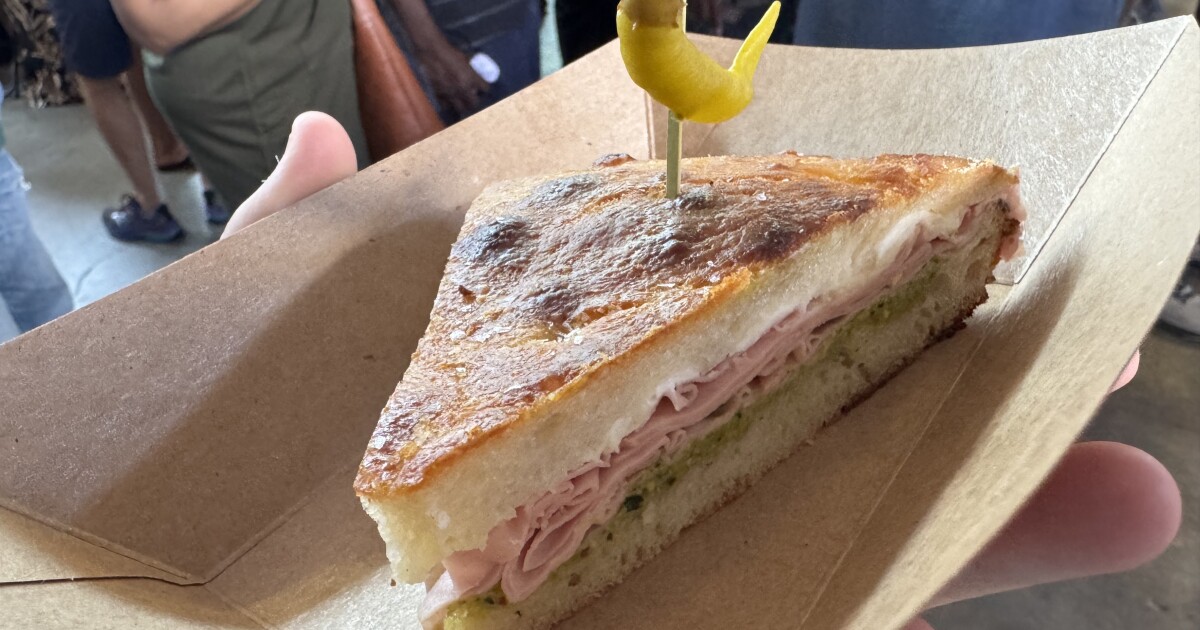
Detroit Sandwich Party returns to Eastern Market on Sept. 6
-

 San Francisco, CA46 minutes ago
A Leak of San Francisco Police Drone Footage Exposes the New Reality of Urban Surveillance
-

 Dallas, TX52 minutes ago
Viral East Dallas coffee shop fears major sales drop amid six-week road closure
-

 Miami, FL58 minutes ago
3 hurt in fire on Lincoln Road that started underground
-

 Boston, MA1 hour ago
Rideshare driver charged in Logan airport passenger assault to appear in court
-

 Denver, CO1 hour ago
Denver area events for July 13

