Louisiana
Hundreds of Louisiana restaurants cited, fined for not disclosing imported seafood


BATON ROUGE, La. (Louisiana Illuminator) – Louisiana law requires restaurants to clearly indicate when they serve imported seafood, but hundreds have failed to do so, according to a review of state enforcement data from 2025.
In response to a public records request, the Louisiana Department of Health compiled spreadsheets listing every restaurant cited and which ones were fined.
State law requires all food establishments using imported shrimp or crawfish to indicate it clearly on their menus or on a sign at the entrance if they don’t use menus. Another law applies to any statements, written or verbal, that restaurants and their employees make about their offerings.
A first-time violation can carry a fine of up to $500, though the health department typically gives offenders an opportunity to remedy the violation before levying a fine. The penalty can double for each subsequent offense, maxing out at $2,000 per violation.
State officials cited 919 restaurants and fined 319 for seafood labeling violations last year, according to the spreadsheets. The collective amount invoiced, including fines from January, totaled about $113,000, health department spokeswoman Emma Herrock said.
Both lists contain some recognizable names and popular restaurants from across the state, including some fine-dining establishments. Others, either through their names or website descriptions, promote their food as “Cajun,” “Creole” or locally-sourced when, in fact, their shrimp or crawfish comes from India, Ecuador, China and other waters outside of the U.S.
Seafood transparency
Health inspectors fined three Popeyes locations last year for failing to label imported shrimp. The cited restaurants were in Opelousas, Grand Coteau and Breaux Bridge.
The national fast-food chain, founded in Arabi, has long used Louisiana culture in its marketing.
Though best known for its chicken, Popeyes often features fried shrimp on its menu and has occasionally experimented with fried crawfish meals and a “Cajun Flounder Sandwich” with Pacific flounder rather than the southern flounder native to Louisiana.
Last year, Popeyes renamed its offering the “Flounder Fish Sandwich,” dropping the “Cajun” moniker.
Popeyes’ parent company, Restaurant Brands International, did not respond to requests for comment or questions sent via email. The vast majority of its 3,700 worldwide restaurants are independently owned and operated. The corporation sets strict food quality standards with specifically-approved wholesale vendors that all franchisees must use, according to its website.
Restaurants reached for this report largely chalked up their violations to a simple oversight or not being aware of their supplier’s seafood source.
Monjuni’s Italian restaurant in Bossier City was cited Feb. 10, 2025, for using imported crawfish without labeling it as such on the menu, records show. In a phone interview, owner Lisa Susano said she wasn’t aware her supplier had sent her foreign crawfish tails when local ones weren’t available. She said she has since instructed her vendor to never send her imported tails.
“I really wasn’t paying attention,” Susano said. “It’s hard to make it in the restaurant industry. Restaurants close every day.”
As for shrimp, Susano said she has always used Louisiana catch. She said she didn’t realize the state’s menu labeling law also applied to crawfish, which she said can be more difficult to source locally because its season can be short.
Health inspectors often show up unannounced at restaurants to check for health code violations, including the labeling laws. Officials check the restaurant’s wholesale receipts and seafood packaging to determine the country of origin for the shrimp or crawfish being served. If the restaurant’s menu doesn’t match the receipts, it’s a violation but not always a fine.
Inspectors typically give the restaurant about a week to correct a menu violation before conducting a follow-up visit. If the violation goes uncorrected, the state can levy a first fine of $500.
State health department records show inspectors cited Mandina’s Restaurant in Mandeville four times last year for violating the menu law from June 30 through Aug. 7. The business is not affiliated with the iconic New Orleans eatery on Canal Street that bears the same name.
In a phone interview, owner Frank Marcello said he paid a $150 fine for the violations at the Mandeville restaurant, which he blamed on his own absent-mindedness.
“It was my fault,” he said. “We just didn’t have that [disclosure] on the menu, so we changed the menu.”
Marcello said he uses Gulf shrimp most of the time except when it’s too expensive.
“When you’re a little family restaurant like us, when something goes up $5 or $6 per pound, you gotta do what you gotta do,” Marcello said. “I can’t charge $30 for a shrimp po’ boy.”
Mandina’s in New Orleans, a favorite of locals and tourists, was not on the health department’s list. General manager Martial Voitier said his restaurant has always used local seafood regardless of the price or availability.
The Mandina family sold the Mandeville location years ago, according to Voitier. He was pleased to hear about the state’s enforcement of the labeling laws and said he thinks they should be as strict as possible.
“It doesn’t offend me or bother me at all because we don’t deal with any foreign products — period,” Voitier said.
Health inspectors also included members-only dining establishments in their enforcement.
The Southern Yacht Club, an exclusive sailing organization in New Orleans with a large waterfront building on Lake Pontchartrain, has a full-service restaurant inside and a summer bar and grill outside. Visitors are welcome if they have an invitation or are accompanied by a member
During a Nov. 18 visit, inspectors cited Southern Yacht Club for 10 “critical” violations, including serving unlabeled imported shrimp. State sanitation codes define critical violations as those “more likely to directly contribute to food contamination or illness,” and they must be addressed immediately.
The club’s other critical violations included failure to retain shellfish tags for 90 days after sale and using oyster shells “more than once as serving containers” for other meats not original to the shell.
Ed Gaskell, Southern Yacht Club’s manager, said via email the imported shrimp was a “substitution error” made by a vendor.
“The shrimp in question from the cooler was thrown out in front of the inspector and never served,” Gaskell said, adding that Southern Yacht Club now uses only domestic shrimp.
State clamps down after years of non-enforcement
The enforcement data from 2025 mark the agency’s efforts to step up enforcement after years of light-handed treatment while Louisiana’s seafood industry complained of a massive influx of foreign seafood.
Two years earlier, the health department documented more than 2,600 violations but did not issue a single fine over that period because the Louisiana Legislature failed to clarify penalties in a 2019 revision to the law.
Since 2024, the legislature has passed sweeping changes to state seafood laws affecting wholesalers, restaurants, food trucks, grocery stores and other establishments across the state. These included heavier fines for violators and strict prohibitions against misleading branding. They also gave authority to the Louisiana Department of Agriculture and Forestry and the Louisiana Seafood Promotion Board to assist in enforcement efforts.

Lt. Gov. Billy Nungesser, who oversees the state Office of Tourism and the Seafood Promotion and Marketing Board, said he is considering building a website that lists every restaurant in Louisiana that serves local seafood products. He is also lobbying for the passage of a new imported seafood law at the federal level.
“My ultimate goal is to get Congress to pass a bill to add a 10-cents-per-pound inspection fee on imported seafood,” Nungesser said.
He said this would help “level the playing field” for local fishermen trying to compete with the significantly cheaper foreign fare that continues to enter the United States.
Dave Williams, a fisheries scientist, has made headlines across the Gulf Coast exposing grocers, restaurants and festival vendors selling imported shrimp in violation of Louisiana seafood labeling laws. His company, SeaD Consulting, developed a rapid test kit that can analyze the genetic makeup of raw or cooked seafood.
Williams said any place that serves imported seafood and has customers that expect to get imported seafood should have no problem labeling that seafood as “imported.”
His company has conducted undercover shrimp testing at restaurants across the Gulf Coast. Williams said his goal has been to educate restaurant owners and draw public attention to the issue so that people start asking where the seafood comes from when they go out to eat. SeaD Consulting publicly commends restaurants found to be serving domestic catch.
“The mislabeling law applies to all restaurants serving these products, ensuring a consistent standard and a level playing field for seafood transparency. … The point of the law in Louisiana is to inform consumers of what they are being served,” Williams said.
Louisiana Illuminator is part of States Newsroom, a nonprofit news network supported by grants and a coalition of donors as a 501c(3) public charity. Louisiana Illuminator maintains editorial independence. Contact Editor Greg LaRose for questions: info@lailluminator.com. Follow Louisiana Illuminator on Facebook and X.



NEWTON COUNTY, Texas. (KPLC) – A DeRidder man reported missing was found dead in the Sabine River Sunday morning, according to the Newton County Sheriff’s Office.
Newton County Sheriff Colton Havard said Jordan Jamal Allen was located around 7:50 a.m. on July 12 with help from Texas Parks and Wildlife game wardens, the Beauregard Parish Sheriff’s Office, and 409 Search and Rescue.
Authorities say the body was recovered not far from where Allen went under Friday night near the U.S. 190 bridge east of Bon Wier at the Texas-Louisiana state line.
The sheriff said that Allen and a woman were said to be wading across the river Friday when the current began pulling the woman.
The sheriff said Allen tried to help her, but went under around 8:45 p.m. and wasn’t seen again. He said the woman made it back to land safely.
We will have more in this story as it develops.
Copyright 2026 KPLC. All rights reserved.

MONDAY
RED STICK FLY FISHERS PROGRAM: 7 p.m., Bluebonnet Regional Library, 9200 Bluebonnet Blvd., Baton Rouge. Open to the public. Email Brian Roberts: roberts.brian84@gmail.com. Website: rsff.org
WEDNESDAY
FLIES & FLIGHTS: 7-9 p.m, Rally Cap Brewing, 11212 Pennywood Ave., Baton Rouge. Casual fly tying. Open to public. Email Chris Williams: thefatfingeredflytyer@gmail.com
THURSDAY
ACADIANA FLY RODDERS PROGRAM: 6 p.m., Pack and Paddle, 601 E. Pinhook, Lafayette. Open to public. Email Darin Lee: at cbrsandcdc@gmail.com. Website: acadianaflyrodders.org
FRIENDS OF NRA/SOUTHWEST LA BANQUET: 6 p.m., Riverside Bar & Grill, 3748 Louisiana 3059, Lake Charles. Call Brack Cole 337-912-1620. Email: jbcoleair@yahoo.com
ONGOING
STATEWIDE TOURNAMENT & ANGLERS RODEO/S.T.A.R.: Through Sept. 7, Coastal Conservation Association’s summer-long fishing event. Tagged redfish, coastal/offshore species categories & youth division. CCA membership required. Website: ccalouisiana.com/star
LOTTERY HUNTS
DOVE/TEAL: July 27 application deadline for dove hunt on Elbow Slough Wildlife Management Area and teal hunt on White Lake Wetlands Conservation Area. Website applications only on Wildlife & Fisheries/Louisiana Outdoors License, Permits and Tags webpage. Fee $8.50. Details: dove hunt, David Hayden at dhayden@wlf.la.gov; teal hunt, Lance Ardoin at lardoin@wlf.la.gov
AROUND THE CORNER
JULY 21 — LAFAYETTE KAYAK FISHING CLUB MEETING: 6 p.m., Pack and Paddle, 601 E. Pinhook, Lafayette. Call 337-232-5854. Website: lafayettekayakfishing.com
JULY 21-22 — GULF COUNCIL SHRIMP COMMITTEE MEETING: Gulf Council office, 4107 W. Spruce St., Tampa, Florida. In conjunction with Scientific and Statistical committees. Website: gulfcouncil.org
JULY 23 — ACADIANA BUGS & BREWS: 6 p.m., Pack and Paddle, 601 E. Pinhook, Lafayette. Casual fly tying and local beers provided. Open to the public. Email Darin Lee: cbrsandcdc@gmail.com. Website: packpaddle.com
JULY 23-25 — International Grand Isle Tarpon Rodeo, Grand Isle Marina & Otto Candies Pavilion, Grand Isle. Website: tarponrodeo.org
JULY 24-25—BASSMASTER JUNIOR CHAMPIONSHIP: Kentucky Lake, Paris, Tennessee. Website: bassmaster.com
JULY 26 — SOUTH LOUISIANA HIGHPOWER CLUB MATCH: 8:30 a.m., Ascension Parish Sheriff’s Range, St. Landry Road, Gonzales. NRA XTC & F-Class match rifle or service rifle, 200-yard/50-rounds match course. Fee $15 members, $20 nonmembers, $5 juniors. $25 annual club (first match free) and Civilian Marksmanship Program membership (allows purchases from CMP). Call Mike Burke, 337-380-8120. Email: SouthLAHighPower@hotmail.com
FISHING/SHRIMPING
SHRIMP: Spring inshore season closed except for Breton/Chandeleur sounds; all outside waters open.
OPEN RECREATIONAL SEASONS: Private recreational red snapper; gray triggerfish; flounder; lane, blackfin, queen and silk snappers and wenchmen among other snapper species; all groupers except closed for goliath and Nassau groupers in state/federal waters.
CLOSED SEASONS: Greater amberjack; bluefin tuna; gag, goliath and Nassau groupers in state/federal waters. Commercial greater amberjack season closed.
LDWF UPDATES
Closed: Roads on Pomme de Terre, Richard Yancey & Bogue Chitto WMAs (flooding)
Drawdowns: Saline Lake (Natchitoches/Winn parishes through Oct. 5); Iatt Lake (Grant Parish through Oct. 5).
-

 New York4 minutes ago
How a Family of 5 Lives on $46,000 a Year in Wakefield
-

 Los Angeles, Ca10 minutes ago
Southern California braces for 110-degree heat, thunderstorms this week
-
 Detroit, MI34 minutes ago
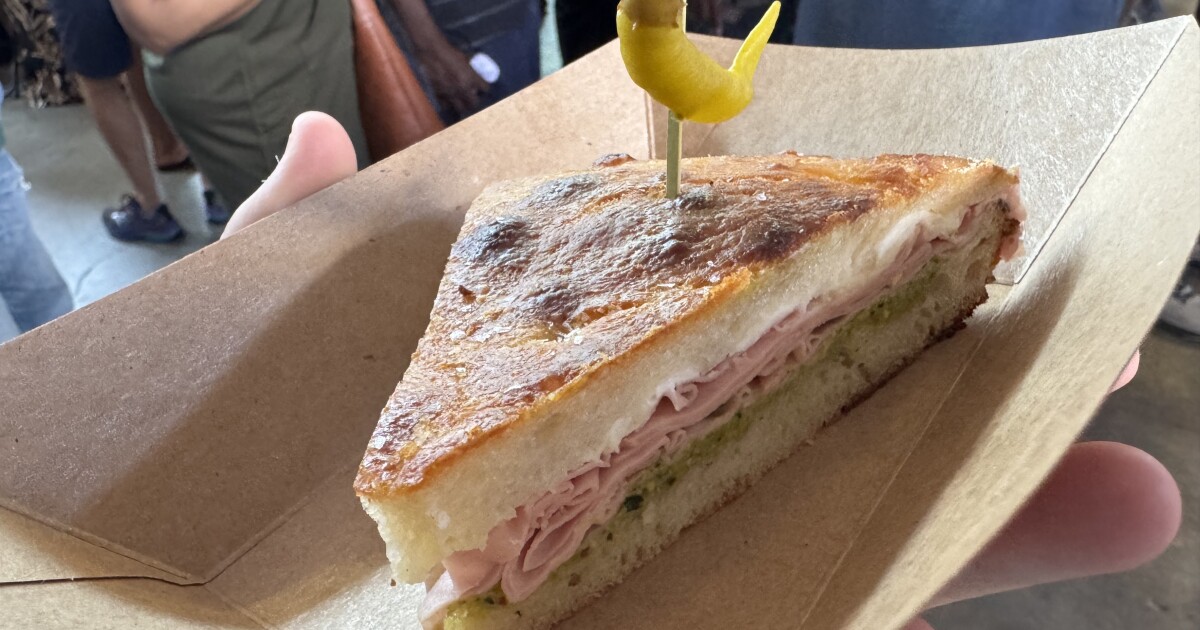
Detroit Sandwich Party returns to Eastern Market on Sept. 6
-

 San Francisco, CA46 minutes ago
A Leak of San Francisco Police Drone Footage Exposes the New Reality of Urban Surveillance
-

 Dallas, TX52 minutes ago
Viral East Dallas coffee shop fears major sales drop amid six-week road closure
-

 Miami, FL58 minutes ago
3 hurt in fire on Lincoln Road that started underground
-

 Boston, MA1 hour ago
Rideshare driver charged in Logan airport passenger assault to appear in court
-

 Denver, CO1 hour ago
Denver area events for July 13

