Delaware
Inside Huxley & Hiro, a bookstore with animal greeters and Curious Histories section


Independent bookstores are the heartbeats of their communities. They provide culture and community, generate local jobs and sales tax revenue, promote literacy and education, champion and center diverse and new authors, connect readers to books in a personal and authentic way, and actively support the right to read and access to books in their communities.
Each week we profile an independent bookstore, sharing what makes each one special and getting their expert and unique book recommendations.
This week we have Huxley & Hiro in Wilmington, Delaware!
What’s your store’s story?
Huxley & Hiro is a woman and LGBTQ owned bookstore in historic downtown Wilmington. As a public benefit corporation, the store’s mission is to partner with local non-profits and provide a community meeting space for the arts. Our store is named after our Maine Coon cat Huxley and Shiba Inu dog Hiro, who make regular appearances to welcome customers. Shortly after opening, owners Ryan Eanes and Claire van den Broek were named most influential Delawareans of 2024 in the business category!
What makes your independent bookstore special?
In the digital age where books are so easily and freely accessible online, and where we are constantly engaged on our phones and other devices, we recognized an increasing desire for places where people could come together in person and share their love of literature. Through a carefully curated selection of books and a design that is browsing-friendly, we want to offer our community a new take on the beloved experience of in-person shopping on a downtown Main Street. Though we as founders are millennials, we realized that both younger and older generations see the Millennial/Gen X vision of virtual communities as far more dystopian than the idealized image we had of the possibilities of technology. Our society seems to have a deep seated desire to return to in-person communities and 15 minute neighborhoods where we can build interpersonal connections not mediated by technology.
What’s your favorite section in your store?
My (Claire) favorite section of the store is our ‘Curious Histories’ display. Influenced by James Daunt, who created an entire London bookstore organized by country instead of genre (no sci-fi, because that wasn’t classifiable by country), we wanted to bring to life a curated collection that drew on many genres, centered around the theme of ‘Curious Histories’. We pulled books from cooking, travel, history, the sciences, and so on that focused on unusual stories, like the history of the egg or Sesame Street in Moscow. Our hope is that this display will offer people a new way of browsing that doesn’t confine them to the genre towards which they usually gravitate; the kind of experience algorithms online aren’t good at curating.
What book do you love to recommend to customers and why?
My favorite recommendation is Sadegh Hedayat’s “Blind Owl,” a deeply disturbing novella written by an Iranian author in the 1930s. Imagine if Edgar Allan Poe and Franz Kafka had a child born in Iran, who grew up watching F. W. Murnau’s “Nosferatu.” Surreal and dreamlike, at times verging on an early Middle Eastern magical realism, this largely unknown novella will haunt you.
What book do you think deserves more attention and why?
Though it’s a classic, I’m always surprised more people aren’t familiar with Bulgakov’s “The Master and Margarita.” Written in Soviet Russia and censored until after his death, Mikhail Bulgakov’s comedic novel chronicles the adventures of Satan, his cat and his valet as they visit Moscow. The story is strongly interwoven with Goethe’s “Faust,” one of the greatest plays ever written, and in many ways, it’s also the love story of the Master and his Margarita (Faust and Gretchen). Brilliant, hilarious, and at times quite moving.
Why is shopping at local, independent bookstores important?
When you choose a local, independent bookstore, more of your money stays within the community. We want to live in vibrant, 15 minute walking communities where we can find unique things and discover new experiences. Bookstores remain a critical part of this experience, and only by supporting local businesses can we ensure that these kinds of neighborhoods remain a reality. Sure you can buy a book cheaply, but do you want to live next a massive warehouse with trucks coming and going at all hours, or do you want to grab your coffee and dog and wander into a beautiful local store with friendly employees who know you and can help you discover new books?
What are some of your store’s events, programs, or partnerships coming up this quarter that you would like to share?
We regularly partner with other local businesses for experiences such as coffee tastings from a local roaster, a bag making workshop that benefits women with cancer, and historical talks such as our event with a 102 year old WWII Air Force Veteran to celebrate that our city has been named an American WWII Heritage City.
We are also partnering with Delaware Futures to create a Banned Books Advocacy Program that will allow disadvantaged youths to spend six weeks exploring banned books, learning to write letters to school boards, and gaining a better understanding of why groups want to ban books and how to fight censorship. At the end of the Program, they will earn a certificate that we hope will provide them with an advantage in their college applications.



Sunday, July 5, 2026 5:14AM

CLAYMONT, Del. (WPVI) — A woman is in critical condition after being shot Saturday evening in the parking lot of a pizza shop in New Castle County.
The shooting happened around 6:45 p.m. outside a Papa Johns in the 2100 block of Marsh Road.
Authorities said the victim was transported to an area hospital, where she remains in critical condition.
Investigators have not released details about what led to the shooting.
There was also no immediate word on whether any arrests have been made.
Anyone with information is asked to contact Delaware State Police.
Copyright © 2026 WPVI-TV. All Rights Reserved.


Watch Bally’s Dover Casino Resort’s annual fireworks show
See video of Bally’s Dover Casino Resort fireworks celebration of America’s 250th and the Fourth of July weekend.
Numerous severe thunderstorms are possible the evening of July 4 across Delaware, threatening America’s 250th birthday celebrations and fireworks.
The National Weather Service issued a severe storm potential for July 4 between 3 and 11 p.m. that could bring heavy rain, damaging winds, flash flooding and lightning.
Extreme heat and humidity experienced over the past few days will fuel a storm threat across the Mid-Atlantic region.
There’s a potential for frequent cloud-to-ground lightning in the evening, making outdoors and on-the-water activities dangerous, according to the weather service.
The silver lining is that any storms will offer relief for the record-breaking and near-record-breaking high temperatures the region has felt this week.
Wilmington hit 103 degree on Thursday, July 2, breaking the day’s record previously set at 98 degrees in 1941. The city hit 102 degrees on Friday, July 3, tying the all-time daily record high originally set in 1966.
Georgetown was 102 degrees on July 3, breaking its 101-degree daily record set in 1954.
Will the storms impact Fourth of July fireworks shows?
As as 11 a.m. July 4, fireworks shows across Delaware are still on schedule for the evening.
Wilmington’s Fourth of July Celebration will bring family entertainment, food and drinks, and an orchestra performance to the Riverfront. Fireworks will launch at 9:30 p.m.
Fireworks in Dover are slated to go off near Legislative Mall at 9:15 p.m., but because of the threat of weather conditions, people are asked to arrive early at 8 p.m.
Due to the extreme heat, Bethany Beach postponed its July 3 Independence Day Parade, but its fireworks are still set to take off at 7:30 p.m. July 4.
Middletown will set off its fireworks at Silver Lake Park once it gets dark on July 4. A rain date of July 5 has been set in case storms blow in.
How hot will it be July 4?
The heat dome over the Central and Eastern United States continues to bring extreme heat to Delaware on Independence Day. Here’s how hot it’s expected to be across the First State.
- Wilmington: High near 100 degrees, with the heat index values as high as 105 degrees. Low around 74 degrees.
- Newark: High near 99 degrees, with the heat index as high as 104 degrees. A low around 73 degrees.
- Middletown: High near 99 degrees, with the heat index as high as 104 degrees. A low around 73 degrees.
- Smyrna: High near 100 degrees, with the heat index as high as 105 degrees. A low around 73 degrees.
- Dover: High near 100 degrees, with the heat index as high as 105 degrees. A low around 74 degrees.
- Milford: High near 100 degrees, with the heat index as high as 106 degrees. A low around 74 degrees.
- Georgetown: High near 101 degrees, with the heat index as high as 109 degrees. A low around 74 degrees.
- Rehoboth Beach: High near 87 degrees, with a low around 74 degrees.
- Bethany Beach: High near 87 degrees, with a low around 74 degrees.
Sophia Voight can be reached at svoight@delawareonline.com.

A Delaware farm owner and animal enthusiast was fatally crushed by one of his own camels in a freak accident last week that’s left his loved ones reeling.
Juan Caride, 65, was “tending to his camel” when the animal fell on him, resulting in his death, a spokesperson for the Delaware State Police confirmed to Delaware Online.
For those close to Caride, who also owned a local pawn shop, the loss is profound.
Torres Hector, whom Caride considered a brother, told Delaware Online that one of the last things Caride said to him was, “I love you.”
Hector recalled responding, “I love you, too, papi.”
The Caride family operates a 50-acre farm in Felton, where they care for 20 horses, nine donkeys, and three camels: Bubbles, Chocolate, and Batman.
Juan’s wife, Toni Caride, had raised the camels since they were calves. In a 2014 interview with Delaware Online, she noted their “really nice personalities,” describing them as “loveable” animals that enjoyed interacting with people.
It was Juan’s idea to start the camel herd. According to his wife, Juan initially bought Batman, the camel who crushed him, as a single companion.

“He was about a week old when we got him, and we felt that he was lonely,” Toni explained. “So, he said I better get a couple more for him. So we went and found two females that were the same age and we got those for him.”
Reflecting on the couple’s character, a tearful Hector described Juan and Toni as “real beautiful” people.
-
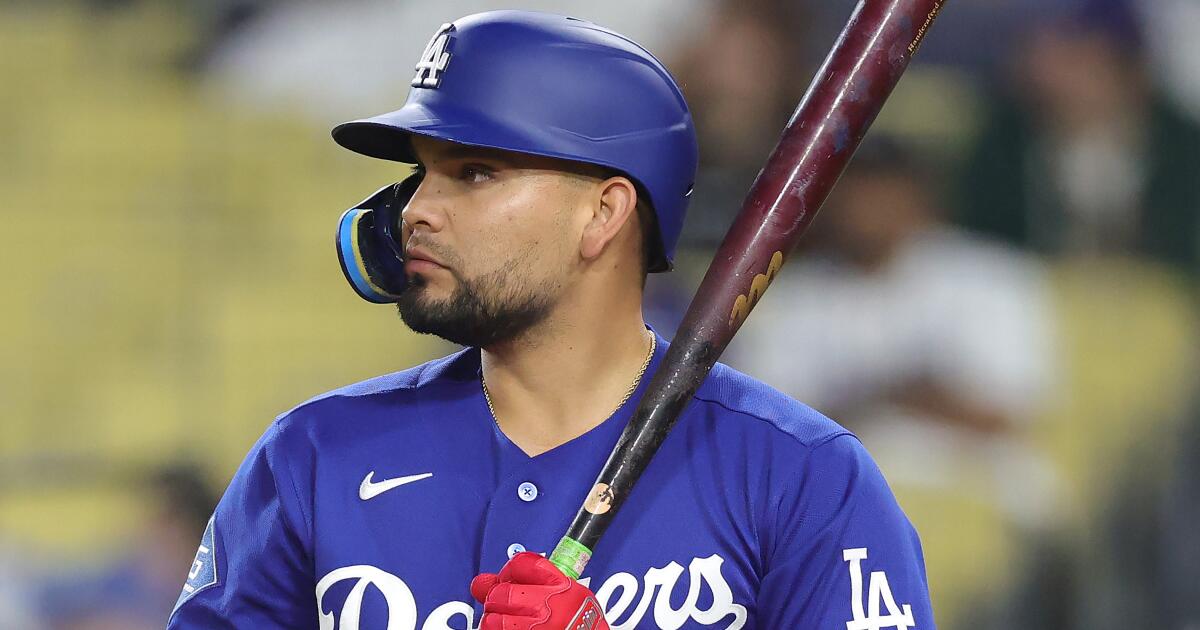 Sports8 minutes ago
Dodgers’ Eliezer Alfonzo praying his sister and stepmother will be found in Venezuela
-

 World18 minutes ago
Reform UK’s Farage failed to disclose funds from convicted criminal: Report
-
 News45 minutes ago
Paul Pelosi in hit-and-run in California, car left with major damage, authorities say
-

 Los Angeles, Ca2 hours ago
Firefighters battle Fourth of July blazes around Los Angeles
-

 Detroit, MI2 hours ago
Storm chances linger into the start of the week across Metro Detroit
-

 San Francisco, CA3 hours ago
Relay for America runs flag from San Francisco to D.C. in message of unity
-

 Dallas, TX3 hours ago
Cowboys newcomer already looks like a waste of money in Dallas
-

 Miami, FL3 hours ago
Police search for suspect after man is shot while on a boat near hotel in Fort Lauderdale on 4th of July

