Politics
Who Are the Three Republican Senators Who Voted Against Pete Hegseth?


Late Friday night, all but three Republican senators voted to confirm President Trump’s pick for defense secretary, Pete Hegseth, creating a 50-to-50 deadlock that required Vice President JD Vance to come break the tie.
But close followers of the Senate likely weren’t surprised to see who had defected.
The two most senior Republican women in the chamber, Senators Lisa Murkowski of Alaska and Susan Collins of Maine, are generally viewed as moderates and have long been considered pivotal swing votes. Both voted against their party’s attempt to repeal the Affordable Care Act in 2017, and they sided with Democrats in favor of confirming Justice Ketanji Brown Jackson to the Supreme Court.
And Senator Mitch McConnell, the former Republican leader, has in recent years become a more vocal critic of Mr. Trump and in return garnered personal attacks from the president and his supporters.
After initially refusing to denounce Mr. Trump’s false claims of election fraud, Mr. McConnell later condemned his repeated attempts to overturn the 2020 election and called the president “practically and morally responsible” for the Jan. 6, 2021, attack on the Capitol by his followers. Even though Mr. McConnell endorsed Mr. Trump’s campaign last year, the two men had not spoken to each other for almost four years, and the agreement was hammered out by their aides.
Notably, none of them directly cited the allegations of personal misconduct against Mr. Hegseth — which include sexual assault, physical and verbal “abuse,” excessive drinking and financial mismanagement, all of which Mr. Hegseth denied — as reasons for opposing his confirmation.
Instead, they focused their criticisms primarily on Mr. Hegseth’s lack of managerial experience and, for Ms. Murkowski and Ms. Collins, his disparaging comments about women serving in combat roles. Ms. Murkowski also said earlier last week that the misconduct allegations against him “do nothing to quiet my concerns,” and said his past infidelity on multiple occasions had demonstrated a “lack of judgment that is unbecoming of someone who would lead our armed forces.”
Mr. McConnell, who has been one of the Senate’s most vocal advocates of aiding allies abroad, stressed that in his view, Mr. Hegseth had not demonstrated a sufficient understanding of national security challenges to handle the job of defense secretary, which he called “the most consequential cabinet official in any administration.” He also took a shot at the claim that Mr. Hegseth, a combat veteran, would restore a “warrior culture” in the U.S. military.
“The restoration of ‘warrior culture’ will not come from trading one set of culture warriors for another,” Mr. McConnell said in a lengthy statement after the vote.
Mr. McConnell’s opposition to Mr. Hegseth could foreshadow additional “no” votes against other key national intelligence nominees, including Tulsi Gabbard, Mr. Trump’s pick for national intelligence director, and Kash Patel, his choice to lead the F.B.I.



Politics
Graham’s death ignites GOP scramble for Senate seat as Trump hints he already has a favorite

NEWYou can now listen to Fox News articles!
Sen. Lindsey Graham’s, R-S.C., sudden death from an undisclosed illness has triggered a two-pronged approach to replace him, and President Donald Trump will likely be a focal point in the process.
Graham’s passing overnight comes at a time when Republicans in the upper chamber need every vote they can get. The Senate GOP now holds a 52-seat majority, and with the timetable for Sen. Mitch McConnell’s, R-Ky., absence still unclear, that majority is now effectively 51 votes.
That will up the pressure, and drama, to find a replacement for the longtime South Carolina lawmaker.
LINDSEY GRAHAM, SOUTH CAROLINA SENATOR WHO ROSE FROM SMALL-TOWN ROOTS TO GOP POWER BROKER, DIES AT 71
Sen. Lindsey Graham speaks with reporters aboard Air Force One with President Donald Trump and Secretary of Commerce Howard Lutnick on the way back to Washington, D.C., on Jan. 4, 2026. (Jim Watson/AFP via Getty Images)
Trump, during an appearance on NBC’s “Meet the Press” on Sunday, said, “I have somebody that I think would be great.”
“But I don’t want to say it now because it’s just, it’s too soon with Lindsey,” Trump said. “I don’t wanna even talk about anybody, but I do have somebody that I think is really good.”
It’s a process guided by the Constitution and state law. The first step will require South Carolina Gov. Henry McMaster, a Republican, to appoint a replacement for Graham on a temporary basis.
McMaster, a close ally of Trump, can appoint a temporary replacement as soon as he wants. That pick will serve until the next special or general election.
MCCONNELL FACES FRESH CALLS TO COME CLEAN ABOUT HEALTH ISSUES
Fox News Digital did not immediately hear back from McMaster’s office on when he would make the announcement, or who he was considering for the seat.
Graham was already in-cycle running for a fifth term in the upper chamber, and he easily cruised to a primary victory early last month. That means that whoever McMaster taps would serve until the end of the year to finish off the remainder of Graham’s fourth term.
The second prong is finding his long-term successor.
The candidate filing period for that special election to win the GOP nomination opens July 21. The election is slated for Aug. 11, according to South Carolina law.
That race could see several familiar faces in South Carolina GOP politics jumping in, including McMaster himself, who is termed out as governor.
TRUMP’S ENDORSEMENT POWER FACES ANOTHER GOP TEST IN SOUTH CAROLINA AFTER ALAN WILSON ADVANCES
Rep. Nancy Mace, R-S.C., departs the U.S. Capitol after a series of House votes on funding for Homeland Security and a War Powers resolution on Iran on March 5, 2026, in Washington, D.C. (Andrew Harnik/Getty Images)
Trump heaped praise on McMaster, noting that he endorsed his first bid for the White House in 2016.
“Henry’s been a great governor, you know now he’s termed out, but he’s going to do the right thing,” Trump said. “I think Henry will be fantastic.”
There are six members of South Carolina’s GOP congressional delegation who could toss their hats into the mix. Rep. Nancy Mace, R-S.C., who recently lost a bid for the GOP gubernatorial nomination, is eyeing jumping into the special election.
A person familiar with Mace’s plans told Fox News Digital, “Congresswoman Mace is considering a bid to run.”
Then there’s Rep. Joe Wilson, R-S.C., the longest-serving Republican member of the Palmetto State’s delegation. He quickly snuffed speculation about whether he’d leap into the fray.
CLICK HERE TO DOWNLOAD THE FOX NEWS APP
“I was grateful to speak with President Trump today reminiscing about our mutual friend, Senator Lindsey Graham,” Wilson said on X. “I assured him my goal is to remain in the House to keep his two-vote majority for the American people!!!”
Then there’s the remaining four: South Carolina Republican Reps. Ralph Norman, who also lost out on scoring the GOP nomination for governor, Russell Fry, William Timmons and Sheri Biggs, none of whom, so far, have signaled that they would jump into the battle for Graham’s seat.
Meanwhile, South Carolina Lt. Gov. Pamela Evette could also be in the mix.
A source familiar told Fox News Digital that Evette is receiving “tons of encouragement from all across the state and from around the country” to serve as the temporary caretaker for Graham’s seat.
The source said that Evette is also being encouraged to run to seek a full six-year term in the Senate.
Evette, a top South Carolina ally of Trump’s and McMaster’s, was endorsed by both as she finished first in South Carolina’s Republican gubernatorial primary in this year’s race to succeed McMaster.
But after Trump also endorsed her GOP rival in the runoff, State Attorney General Alan Wilson, she was trounced by Wilson a few weeks ago in the runoff election
Fox News Digital did not immediately receive responses to requests for comment from possible contenders in the House.
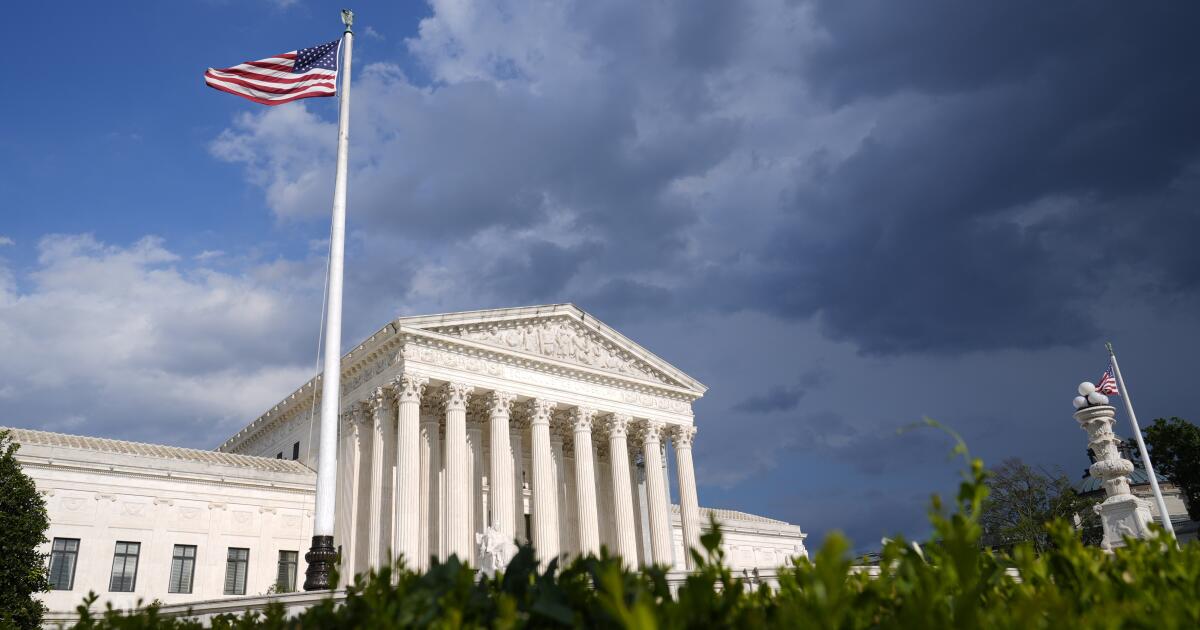
WASHINGTON — The Supreme Court’s conservative justices say they decide cases based on the words and original history of the Constitution — and not on their personal or political views.
Following the lead set by the late Justice Antonin Scalia, they say they see history and “originalism” as a guiding principle to prevent judges from changing the Constitution to adjust to new and changing times.
This text-and-history approach is said to contrast with an evolving or “living Constitution” favored by progressives and liberal activists.
But this year saw a flip of sorts on birthright citizenship.
The foremost conservatives agreed with President Trump that the surge of illegal immigration called for reconsidering the promise of citizenship at birth set out in the 14th Amendment of 1868.
“The number of illegal immigrants in this country exploded” in recent years, Justice Samuel A. Alito Jr. wrote in dissent. The rule of citizenship at birth provides “a powerful incentive to enter or remain in this country illegally,” he added.
“The Constitution is an enduring document,” wrote Justice Brett M. Kavanaugh, but its rules and meaning must adjust to “modern situations that were unknown or unanticipated by the Constitution’s Framers.”
In a concurring opinion, he said that “significant illegal immigration into the United States is a new circumstance that was largely unknown as of 1868.”
There were no federal immigration laws in the mid-19th century, but it was an era when a surge of Irish immigrants had settled on the East Coast and large numbers of Chinese immigrants came to California.
Under the law, their children were deemed to be citizens at birth.
Among the conservative originalists, only Justice Amy Coney Barrett signed the majority opinion that was written by Chief Justice John G. Roberts Jr. and joined by the three liberals.
The opening words of the 14th Amendment of 1868 say: “All persons born or naturalized in the United States and subject to the jurisdiction thereof are citizens of the United States.”
In 1898, the Supreme Court upheld the rule of citizenship at birth in the case of Wong Kim Ark, who was born in San Francisco to Chinese parents.
In an executive order, Trump proposed to end birthright citizenship for the newborns whose parents were in the country illegally or temporarily.
Writing for the court, the chief justice said the words of the 14th Amendment were clear and were clearly understood at the time. He dismissed the “dramatically revisionist view” that has been cited recently.
Kavanaugh voted with the majority to block Trump’s order from taking effect. He did so because Congress had adopted birthright citizenship in a 1952 law.
“Consistent with the 14th Amendment, Congress could … enact new legislation establishing exceptions to birthright citizenship,” he wrote.
Justices Clarence Thomas and Alito wrote long dissents arguing that the framers of the 14th Amendment did not or would not have favored birthright citizenship.
They pointed to recent scholarship by law professors that raised questions about the accepted understanding of the 14th Amendment and the citizenship rule.
Thomas said citizenship of the child should turn on whether the parents were “domiciled” in this country. Black people who were enslaved were undoubtedly domiciled here, but the same is not true of temporary visitors.
Justice Neil M. Gorsuch agreed in part with Thomas and questioned whether the newborns of temporary visitors should be deemed as citizens at birth.
Many court commentators were surprised by the close 5-4 divide on the constitutional issue.
“Given how clear the language was, I expected it to be 7 to 2,” said Melissa Murray, a New York University law professor. “I really gasped when I saw it was 5-4. This is not settled. We’re not done with this debate.”
Sarah Isgur, a podcaster and SCOTUSblog analyst, said that “originalism is getting more and more muddled. Either the history matters or it doesn’t.”
However, she agreed with Kavanaugh’s approach of leaving it to Congress to reconsider the issue.
Not all originalists are conservative.
Yale Law Professor Akhil Amar, a constitutional historian, argued that the history of birthright citizenship is clear and not subject to revisionist thinking. He said the Reconstruction Congress adopted this principle of citizenship at birth and stated their intent in clear words in the 14th Amendment.
“When a baby is born on American soil and an American flag flies above, that baby is a birthright citizen, as the Reconstruction Republicans across the land understood,” he wrote in February. This rule “has virtually nothing to do with the baby’s parents.”
Last week, he was mostly cheered by the court’s ruling.
“It’s a triumph, but it should have been 9-0,” Amar said on a review of the court term sponsored by SCOTUSblog. “Shame on the dissenters. They didn’t even the address the statute” and its wording.
But the majority led by Roberts “clearly affirmed the plain meaning of the constitutional text and its history. And that’s a win,” he said.
History has a recurring role at the Supreme Court.
Isgur noted the court will hear arguments in the fall on whether the 2nd Amendment of 1791 gives gun owners a right to have “assault weapons” like AR-15 rifles.
She said the court will decide then between history and changed circumstances.
At issue is whether these modern rapid-fire rifles fit within the history of the gun rights protected by the 2nd Amendment or instead represent a new and dangerous threat to public safety that was unknown in 1791.
Scalia’s opinion upholding gun rights in 2008 is often cited as a model of originalism, but it too emerged from a court divided 5-4.
The 2nd Amendment says, “A well-regulated Militia, being necessary to the security of a free state, the right of the people to keep and bears Arms, shall not be infringed.”
For decades, the Supreme Court had all but ignored the 2nd Amendment, viewing it as a somewhat outdated provision involving militias, akin to the 3rd Amendment. It forbids having soldiers “quartered in any house … in time of peace.”
Four liberal dissenters in 2008 said the court should stand by that understanding of history.
Justice John Paul Stevens said the 2nd Amendment was added to the Constitution to protect state militias from federal interference. Moreover, the reference to “bear arms” suggests it was about militias, he said.
But Scalia’s opinion stands as the landmark precedent, and he said the dissenters had the history all wrong.
The right to have guns for self-defense arose in England and came to the American colonies. “By the time of the founding, the right to have arms had become fundamental for English subjects,” he wrote.
The 2nd Amendment did not establish a new right, he said. Rather, it “codified a pre-existing right [of] having and using arms for self-preservation and [defense],” he wrote.
“There seems to us no doubt, on the basis of both text and history,” Scalia wrote, “that the 2nd Amendment conferred an individual right to keep and bear arms.”

NEWYou can now listen to Fox News articles!
Sen. Lindsey Graham, R-S.C., died Saturday evening following a “brief and sudden” illness, according to a statement from his office.
“On the evening of Saturday, July 11, U.S. Senator Lindsey Graham passed away from a brief and sudden illness,” his office said.
“Senator Graham’s family appreciates prayers at this time and asks for privacy during this incredibly difficult period,” it continued.
CLICK HERE TO DOWNLOAD THE FOX NEWS APP
Sen. Lindsey Graham, R-S.C., speaks with reporters about aid to Ukraine, on Capitol Hill, Wednesday, March 10, 2022, in Washington. (AP Photo/Alex Brandon)
This is a breaking story; check back for updates.
-

 Los Angeles, Ca12 minutes ago
Rare, corpse flower double bloom underway at Huntington Library
-

 Detroit, MI36 minutes ago
Around 400 pairs of shoes intended for charity giveaway stolen from Detroit nonprofit, organization says
-

 San Francisco, CA48 minutes ago
How to watch San Francisco Giants vs. Colorado Rockies
-

 Dallas, TX54 minutes ago
3 unanswered questions before training camp: Dallas Cowboys edition
-

 Miami, FL1 hour ago
“Love & Hip Hop: Atlanta” star Tommie Lee among 6 arrested during World Cup match in Miami, sheriff says
-

 Boston, MA1 hour ago
‘More than just a cyclist’: Hundreds mourn Boston transit planner killed while biking – The Boston Globe
-

 Denver, CO1 hour ago
Nuggets sign former Denver West basketball player Alpha Diallo out of EuroLeague
-

 Seattle, WA1 hour ago
Portland aims to top Seattle’s 405 e-bikes with 2-mile Guinness record ride and party

