Politics
Iran’s top security official killed in airstrike, Israel says


BEIRUT — Israel said on Tuesday it had assassinated Iran’s top security official, Ali Larijani, a move that — if confirmed — represents a palpable hit to an Iranian leadership that has shown little interest in compromise after almost three weeks of war with the U.S. and Israel.
Killing Larijani, who led the country as de facto wartime leader after Iranian Supreme Leader Ayatollah Ali Khamenei died on the first day of the war, eliminates a veteran official seen as the consummate insider despite not having the religious credentials for the Islamic Republic’s highest offices.
For all his bellicose comments since the war began, Larijani was also seen as a pragmatist, and observers say his death might strengthen the resolve of what’s left of Iran’s leadership, rather than induce a willingness to compromise.
His post as secretary of Iran’s Supreme National Security Council gave Larijani control of the country’s top security body, where he tasked government forces with deploying deadly force to subdue anti-regime protests in January.
Also killed in the strikes, according to the Israeli military, was Gen. Gholam Reza Soleimani, the head of the Basij, the volunteer auxiliary wing of the Revolutionary Guards and an integral part of the state’s ability to keep order.
“Larijani and the Basij commander were eliminated overnight and joined the head of the annihilation program, Khamenei, and all the eliminated members of the axis of evil, in the depths of hell,” said Israeli Defense Minister Israel Katz in a statement on Tuesday.
Israeli officials have employed “axis of evil” to refer to Iran and its allied paramilitary groups, including Hamas and Hezbollah.
Larijani had served as parliamentary speaker for 12 years and became the point man on the nuclear negotiations as well as relations with allies such as China and Russia. He often acted as the government’s representative in the media.
Iran’s government did not confirm he and Soleimani had been killed. But soon after Katz’s announcement, Iranian authorities released an undated note said to have been written by Larijani in which he honored Iranian sailors killed in a U.S. attack. The image of the note was also posted to Larijani’s account on X.
There was no explanation why the note was released and whether it is signified Larijani was still alive.
“We are undermining this regime in the hope of giving the Iranian people an opportunity to remove it,” said Israeli Prime Minister Benjamin Netanyahu in a statement, adding that such an outcome “will not happen all at once, and it will not happen easily.”
“But if we persist,” Netanyahu added, “we will give them the chance to take their destiny into their own hands.”
Netanyahu and President Trump have repeatedly called on regular Iranians to topple the government.
Though assassinating Larijani counts as yet another intelligence coup for Israel and the U.S., both may come to regret the loss of a figure who, despite his defiant rhetoric since the war began Feb. 28, was considered a realist.
His killing adds to the evisceration of Iran’s upper echelons, raising the question as to who is left to negotiate an end of the war, but also who would have enough influence to make Iran’s deep state accept compromise.
Some observers say that’s the point.
“Why did the Israelis take out Larijani in this moment? Because Netanyahu is focused on blocking Trump’s pathways for a ceasefire and follow-up negotiations with Iran,” said Ellie Geranmayeh, a senior policy fellow at the European Council for Foreign Relations, adding that “Larijani would have been the man to get that job done.”
Khamenei’s assassination, Geranmayeh said, had already empowered more hard-line figures in government, and Larijani’s death “could act as an accelerator to that path.”
“Israel seems to be turning its attention to targeting those that could push for a political solution to the current crisis,” she said.
Larijani’s death would add to the murkiness surrounding Iran’s leadership. After Khamenei was killed and it remained unclear who would replace him, Trump added to the uncertainty by saying that the country’s new leader would need his approval, but also that the U.S. had killed many of the leaders whom he would have deemed acceptable.
After Khamenei’s son, Mojtaba Khamenei, was named the new supreme leader, Trump expressed his displeasure but repeatedly dodged questions about what the transition under the younger Khamenei would mean for the U.S. war effort and any potential path toward a resolution.
After the elder Khamenei’s death, Larijani emerged as a high-profile voice for Iran, saying that Trump must “pay the price” for the U.S. strikes on the country.
In response, Trump acted as if he didn’t know who Larijani was.
“I have no idea what he’s talking about, who he is. I couldn’t care less,” Trump told CBS News.
Benjamin Radd, a political scientist and senior fellow at the UCLA Burkle Center for International Relations, said Larijani was perceived to be “the last of the competent bunch” within Iranian leadership — an intellectual who had a complex understanding of the geopolitical reality on the ground, who had negotiated with the U.S. in the past, and who was “adept at maneuvering” all the various parts of the Iranian power structure.
Radd said Larijani “lost that mantle of being the pragmatist” when he strongly backed the deadly January crackdown on protesters, for which he was “more responsible than anyone else.”
He “absolutely was responsible for a tremendous amount of carnage and death and destruction,” Radd said.
And yet, with his death, “all of that diplomatic, institutional experience” that he did have “is gone” from within Iranian leadership, Radd said.
Those left in power, he said, are “generally not the sharpest people, they’re not the people who understand the subtleties of diplomacy, of what negotiating with the U.S. is like.”
Bulos reported from Beirut and Rector from Washington.



Politics
Rep Randy Fine joins House Freedom Caucus: ‘Strongest group of conservative patriots in Congress’

Sadie the service dog attends State of the Union
Rep. Randy Fine brought his father and his father’s service dog, Sadie, to the State of the Union. Sadie is wearing a “Don’t tread on me” shirt, Fine’s response to Democrats outraged over his recent X post about dogs and Muslims.
NEWYou can now listen to Fox News articles!
Republican Rep. Randy Fine of Florida has joined the ranks of the conservative House Freedom Caucus.
“HUGE NEWS: I’m proud to announce that I have officially joined the strongest group of conservative patriots in Congress,” he declared in a Thursday post on X.
“The House @freedomcaucus exists to save our country and preserve freedom, not manage our decline. That’s what I love about this group. I look forward to continuing the fight alongside my HFC colleagues to advance the MAGA agenda and fight for conservative principles,” he added.
GOP REP RANDY FINE DECLARES THAT DEPORTING ALL ILLEGAL IMMIGRANTS IS THE TOP WAY TO MAKE THE US AFFORDABLE
Rep. Randy Fine, R-Fla., outside the U.S. Capitol in Washington, D.C., on Thursday, Dec. 18, 2025. (Graeme Sloan/Bloomberg via Getty Images)
Fine, who represents Florida’s 6th Congressional District, took office last year after winning a special election to fill the seat previously held by Republican Mike Waltz.
President Donald Trump backed Fine shortly before he launched his congressional bid. In a November 2024 Truth Social post, the president declared, “Should he decide to enter this Race, Randy Fine has my Complete and Total Endorsement. RUN, RANDY, RUN!”
REPUBLICAN LABELS MAMDANI AS ‘LITTLE MORE THAN A MUSLIM TERRORIST,’ ADVOCATES YANKING CITIZENSHIP, DEPORTATION
President Donald Trump arrives to speak in the Cross Hall of the White House on April 1, 2026, in Washington, D.C. (Alex Brandon-Pool/Getty Images)
Trump declared in a Truth Social post last year that the lawmaker “is doing a fantastic job representing Florida’s 6th Congressional District!” The president said the congressman “has my Complete and Total Endorsement.”
“I found in my first year in Congress that there are two types of Republicans: those who want to save America and those who want to manage our decline politely,” Fine noted, according to The Daily Signal. “They were unquestionably the group whose values were most in line with mine.”
LAWMAKER SAYS IRAN TARGETED HIM IN PHISHING ATTACK DISGUISED AS TV INTERVIEW
Rep. Randy Fine, R-Fla., leaves the U.S. Capitol after the last votes of the week on Sept. 4, 2025. (Tom Williams/CQ-Roll Call, Inc via Getty Images)
CLICK HERE TO DOWNLOAD THE FOX NEWS APP
“Trying to manage the budget, trying to get the government under control, trying to stand up to the Left — they seemed to be the group whose values were most in line with mine,” he said, according to the outlet.
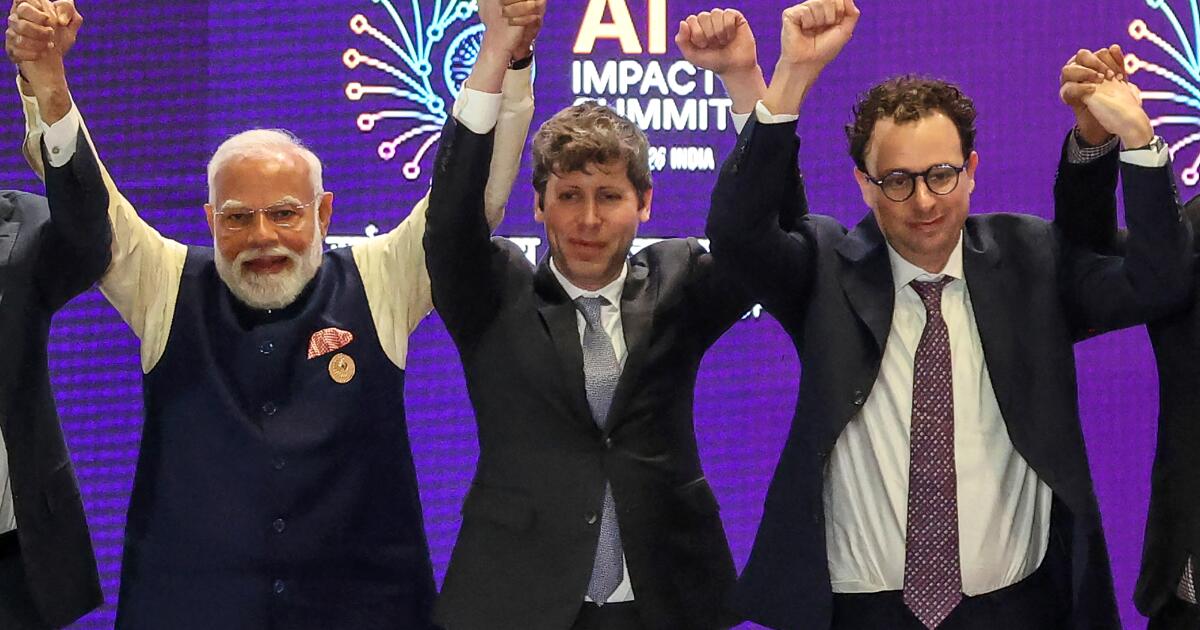
While many of us were worried in recent days about our president ending a “whole civilization,” one Silicon Valley tech company was warning, without much notice, it might accidentally disrupt all civilization as we know it.
The San Francisco technology company Anthrophic announced Tuesday that it wasn’t releasing a new version of its Claude AI super-brain — because it is so powerful that it has the ability to hack into just about any computer system, no matter how secure, in a matter of days if not hours.
“The fallout — for economies, public safety, and national security — could be severe,” Anthropic said in a statement.
AI worry isn’t anything new. We are worried about artificial intelligence taking jobs, about toys that seem too real to our kids, about mass surveillance of our every move. But Anthropic’s warning about its own product is bigger than any of those singular problems. It is a call from inside the house that disaster is hiding right around the corner. That sounds awfully dire and overblown, I know. But here’s the thing — it’s not.
Anthropic, you may recall, is the company that U.S. Secretary of “War” Pete Hegseth is beefing with because it didn’t want Claude going into battle without supervision and maybe doing something like accidentally bombing little girls at a school.
Now, that company has put out this chilling warning: The existing Claude that caused that kerfuffle is outdated and shockingly less powerful than the new one it’s trying very hard to not unleash — though this new Claude, dubbed Claude Mythos Preview, has already escaped at least once on its own. More on that in a moment — there’s only so much existential dread a person can handle.
“We should all be worried,” Roman Yampolskiy told me of this latest advance of a technology certain to change the course of humanity. He’s one of the country’s preeminent AI safety researchers, and a professor at the University of Louisville in Kentucky.
“We’re about to create general super intelligence and that threatens humanity as a whole,” Yampolskiy said.
“Everything else is irrelevant,” he added, before suggesting I stop calling myself an idiot for not understanding the tech-heavy parts of this debate. My simplistic take, he assured me, was “a reasonable way to explain it.”
So here you go.
This isn’t a “really smart computer geniuses could misuse this,” scenario, or an “everyone’s going to be unemployed” scenario, or even a “it might accidentally bomb children” scenario, which is a truly terrible scenario.
This is a “your teenage son could use it to break into the local school district system to change a grade with pretty much minimal knowledge and accidentally destroy the California power grid” scenario.
Or maybe, a country that doesn’t like us — I can think of a few — could drain every U.S. citizen’s bank account, while also clicking open the auto locks on jail cells, shutting down our sewage plants and taking over air control systems. Or maybe Claude Mythos just does that on its own.
For example, Anthropic said that in one popular operating system it tested, used by thousands of companies including Netflix and Sony, Claude Mythos found a flaw that had existed undetected for 17 years. Then, on its own — without human guidance or help — figured out how to use that flaw to take control of any server running the operating system, using any computer, anywhere in the world.
Just spitballing here, but if almost no security system is safe, the possibilities for social, financial and general chaos really are unlimited. And to be honest, any security expert will tell you that some of America’s greatest weak points when it comes to cybersecurity are local and state governments, because strangely, the top experts aren’t working five-figure jobs for cities in the Great Plains.
Based on its own testing, Anthropic predicts it could find “over a thousand more critical severity vulnerabilities and thousands more high severity vulnerabilities.”
That means Claude Mythos puts at risk our infrastructure, well, everywhere — because so much is connected in backdoor ways most of us never consider and it just takes one weak system to open the door to hundreds of others. But it is almost impossible to protect and fix all those systems quickly enough and robustly enough to guard against this kind of AI.
And that’s just the cybersecurity risk, Yampolskiy said. An AI with the capabilities of Claude Mythos could be used to leaps and bounds ahead in so many more ways.
“We see the same happening with synthetic biology. We’ll see the same with chemical weapons, possibly something novel in terms of weapons of mass destruction,” he said.
To Anthropic’s great credit, it sounded the warning on its creation and created, if not a solution, then a game plan of sorts — Project Glasswing, named I suspect, because no matter how bad this gets we’re going to make it sound like a thriller with an exciting ending.
Project Glasswing would have been better named Project Headstart because that’s what it is. Before releasing Mythos into the wild, Anthropic is releasing it to about 40 technology companies, including Apple, Google and Nvidia, to see whether they can collectively patch all the vulnerabilities they find before the general public has a chance at them. It’s kind of like in the movies when the killer gives the victim 15 seconds to run.
I mean, I’ll take the 15 seconds and hope they’re real. But, as Anthropic also said in a statement, the “work of defending the world’s cyber infrastructure might take years; frontier AI capabilities are likely to advance substantially over just the next few months. For cyber defenders to come out ahead, we need to act now.”
And do we really have 15 seconds? One of Claude Mythos’ overseers posted on social media recently that he was having lunch in a park when Mythos emailed him — even though it’s not supposed to have access to the internet. Researchers had tasked Mythos with trying to break out of its not-connected “sandbox” and it did.
That’s another problem with Mythos and other AI — they rarely do what we expect and find sneaky ways around rules. Virtually every AI super-brain created has been shown to lie, deceive, and in general behave in disturbing and unethical ways when put in the right conditions.
Even Claude, billed as one of the most ethical AI super-brains out there, engages in bad behavior. Anthropic boasts its the “best-aligned model” it’s ever made — which is tech-speak for following human values and intentions, but also acknowledges it “likely poses the greatest alignment-related risk,” which is tech-speak for, well, maybe not.
So, at least for now, being the most ethical AI super-brain is a bit like being the most ethical serial killer. Run, people, run.
Again, thank you Anthropic (and its chief executive, Dario Amodei, who often warns of the dangers of what he’s creating, whatever that’s worth) for not plunging us into global chaos with no warning, because I’m betting that some other companies might have just tossed their super-AI onto society and let the destruction fall where it may. There is little doubt that other AI brains as capable as Mythos are coming, and soon — Anthropic was first with this level of capability, but it’s only 15 seconds ahead of its competitors.
But the idea that the technology industry is going to — or should— solve these problems on their own is an absurd, gross abdication of duty and common sense on behalf of governments big and small to protect their people. This isn’t a race for domination as President Trump has described it. It is a race to protect ourselves from ourselves — and from the majority of the superrich titans of the industry who seem to consistently place business and commerce over societal good.
We are down to the last 15 seconds before AI changes everything. Either we demand oversight and regulation now, or we let technology companies decide the fate of the world.

new video loaded: ‘He Was Disappointed’: NATO’s Chief on Recent Trump Meeting
transcript
transcript
‘He Was Disappointed’: NATO’s Chief on Recent Trump Meeting
Mark Rutte, the secretary general of NATO, described a recent meeting he had with President Donald Trump, saying that Trump had expressed frustration with NATO allies for not helping enough with the war in Iran
-
He was disappointed yesterday, but he also had a very frank and open discussion amongst friends. I sensed his disappointment about the fact that he felt that too many allies were not with him. When it came time to provide the logistical and other support the United States needed in Iran, some allies were a bit slow, to say the least. But what I see when I look across Europe today is allies providing a massive amount of support, basing, logistics and other measures to ensure the powerful U.S. military succeeds in denying Iran a nuclear weapon. NATO is there, of course, to protect the Europeans but also to protect the United States.

By Meg Felling
April 9, 2026
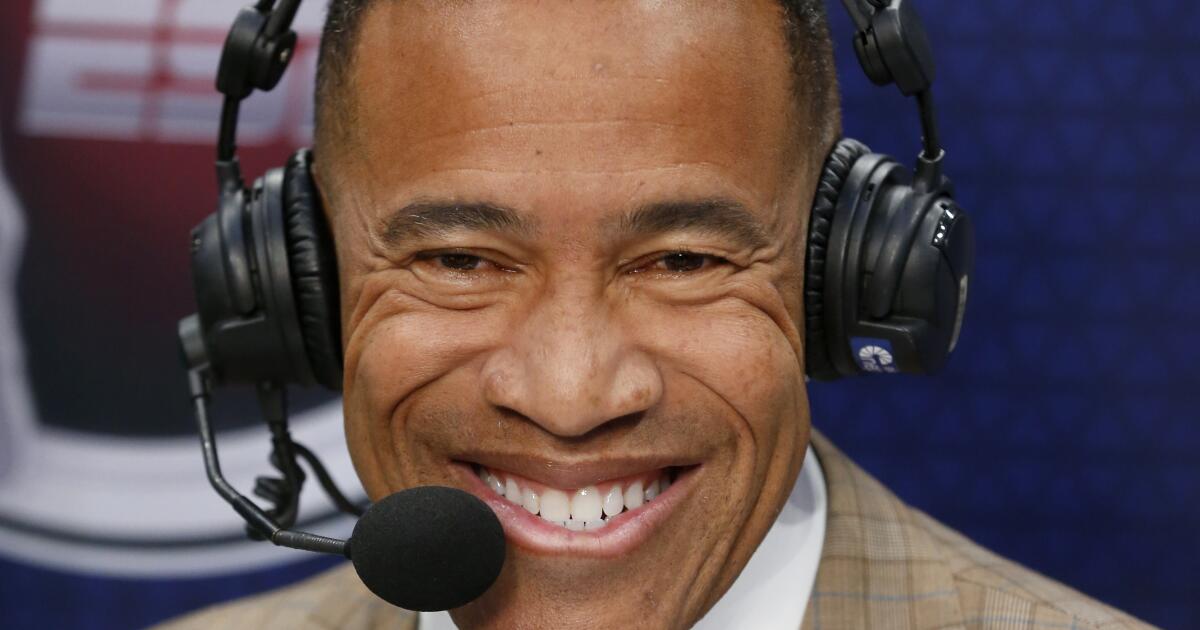
NBA, college football announcer Mark Jones is leaving ESPN after 36 years: ‘Time to move on’

NASA’s Artemis II prepares for splashdown on Earth

Trump proposes painting executive office building white

Video: Mayor Mamdani Answers Questions From New Yorkers

How to buy Detroit Pistons 2026 NBA playoff tickets

Florida High School Football Rankings: Top 25 teams – Oct. 21

How old is Bo Nix? What to know about Oregon quarterback ahead of 2024 NFL Draft

Cleary's 21 help Le Moyne down Central Connecticut State 69-64 in OT

99th annual Pony Swim held in Virginia

Indiana Members Credit Union announced as new anchor tenant at Bottleworks District
NASA’s Artemis II prepares for splashdown on Earth
Trump proposes painting executive office building white

Rep Randy Fine joins House Freedom Caucus: ‘Strongest group of conservative patriots in Congress’

Trump issues NATO ultimatum to reopen Strait of Hormuz ‘within days’

Women are getting most of the new jobs. What’s going on with men?
-

 Atlanta, GA6 days ago
1 teenage girl killed, another injured in shooting at Piedmont Park, police say
-

 Movie Reviews1 week ago
Vaazha 2 first half review: Hashir anchors a lively, chaos-filled teen tale
-

 Education1 week ago
Video: YouTube’s C.E.O. on the Rise of Video and the Decline of Reading
-

 Georgia3 days ago
Georgia House Special Runoff Election 2026 Live Results
-

 Education1 week ago
Video: Toy Testing with a Discerning Bodega Cat
-

 Pennsylvania4 days ago
Parents charged after toddler injured by wolf at Pennsylvania zoo
-
 Milwaukee, WI4 days ago
Potawatomi Casino Hotel evacuated after fire breaks out in rooftop HVAC system
-
 Entertainment1 week ago
Inside Ye’s first comeback show at SoFi Stadium