Business
How Iran’s Information War Machine Operates Online


In late March, Iran circulated a shaky video supposedly showing an American F/A-18 under attack. Iranian officials claimed they had destroyed the jet, though the Pentagon denied that. The video quickly earned millions of views online, demonstrating how Iran has exploited the global media ecosystem to propagate an image of military prowess.
The New York Times reconstructed how Iran was able to use overt and covert global networks alongside unwitting participants to spread its message through social media, state-affiliated news organizations and American influencers.
Here is how the claim went from a single post to a global audience of millions in 69 minutes.
1:04 p.m.
An obscure account on X, linked to Iran, posted the video first, in English, at 1:04 Eastern, followed a minute later by a post on Telegram by Iran’s Islamic Revolutionary Guards Corps. The posts received little attention at first, according to an analysis based on data from Alethea, Graphika and Cyabra, three companies monitoring online activity during the war.
1:04 p.m.
Almost simultaneously, official accounts of Iranian embassies and consulates repeated the claim on X, giving the narrative an imprimatur of legitimacy.
1:06 p.m.
An Iranian state television network then shared the video on X. Within a minute, RT, Russia’s international network, reposted the video with its own logo. The timing suggested coordinated coverage of the war from Iran and Russia.
1:14 p.m.
One of the most popular posts about the attack, from a pro-Russian influencer account known as Megatron, amassed nearly two million views, according to Graphika. At that point, there was no confirmation of an attack from any other sources.
1:21 p.m.
Sixteen minutes after its first post on Telegram, the Revolutionary Guards posted an update, claiming that the jet had been “precisely hit” and “fell into the Indian Ocean,” a detail that may have been intended to explain why there was no evidence of wreckage on the ground.
1:25 p.m.
The conversation surrounding these posts included suspected bot accounts mingled with authentic profiles, according to an analysis by Cyabra, suggesting some of the engagement was manufactured. Replies to RT’s post, for instance, often featured “short, affirmative comments” with celebratory emojis to show support for Iran, Cyabra’s analysis said.
1:32 p.m.
As the video spread, prominent influencers began posting about it, giving a boost to Iran’s narrative whether they intended to or not. Sulaiman Ahmed, an anti-Israeli activist with more than 800,000 followers on X, shared RT’s video about 10 minutes later.
1:33 p.m.
Ed Krassenstein, an American influencer, shared the claim to his more than one million followers on X. While his post made it clear that the attack was not confirmed by any other sources, influence campaigns benefit from the attention of prominent voices to amplify their narratives to broader audiences.
“I am always as careful as I can be to note where the information is coming from if it’s from a foreign government,” Mr. Krassenstein said in response to questions.
The number of posts mentioning the F-18 or similar terms began to surge, generating more than 35 million views on X alone that day, according to data from Tweet Binder by Audiense. Some users doubted the claim, but many pro-Iranian accounts celebrated the attack as a military triumph.
2:00 p.m.
Barely an hour had gone by, and the narrative had reached millions of views on social media, amplified by authentic and fake accounts based in dozens of countries, from Afghanistan to Yemen. The video appeared not only on X and Telegram but also on TikTok, Facebook and Instagram.
2:01 p.m.
Mario Nawfal, an influencer who has spread right-wing talking points and misinformation in the past, also shared RT’s post and video to his more than 3.2 million followers, noting the historical significance of an attack — “if true.”
“Our approach is to present claims transparently while clearly signaling their verification status, allowing our audience to assess credibility in real time,” Mr. Nawfal wrote in a statement.
2:05 p.m.
Prominent news organizations around the world began reporting on the claim. They included Pravda, Al Jazeera, the India Economic Times and official state media in China. Many repeated Iran’s claim that it had shot down the jet.
2:13 p.m.
An hour and nine minutes after the claim, the United States Central Command posted a denial on X, saying no American aircraft had been shot down. Its post created a new flurry of debate. Some users wrestled with the language, asking whether the plane had in fact been hit but not “shot down.” It declined to comment further.
Despite the statement from Central Command, Iranian, Chinese and Russian state broadcasters continued to feature the video over the next 24 hours, and to post about it across social media. An anchor on Russia 24 reported on “the destruction of yet another U.S. Air Force aircraft,” citing Iranian sources along with the denial from Central Command.
Since the video appeared, no evidence has emerged that Iran shot down an American F/A-18 jet. (This month, Iran successfully downed an F-15E Strike Eagle and an A-10 Warthog.) Still, millions consumed the narrative, spread by witting and unwitting actors.
“By the time an official denial lands,” the monitoring company Alethea wrote in an analysis, “audiences in multiple countries have already processed the story as confirmed.”



Business
Many indie festival films struggle to get distribution. Alamo Drafthouse is trying to change that
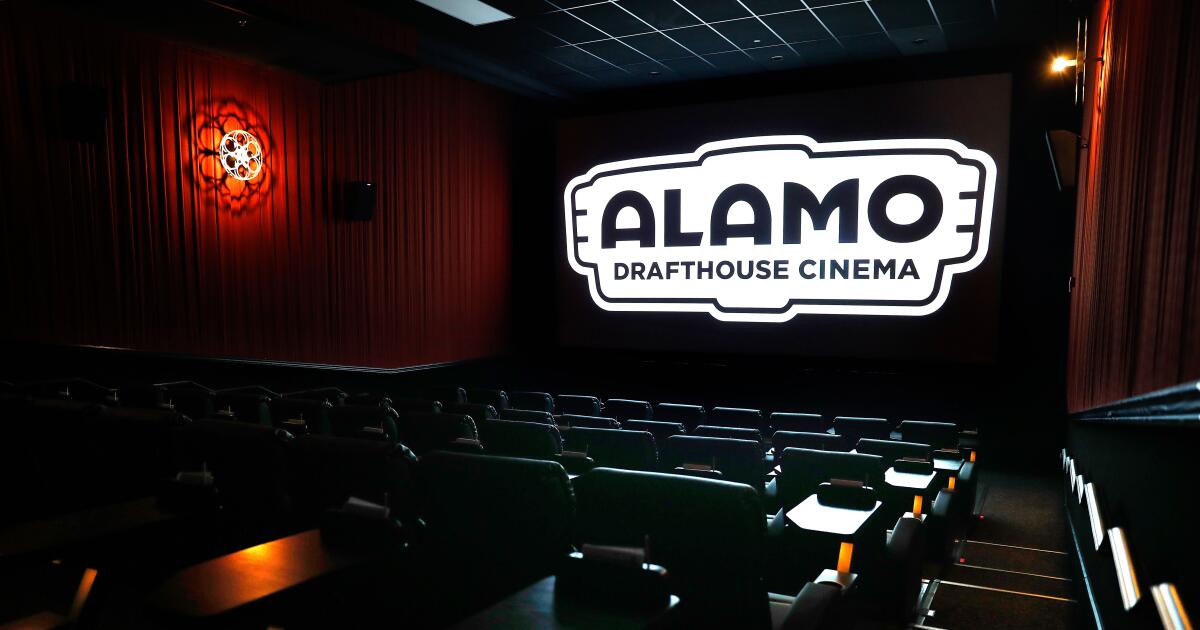
Dine-in movie theater chain Alamo Drafthouse Cinema is launching a new initiative to show unreleased independent films that had successful festival runs, a move that comes as specialty films have struggled to gain distribution.
The Alamo Exclusives program, announced Wednesday, will give limited theatrical runs to films that showed at festivals including Sundance, the Toronto International Film Festival, Tribeca Festival and South by Southwest festival, as well as Alamo’s own Fantastic Fest.
The idea is to help showcase films that received critical acclaim, but did not secure distribution or acquisition deals. The chain will not acquire these films, but instead will enter into agreements with filmmakers to exhibit their films on Alamo Drafthouse screens. By showing these films to audiences on the big screen, these films could get the momentum they need for further opportunities.
The program’s first film will be the documentary “Butthole Surfers: The Hole Truth and Nothing Butt,” which debuted last year at South by Southwest and chronicles the history of the punk rock band.
The film will be shown in Alamo Drafthouse theaters for a limited time later this summer.
The Austin-based chain, which is owned by Sony Pictures, has a long history of curating indie films for its audiences, giving Alamo Drafthouse confidence that its viewers want to see these kinds of movies, company chief executive Michael Kustermann said in a statement.
“Time and again, they’ve shown they’ll come out to support bold, original films when given the opportunity,” he said. The new Alamo Exclusives “gives us another way to champion filmmaker-driven films that deserve to be discovered and connect them with the wider Alamo Drafthouse audience.”
The initiative comes at a difficult time for indie films. Since the pandemic upended the movie business, traditional studios and distributors have had less appetite for risk, including betting on smaller indie films out of festivals.
And as the 2023 dual writers’ and actors’ strikes thinned out theatrical lineups, that aversion to uncertainty became a push for reliable and profitable hits.
“Too many incredible films premiere at festivals and then never receive the theatrical life they deserve,” Lisa Dreyer, director of Fantastic Fest and film innovation at Alamo, said in a statement. “We are actively searching for films across all genres, from horror to comedy, to everything in-between, to champion in this new, exciting way.”
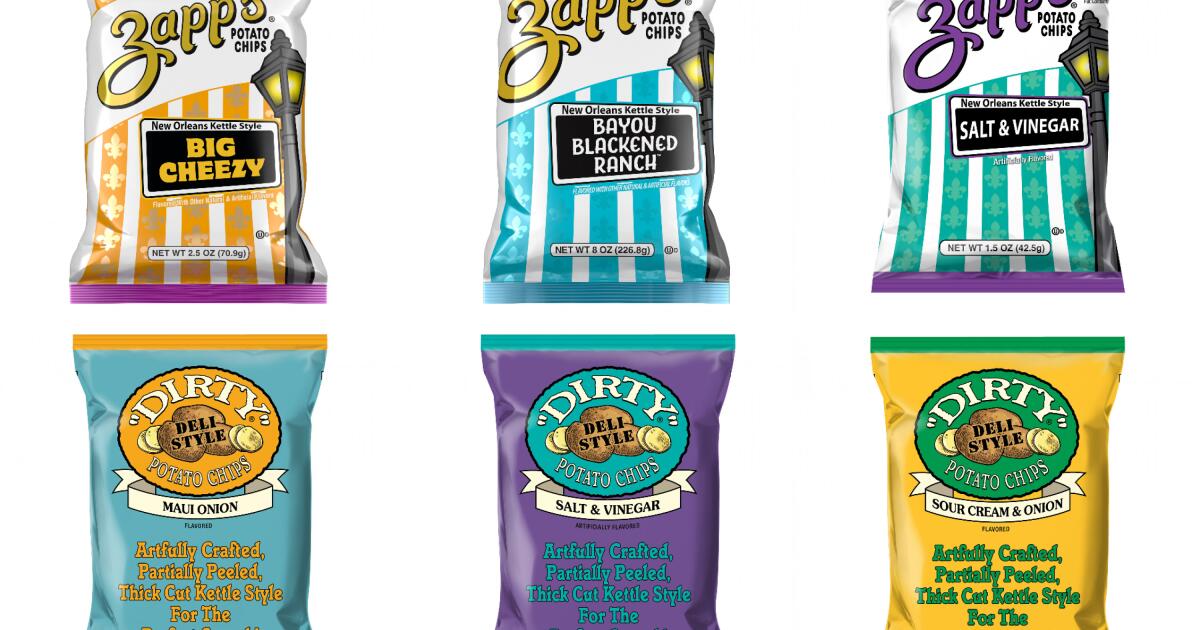
The recall of a popular chip brand over salmonella concerns was recently upgraded to the U.S. Food and Drug Administration’s highest level, just ahead of the Fourth of July holiday and countless backyard barbecues.
On June 24, the FDA designated the recall of several varieties of Zapp’s and Dirty brand potato chips as Class I, meaning it’s “a situation in which there is a reasonable probability that the use of or exposure to a violative product will cause serious adverse health consequences or death.”
FDA has classified the following items as Class I:
Zapp’s
- 1.5-ounce Zapp’s Bayou Blackened Ranch Kettle Chips
- 2.5- and 8-ounce Zapp’s Bayou Blackened Ranch Potato Chips
- 1.5- and 8-ounce Zapp’s Big Cheezy Potato Chips
Dirty
- 1.5- and 2-ounce Dirty Brand Salt and Vinegar Potato Chips
- 2-ounce Dirty Maui Onion Chips
- 2-ounce Dirty Sour Cream and Onion Potato Chips
The chips are produced by Utz Quality Foods, LLC, which on April 28 issued a recall after learning “that a seasoning containing dry milk powder, sourced from California Dairies, Inc. and supplied by a third-party supplier, may contain the presence of Salmonella.”
Salmonella can lead to sometimes deadly infections in elderly people, young children and those with weakened immune systems, according to the FDA.
More than 680,000 bags are included in the recall.
Anyone who has these products should not eat them and should discard them immediately.
What to look for
Salmonella is a foodborne illness that can be fatal to young children, pregnant women, older adults and people with weakened immune systems, according to the National Institutes of Health.
Symptoms may develop 12 to 72 hours after infection, according to the FDA.
The FDA said that people with strong immune systems infected with salmonella may experience fever, diarrhea (which may be bloody), nausea, vomiting and abdominal pain. The illness can last four to seven days.
In rare cases, the infection may produce more severe illnesses such as arterial infections, endocarditis and arthritis, the agency added.
What to do if infected
If you contract salmonella, the Centers for Disease Control and Prevention recommends drinking plenty of fluids to prevent dehydration.
The CDC advises consulting a doctor before taking antidiarrheal medicine or antibiotics. If severe symptoms continue after two days, seek medical help, the agency says.
Because those with diarrhea can spread salmonella to others, it’s also recommended to avoid sharing food or preparing meals for others, sexual contact and swimming in public pools, and to stay home while sick.
Times staff writer Jasmine Mendez contributed to this report.
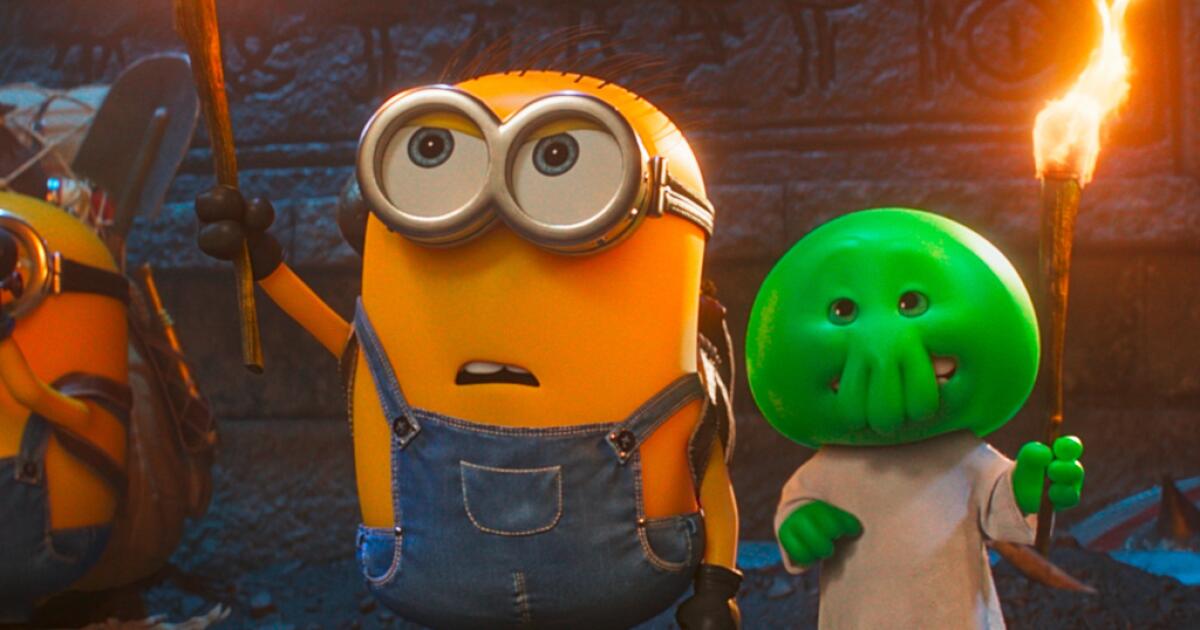
The Minions took over theaters this weekend as Universal Pictures and Illumination’s “Minions & Monsters” won the top spot at the box office, though with a lower-than-expected domestic haul.
The animated movie, which follows the Minions’ takeover of Hollywood, took in $61.4 million in the U.S. and Canada for the five-day Fourth of July holiday weekend, according to studio estimates. That haul was lower than analysts’ expectations for a domestic opening of about $68 million. The movie’s three-day total was $36.4 million.
But the Minions performed well internationally, bringing in about $85 million. In total, “Minions & Monsters” made $159.9 million worldwide on a production budget of about $85 million.
The film is the latest in the powerhouse franchise that began with “Despicable Me” in 2010. Across its previous six installments, the “Despicable Me” and “Minions” franchise has made more than $5.6 billion at the global box office. The last movie, 2022’s “Minions: The Rise of Gru,” made more than $940 million worldwide.
“Minions & Monsters” marks the lowest opening for the franchise. Part of the issue could be timing — the box office can be negatively affected when the Fourth of July lands on a Saturday, said Paul Dergarabedian, head of marketplace trends at Rentrak.
Walt Disney Co. and Pixar’s “Toy Story 5” came in second at the box office this weekend with a domestic three-day gross of $31 million. Angel Studios’ biopic “Young Washington” ($20.8 million), Warner Bros. and DC Studios’ “Supergirl” ($9.6 million) and Universal’s “Disclosure Day” ($6 million) rounded out the top five, according to Rentrak.
The haul for “Minions & Monsters,” coupled with the strong holdover performance of “Toy Story 5,” proved again that family films are making a dent in the summer box office.
“Toy Story 5” has now brought in a total of $764.3 million worldwide, and last month, Universal, Illumination and Nintendo’s “The Super Mario Galaxy Movie” crossed $1 billion at the global box office, becoming the first film of any kind to do so this year.
The rest of the summer theatrical lineup is also expected to bring in audiences and push domestic box office totals closer to pre-pandemic figures. Next week, Disney will release its live-action “Moana,” followed by Christopher Nolan’s “The Odyssey” and Sony Pictures’ “Spider-Man: Brand New Day.”
To date, the summer box office is now about $2.3 billion, a nearly 12% increase compared with the same period a year ago, according to Rentrak data. Compared with pre-pandemic 2019’s numbers, however, it is still down about 7%.
-

 Washington, D.C33 seconds ago
The hottest T-shirts in DC are from Metro – WTOP News
-

 Cleveland, OH6 minutes ago
Medical examiner identifies woman found dead in backyard of Cleveland home
-

 Austin, TX13 minutes ago
How much daylight are we losing in Texas this month?
-

 Alabama16 minutes ago
Sweet Home 250 draws thousands to Montevallo for Alabama’s o…
-

 Alaska21 minutes ago
A frozen ground under Alaska’s tundra looks like ordinary soil from above, but scientists have put a $43 trillion price tag on what happens when it thaws
-
 Arizona28 minutes ago
WATCH: Mesa teen builds free scam detection tool to protect seniors from fraud
-

 Arkansas31 minutes ago
Arkansas restaurants adapt as rising food costs change menus and dining habits
-

 California36 minutes ago
Activists demand Black English be pushed on kids in California preschools

