Movie Reviews
Film Review: Faces of Death – Santa Monica News, Events & Local Politics | Santa Monica Mirror


By Dolores Quintana
Faces of Death is a film that is both terrifying and exhilarating. It is intelligent, perceptive, and gory filmmaking that shows you both sides of the coin, the victim and the serial killer, the consumer of online “content” and the rapacious creator through the lens of today’s world, when everyone is whipping out and living through their phone camera. When everyone is trying to score the attention they crave on the internet.
Faces of Death is impressive in its immediacy and its insistence on the damage that our “attention economy” is doing to humanity, because “business is booming”, is incalculable and being enabled without thought to where it might lead us. You can acquire tickets here.
Creating a new film around the original Faces of Death is quite difficult because it is a revered curio of the horror genre’s past, with a fearsome reputation, and you are updating it in a world where you can watch real people die on social media. It is not a remake. What Isa Mazzei and Daniel Goldhaber have done is miraculous; they have updated the mondo movie in an intense way that drags the viewer into the action, even though it does not claim to be real life.
You can watch the trailer here, and the film comes with my highest recommendation:
It merges the narrative film with the immediacy of found footage and the viral video. It has an incredible brevity as a film, in that the central premise is quickly but accurately sketched, and then the story hits with one crucial incident after another, with requisite moments of ironic levity, and the actors take on the characterization on through their performances. There are only brief explications of character backstory, so it doesn’t get in the way of the high-speed rail locomotion of the tale.
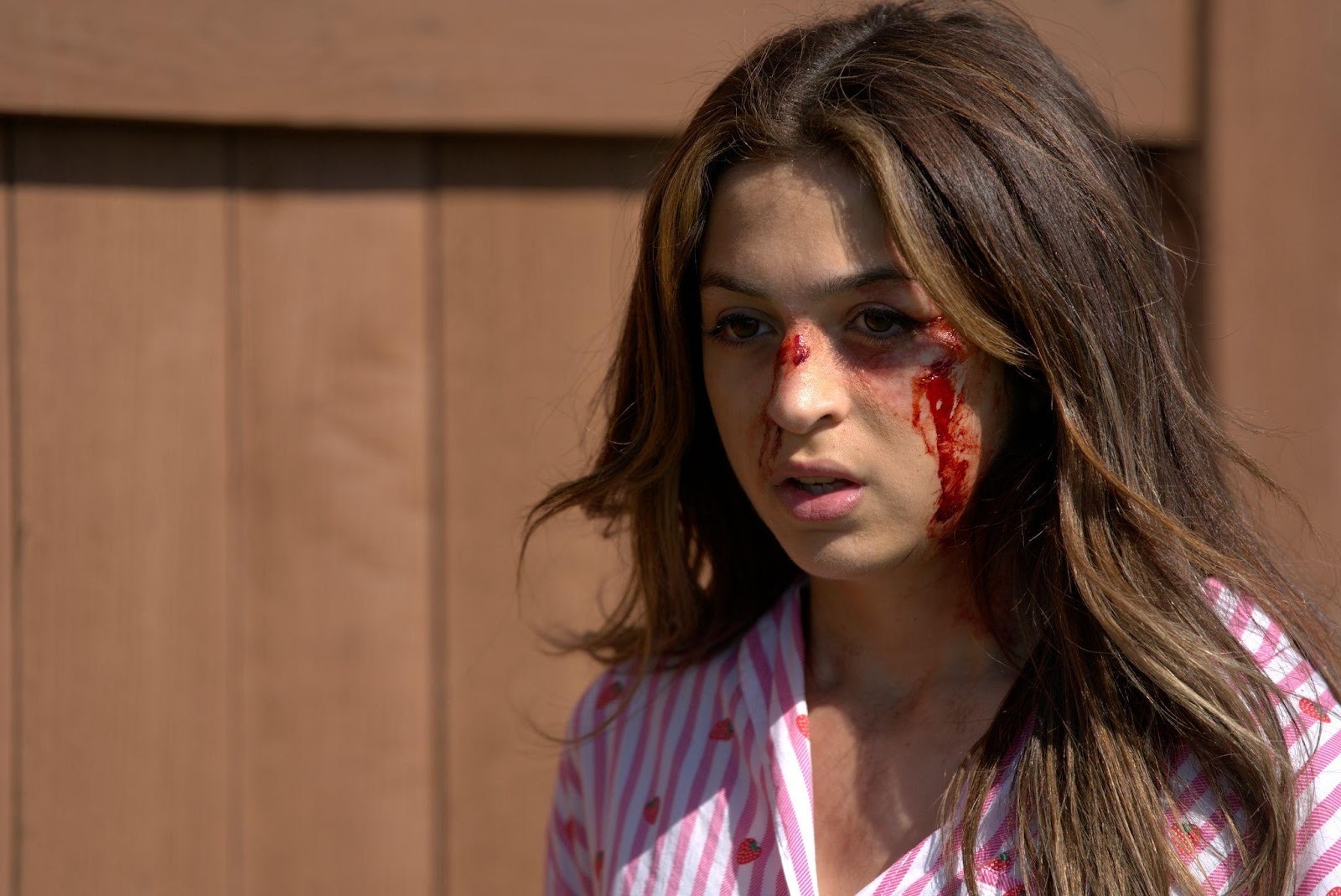
Barbie Ferreira and Dacre Montgomery’s performances are excellent. No one in this movie is a cartoon monster, and even the people you don’t like are shown to be human beings who feel, choke on their own fear, and bleed just like we do. Josie Totah, Aaron Holliday, Kurt Yue, Ash Maeda, and Jermaine Fowler give lived-in performances. When they fight for their lives and breathe their last breath, you can feel it.
Every time you see a video in which someone is injured or dies, that is a real person. The filmmakers don’t want you to have the dissociative protective layer that grows on your soul the longer you scroll, and the film pushes your face towards the horror and compels you to look. You can’t look away.
You can be the person who cares about others or the person who considers other human beings as a means to an end.
I have seen someone die on camera. During the Iranian Green Revolt, Twitter was refreshing so fast that the servers almost couldn’t keep up. I had seen hints about a woman named Neda, and the video crashed into my feed. In the video, you see the joy of freedom in her face until you hear the crack of a rifle, and her face goes slack as the life starts to bleed out of her body, and the light dies in her eyes.
Neda Agha Soltan. I will never forget her, and when you are privileged or damned enough to see the moment someone leaves their body, you shouldn’t reduce it to a moment of entertainment. We are all endlessly and morbidly curious about death, which is where the original inspiration and popularity of the original Faces of Death from 1978 came from, but it is the one thing we can’t escape.
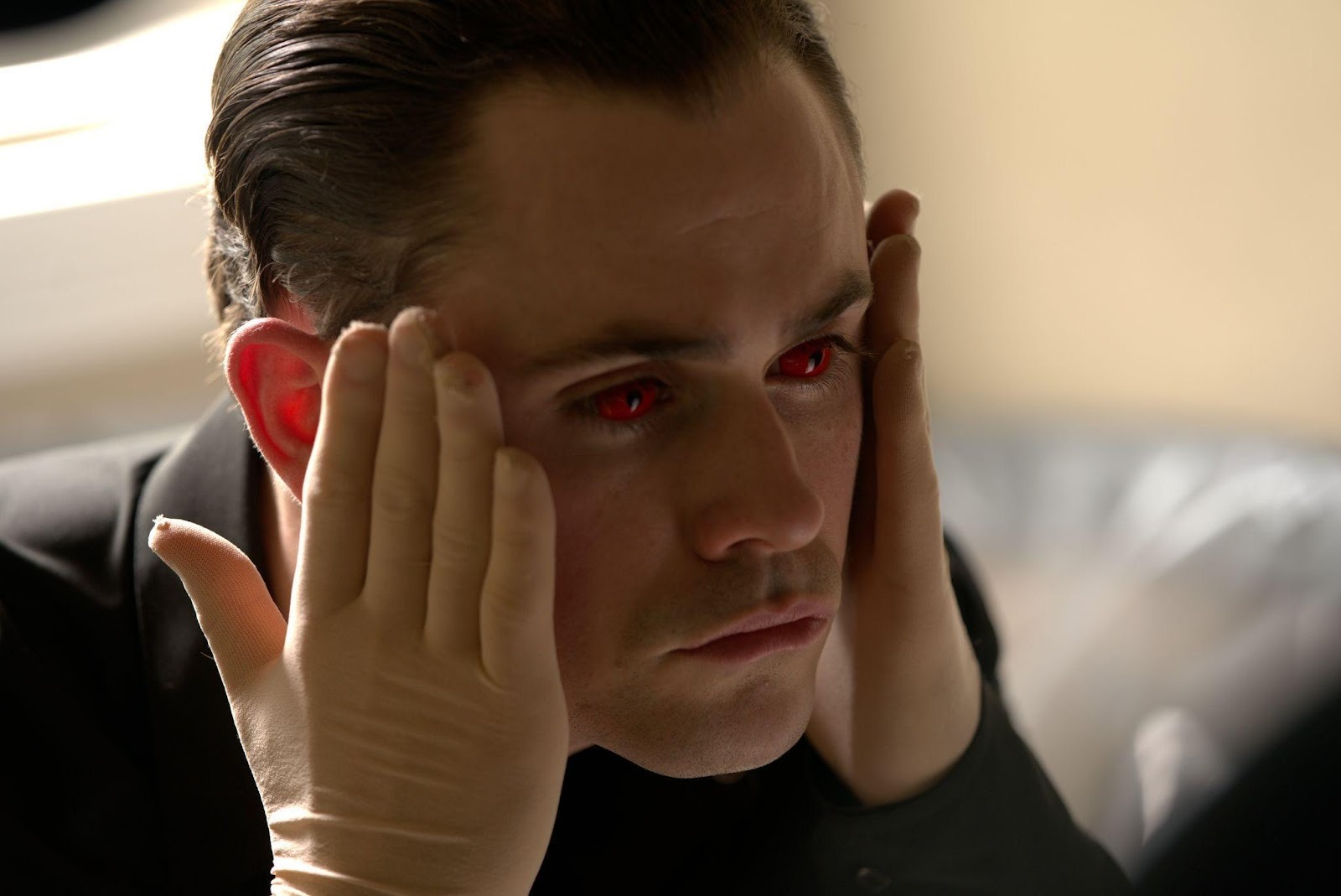
Dacre Montgomery is really frightening during his bouts of rage and his moment of sheep-like duplicity. His gaze, when you can see the wheels and levers turning in his head, is disturbing on a different level. So, he is scary pretty much all of the time. The worst thing is that I knew someone a lot like him. Montgomery has a fearsome level of dedication to this role.
Arthur is an empty house: forlorn rooms, echoing hallways, and windows covered in dust filled only with free-floating rage. Arthur is a pitiless yet pitiable person who doesn’t seem to engage with life unless it is on screen or filming another gruesome murder. He’s locked into a loneliness that is eternal.
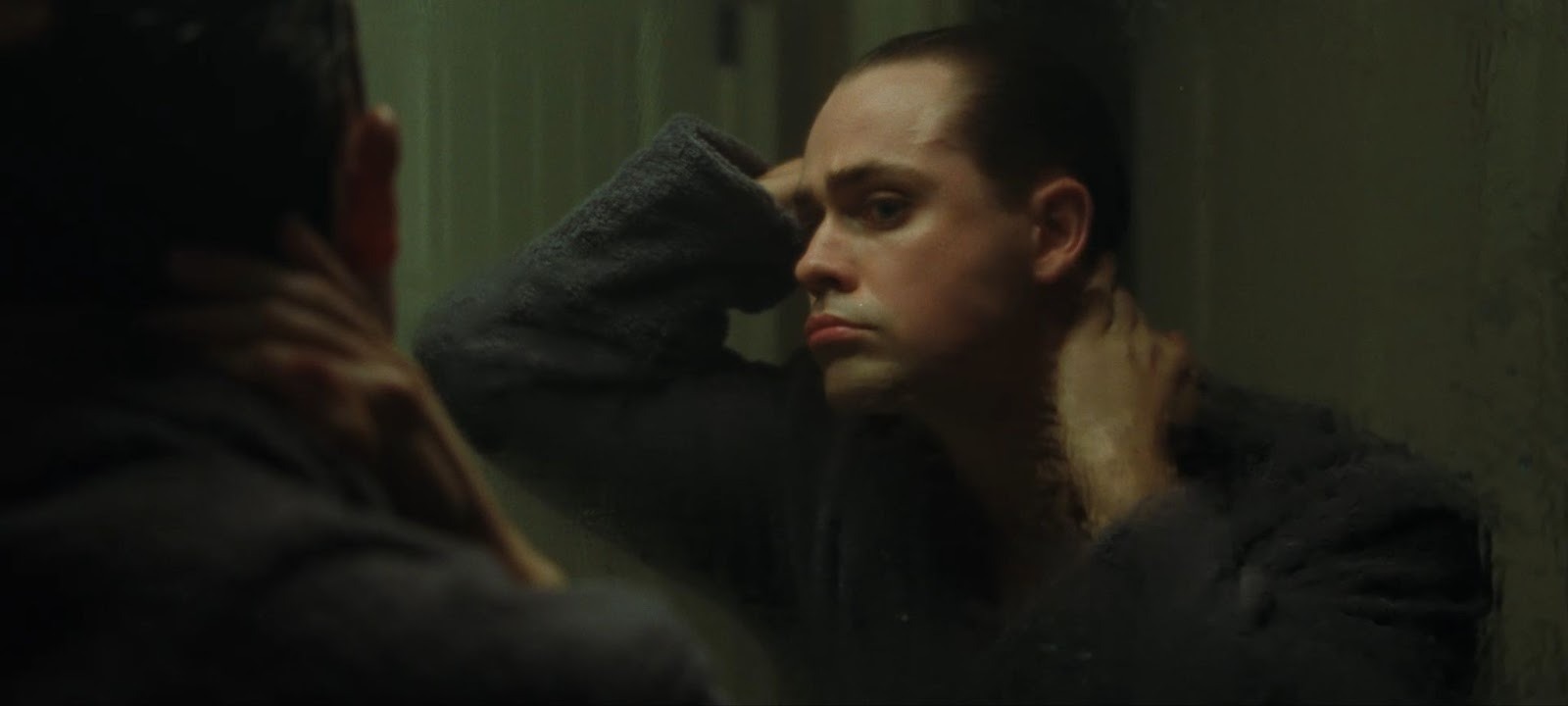
You can see who Arthur and Margot are and the impulses and needs that drive them to do what they do. The exceptionally talented cast does a wonderful job of making sure you can see them think the second before the killer strikes.
Barbie Ferreira’s Margot Romero (love that last name) is a final “girl” for the digital age. After her initial actions that set the plot in motion, she thrums with lightning and uses her brain to stay alive, but even then, what she has done and survived brings her out of her online infamy and shame back into the real world. Ferreira has not only a firm grasp on the role but a deep well of empathy for others that is crucial to Margot.
She goes from a guilt-ridden person who plays the scene of her mistake in her mind over and over to someone who knows that something is wrong and won’t stop until she has convinced the authorities, and failing that, takes the disturbing matters into her own hands. All of that hyperawareness and ability to problem-solve that came out of her tragedy becomes an asset rather than a liability.
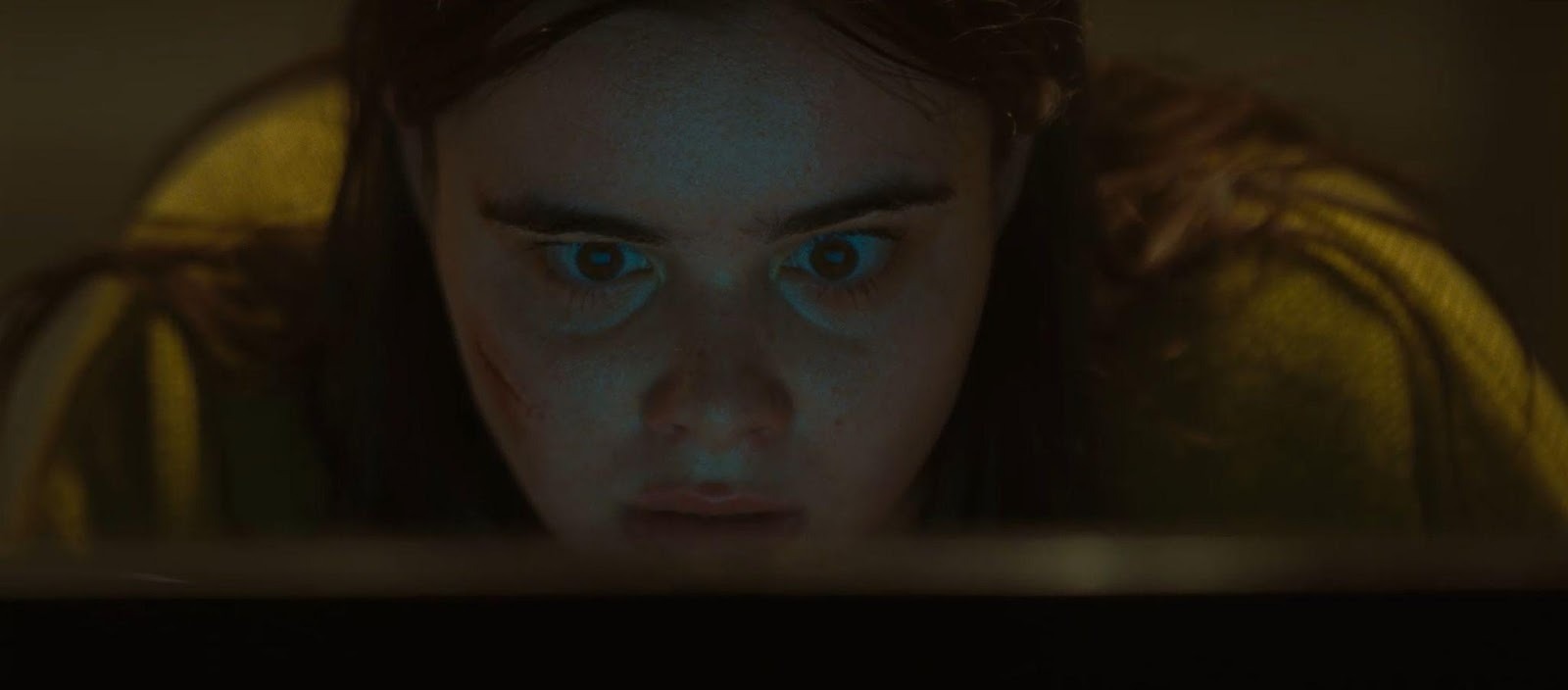
Goldhaber and Mazzei use their film to hold up the mirror of our society’s growing online narcissism up to our own faces and give us a glimpse of the skull beneath the skin, which syncs with the original FACES OF DEATH’s aims.
Curious about death? Here you go. Everything we watch changes us, and we can either change into bored thrill seekers, apathetic drones, or people who know what’s up and won’t stand for it anymore.
Faces of Death is a rage-fueled leap into a blood-drenched hell of being “too online,” a grotesquerie of human destruction that runs on likes and comments that does not judge you, but simply stares into you, knowing that one day, your time will be up.


Welcome to an exciting year-long project here at The Nerdy. 1986 was an exciting year for films giving us a lot of films that would go on to be beloved favorites and cult classics. It was also the start to a major shift in cultural and societal norms, and some of those still reverberate to this day.
We’re going to pick and choose which movies we hit, but right now the list stands at nearly four dozen.
Yes, we’re insane, but 1986 was that great of a year for film.
The articles will come out – in most cases – on the same day the films hit theaters in 1986 so that it is their true 40th anniversary. All films are also watched again for the purposes of these reviews and are not being done from memory. In some cases, it truly will be the first time we’ve seen them.
This time around, it’s July 18, 1986, and we’re off to see Aliens and Vamp.
Aliens
Really, what can you say about a classic?
Set 57 years after the events of Alien, Ellen Ripley (Sigourney Weaver) finds herself heading back to LV-426 when a colony on the planet stops communicating with Earth. Teamed up with Colonial Marines, she is still unprepared for the new horrors she will find at the claws of the xenomorphs.
I’m going to do something I normally don’t do and talk about a deleted scene. Aliens, as it stands is a heck of a follow-up to the original film, but for the life of me I will never figure out why James Cameron cut the scene about Ripley’s daughter dying. For those unfamiliar with it, there is a scene after Ripley returns to Earth where she learns her daughter passed away at the age of 66, two years before Ripley made it home. She cries over the fact she had promised her daughter she would be home in time for eleventh birthday.
This scene does so much to frame some of Ripley’s decisions throughout the rest of the movie. This scene, when included, improves the film far beyond the theatrical cut and adds immense weight to several other scenes.
The theatrical version is great, the extended cut is even better.
Where to watch: Available to stream.

Vamp
The 1980s seem to have already been fed up with vampire films with far more of them tackling the tropes instead of being straight-faced about the bloodsuckers.
Keith (Chris Makepeace) and AJ (Robert Rusler) are rushing a fraternity when when the latter promises the frat a stripper for their party to help their chances of getting in. They head downtown and wander into a strip club that features a dancer named Katrina (Grace Jones) that they are mesmerized by and decide she is the one they need. Little do they know she is actually an ancient vampire.
Considering this wasn’t long after Fright Night, it seems everyone was tired of the same old vampire stories. If they only knew what was coming several years later.
It’s a fine movie, and I mean that in the sense of “it’s fine.” It doesn’t do anything that new per se, but it has some fun visuals and sight gags.
Where to watch: Available to stream.
1986 Movie Reviews will continue on July 25, 2026, with

Christopher Nolan delivers his boldest and most visually stunning film to date.
TOP FIVE OF “THE ODYSSEY”
5. Nolan’s Astounding Script
As a writer-director, Nolan has evolved in substantial ways over the course of his career. He has always been a strong, concept-oriented writer who could sell the ever-living shit out of a great narrative hook, but in recent years, he has reached another level of craftsmanship, especially when it comes to the emotional depth of his work. His take on The Odyssey has the unenviable task of condensing Homer’s sprawling, lyrical epic into a feature-length runtime, yet he manages to turn that challenge into a strength rather than a weakness. From the very first frame, Nolan engages in a fascinating conversation with the original text.
The screenplay merges elements of both Homer’s The Iliad and The Odyssey in articulate and insightful ways that should excite scholars and newcomers alike. Nolan’s film is so efficient that it remains completely accessible to those unfamiliar with the stories, while also serving as a fascinatingly complex and deeply thoughtful adaptation that will keep longtime fans captivated until the very end. Somehow, he accomplishes all of this while crafting one of his most personal works to date. The film is explicitly rooted in many of Nolan’s recurring thematic interests, including time, familial bonds, and the inherent guilt of achievement, while pushing each of those ideas to new depths. This is my favorite Nolan screenplay to date, and an incredible accomplishment.
4. The Insane Ensemble
The cast Nolan assembles for The Odyssey is as sprawling as Homer’s epic itself. The ensemble is a blend of longtime Nolan collaborators and newcomers, all of whom come together to form a richly woven tapestry of fully realized performances. For my money, there isn’t a weak link in the group. If anything, it’s remarkable to see acclaimed actors like Charlize Theron, Lupita Nyong’o, and Zendaya appear for only a few minutes each and still leave a lasting impression.
There are, however, several standout performances, particularly from Matt Damon, Samantha Morton, Robert Pattinson, Anne Hathaway, and Elliot Page. Each actor is utterly magnetic, possessing the screen presence and charisma to command Nolan’s signature IMAX frames in breathtaking fashion. Tom Holland also deserves special recognition, delivering what is arguably the best performance of his career. By the film’s end, it genuinely feels like he’s entering an entirely new chapter as an actor. Altogether, the performances are phenomenal, filled with emotion, pathos, and deeply affecting, soulful work.
3. The Horror Sequences
It’s astonishing how much of Homer’s epic Nolan manages to fit into this film without ever making it feel rushed or condensed. For me, though, the most exhilarating moments come when he fully embraces the story’s fantastical elements through a distinctly unsettling, dread-filled lens. The Cyclops sequence feels like Nolan casually inserted a masterful horror short into the middle of the film’s first act. Even more impressive is the Circe-centered sequence later in the runtime, which pushes the film into even more delirious and mesmerizing territory while employing a similarly immersive approach.
These sequences give Nolan the opportunity to apply many of his signature filmmaking techniques in entirely fresh ways. The craftsmanship on display feels deeply rooted in his established style, incorporating everything from practical on-screen light sources and a thunderous blend of diegetic and non-diegetic sound to his trademark cross-cutting. Yet, when placed within these mythological and fantasy-driven settings, those familiar techniques feel completely revitalized, creating some of the most visually and emotionally striking moments of Nolan’s career.
2. An All-Encompassing Cinematic Experience
Which brings us to the culmination of all this extraordinary craftsmanship: The Odyssey is simply a transportive experience, one that can only be compared to one other Christopher Nolan film, his masterpiece, Dunkirk. From Hoyte van Hoytema’s breathtaking cinematography and Richard King’s immersive sound design to Ludwig Göransson’s soaring score, every element of the film pulls you deeper into its world. Sitting in an IMAX theater, surrounded by this level of cinematic precision and commitment, while witnessing the remarkable performances and Nolan’s grand creative vision, results in something truly monumental.
It was a theatrical experience I won’t soon forget, one that felt epic in every sense of the word.
1. The Obscenely Satisfying Final Act
The final thirty minutes of The Odyssey feel like watching a magic trick unfold before your eyes. As gripping and immersive as the film is from the very beginning, it becomes clear that Nolan has been meticulously setting up layers upon layers of narrative and thematic dominoes, all so he can knock them down in spectacular fashion during the final act. The sheer number of satisfying payoffs that arrive in rapid succession throughout this closing stretch is nothing short of astonishing.
At three hours long, The Odyssey never feels like it’s wasting a single moment. Instead, Nolan creates an experience that makes you feel as though you’ve genuinely embarked on this journey alongside the characters. By the time the film reaches its conclusion and everything comes full circle with such precision and emotional weight, it’s difficult to put into words just how deeply moving it all is. I genuinely sat there with my jaw on the floor. It’s phenomenal filmmaking.
RGM GRADE
(A)
Over the past few decades, Christopher Nolan has established himself as one of the defining filmmakers of his generation. From early works like the critically acclaimed cult classic Memento to blockbuster landmarks like The Dark Knight and Inception, and most recently the Academy Award-winning Oppenheimer, Nolan has remained one of the most influential voices in modern cinema. That made the question of what he would do after winning Best Picture and Best Director for Oppenheimer especially compelling. What kind of film does a director who seemingly can do anything choose to make at the absolute height of his creative powers?
The answer is The Odyssey, an adaptation of Homer’s seminal, genre-defining epic. The choice of source material wasn’t entirely unexpected, given Nolan’s long-documented fascination with the story. He nearly directed Troy back in 2004 before pivoting to Batman Begins, a decision that ultimately launched the extraordinary run of films that followed. What is surprising, however, is the sheer ambition and fearless conviction with which he tackles the material. In a post-Oppenheimer world, Nolan clearly feels emboldened to take even bigger, bolder, and more daring creative swings. The result is a staggering achievement. The Odyssey is unlike anything else in modern blockbuster filmmaking and stands among the finest accomplishments of Nolan’s career.
Ultimately, it’s almost unbelievable that a film like this exists: a massive-budget, three-hour, R-rated epic that finds Christopher Nolan pushing himself further than ever before while embracing his unique storytelling instincts in deeply thoughtful and compelling ways. For a filmmaker whose work has often felt meticulously controlled, The Odyssey crashes over you like a roaring sea, occasionally threatening to overwhelm even its creator, yet becoming all the more exhilarating because of it. It’s a breathtaking, enthralling, and profoundly insightful cinematic achievement. I cannot recommend it highly enough.

Discover more from RGM
Subscribe to get the latest posts sent to your email.
Movie Reviews
‘3 Weeks After’ Review: A High-School Field Trip Goes Off the Rails in a Skillful but Sadistic Serbian Shocker

The kids are not alright, or even right in the head in Serbian drama 3 Weeks After. This skillfully made but mean-spirited exercise revolves around a high-school trip to the countryside that turns extra dark when nearly everyone takes to bullying one kid among them: a boy, Zoza (Jovan Ginic), who just happens to have been the best friend of another kid they all bullied into committing suicide three weeks before, hence the title.
Imagine an especially vicious adaptation of Lord of the Flies or a remake of Gus Van Sant’s Elephant but directed by Gaspar Noé. Indeed, there’s even an extended sequence in which the teens get high and dance to techno, recalling Noé’s Climax. Unfortunately, 3 Weeks is way less fun and has a sadly deflated final stretch. More importantly, for all that director Miroslav Terzic (Redemption Street, Stitches) has talked up basing this loosely on actual events and discussing peer-on-peer violence with his young cast, the film offers an absurdly bleak portrait of Gen Z that just doesn’t ring true.
3 Weeks After
The Bottom Line Nasty beyond belief.
Venue: Karlovy Vary Film Festival
Cast: Jovan Ginic, Klara Karaulic, Andjela Alavirevic, Tihana Lazovic, Branislav Trifunovic, Andrija Markovic
Director: Miroslav Terzic
Screenwriters: Vladimir Arsenijevic, Bojan Vuletic, Miroslav Terzic
1 hour 35 minutes
The picture opens with a sledgehammer of a visual metaphor: a building on a housing estate is fully engulfed in flames, but there are no firefighters on the scene, no victims screaming from windows, and not even any gawking spectators except for Zoza. Even he seems pretty unbothered about the inferno. Seemingly having had his fill of conflagration watching, Zoza heads off with his backpack, joined en route by classmate Darija (Andjela Alavirevic), who expresses her surprise that he’s going on the school trip to Bulgaria so soon after “what happened.” This traumatic three-weeks-old inciting incident — wherein Zoza’s friend Andrija killed himself in order to escape bullying from his schoolmates — is only gradually explained as the film unfolds, with nasty little details dropped like breadcrumbs along the way.
It turns out that Zoza was also somewhat culpable for Andrija’s death, although nowhere near as much as those who actually beat and humiliated the late teen until he could bear it no longer. As the kids sit on the hired coach in little cliques and subgroups, it becomes clear that they’ve decided Zoza will be the next victim, partly because he knows what happened to Andrija and partly just because he’s quiet, a bit of a loner and not a morally benumbed sociopath like the rest of the class.
At a rest stop along the way, head sociopath Milos Bogdanovic (Andrija Markovic), who has been banned from the trip while the circumstances of Andrija’s death are investigated, sneaks aboard so he can be with his queen bee girlfriend Milica (Klara Karaulic). Somehow neither the two chaperone teachers on the trip, flighty Viktorija (Tihana Lazovic) and lumpish Markus (Branislav Trifunovic), nor the coach’s driver notice Bogdanovic’s arrival. His presence is only detected when the bus is forced to stop on the way due to a landslide-blocked route and a tire is punctured while trying to turn around on the narrow mountain road.
Perhaps that’s all also meant to be further visual metaphors. Certainly, there’s very little that’s metaphorical about the way the script, by Terzic, Vladimir Arsenijevic and Bojan Vuletic, has Viktorija and Markus negligently putting on noise-muffling headphones as they go to bed in the sprawling remote hotel the whole party has checked into. Having spent a little time griping to each other about how awful kids are these days, they both make themselves about as useful as nipples on cockroaches by electively shutting up their ears. With no adult supervision (the hotel staff is mysteriously absent too, as it’s meant to be the end of the season), the teens raid the beer supply and begin hunting down Zoza, who’s lured out by the one person he semi-trusts.
As repellent as the scenes that follow are — especially one in which a child is brutalized out of frame while Milica scrolls her phone with a blank affect, complaining that she’s bored when the atrocity is finished — there’s no denying that Terzic and his team have skills. The chase of Zoza through the forest and caves beyond the hotel is well-wrought, coherently mapped out spatially, and filmed by cinematographer Damjan Radovanovic and his team with just enough light and the right filters to allow us to work out what’s going on. That said, this probably won’t be even faintly legible on a home entertainment system, let alone the handheld gadgets that kids like the ones seen here prefer to watch entertainment on these days.
But this movie isn’t meant for teenagers, or really anyone who has more than a passing acquaintance with young people of this generation. Maybe things are worse in Serbia, which suffered a war a generation ago that left deep scars, but it rather beggars belief that this cohort could be, right down to every single child, quite this pathologically cruel and morally bereft. Likewise, it seems very farfetched that the morning after every single one of them would be so catatonically hungover, passed out in puppy piles in their clothes with not a drop of vomit in sight, that they wouldn’t wake and hear the ominous things going on. Is it another kind of metaphor that Terzic cuts abruptly to black instead of showing us the climactic combustion we’ve been set up to expect? Maybe, but really who cares?
-

 Michigan42 seconds ago
Taylor Farms recall: Check your fridge for iceberg lettuce products sold in Michigan amid cyclosporiasis outbreak
-

 Massachusetts7 minutes ago
Woman killed in Taunton car crash
-

 Minnesota13 minutes ago
New air quality alert issued through Monday for Minnesota
-

 Mississippi19 minutes ago
David Turner, a three-time Mississippi State football assistant, announces retirement
-
 Missouri25 minutes ago
1 woman, 1 firefighter injured in Saturday morning fire in Kansas City, Missouri
-

 Montana31 minutes ago
Central Montana Fair main events kick off Wednesday
-

 Nebraska37 minutes ago
Gallery: 39th Annual Kearney Cruise Nite Show and Shine
-

 Nevada43 minutes ago
Nevada City Housing Element Community Workshop on July 30

