Entertainment
Coachella 2026: How premium brands are cashing in on a ‘consumer wonderland’

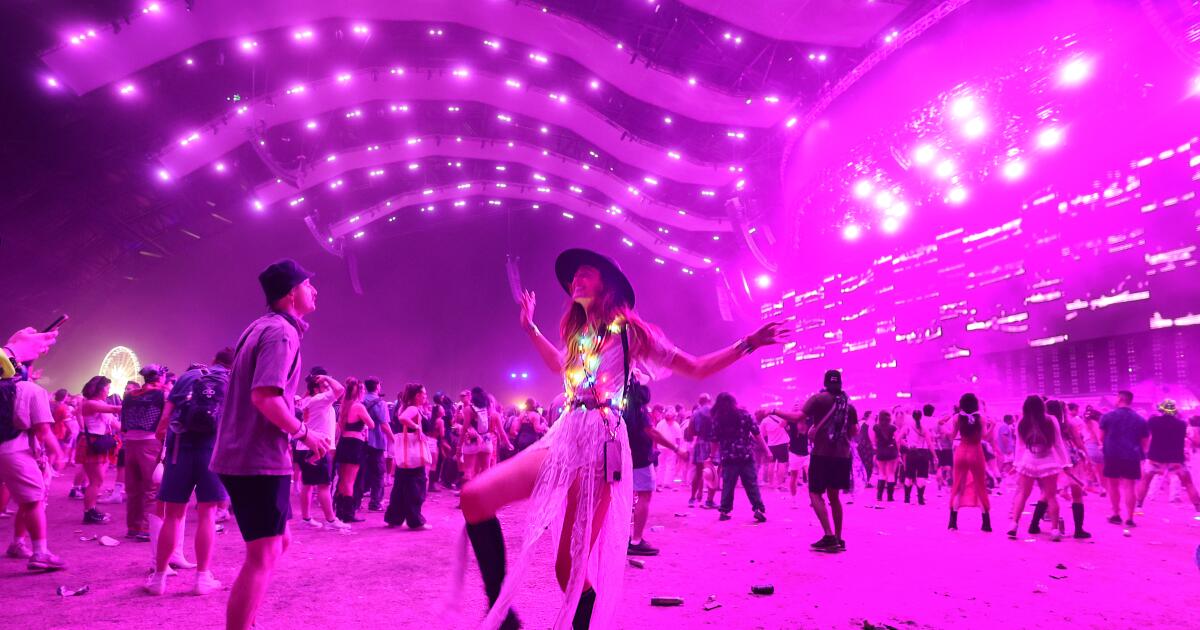
Coachella revelers are getting ready to pitch their tents, performing artists are running through their final rehearsals and thousands of global brands are gearing up for what will be one of the biggest content-making weekends of the year.
What began as a grungy early 2000s desert fest has since evolved into a high-end global cultural phenomenon. The Coachella Valley Music and Arts Festival at the Empire Polo Club in Indio is regarded as one of the largest of its kind in the world, drawing more than 125,000 people a day across two consecutive weekends in April.
As the festival has grown, so too has the allure for big brands like Guess, Rivian, Soho House and Kendall Jenner’s 818 Tequila looking to capitalize on Coachella as a marketing megaphone.
Both off and on the festival grounds, these brands host a series of parties, pop-ups and other VIP events that lavish celebrities, influencers and artists with premium experiences. The hope is they will then share those experiences with their large online audiences.
The Absolut Heat Haus, Soho House’s VIP pop-up The Hideout, and the Coca-Cola Pop Shop are just a few of the brand activations that aim to build a rapport with the festival audience.
This turn toward a high-end consumer market — which reflects a broader trend among many retailers to cater to the affluent — hasn’t been without its critics, especially from music purists who view the festival as overly commercial.
But in many ways, the festival creates the perfect marketing opportunity for global brands to reach Gen Z consumers, who accounted for approximately 17% of total global consumer spending of $57.6 trillion in 2024, according to Nielsen.
Music Fans at the “Do LAB” at the 2025 Coachella Valley Music and Arts Festival.
(Allen J. Schaben/Los Angeles Times)
“People come to Coachella with the idea in mind that brands will bring their best foot forward. Not only are they looking for their favorite, tried-and-true brands to be there, but they’re also looking at what’s the next big thing,” said Jessica Lanzon, director of partnerships and experiential at Ciroc.
The vodka maker offers the Ciroc Athletic Club, an invite-only pop-up that includes a padel tournament and many luxury amenities, like customized merch and bottomless cocktails.
Marc Lotenberg, the founder and chief executive of Dorsia, a members-only platform for exclusive restaurant reservations, estimates brands can spend up to tens of millions of dollars at Coachella.
The biggest global stage
“It’s Coachella, then it’s everything else,” said Lotenberg. “Nothing else compares to the amount of eyes that you get during Coachella. It’s the biggest global stage.”
Dorsia hosts the Zenyara party series, an exclusive after-hours gathering that transforms the private lakeside estate into a nightclub.
The company helped introduce Nobu to the festival last year. The famed Japanese restaurant is returning to this year with meals starting at $375 per person.
Dorsia also offers suites at Coachella’s main stage that start at $70,000 per weekend and accommodate 10 guests who will get backstage access, dedicated service and premium amenities.
“There’s no ceiling when it comes to how much people are willing to pay when it comes to experiences,” Lotenberg said.

Music fans at the 2025 Coachella Valley Arts and Music Festival in Indio.
(Allen J. Schaben/Los Angeles Times)
Some of Coachella’s most elite attendees won’t spend their day at the actual festival, choosing instead to hop between the many exclusive day parties, powered by brands like Revolve.
Over the last decade, the Cerritos-based online fashion retailer has hosted its own mini-festival featuring A-list performers and a star-studded guest list. Last year, Grammy-winning rappers Lil Wayne and Cardi B performed. The off-site festival held in the Coachella Valley is invite-only and hosts around 2,000 people.
“It was quite simple. We saw the impact pretty immediately in terms of traffic to the site and conversion sales,” said Raissa Gerona, chief brand officer for Revolve. “Because we’ve been doing it for so long, we have become the destination … to shop for all things festival and not just Coachella.”
It’s not all about high fashion and luxury mansions. The spirit of outdoor camping is in Coachella’s DNA. The nature-themed boutique hotel company AutoCamp and electric-truck maker Rivian have partnered up for Camp Rivian.
The companies are hosting a curated group of influencers and media partners to stay at a pop-up campsite featuring AutoCamp’s modernized Airstreams. Invitees get the opportunity to test drive Rivian’s newest R2 SUV to the festival and indulge in the communal glamping site.
AutoCamp’s Chief Operating Officer, Bryan Terzi, said it felt like the right moment to try out a deluxe festival camping concept.

People at the flower installation at the 2025 Coachella Vally Arts and Music Festival in Indio.
(Allen J. Schaben/Los Angeles Times)
“People would really get it because it’s happening at Coachella,” he said. “I don’t know if this type of experience would really work at other smaller festivals like Austin City Limits.”
L.A.-based clothing retailer Guess is going all-in on the accommodations with its Guess Compound. The denim brand rents out ten of the valley’s most luxurious villas, hosts up to 60 people, provides high-end amenities like IV drips, massage therapy and an onsite coffee pop-up from La La Land and puts on exclusive after-parties.
Nicolai Marciano, the chief business development officer at Guess, said the effort is about creating more brand equity and building relationships within Coachella’s creative community.
“There’s a lot of different types of talent from musical artists performing to people from reality TV shows and people that make great content — when you put them all together, it’s exciting to watch as an end consumer,” Marciano said.
Claudio Bravo, of Bravo Luxury Retreats, is the chief executive behind the private luxury community next to the festival that hosts Guess. The property contains 16 villas with more than 100 bedrooms, as well as a standalone 10-acre estate set aside for high-end stays and brand activations.
During festival season, Bravo charges around $150,000 for a weekend at one of the villas. He sells out every year, up to six months in advance, catering to wealthy individuals and corporate clients.
“These houses are very luxury, very modern. You feel like you are in a resort,” said Bravo. “I built these houses especially for this – like I was building a hotel.”
Bravo is developing another 14-villa project in nearby La Quinta, which hosts annual professional golf events.
Walker Drawas, a brand marketing agency which has worked at Coachella for years, is involved in six events at the festival, including Kendall Jenner’s “818 Outpost.”
“Brands today are starved for content and starved for news,” said Adam Drawas, co-founder of the agency. “The consumer needs to engage with newness and new content so many times a day, and so brands really need a content wonderland that can give them a big bank of content.”
Sean Breuner, the chief executive of luxury rental company Avant Stay, said at each of their properties, renters will interact with products and amenities from 15 to 20 brands — many of them in the fridge — seeking out high-end consumers.
VIPs expect a private chef, a driver to take them back and forth to the festival grounds or auxiliary events, private security, IV drips provided at home, an on-call cleaner and private tennis or pickleball lessons.
“The majority of festivals you go to don’t have art installations or people who are dressed to the nines in festival outfits,” Breuner said.
Drawas said he believes the market is only going to keep expanding.
“This began in music. It transitioned into fashion,” added Drawas. “Now it’s just a consumer wonderland.”


Christopher Nolan delivers his boldest and most visually stunning film to date.
TOP FIVE OF “THE ODYSSEY”
5. Nolan’s Astounding Script
As a writer-director, Nolan has evolved in substantial ways over the course of his career. He has always been a strong, concept-oriented writer who could sell the ever-living shit out of a great narrative hook, but in recent years, he has reached another level of craftsmanship, especially when it comes to the emotional depth of his work. His take on The Odyssey has the unenviable task of condensing Homer’s sprawling, lyrical epic into a feature-length runtime, yet he manages to turn that challenge into a strength rather than a weakness. From the very first frame, Nolan engages in a fascinating conversation with the original text.
The screenplay merges elements of both Homer’s The Iliad and The Odyssey in articulate and insightful ways that should excite scholars and newcomers alike. Nolan’s film is so efficient that it remains completely accessible to those unfamiliar with the stories, while also serving as a fascinatingly complex and deeply thoughtful adaptation that will keep longtime fans captivated until the very end. Somehow, he accomplishes all of this while crafting one of his most personal works to date. The film is explicitly rooted in many of Nolan’s recurring thematic interests, including time, familial bonds, and the inherent guilt of achievement, while pushing each of those ideas to new depths. This is my favorite Nolan screenplay to date, and an incredible accomplishment.
4. The Insane Ensemble
The cast Nolan assembles for The Odyssey is as sprawling as Homer’s epic itself. The ensemble is a blend of longtime Nolan collaborators and newcomers, all of whom come together to form a richly woven tapestry of fully realized performances. For my money, there isn’t a weak link in the group. If anything, it’s remarkable to see acclaimed actors like Charlize Theron, Lupita Nyong’o, and Zendaya appear for only a few minutes each and still leave a lasting impression.
There are, however, several standout performances, particularly from Matt Damon, Samantha Morton, Robert Pattinson, Anne Hathaway, and Elliot Page. Each actor is utterly magnetic, possessing the screen presence and charisma to command Nolan’s signature IMAX frames in breathtaking fashion. Tom Holland also deserves special recognition, delivering what is arguably the best performance of his career. By the film’s end, it genuinely feels like he’s entering an entirely new chapter as an actor. Altogether, the performances are phenomenal, filled with emotion, pathos, and deeply affecting, soulful work.
3. The Horror Sequences
It’s astonishing how much of Homer’s epic Nolan manages to fit into this film without ever making it feel rushed or condensed. For me, though, the most exhilarating moments come when he fully embraces the story’s fantastical elements through a distinctly unsettling, dread-filled lens. The Cyclops sequence feels like Nolan casually inserted a masterful horror short into the middle of the film’s first act. Even more impressive is the Circe-centered sequence later in the runtime, which pushes the film into even more delirious and mesmerizing territory while employing a similarly immersive approach.
These sequences give Nolan the opportunity to apply many of his signature filmmaking techniques in entirely fresh ways. The craftsmanship on display feels deeply rooted in his established style, incorporating everything from practical on-screen light sources and a thunderous blend of diegetic and non-diegetic sound to his trademark cross-cutting. Yet, when placed within these mythological and fantasy-driven settings, those familiar techniques feel completely revitalized, creating some of the most visually and emotionally striking moments of Nolan’s career.
2. An All-Encompassing Cinematic Experience
Which brings us to the culmination of all this extraordinary craftsmanship: The Odyssey is simply a transportive experience, one that can only be compared to one other Christopher Nolan film, his masterpiece, Dunkirk. From Hoyte van Hoytema’s breathtaking cinematography and Richard King’s immersive sound design to Ludwig Göransson’s soaring score, every element of the film pulls you deeper into its world. Sitting in an IMAX theater, surrounded by this level of cinematic precision and commitment, while witnessing the remarkable performances and Nolan’s grand creative vision, results in something truly monumental.
It was a theatrical experience I won’t soon forget, one that felt epic in every sense of the word.
1. The Obscenely Satisfying Final Act
The final thirty minutes of The Odyssey feel like watching a magic trick unfold before your eyes. As gripping and immersive as the film is from the very beginning, it becomes clear that Nolan has been meticulously setting up layers upon layers of narrative and thematic dominoes, all so he can knock them down in spectacular fashion during the final act. The sheer number of satisfying payoffs that arrive in rapid succession throughout this closing stretch is nothing short of astonishing.
At three hours long, The Odyssey never feels like it’s wasting a single moment. Instead, Nolan creates an experience that makes you feel as though you’ve genuinely embarked on this journey alongside the characters. By the time the film reaches its conclusion and everything comes full circle with such precision and emotional weight, it’s difficult to put into words just how deeply moving it all is. I genuinely sat there with my jaw on the floor. It’s phenomenal filmmaking.
RGM GRADE
(A)
Over the past few decades, Christopher Nolan has established himself as one of the defining filmmakers of his generation. From early works like the critically acclaimed cult classic Memento to blockbuster landmarks like The Dark Knight and Inception, and most recently the Academy Award-winning Oppenheimer, Nolan has remained one of the most influential voices in modern cinema. That made the question of what he would do after winning Best Picture and Best Director for Oppenheimer especially compelling. What kind of film does a director who seemingly can do anything choose to make at the absolute height of his creative powers?
The answer is The Odyssey, an adaptation of Homer’s seminal, genre-defining epic. The choice of source material wasn’t entirely unexpected, given Nolan’s long-documented fascination with the story. He nearly directed Troy back in 2004 before pivoting to Batman Begins, a decision that ultimately launched the extraordinary run of films that followed. What is surprising, however, is the sheer ambition and fearless conviction with which he tackles the material. In a post-Oppenheimer world, Nolan clearly feels emboldened to take even bigger, bolder, and more daring creative swings. The result is a staggering achievement. The Odyssey is unlike anything else in modern blockbuster filmmaking and stands among the finest accomplishments of Nolan’s career.
Ultimately, it’s almost unbelievable that a film like this exists: a massive-budget, three-hour, R-rated epic that finds Christopher Nolan pushing himself further than ever before while embracing his unique storytelling instincts in deeply thoughtful and compelling ways. For a filmmaker whose work has often felt meticulously controlled, The Odyssey crashes over you like a roaring sea, occasionally threatening to overwhelm even its creator, yet becoming all the more exhilarating because of it. It’s a breathtaking, enthralling, and profoundly insightful cinematic achievement. I cannot recommend it highly enough.

Discover more from RGM
Subscribe to get the latest posts sent to your email.
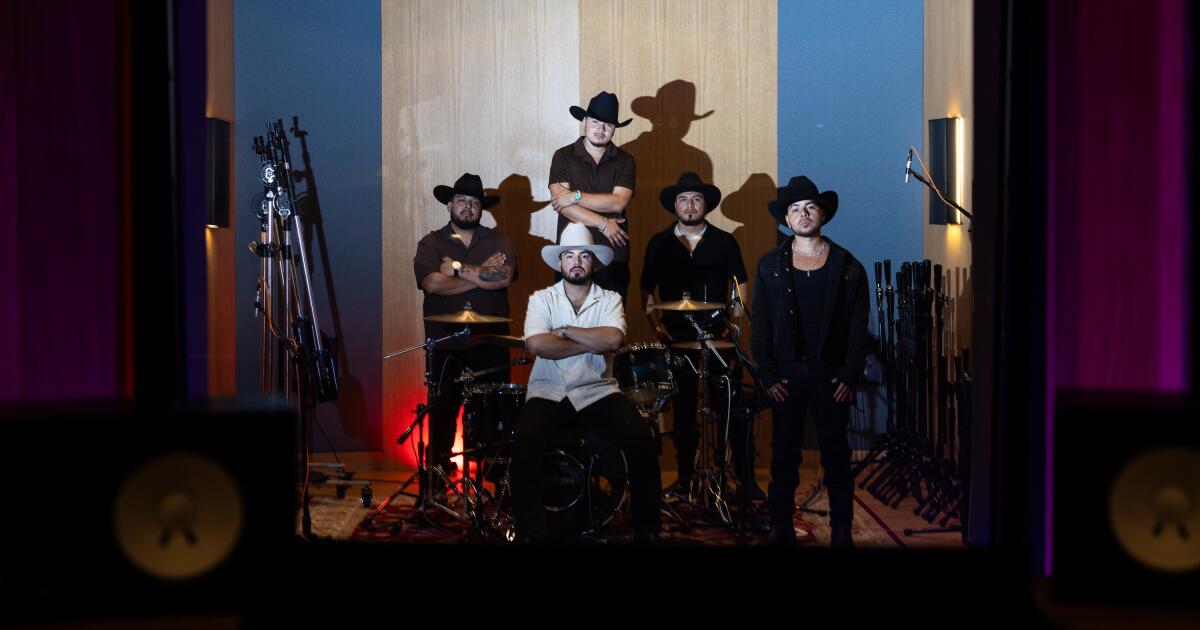
When you walk into a room with Los Primos del Este, the happy-go-lucky guys immediately make you feel like part of the family. What they first cultivate with silly banter and lighthearted ad-libs eases into a more vulnerable, introspective atmosphere, comparable to a cathartic therapy session.
When I met the norteño-sax band in at Interscope Records — the major label that signed them in early 2023 — it was just a couple of hours before the official release of Los Primos’ new album, “Dulce Amargo,” on Thursday.
For a young band of players in their early 20s, they play it cool; “Dulce Amargo” is their eighth LP to date. The project feels thoroughly chiseled to their refined sonic tastes (influenced by Julión Álvarez, Legado 7 and Remmy Valenzuela) inflected with raw, sentimental lyricism and a wailing saxophone that commands each track with the spirit of an electric guitar.
“Play it back to back and actually start understanding the sound more and realize there’s new sounds being created,” said lead vocalist Geovanni Flores. “Because a lot of people get stuck in their old ways.”
Made up of five members — Flores, bassist and supporting vocalist Ariel Jesus Lopez, accordionist Juan Luis Hernandez, drummer Alejandro Tellez and saxophonist David Tellez — the group has built a steady momentum in the música mexicana genre. They’ve championed the resurgence of norteño-sax, a subgenre that fuses the accordion sounds of norteño music with an invigorating alto saxophone, made popular by legendary groups like Conjunto Primavera.
Since forming in 2017, the North Carolina-based band has gained over 2 million listeners on Spotify through catchy norteño-sax songs like “No Es Mentira (Version Norteña),” “Poema” and “Mami” — drawn together by a polka-like beat that has made them a staple of Mexican dance venues.
In 2024 alone, the subgenre grew by 39% in both the U.S. and Mexico, per Spotify.
Los Primos del Este formed in 2017 out of North Carolina.
(Arwen Clemans / Los Angeles Times)
The band took a few years to find its groove. Its 2020 debut album, “PDE,” experimented more with the prickly, sad sierreño sound popularized by acts like Eslabon Armado and DannyLux — as well as trap-infused corridos tumbados with a thumping tololoche. Still, this was music one could bop their head to, even if dance parties were limited during the global pandemic. With norteño-sax, the group could incorporate contemporary dating themes into songs that bring people physically closer to one another on the dance floor.
“There’s been a sense of maturity that’s happened within the group. In the past, we would just make music to make music and release it,” said Flores. “ We thought about every single detail now, even down to the album cover.”
Before getting into the thick of their recent music catalog, Los Primos del Este quickly unfurled details of the album cover, which shows the group sprawled across the flatbed of a white truck. The image was inspired by Alejandro Cartagena, a Dominican Republic-born Mexican creative who photographed carpooling laborers on the flatbeds along a highway in Monterrey, Mexico, in 2012. The project was a visual representation of how everyday people — often marginalized individuals — navigate transit in a sprawling suburban area.
Such an open stance on community issues appears to be a norteño-sax speciality. In 2000, their forefathers Conjunto Primavera previously told The Times that they make music for working-class audiences: “Wealthy people don’t like what we do.”
“Personally, I found myself in the bed of a truck at one point, low-income, trying to make something out of nothing,” said Lopez. “That’s the world I grew up in, and that’s the world I wanna show everybody. It’s not all sweet, you know?”
The band also nods to injustices faced by immigrant communities — including the recent fatal shootings of 52-year-old Lorenzo Salgado Araujo and 26-year-old Johan Sebastian Duran Guerrero by Immigration and Customs Enforcement agents in Texas and Maine, respectively.
“We’re willing to take the heat,” said Lopez, referring to the band’s pro-immigrant stance. “The community looks at us as a negative presence, but in reality, we’re hard-working, dedicated family people.”
It is both that honesty and vulnerability that are etched into the 14-track LP “Dulce Amargo,” which translates to “bittersweet” in English. The band shared that each member contributed details of his own personal experience to the brainstorming sessions — a process they likened to therapy.
“We were comfortable enough with each other to let [our] stories be heard,” said Lopez. “In the Latino community, there is kinda like that stereotype [that] you have to be strong. I think this message goes out to everybody — if you’re feeling something, specifically the men, it’s OK to just let it out.”

(Arwen Clemans/Los Angeles Times)
The hazy love melody “Tremenda,” for example, underscores an intense yearning for connection. Written after Lopez was starstruck by a woman, its first lyrics begin in wondrous marvel: “Tal vez fue tu mirada,” or, “Perhaps it was your gaze.”
“What’s the first thing you do when you look at somebody? I look at the eyes,” said Lopez. “They say the eyes are the doors to the soul.”
Alejandro Tellez’s contribution came with the punchy “Linda Sonrisa,” that pleads for someone to realize the realities of the mistreatment they’re facing with another lover.
“How many times are you gonna let him do you wrong until you realize that you have the right guy in front of you?” said Alejandro Tellez in a sing-song twang. “That’s a story that I went through in high school.”
For Flores, the EDM-fused, echoing melody “Mejor Sin Ti,” struck a personal chord; could a relationship be the only thing standing in your way to personal success? “Some people do hold you back, some people tie you down — that’s what I felt,” said Flores.
Hernandez gets a bit teary-eyed when talking about his favorite song, “Sentimientos,” a whirling polka-driven ballad about an avoidant situationship, he said. “To me, it’s like we both kinda love each other already, but we’re kind of afraid to say it,” he explained. “A lot of people are afraid of falling in love again, so that song hits close to home.”
The concept behind “Mereces Mejor,” a trance-inducing ode with floating melodies that implores a loved one to recognize their self-worth, was inspired by David Tellez’s own experience with unrequited love: “She’s trying to go to the bad guy, and I’m over here giving everything I got.”
As the five artists prepare to take their new album on the road — including an upcoming performance at the Lone Star State’s Truck Show Texas Fest on July 25 — they want to make clear that norteño-sax is not a stagnant subgenre. Like most of música mexicana, it, too, is evolving, both in sound and lyricism, encapsulating today’s complex dating culture. Their emotional vulnerability is welcome in a field flooded with artists that may otherwise shrink away from such honesty — perhaps due to the stigma of mental health issues in the Latino community, especially among men.
“We understand that changing the sound may not be for everybody, but we’re making music for the next generation,” said Lopez. “Who knows? Maybe their parents might end up liking this too.”
Movie Reviews
‘3 Weeks After’ Review: A High-School Field Trip Goes Off the Rails in a Skillful but Sadistic Serbian Shocker

The kids are not alright, or even right in the head in Serbian drama 3 Weeks After. This skillfully made but mean-spirited exercise revolves around a high-school trip to the countryside that turns extra dark when nearly everyone takes to bullying one kid among them: a boy, Zoza (Jovan Ginic), who just happens to have been the best friend of another kid they all bullied into committing suicide three weeks before, hence the title.
Imagine an especially vicious adaptation of Lord of the Flies or a remake of Gus Van Sant’s Elephant but directed by Gaspar Noé. Indeed, there’s even an extended sequence in which the teens get high and dance to techno, recalling Noé’s Climax. Unfortunately, 3 Weeks is way less fun and has a sadly deflated final stretch. More importantly, for all that director Miroslav Terzic (Redemption Street, Stitches) has talked up basing this loosely on actual events and discussing peer-on-peer violence with his young cast, the film offers an absurdly bleak portrait of Gen Z that just doesn’t ring true.
3 Weeks After
The Bottom Line Nasty beyond belief.
Venue: Karlovy Vary Film Festival
Cast: Jovan Ginic, Klara Karaulic, Andjela Alavirevic, Tihana Lazovic, Branislav Trifunovic, Andrija Markovic
Director: Miroslav Terzic
Screenwriters: Vladimir Arsenijevic, Bojan Vuletic, Miroslav Terzic
1 hour 35 minutes
The picture opens with a sledgehammer of a visual metaphor: a building on a housing estate is fully engulfed in flames, but there are no firefighters on the scene, no victims screaming from windows, and not even any gawking spectators except for Zoza. Even he seems pretty unbothered about the inferno. Seemingly having had his fill of conflagration watching, Zoza heads off with his backpack, joined en route by classmate Darija (Andjela Alavirevic), who expresses her surprise that he’s going on the school trip to Bulgaria so soon after “what happened.” This traumatic three-weeks-old inciting incident — wherein Zoza’s friend Andrija killed himself in order to escape bullying from his schoolmates — is only gradually explained as the film unfolds, with nasty little details dropped like breadcrumbs along the way.
It turns out that Zoza was also somewhat culpable for Andrija’s death, although nowhere near as much as those who actually beat and humiliated the late teen until he could bear it no longer. As the kids sit on the hired coach in little cliques and subgroups, it becomes clear that they’ve decided Zoza will be the next victim, partly because he knows what happened to Andrija and partly just because he’s quiet, a bit of a loner and not a morally benumbed sociopath like the rest of the class.
At a rest stop along the way, head sociopath Milos Bogdanovic (Andrija Markovic), who has been banned from the trip while the circumstances of Andrija’s death are investigated, sneaks aboard so he can be with his queen bee girlfriend Milica (Klara Karaulic). Somehow neither the two chaperone teachers on the trip, flighty Viktorija (Tihana Lazovic) and lumpish Markus (Branislav Trifunovic), nor the coach’s driver notice Bogdanovic’s arrival. His presence is only detected when the bus is forced to stop on the way due to a landslide-blocked route and a tire is punctured while trying to turn around on the narrow mountain road.
Perhaps that’s all also meant to be further visual metaphors. Certainly, there’s very little that’s metaphorical about the way the script, by Terzic, Vladimir Arsenijevic and Bojan Vuletic, has Viktorija and Markus negligently putting on noise-muffling headphones as they go to bed in the sprawling remote hotel the whole party has checked into. Having spent a little time griping to each other about how awful kids are these days, they both make themselves about as useful as nipples on cockroaches by electively shutting up their ears. With no adult supervision (the hotel staff is mysteriously absent too, as it’s meant to be the end of the season), the teens raid the beer supply and begin hunting down Zoza, who’s lured out by the one person he semi-trusts.
As repellent as the scenes that follow are — especially one in which a child is brutalized out of frame while Milica scrolls her phone with a blank affect, complaining that she’s bored when the atrocity is finished — there’s no denying that Terzic and his team have skills. The chase of Zoza through the forest and caves beyond the hotel is well-wrought, coherently mapped out spatially, and filmed by cinematographer Damjan Radovanovic and his team with just enough light and the right filters to allow us to work out what’s going on. That said, this probably won’t be even faintly legible on a home entertainment system, let alone the handheld gadgets that kids like the ones seen here prefer to watch entertainment on these days.
But this movie isn’t meant for teenagers, or really anyone who has more than a passing acquaintance with young people of this generation. Maybe things are worse in Serbia, which suffered a war a generation ago that left deep scars, but it rather beggars belief that this cohort could be, right down to every single child, quite this pathologically cruel and morally bereft. Likewise, it seems very farfetched that the morning after every single one of them would be so catatonically hungover, passed out in puppy piles in their clothes with not a drop of vomit in sight, that they wouldn’t wake and hear the ominous things going on. Is it another kind of metaphor that Terzic cuts abruptly to black instead of showing us the climactic combustion we’ve been set up to expect? Maybe, but really who cares?
-

 Movie Reviews9 minutes ago
“The Odyssey” is Christopher Nolan’s Most Singular Film Yet (Movie Review)
-
World22 minutes ago
Iran War Updates: Bridges and Water Plants Hit as Strikes Stretch to 7th Straight Day
-
 Lifestyle1 hour ago
Spain could make World Cup history: The first to win men’s and women’s trophies back-to-back
-

 Technology1 hour ago
Taylor Farms pulls iceberg lettuce from the US market after cyclosporiasis outbreak
-

 World1 hour ago
Who is Andy Burnham? The Trump critic set to become the UK’s next prime minister
-

 Politics2 hours ago
Major appeals court declares New Jersey AR-15 ban unconstitutional in landmark Second Amendment ruling
-

 Health2 hours ago
First death reported in Upper East Side Legionnaires’ disease outbreak as cases rise to 67
-

 Sports2 hours ago
Raising Cane’s owner Todd Graves on how viral Tom Brady-Rob Gronkowski dunk tank came to be at Fanatics Fest

