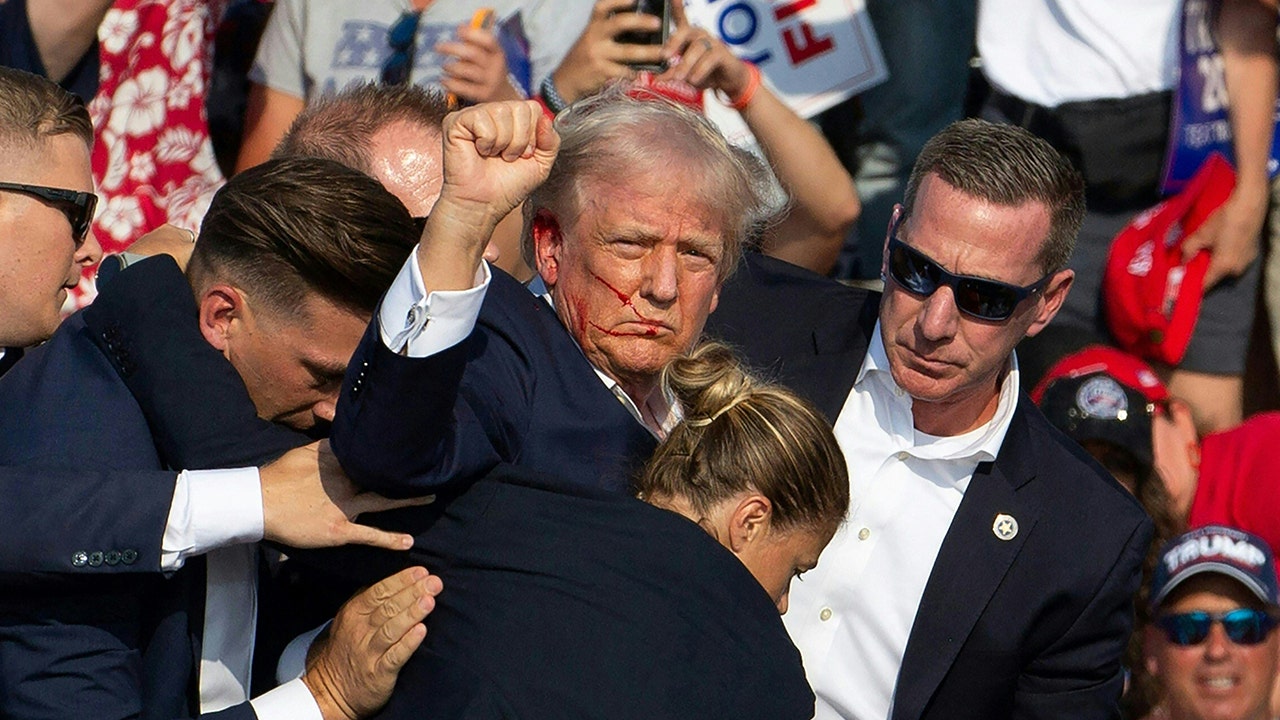
The U.S. Secret Service on Friday published a summary of the agency’s independent investigation into the July 13 assassination attempt against former President Donald Trump, which concluded that certain agents’ actions and behaviors may warrant disciplinary action.
The agency’s investigation, called a Mission Assurance Inquiry, “identified several instances of behaviors and acts by multiple employees that warrant review for corrective counseling and, potentially, disciplinary action,” the USSS synopsis says.
“All Secret Service employees are held to a high standard of conduct in the performance of their duties when providing protection to those that entrust us with their well-being and the safety of their families,” the document states.
In particular, the internal review, which will be shared with Congress, found communications deficiencies, an unclear understanding of duties among some personnel working for USSS, and certain planning failures leading up to and during Trump’s campaign rally in Butler, Pennsylvania, where gunman Thomas Crooks shot Trump, the bullet skimming the former president’s ear.
SECRET SERVICE KNEW AIRSPACE PROTECTION WOULD END WITH FORMER PRESIDENT ONSTAGE
Advertisement
Former President Donald Trump was shot during a campaign rally in Butler, Pennsylvania on July 13, 2024.(Rebecca Droke/AFP via Getty Images)
Crooks, 20, killed rally attendee Corey Comperatore and critically wounded two other attendees, David Dutch and James Copenhaver, in his attempt to kill Trump.
The report acknowledged that some of the Homeland Security Investigations (HSI) personnel tapped with assisting USSS in its security procedures that day “conveyed the belief that they were inadequately prepared due to insufficient instruction,” while others did feel prepared.
“July 13, 2024, was a failure for the Secret Service.”
— Mission Assurance Inquiry
USSS also found that the agency “did not have adequate command and control over the radio communications for the rally.”
Advertisement
WATCH: VIDEO SHOWS TRUMP SHOOTING VICTIM’S POV
Certain agents failed to “adequately relay” critical information through the radio and “instead relayed critical pieces of information conveyed by law enforcement partners via telephone and text message to some, but not all, Secret Service personnel at the site.”
Additionally, certain agents failed to “command the appropriate dispatch of personnel” to the area of the American Glass Research (AGR) building, where Crooks positioned himself on the roof and fired eight rounds, “after learning about a suspicious individual with a range finder” approximately one hour before shots rang out.
SECRET SERVICE, FBI RESPOND TO TRUMP RALLY VIDEO SHOWING FIGURE ON ROOF MINUTES BEFORE GUNFIRE
Thomas Matthew Crooks crawling on a roof moments before he attempted to assassinate former President Donald Trump.(DJ Laughery. Inset: Obtained by Fox News Digital)
Advertisement
Two state and local law enforcement agencies with prior experience working with USSS determined that Secret Service “planning for the Butler rally lacked detail, cohesion, and clear understanding of who was in charge, all of which contributed to the overall lack of coordination.”
The agency also noted in its report that the rally attracted a large crowd of about 15,000 attendees in 90-degree weather, contributing to a reported 251 requests for medical assistance that day at the rally.
Former President Donald Trump raises his fist in the air defiantly after an attempted assassination left him with a wounded ear in Butler, Pennsylvania.(Photo by Jeff Swensen/Getty Images)
USSS also pointed to a “lack of coordination” with Trump campaign staff that “caused a higher-than-expected proportion of security personnel to be diverted into assisting with medical responses.”
The investigation summary concluded that the July 13 rally was a “failure for the Secret Service” that warranted “several operational, policy, and organizational changes, some because of the findings and recommendations of the Mission Assurance Inquiry, and others done proactively in the wake of the July 13 incident.”
Advertisement
SECRET SERVICE TURNED DOWN LOCAL DRONE ‘REPEATEDLY’ AHEAD OF TRUMP JULY 13 RALLY: WHISTLEBLOWER
Officers surround Thomas Crooks on the AGR roof after countersnipers killed him.(Butler Twp Police Dept.)
The changes include: providing the “highest level” of USSS protection to Trump and Vice President Kamala Harris that is comparable “to the level of the president”; increased staffing of agents assigned to Trump’s detail; expanded use of unmanned aerial systems and counter unmanned aerial systems; radio fixes, including deployed personnel assisting with the development of radio networks; agreements with federal partners to secure more law enforcement “personnel and assets”; expanded USSS tactical coverage; expanded use of ballistic countermeasures at Secret Service-protected campaign sites; expanded use of technical countermeasures to enhance Trump’s security; and “organizational changes to better align enabling technologies … to give the Secret Service a technical advantage over its adversaries.”
“The Secret Service will continue to make further changes and implement viable recommendations that it receives from various entities. The agency is devoted to the mission entrusted to us and will work vigilantly to restore the trust bestowed upon us by the people we protect, the Congress, and the American people,” the Mission Assurance Inquiry report concluded.
Advertisement
Congress and other oversight committees continue to investigate the July 13 assassination attempt.
Audrey Conklin is a digital reporter for Fox News Digital and FOX Business. Email tips to audrey.conklin@fox.com or on Twitter at @audpants.
Pennsylvania hides some of its best sights in salt-mining canal towns, riverside boroughs of a few hundred people, and overlooks where the Susquehanna unspools below you. These nine small towns trade crowds for character: a 65-mile rail trail tracing the “Pennsylvania Grand Canyon,” gas lamps flickering over a downtown that still has a family-owned department store, a lake that once held an amusement park and now holds stocked trout every spring. From the Endless Mountains of Bradford County to the Allegheny valleys, here are seven Pennsylvania towns worth the detour.
Harveys Lake
Harveys Lake, Pennsylvania from the northeast, By Jakec – Own work, CC BY-SA 4.0, Wikimedia Commons
Harveys Lake is a small but approachable borough near the Back Mountain Region of Luzerne County, inviting those who seek outdoor recreation opportunities like boating, fishing, and biking. With a population of just under 3,000, this out-of-the-way town is named for the beautiful lake it surrounds. Harveys Lake was a bustling tourist destination throughout the 20th century. At one point it featured a casino, an amusement park, and Grand Hotel Oneonta. Nowadays, this modest town on a mighty lake is a lesser-known setting for outdoor recreation enthusiasts and those seeking to get away from the usual crowded vacation spots.
Boating is popular amongst locals and visitors alike, and personal vessels can be launched from the Pennsylvania Fish and Boat Commission access on Lakeside Drive. The best way to fish on Harveys Lake is by boat, and there’s plenty of trout stocked in the springtime by the PFBC. It’s even possible to charter a fishing trip on the lake with a guide like Dry Creek Charters or rent a boat for fishing from Harveys Lake Pontoon Cruises. Purchase a guest pass at one of the beaches, like the one at Sunset Beach Club, and unwind with a swim along the lake’s shoreline. The slow pace of life in this town lends itself well to biking, too. The Harveys Lake Loop that runs through the borough is an easy, paved ride around the lake’s perimeter.
Saltsburg
Saltsburg, Pennsylvania
About 36 miles from Pittsburgh is a remote borough sitting where the Conemaugh River and Loyalhanna Creek come together, creating the Kiskiminetas River. This location, combined with its history as a salt mining town, makes it an engaging yet secluded area to explore. The historic Pennsylvania Mainline Canal ran through Saltsburg, and people can still visit and learn about the canal whose terminus was all the way in Philadelphia. The yearly Saltsburg Canal Days Festival every June is an ode to the canal history for residents and visitors interested in food, live music, and even a charity duck race.
It’s easy to find roads less traveled along Saltsburg’s hiking and biking trails, like the Westmoreland Heritage Trail or the Conemaugh River section of the West Penn Trail. When the river is calling, it’s easy to rent a kayak from Saltsburg Kayak and Canoe on Market Street for a leisurely float. Time is well-spent at the Rebecca B. Hadden Stone House Museum viewing historical artifacts and furnishings.
Advertisement
Hollidaysburg
Allegheny Street in Hollidaysburg, Pennsylvania
Hollidaysburg is a beautiful small borough in Blair County, PA. With a population of around 5,600, the borough is small enough to be a calm getaway while still serving peak entertainment, views, and outdoor fun. History and recreation collide at Canal Basin Park, where historic markers and a canal lock replica invite onlookers to interact with the community’s past. The Anne Sloane Borland Performing Arts Pavillion provides live music throughout the summer months. View a quiet, breathtaking aerial of the borough from Chimney Rocks Park. The way up to the overlook via the Chimney Rocks Lookout Trail is a great way to take in the natural landscape.
The scenic views continue on old State Route 22, where gorgeous flowers are planted and maintained by the borough at Gateway Garden. Small-town hospitality is abundant at The Dream Restaurant on Allegheny Street, feeding nostalgia with home-style comfort meals. The living history of Hollidaysburg surrounds guests at the Allegheny Street Bed and Breakfast who choose to go out and explore the historic district.
Wyalusing
Three buildings on Main Street in Wyalusing, Pennsylvania, via jschumacher on Flickr.com
Wyalusing is a borough best known for the Wyalusing Rocks Overlook, a natural rock formation that offers grand panoramas of the Susquehanna River. The borough is a treat for visitors to the Endless Mountains Region of Bradford County. Wyalusing was originally settled by several groups of Indigenous tribes, such as the Susquehannock, the Iroquois, and the Delaware, before becoming a vital hub for logging and farming. Today, Wyalusing is home to 613 residents who cherish and appreciate their small town.
Spaces like Wyalusing Creekside Park are a phenomenal way to savor the scenery and participate in activities like disc golf and trail walking. The babbling Wyalusing Creek is sure to offer opportunities to catch smallmouth bass. The rich narratives of the borough and surrounding area are highlighted at the Wyalusing Valley Museum. Their location on Main Street makes it easy to book a private tour and browse items in the archive.
Curwensville
Curwensville, Pennsylvania, By Doug Kerr, CC BY-SA 2.0, Wikimedia Commons
The valleys of the Allegheny Mountains are the place to find off-the-grid destinations. Curwensville is a town among them that offers adventure and outdoor fun. Like many municipalities in Western Pennsylvania, the area established itself through the extensive logging industry. The flow of the West Branch of the Susquehanna River nearby made this possible. Now, Curwensville is a valuable riverside town with lots of potential for exploration.
The most popular attraction is Curwensville Lake. Formed by the Curwensville Dam, folks can swim, boat, and fish throughout the spring and summer months. The ever-popular Irvin Park offers a kayak launch area, inclusive playground, and pavilion rentals all season. It’s also the location of the Curwensville Days Festival, a five-day event full of vendors, exhibits, and even a car show. Another annual happening is the Curwensville Blueberry Festival, which includes vendors and a farmers market. Outside of festival season, locals love to satisfy their sweet tooth at the Blue Kow on Susquehanna Avenue.
Shickshinny
View of Shickshinny, Pennsylvania from Overlook B on the Mocanaqua Loop Trail, By Jakec – Own work, CC BY-SA 4.0, Wikimedia Commons
Named for the Shickshinny Creek that runs through the center of town, this borough is located between Berwick and Nanticoke in Luzerne County. The Historical and Preservation Society of the Greater Shickshinny Area helps its 715 residents remain active participants in maintaining its regional legacy. They’ve operated an informative historical museum in their building on Main Street that’s available by appointment and during scheduled open houses.
The yearly Shickshinny Borough Carnival is a delightful blend of food, vendors, and live music the town looks forward to in North Canal Park. Parks and recreation go off the beaten path on winding trails like the Mocanaqua Loop Trail or the Susquehanna Warrior Trail. Shickshinny has truly stunning natural formations. Little Shickshinny Falls is arguably the most beautiful. It’s only about 15 minutes’ hike up from the trail on Shickshinny Valley Road.
Wellsboro
Wellsboro, PA, USA: The downtown streets of Wellsboro still illuminated with authentic gas street lamps.
The Tioga County seat of Wellsboro is visually stunning, with its most prolific landmark being the Pennsylvania Grand Canyon. This six-million-year-old artifact of nature is part of Tioga State Forest. Many find their way to the canyon from the Pine Creek Rail Trail, which traverses 65 miles through Tioga and Lycoming Counties, respectively. It offers a low-grade path that lends itself well to hiking, biking, and even horseback riding in some sections.
The allure of gas lamps lining the streets downtown gives Wellsboro an almost magical feel. This feeling is amplified by the many shops in the borough, with Dunham’s being one of the last family-owned and operated department stores in the nation. A statue of one of the borough’s founders, Mary Wells Morris, is a welcome and graceful presence on Main Street. Just a few blocks down, the Gmeiner Art and Cultural Center is an inviting space to appreciate more local art at one of its many planned exhibits.
Advertisement
Off the Beaten Path
When the natural beauty of Pennsylvania meets the amiable small towns of the various regions, it creates an incomparable experience. Chartering a boat to fish Harveys Lake is one example of that immersive energy. It’s celebrated in festivities like the Shickshinny Borough Carnival or the Canal Days Festival. At the end of the day, these off-the-grid areas have just as much excitement as their more populated counterparts in terms of atmosphere and offerings.
PROVIDENCE – In an unusual move, the Rhode Island Democratic State Committee issued no endorsement for the incumbent governor and lieutenant governor on Saturday.
Incumbent Governor Daniel J. McKee received 82 votes, while his challenger, former CVS executive Helena Buonanno Foulkes, received 73 votes. There were 11 votes for no endorsement, including from the party chair, Liz Beretta-Perik.
To secure an endorsement, a candidate needs 50 percent of the votes cast plus one vote. McKee needed 84 votes to secure the endorsement, so he came up two votes short.
Party officials said they could not recall the last time the committee did not endorse an incumbent Democratic governor. Beretta-Perik later said she voted for no endorsement because she needed to stay neutral.
Advertisement
McKee left the Teamsters Local 251 union hall in East Providence soon after the vote, without talking to reporters. In a statement sent soon after, however, he declared the outcome “a victory for our campaign” and noted he received “the largest margin in today’s endorsement vote.”
Get Rhode Map
A weekday briefing from veteran Rhode Island reporters, focused on the things that matter most in the Ocean State.
Rhode Island Governor Daniel J. McKee speaks to the Democratic State Committee on Saturday at the Teamsters Local 251 union hall in East Providence, R.I.Edward Fitzpatrick
“We will win again in September,” he said in the statement. “Rhode Islanders have a clear choice: a governor who has spent every day fighting for working families, or a corporate executive who has spent her career fighting for corporate profits in the boardroom. I know which side I’m on — and today, Rhode Island Democrats made clear they do too.”
Helena Buonanno Foulkes speaks to the Democratic State Committee at the Teamsters Local 251 union hall in East Providence, R.I.Edward Fitzpatrick
Part of the reason McKee came up two votes short of an endorsement is that his former special adviser, Eva-Marie Mancuso, voted for Foulkes.
As she walked into the Teamsters hall, Mancuso said, “I think we need new leadership. I’m ready.”
Advertisement
Mancuso — a former Rhode Island Board of Education chairwoman who left the McKee administration in 2023 to take a job with Bryant University — said a big part of her decision had to do with the decision by McKee, a long-time charter school advocate, to sign a bill that places a three-year moratorium on new charter schools and permanently lowers the cap on the total number.
“That was a big, big deal,” she said. “I mean, that just shows that he’s really lost focus of what the state needs.”
When McKee beat Foulkes in the 2022 Democratic primary, McKee was filmed telling Mancuso to hang up on Foulkes as he was prepared to deliver his victory speech. On Saturday, Mancuso said, “I took her call.”
The Democratic committee also did not endorse a candidate for Lieutenant Governor. Out of 162 votes, incumbent Lieutenant Governor Sabina Matos received just 55 votes, while former Newport mayor Xay Khamsyvoravong received 71. Providence City Council member Sue AnderBois received 15 votes, and former state senator Cynthia Coyne got 13. Eight people voted for no endorsement.
The committee did not endorse anyone in the race to replace term-limited Attorney General Peter F. Neronha.
Advertisement
State Representative Joseph J. Solomon Jr. received 73 votes, former state Cannabis Control Commission chairwoman Kim Ahern received 42 votes, former attorney general policy chief Keith Hoffman received 22 votes, and state Representative Jason Knight received 12 votes, while 10 voted for no endorsement.
A total of 159 committee members voted, so 80 votes were needed to secure the endorsement.
This is a breaking news story and will be updated.
Edward Fitzpatrick can be reached at edward.fitzpatrick@globe.com. Follow him @FitzProv.
PAWLET — The Pawlett Historical Society and Rupert Historical Society will co-host a talk, “The Great Bennington Battle and Vermont,” with acclaimed historian Howard Coffin, at 1 p.m. on Sunday, July 5, at the Pawlet Town Hall, 122 School Street, Pawlet.
The surrender at Saratoga of a British army under John Burgoyne, now almost 250 years ago, has long been called the decisive battle of the American Revolution. But perhaps Burgoyne was doomed after the Battle of Bennington, a bloody day of fighting along the Vermont border that happened two months before Saratoga?
Coffin will discuss the history-changing Burgoyne campaign, focusing on the dramatic battle of Great Bennington—a Vermont battle as well as a New York one. He will also review heroes John Stark and Seth Warner and the Vermont Constitution, itself about to turn 250 years old.
Advertisement
A seventh-generation Vermonter, Howard Coffin is the author of four books on the Civil War: “Something Abides: Discovering the Civil War in Today’s Vermont;” “Full Duty: Vermonters in the Civil War;” “Nine Months to Gettysburg; and The Battered Stars,” as well as “Guns Over the Champlain Valley,” a book on military sites along the Champlain Corridor.
This free event starts at 12 p.m. with a display of the first coinage minted in the United States, and works by noted photographers Neil Rappaport and John Pelton from our towns’ Bicentennial events in 1976. Be sure to mingle after Coffin’s presentation for an ice cream social with Stewart’s Ice Cream. This event is accessible to all, and made possible by the Vermont Humanities Speakers Bureau. For details on the event, contact Rose Smith at 802-645-0306 or roseksmith1925@gmail.com. For information on Vermont Humanities, visit vermonthumanities.org.