You have reached your maximum number of articles. Log in or create an account FREE of charge to continue reading.
By entering your email and pushing continue, you are agreeing to Fox News’ Terms of Use and Privacy Policy, which includes our Notice of Financial Incentive.
Please enter a valid email address.
Barnard College has seen weeks of anti-Israel unrest rock its campus, with students taking over buildings. Eliana Birman, a Jewish student at Barnard, co-wrote a letter with fellow Barnard student Shoshana Aufzien demanding accountability from the college. The open letter has gotten nearly 1,300 signatures in a matter of days.
Birman told Fox News Digital that the letter was meant as a direct response to an email from the Barnard Student Government Association (SGA) condemning the college for calling police to intervene in the unrest.
Advertisement
“My friends and I, especially Shoshana and I, were very frustrated with it because we didn’t think that the email from the Barnard student government really represented us, because we honestly felt safer having police on our campus when there was a bomb threat and when we were in an emergency situation,” Birman told Fox News Digital. “And we don’t think that having the police promise to never come on to campus is for the betterment of the safety of our community.”
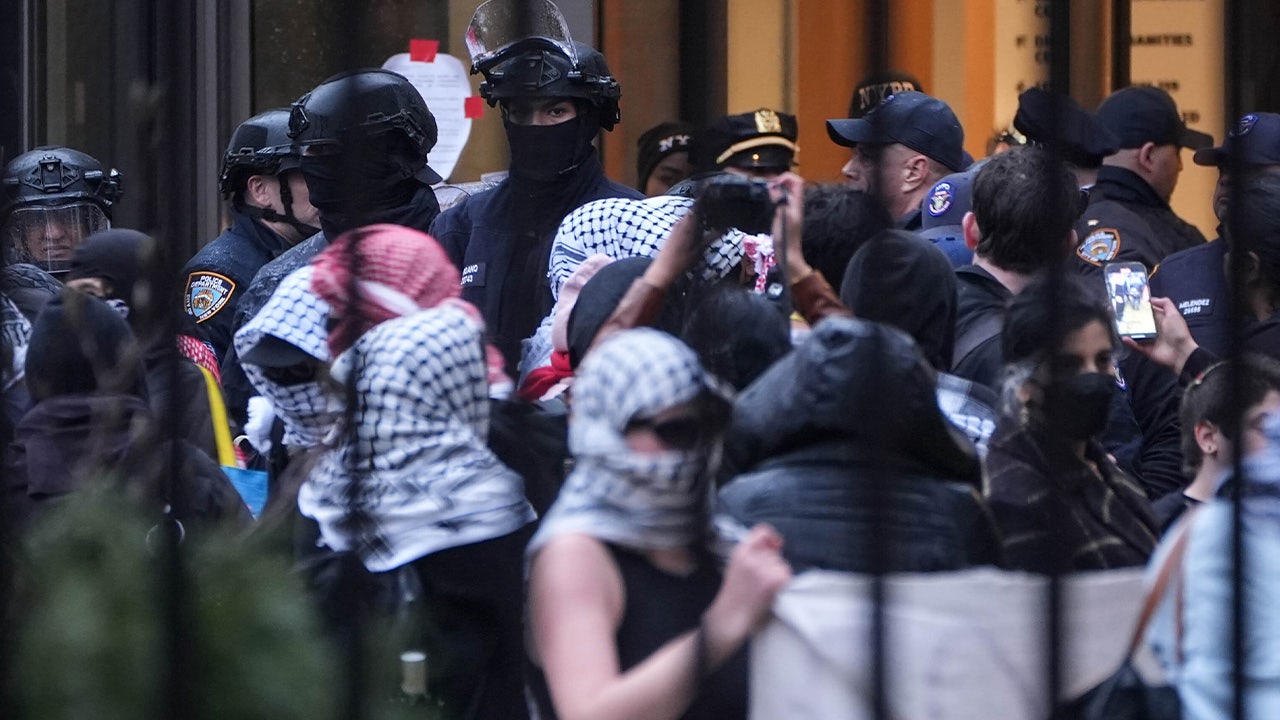
NYPD cleared pro-Palestinian demonstrators from Barnard College after a group of student protesters occupied Milstein Library on Wednesday night.( Lokman Vural Elibol/Anadolu via Getty Images)
TRUMP CUTS MORE THAN $400 MILLION IN GRANTS TO COLUMBIA OVER ANTISEMITISM CONCERNS, POTENTIALLY MORE TO COME
The NYPD was called to Barnard College’s campus on March 5 over a bomb threat that came after hours of anti-Israel agitators demonstrating in Milstein Center, Barnard’s library. Multiple agitators were arrested during the operation.
“Anyone who refuses to leave the location is subject to arrest,” the NYPD said in an X post confirming its response to the threat. “Please stay away from the area.”
Advertisement
Barnard SGA released its letter on Instagram, saying it “strongly condemns” the police presence on campus, saying the school broke “a long-standing promise.” When asked about the “promise” mentioned in the letter, Birman said she did not know to what SGA was referring.
The SGA also listed three demands in the letter: first, “amnesty for all students connected to the Milstein Library sit-in”; second, “a good-faith negotiation” with senior staff, SGA and student protesters; and third, the restructuring of Barnard’s disciplinary process to one that involves students as well as faculty.
Anti-Israel activity at Columbia University reached a fever pitch last spring with an infamous encampment on the campus quad. Birman believes that messaging is still having an impact on student agitators. Barnard is an official college of Columbia University, and the institutions have a long-standing relationship.
A “Free Palestine” flag hangs inside a building at Barnard College in NYC.(X/Columbia Jewish & Israeli Students)
COLUMBIA PROFESSOR SLAMS UNIVERSITY LEADERSHIP AS ANTI-ISRAEL AGITATORS WREAK HAVOC AT BARNARD
Advertisement
“I mean, definitely a lot of it comes from social media, without a doubt. But a lot of it is just repeating what’s been heard in the past. What has been repeated since last spring on campus,” Birman told Fox News Digital.
Birman told Fox News Digital that, despite the anti-Israel agitators’ demonstrations on campus, she generally felt physically safe until the bomb threat.
“Most of the time, I feel completely safe just walking around the campus with my dog tag, my Star of David, all those things. But when these protests are flaring up, I really do have to be careful about where I go and who I speak to and who I make eye contact with. And I just have to be a little bit more intentional about everything I do,” Birman said.
Pro-Palestinian student protesters demonstrate outside Barnard College in New York on Feb. 27, 2025, the morning after pro-Palestinian student protesters stormed a Barnard College building to protest the expulsion last month of two students who interrupted a university class on Israel. (TIMOTHY A. CLARY/AFP via Getty Images)
Advertisement
Overall, Birman is not satisfied with Barnard’s handling of antisemitism on campus. She told Fox News Digital that the college is making “great Fstrides” recently, but it still has room for improvement.
“I think the biggest aspect of that is acknowledging that what’s happening is antisemitism. They’re acknowledging that it’s a form of hate, and they’re acknowledging that it’s intimidation and that it’s creating a sense of unrest on campus. But they haven’t really said anything about antisemitism specifically. And I don’t really know why,” Birman said.
Barnard College did not immediately respond to Fox News Digital’s request for comment on Birman’s letter and the “promise” mentioned in the SGA’s statement.
BOSTON (WHDH) – The Boston Pops are preparing for their Fourth of July Fireworks Spectacular this weekend with half a million people expected to celebrate the United States’ 250th birthday on the Charles River Esplanade.
The President and CEO of Boston Symphony Orchestra said an even bigger celebration is being prepared at the hatch-shell this year.
“Everything is bigger. You only turn 250 once!” said Chad Smith, President and CEO of Boston Symphony. “We recognize that Massachusetts has been a center of revolution, not just in the Revolutionary War, but through the last 250 years. That spirit, sense of innovation, the sense of pushing our country forward is going to be on display as well.”
Organizers are bringing in lighting, sound equipment, extra stages, and of course – the fireworks.
Advertisement
“Planning to bring in new details and amplify the experience on the Fourth of July with a bigger firework show. They’re going to have drones for the first time, amazing talent,” said Kate Fox, Executive Director at the Massachusetts Office of Travel & Tourism.
This year’s spectacular is being hosted by actress Jane Lynch, and will feature performances by country star Lainey Wilson, Chance the Rapper, Trombone Shorty, and Broadway star Megan Hilty.
“We’re going to have remarkable artists that represent the vast diversity and breadth of American music,” Smith said.
The Boston Pops have been performing on the Esplanade for the Fourth of July Fireworks Spectacular for 52 years, and organizers said this year’s show will highlight the history of Massachusetts.
“The history of the Pops is so closely tied to the Massachusetts story on the Fourth of July,” Fox said.
Advertisement
The fireworks show will begin at 9:15 p.m., and will be set to live music from the Pops.
(Copyright (c) 2026 Sunbeam Television. All Rights Reserved. This material may not be published, broadcast, rewritten, or redistributed.)
Join our Newsletter for the latest news right to your inbox
Pittsburgh officials are partnering with a nonprofit to provide a unique way to thank veterans for their service while getting a grand look at the Steel City.
A 90-foot Ferris wheel dubbed the Salute to Service Wheel will be spinning on the North Shore from Wednesday through Sunday.
It’s provided by Piatt Companies and Piatt Sotheby’s International Realty with half of ticket sale proceeds going to Veterans Leadership Program.
First launched in 1982, VLP helps veterans navigate life’s transitions. Efforts include wellness services, housing, career development and various support programs.
Advertisement
Mayor Corey O’Connor, parks and recreation director Eric Sloan, Piatt Companies CEO Lucas Piatt and representatives from the Veterans Leadership Program are expected to host a grand opening celebration Wednesday around 12:30 p.m. at North Shore Drive and Art Rooney Avenue and take the first rides.
It is part of Pittsburgh’s Independence Day celebration.
Tickets are on sale now and cost $11.20, including a $1.20 service fee. They can be found at pittsburghpa.gov.
Bookings are in hour intervals from 2-9 p.m. Wednesday, Thursday, Friday and Sunday and from 2-8 p.m. Sunday.
Riders smaller than 48 inches tall must be accompanied by an adult.
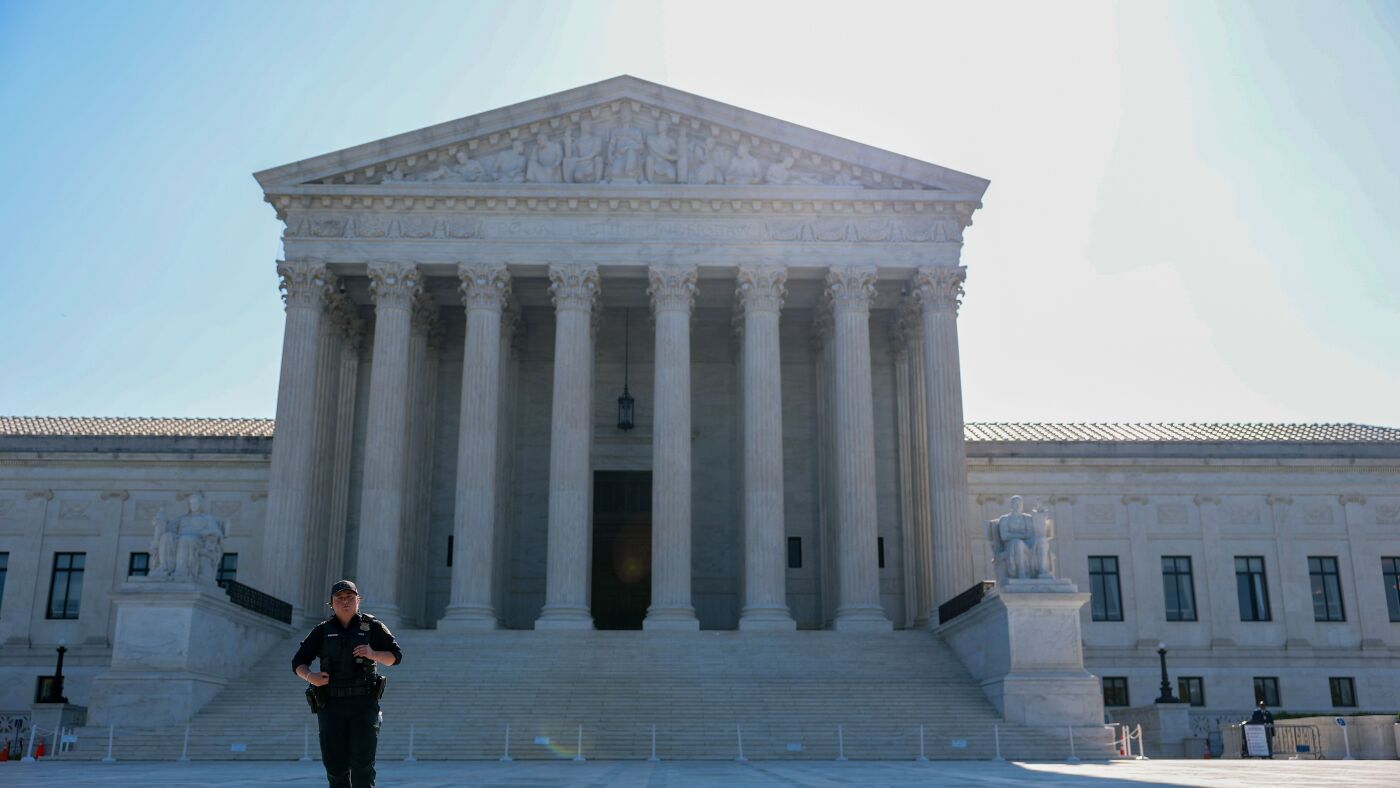
HARTFORD, Conn. (WFSB) – The U.S. Supreme Court said Tuesday it will take up an appeal challenging bans on the AR-15 and other semi-automatic firearms, including the ban in Connecticut and in the Chicago area.
Similar bans are in place in about a dozen states. The case is expected to be heard in the fall.
Connecticut Attorney General William Tong said the state’s assault weapons ban is lawful and that his office is prepared to fight the challenge in court.
“Connecticut’s assault weapon ban is lawful, lifesaving, and broadly supported. The gun lobby has flooded the courts in states across the country to get an assault weapons case up to this Supreme Court. We are prepared for this fight, and we are going to go in with everything we’ve got to keep these weapons of war off our streets, out of our schools, and away from our families,” said Attorney General Tong.