Northeast
On this day in history, October 27, 1858, Teddy Roosevelt, American titan, is born in New York City

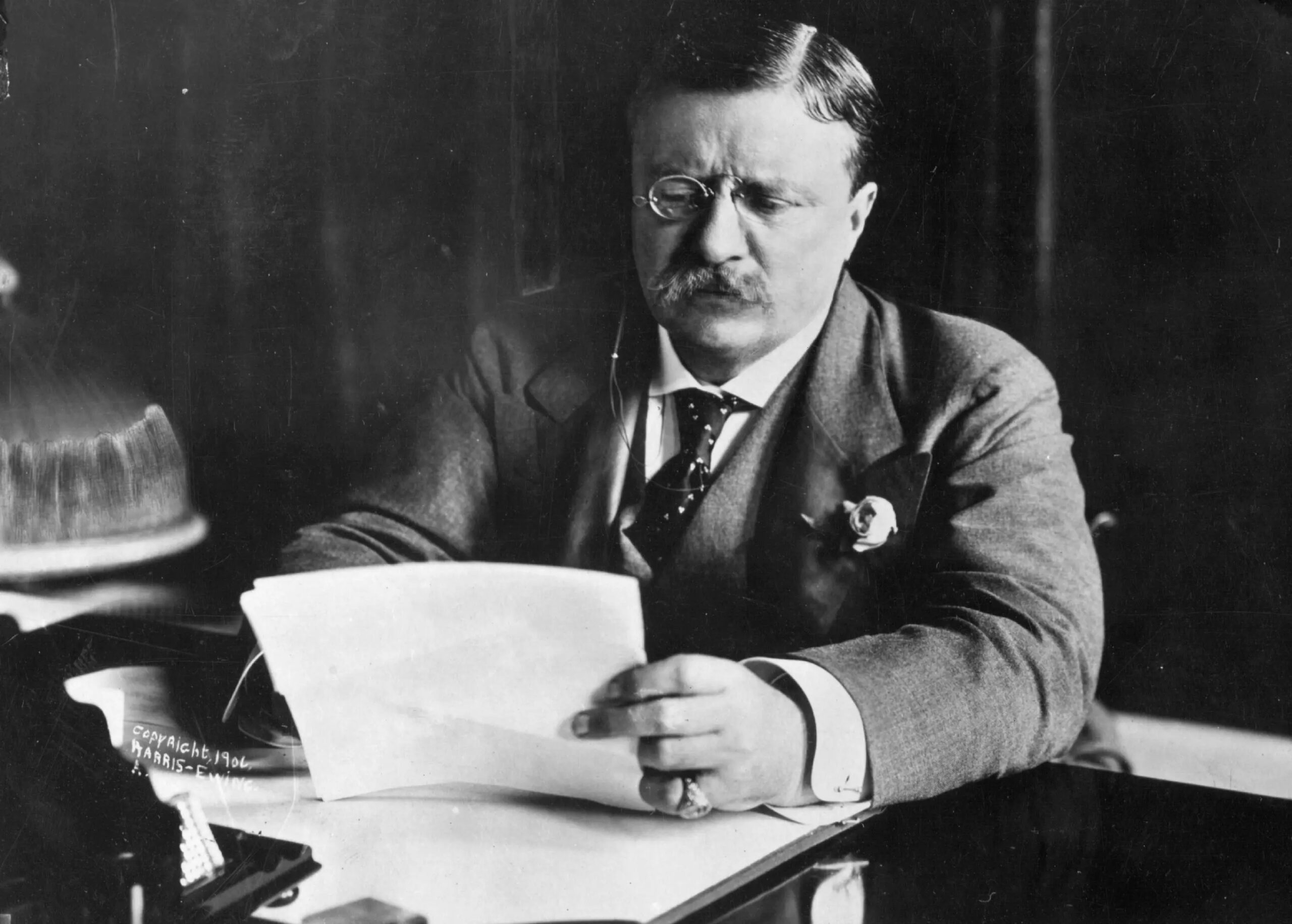
Theodore Roosevelt, a titan of political progressivism, war hero, champion of American exceptionalism, Nobel Peace Prize recipient and 26th president of the United States, was born in New York City on this day in history, Oct. 27, 1858.
He left a massive imprint on both our national heritage and physical landscape and set in motion the ascendancy of the American Century.
Among other astounding achievements, he remains the youngest man to become U.S. president, reaching the Oval Office at age 42.
ON THIS DAY IN HISTORY, OCTOBER 26, 1825, ERIE CANAL OPENS, TRANSFORMING AMERICAN INFRASTRUCTURE, COMMERCE
“Roosevelt’s youth differed sharply from that of the log cabin presidents,” reports WhiteHouse.gov, the official website of the presidential mansion, in its report of the 26th president. It cited “The Presidents of the United States of America” by Frank Freidel and Hugh Sidey.
“He was born in New York City in 1858 into a wealthy family, but he too struggled against ill health — and in his triumph became an advocate of the strenuous life.”
His first wife, Alice Lee Roosevelt, as well as his mother died on the same day in 1884, launching Teddy Roosevelt onto a path that would reshape both his personal destiny and that of the nation.
Travel writer Karen Loftus snaps a photo of the Theodore Roosevelt Birthplace National Historic Site in Manhattan, where the 26th president was born on Oct. 27, 1858. (Kerry J. Byrne/Fox News Digital)
“Roosevelt spent much of the next two years on his ranch in the Badlands of Dakota Territory,” writes WhiteHouse.gov.
“There he mastered his sorrow as he lived in the saddle, driving cattle, hunting big game — he even captured an outlaw.” On a visit to London, he married Edith Carow in December 1886.
He galloped into military lore on July 1, 1898, leading the Rough Riders in the Battle of San Juan Hill, during the United States’ swift victory in the Spanish-American War.
Theodore Roosevelt standing on a podium pointing into the crowd during a campaign rally speech,1900s. (Getty Images)
“Among Theodore Roosevelt’s many lifetime accomplishments, few capture the imagination as easily as his military service as a ‘Rough Rider,’” reports the National Park Service.
“He led a series of charges up Kettle Hill towards San Juan Heights on his horse, Texas, while the Rough Riders followed on foot. He rode up and down the hill encouraging his men with the orders to ‘March!’ He killed one Spaniard with a revolver salvaged from the Maine. Other regiments continued alongside him, and the American flag was raised over San Juan Heights.”
Republican presidential candidate William McKinley tapped Roosevelt as his running mate in the 1900 campaign.
He called the victory the “great day of my life,” writes the NPS.
He parlayed his fame from the battle into the New York governorship in 1899 and 1900. Republican presidential candidate William McKinley tapped Roosevelt as his running mate in the 1900 campaign.
A lithograph showing Theodore Roosevelt leading the Rough Riders during their charge of San Juan Hill, near Santiago de Cuba, on July 1, 1898. (Library of Congress/Corbis/VCG via Getty Images)
He became the youngest president in U.S. history, just 42 years old, amid tragic circumstances, when McKinley was assassinated on Sept. 14, 1901.
“As president, Roosevelt held the ideal that the Government should be the great arbiter of the conflicting economic forces in the Nation, especially between capital and labor, guaranteeing justice to each and dispensing favors to none,” reports WhiteHouse.gov.
He served nearly two full terms in office, then ran for a non-consecutive third term in 1912 as the head of the Progressive Party, following a split with the GOP.
Theodore Roosevelt (1858-1919), 26th president of the United States (1901-09), is shown sitting at his desk working, circa 1905. (Hulton Archive/Getty Images)
He outgained sitting president William Howard Taft in the election, but lost the White House to Democrat Woodrow Wilson.
Despite towering achievements that made him a hero of the progressive movement for more than a century, his legacy has been savaged recently by the same movement.
THEODORE ROOSEVELT STATUE REMOVED FROM FRONT OF NYC’S MUSEUM OF NATURAL HISTORY
The American Museum of Natural History in Manhattan, an institution Roosevelt championed in his hometown, removed the statue of him on horseback from its Central Park West location earlier this year.
His Manhattan birthplace, a part of the National Park Service, was closed throughout the COVID-19 and reopened just last month.
Roosevelt’s image was chiseled in perpetuity in the American landscape he loved as one of four presidents immortalized in Mount Rushmore, alongside George Washington, Thomas Jefferson and Abraham Lincoln.
Roosevelt’s name and image have been cited frequently on the hit TV show “Blue Bloods.”
“Let us place there, carved high, as close to heaven as we can, the words of our leaders, their faces, to show posterity what matter of men they were,” wrote sculptor Gutzon Borglum of his monumental relief.
“Then breathe a prayer that these records will endure until the wind and the rain alone shall wear them away.”
ON THIS DAY IN HISTORY, OCTOBER 14, 1912, TEDDY ROOSEVELT SHOT IN CHEST, MAKES CAMPAIGN STOP MINUTES LATER
In a more contemporary and less permanent iconography, Roosevelt’s name and image were still cited frequently on the hit TV show “Blue Bloods,” where his portrait hangs in the office of the show’s fictional New York City police commissioner Francis Reagan (Tom Selleck).
Roosevelt served as New York City’s top cop from 1895 to 1897.
Bloodstained shirt worn by President Theodore Roosevelt, photographed following an assassination attempt by New York saloon keeper John F. Schrank, on Oct. 14, 1912, in Milwaukee, Wisconsin. (Harlingue/Roger Viollet via Getty Images)
In one almost superhero-like incident that fueled his coveted muscular American image, Roosevelt was shot in the chest by a would-be assassin on the campaign trail in 1912 while running for a third term as president.
For more Lifestyle articles, visit www.foxnews.com/lifestyle
The speed of the bullet was slowed by the contents of Roosevelt’s coat pocket, preventing it from being a lethal strike.
He went on to deliver his 84-minute campaign speech, with the bullet lodged in his chest and blood soaking his white shirt, before he was rushed to the hospital.
Roosevelt later said of his resolute reaction to the assassination attempt: “In the very unlikely event of the wound being mortal I wished to die with my boots on.”
Roosevelt went on to live for another six-and-a-half years after the shooting.
He passed away in Jan. 1919 at age 60.
Read the full article from Here


WETHERSFIELD, Conn. (WFSB) – A tractor trailer’s diesel fuel saddle tank ruptured on I-91 north between exits 25 and 27, state police said.
Approximately 25 to 30 gallons of fuel was released to the road surface, according to the state Department of Energy and Environmental Protection. No ground soil or waterways were involved, DEEP said.
The two right lanes were closed, according to the state Department of Transportation.
No other vehicles were involved and no injuries were reported, state police said.
Wethersfield Fire Department solidified the diesel fuel on the ground surface with Speedy Dry, DEEP said. An environmental cleanup contractor was en route for cleanup.
Copyright 2026 WFSB. All rights reserved.

Scott A. Harrison, Ed.D., M.B.A., is a senior advisor at The Harrison Group, a consultancy based in Yarmouth.
Maine has long valued local control in education. That tradition reflects an important belief that communities should have a strong voice in shaping their schools. But local control should not prevent us from asking a harder question: Are there core functions that could be delivered more effectively through a single statewide framework?
One of the most important is educator evaluation and professional growth. Maine law already recognizes the importance of this work. Under Title 20-A, Chapter 508 (Educator Effectiveness), districts must implement performance evaluation and professional
growth systems that evaluate educators, assign effectiveness ratings and support
professional growth.
The law further requires superintendents to use those ratings to inform key human capital decisions, including recruitment, hiring, induction, mentoring, professional development, compensation, assignment and dismissal. In short, educator evaluation is not intended to be a compliance exercise. It is intended to be a primary lever for the continual improvement of teaching and learning.
In 2012, LD 1858 sought to advance that vision by giving districts broad flexibility to design their own systems. Districts could choose instructional frameworks, establish measures of effectiveness and determine how evaluators would be trained and calibrated. The goal was to balance local autonomy with professional accountability.
More than a decade later, however, the evidence suggests that flexibility alone has not produced consistent results.
My research involving 130 educators across four Maine school districts found only modest perceptions of performance evaluation and professional growth systems’ effectiveness.
On a four-point scale, average ratings ranged from 2.48 to 2.99. While educators generally agreed that districts provide individualized growth plans and can differentiate levels of instructional effectiveness, they rated several critical implementation areas notably lower, including instructional coaching, evaluator training, feedback quality, evaluator calibration and the use of evaluation data to inform professional learning and personnel decisions.
Although the sample was relatively small, the findings closely mirror what I have observed while working with predominantly rural Maine districts over the past decade.
The qualitative findings were equally revealing. Teachers and administrators described systems that are often cumbersome, inconsistently implemented and difficult to sustain. Educators reported spending significant time developing goals and documenting evidence, while administrators acknowledged that competing priorities frequently reduce evaluation to a compliance exercise rather than a meaningful opportunity for growth.
Participants cited insufficient training, inconsistent expectations, limited coaching support and weak connections between evaluation results and professional learning. Perhaps most significant, though not surprising given the realities of today’s schools, the primary obstacle appears to be not commitment, but capacity — the time, expertise and tools required to implement these complex systems with fidelity.
Designing and sustaining high-quality evaluation systems requires expertise in instructional leadership, observation and feedback, adult learning, professional development, data use and evaluator calibration. While some districts have built this capacity, many — particularly smaller and rural systems — have not. Even where expertise exists, time remains a major barrier.
Effective evaluation depends on regular observation, coaching, feedback and calibration. Yet for principals balancing instructional leadership with the daily demands of running a school, carrying out these responsibilities consistently can be extraordinarily difficult.
As a result, Maine has effectively asked more than 250 districts to independently build and maintain highly complex educator effectiveness systems. The outcome is predictable: uneven quality and implementation, and variable impact on teaching and learning.
This raises an important policy question: Should every district continue to design, train, calibrate and maintain its own evaluation system, or would educators and students be better served by a common statewide framework supported by regional and state expertise?
A statewide approach would not eliminate local control. Districts would continue to make decisions about hiring, staffing, curriculum, budgeting and school improvement priorities. Instead, the state would provide shared infrastructure: a common instructional and evaluation framework, validated tools, evaluator training, calibration supports, professional learning resources and implementation assistance.
The benefits extend beyond evaluation. A common framework would create stronger alignment across Maine’s educator pipeline. Colleges and universities could align coursework, clinical experiences and assessments to the exact same standards used in schools while sharing responsibility for educator success beyond initial placement.
Preparation programs, districts and the state would become partners in a continuous system of educator development, creating mutual accountability for results and a stronger return on Maine’s investment in teacher preparation.
Such alignment matters. As systems thinker Peter Senge observed, people working within the same system tend to produce similar results. If we want more consistent outcomes for students, we must pay closer attention to the systems shaping educator practice.
A statewide approach would not eliminate local control. Districts would continue to make decisions about hiring, staffing, curriculum, budgeting and school improvement priorities.
A common framework would establish a shared language and clearer expectations throughout the career continuum. It would also make continuous improvement easier. Rather than asking hundreds of districts to independently revise complex systems, the state could evaluate implementation, refine practices, share lessons learned and respond to emerging research. Educators have experienced too many short-lived initiatives that consume considerable time and effort before fading away.
A coherent statewide system would provide greater stability and more meaningful long-term improvement. The question is not whether local control matters. It does. The question is whether every district should be expected to independently build and sustain complex systems that require specialized expertise, significant resources and ongoing refinement.
If Maine is serious about improving outcomes for students, it should rethink which functions are best managed locally and which are better supported through statewide infrastructure. Educator effectiveness is one example. There are likely others.
In a previous op-ed here, I argued that Maine should reconsider whether teacher compensation is best negotiated district by district. The same question applies here. When critical human capital systems are essential to student success, a coherent statewide framework may be better positioned to advance equity, efficiency and effectiveness while preserving local decision-making where it matters most.
The goal is not less local control, but a smarter balance between local autonomy and statewide support — one that strengthens schools and improves outcomes for every student, regardless of geography.
Massachusetts
Fisherman reels in white shark off Massachusetts, then snags the hook from its toothy mouth

BILLERICA, Mass. (AP) — Elliot Sudal didn’t need a bigger boat, but he did need to find a way to get a hook out of a shark’s mouth.
Sudal, a veteran angler and boat captain, reeled in the nearly nine-foot shark — also commonly known as a great white shark or a great white — on June 7 on Nantucket. White sharks are a protected species in the U.S. and must be released immediately when accidentally caught.
That presents a nasty problem for a fisherman because the white shark is a formidable apex predator best known for the 1975 movie Jaws, in which Roy Scheider utters the famous line “You’re gonna need a bigger boat” upon seeing the big fish. Sudal, who caught the shark while fishing from shore, decided to use his encounter to demonstrate how to respond to such a situation.
Sudal posted a video of himself removing the hook to his social media accounts. In the video, Sudal climbs onto the back of the shark, secures the fish in the surf, and removes the hook from its mouth. By the end of the short video, the shark is back in the water.
White sharks typically have about 300 teeth arranged into five rows, so speed was key.
“Hooks out and back on her way in 15 seconds, not sure how to do it better,” Sudal wrote in an Instagram post that included a video of the shark release.
Sudal is no stranger to sharks, and has caught and tagged hundreds of them over the years. He said in a social media post that this month’s encounter with a white shark was the first time he has ever caught one of them in more than a decade of the work.
Sudal’s practices have sometimes attracted the attention of the National Oceanic and Atmospheric Association, such as in 2017, when the agency investigated his handling of a smalltooth sawfish, an endangered species, in Florida. The agency said in 2018 that it sent Sudal a letter “informing him of the Endangered Species Act issues and the safe handling protocol for sawfish.”
White sharks are not listed under the federal Endangered Species Act, but are subject to special federal protections. The International Union for Conservation of Nature considers them vulnerable globally.
Sightings of white sharks off New England have ticked up in recent years, and some scientists have pinned that to the greater availability of the seals that they prey on. Dangerous encounters between white sharks and humans are extremely rare, and only a few dozen fatal white shark bites on people have ever been recorded.
___
Whittle reported from Portland, Maine.
Copyright 2026 The Associated Press. All rights reserved.
-

 Cleveland, OH10 minutes ago
Cleveland police arrest suspect in involuntary manslaughter investigation, find fentanyl and PCP
-

 Austin, TX13 minutes ago
Austin community celebrates ‘Black Artists Matter’ mural before removal
-

 Alabama18 minutes ago
Two Alabama bridges rank among longest in U.S. Have you crossed them?
-

 Alaska25 minutes ago
Pilot dies in small plane crash southeast of Cordova
-

 Arizona28 minutes ago
Arizona’s Rugged Wilderness Area Has Gorgeous Mountain Trails And Scenic Camping Spots – Islands
-

 Arkansas33 minutes ago
Tulsa downs Northwest Arkansas | Northwest Arkansas Democrat-Gazette
-

 California40 minutes ago
California man arrested for alleged lewd acts, exploitation involving juveniles
-

 Colorado43 minutes ago
Colorado neighbors lament likely closure of Roxborough library; $22 million regional library breaks ground nearby

