New Jersey
Race to watch: New Jersey’s U.S. Senate contest between Democrat Andy Kim and Republican Curtis Bashaw


Republican Curtis Bashaw
Curtis Bashaw, the Republican candidate, is a Camden County native, who grew up in Cherry Hill and Haddonfield. A graduate of Wheaton College and the University of Pennsylvania’s Wharton School of Business, he is a hotelier. He purchased his first hotel with his father in 1986.
For the last 35 years, he built his business, Cape Resorts. His company includes several hotels in Cape May along with a couple of properties on Long Island, New York.
Bashaw served as the head of the Casino Reinvestment Development Authority under Gov. Jim McGreevy for two years.
“I got a taste for what it was like to work inside a political process,” he said. “I felt when I finished that two-yeartwo year term that maybe one day I would go back and get involved.”
Bashaw’s platform includes securing the southern U.S. border, which he said has been conflated with immigration policy.
“Border security shouldn’t be a partisan issue,” he said. “Immigration policy, on the other hand, we need to have a bipartisan consensus.”
His other campaign issues include cutting taxes and creating an energy plan that isn’t heavily reliant on foreign oil. Bashaw said New Jersey is losing college grads and younger professionals to other states because of the state’s affordability issues.
Bashaw is in contrast to the top of the GOP ticket. He is an openly gay man with a husband who said he is pro-choice, though he supported the 2022 U.S. Supreme Court decision that overturned constitutional access to abortion. But, he considers himself “a change agent.”
“I’m being a protagonist in this moment to try to do some good,” he said. “I think voters are exhausted by the dysfunction of our politics, and that’s one of the reasons I stepped into it.”

Green Party Candidate Christina Khalil
Christina Khalil was born in Pottsville, Pennsylvania, and grew up in foster care. After moving to New Jersey, she graduated from Saddle Brook High School then earned a B.A. in psychology and a Master’s degree in Social Work from Ramapo College.
She worked in the co-occurring addiction and mental health field, starting as an intern and then moving to be a liaison between Drug Court and treatment.
During the COVID pandemic, she worked on the front lines at a medical detox facility while volunteering at Hackensack High School.
One major focus of her campaign is fighting inflation. Another is immigration reform. She said improving the immigration policy requires a complete redesign, including funneling money from Immigrations and Customs Enforcement to investments in immigration lawyers, community support, mental health support for asylum seekers, and immediate pathways to citizenship.
Khalil also supports universal healthcare. She wants to establish a no-cost national healthcare system that provides coverage starting from birth. If elected to the Senate, she said she would work to address the housing crisis, police brutality, climate change, animal welfare, campaign finance reform, unemployment and reconfiguring the national tax system.
Khalil has volunteered for multiple community organizations, including the Bergen County LGBTQ+ Alliance.
She said the true keys to freedom lie in education.
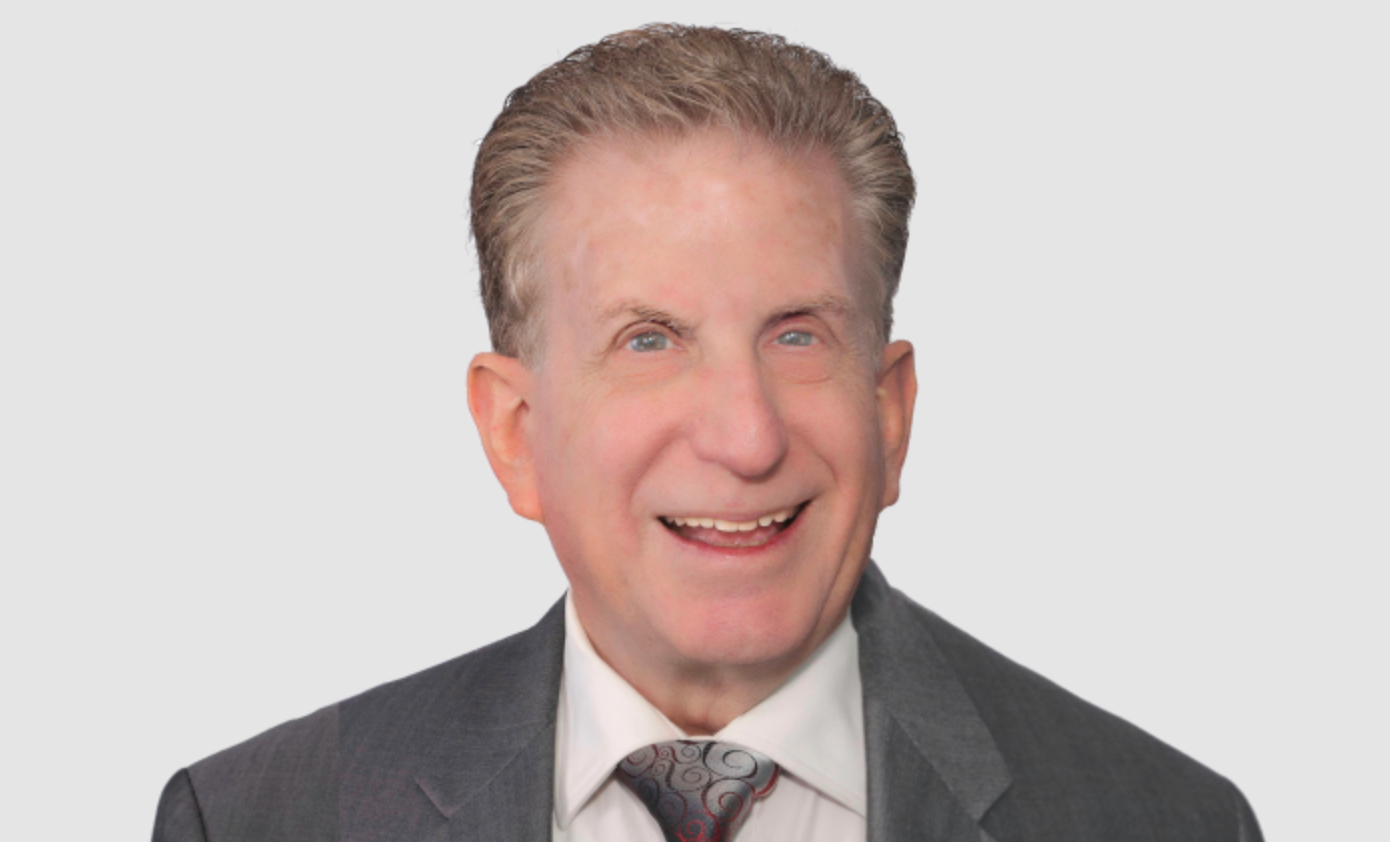
Libertarian Kenneth Kaplan
Kenneth Kaplan was born in Newark, and grew up in West Orange. He graduated from West Orange Mountain High School. Kaplan then attended Franklin & Marshall College, earning a B.A from Brandeis University and a law degree from New York University Law School. He has worked as a real estate broker, lawyer, and is the president of KenKap Realty Corp.
A major focal point of his campaign is following the Constitution, which he believes means small government, lower taxes and more individual liberty.
On his website,he said the best way to stimulate the economy and create jobs ‘is for government to get out of the way.”
He supports eliminating federal income taxes. He said this is doable “if we strip the federal government back to the functions that the Constitution directly mandates, such as providing for the national defense and maintaining a federal court system.”
He favors a foreign policy that does not interfere with the internal affairs of other countries, encourages solar, wind, hydro and other fossil fuel alternatives and reduces the national deficit by shrinking the size of government.
He is a past president of the Livingston Lions Club, and a member of the Men’s Club of Temple Beth Shalom in Livingston, where he is a board member.



New Jersey
Husband of slain New Jersey mom begs for help in newly released 911 call | Fox News Video

Former homicide detective Brian Foley joins ‘Fox & Friends Weekend’ to provide analysis on Conor Hanlon’s 911 call after finding his wife, Brooke, stabbed to death.
Former homicide detective Brian Foley provides expert insights into the newly released 911 call from Conor Hanlon, whose wife, New Jersey therapist Brooke Hanlon, was found stabbed to death. Foley analyzes the husband’s emotional state and the police’s approach, noting the case’s ‘suspicious’ designation 13 minutes into the call.

A young firefighter died two weeks after being badly hurt in a crash while responding to a fire call, according to the Malaga Fire Company.
Robert (Bobby) Reider, 23, was driving north along Delsea Drive while trying to get to the scene of fire on Saturday, June 27 when his car went off the road, officials said.
When first responders got to the scene of the crash, they found Reider trapped in his car and worked to remove him.
Reider was then taken by helicopter to a nearby hospital where he was treated for severe and traumatic injuries.
Weeks later, on July 10 around 4:30 a.m., Reider died from his injuries while still in the hospital.
The Malaga Fire Company says that Reider joined their team in 2018 when he was just 16 as a junior firefighter.
He then went on to earn a certificate at Fire 1 at the Salem County Fire Academy in 2022.
New Jersey
NJ Legislators Are Considering a Bill That Could Ban Tesla Robotaxis Due to Their Tech Choice

New Jersey lawmakers are deliberating on a law that would create a three-year autonomous vehicle pilot program in the state, but Tesla might be banned from participating altogether over a technical choice made by the Texas-based carmaker for its self-driving vehicles.
The bill, officially known as S1677, would establish autonomous vehicle testing requirements with the New Jersey Department of Transportation (DOT) and the New Jersey Motor Vehicle Commission. One of these proposed requirements is that autonomous vehicle operators use camera-based technology and two additional forms of sensor tech, such as lidar or radar. Of course, Tesla’s autonomous vehicle technology is purely camera-based, meaning the brand could be banned from testing in New Jersey.
The text of the bill is fairly straightforward, requiring prospective autonomous operators to submit a “law enforcement interaction plan” and detail redundant safety systems, crash-avoidance technology, and data recording capabilities. The specific language that would ban Tesla’s system requires autonomous operators to “be equipped with crash-avoidance systems, including a camera system and two distinct sensing modalities that are capable of detecting and tracking obstacles in the event of failure of the camera system.” The bill also favors keeping traditional steering wheel and pedal controls available. While initial testing would be completed with human safety operators, the bill would allow fully autonomous operation once certain metrics, such as 50,000 crash-free miles, are met.
The decision to require both camera- and sensor-based technology is not a coincidence, according to The Verge. “This is not anti-Tesla. I’m pro-New Jersey safety,” Democratic state senator Andrew Zwicker, the bill’s primary sponsor and a physicist by trade, said to The Verge. “At this point, I don’t think the evidence is sufficient that a single sensor with software can handle situations that humans can.”
Tesla is, unsurprisingly, upset about this development, and the company is fighting back. The automaker’s public policy platform, Engage Tesla, features a call to action for Tesla owners to contact members of the New Jersey Legislature to oppose the bill, with the plea claiming the autonomous vehicle testing program is the opposite of progress, and saying that Tesla would be legally barred from testing in the Garden State. Statistics about roadway death rates in New Jersey and denying freedom of movement for elderly populations are also included.

“Rather than prioritizing real safety outcomes and performance, the bill specifically bans Tesla from the New Jersey market,” the site reads. “Every arbitrary roadblock is a delay for the people who need this life-changing technology most. Legislation that bans Tesla’s proven AV technology from the market is not caution — it’s anti-competitive favoritism that will cause New Jersey to fall behind while other states move forward.”
The bill, introduced on January 16, is currently under consideration by the New Jersey Senate Budget and Appropriations Committee. The bill’s language closely mirrors talking points from the nonprofit SAVE-US, which is lobbying for stronger oversight of autonomous vehicle testing. New Jersey is not the only state pondering additional autonomous testing regulation; New York legislators are working on similar legislation. Just yesterday, federal safety regulators called out autonomous vehicle operators like Waymo for interfering with first responders.

A New York transplant hailing from the Pacific Northwest, Emmet White has a passion for anything that goes: cars, bicycles, planes, and motorcycles. After learning to ride at 17, Emmet worked in the motorcycle industry before joining Autoweek in 2022 and Road & Track in 2024. The woes of alternate side parking have kept his fleet moderate, with a 2014 Volkswagen Jetta GLI and a BMW 318i E30 street parked in his Queens community.
-

 Pennsylvania2 minutes ago
Indicators 2026: How walkable is Northeast Pennsylvania?
-

 Rhode Island7 minutes ago
RISP Warwick Arrests July 10: Threatening Officials, DUI – WarwickPost.com
-

 South-Carolina14 minutes ago
Editorial: There’s an easy solution to SC budget impasse, but legislators won’t like it
-

 South Dakota17 minutes ago
10 North Dakota Small Towns With Unmatched Friendliness
-

 Tennessee22 minutes ago
Former Tennessee Football Position Coach Beats Out Vols For Commitment of Elite Recruit | Rocky Top Insider
-

 Texas29 minutes ago
This Week in Texas: $1500 for every Texas Household, ICE accountability, politics in sports
-

 Utah32 minutes ago
Utah woman’s viral video helps raise more than $174K for Navy veteran she spotted at airport
-

 Vermont37 minutes ago
802 Homes to release free home design catalog aimed at lowering construction costs

