Northeast
New Jersey teacher taped 9-year-old boy to desk for nearly an hour, police say

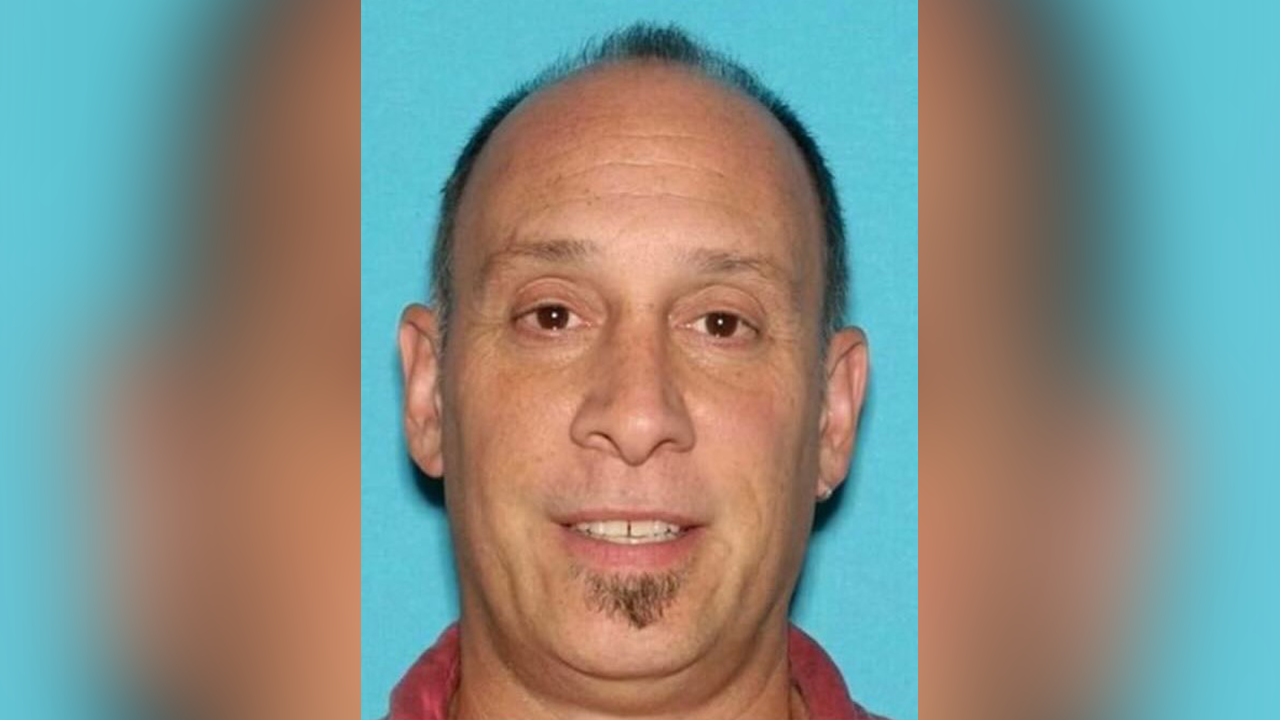
A teacher in New Jersey was arrested on allegations that he taped a nine-year-old student to his desk for close to an hour, while a teacher’s aide was accused of failing to intervene.
Lenox Elementary School teacher Todd Lewis placed masking tape around the back of the boy’s neck and secured it to the student’s desk for roughly 40 to 50 minutes one day in October while Sallyann Scala was in the classroom but failed to intervene, the victim said, according to the Pompton Lakes Police Department.
Lewis, 57, was charged with one count of second-degree endangering the welfare of a child and Scala, 67, was charged with fourth-degree abuse and neglect of children.
GOV. PHIL MURPHY SIGNS LAW PROHIBITING BOOK BANS, MAKING NEW JERSEY THE LATEST STATE TO DO SO
Todd Lewis, 57, was charged with one count of second-degree endangering the welfare of a child. (Pompton Lakes Police)
Police said Lewis appeared for judicial processing proceedings on Thursday after he was served a warrant the day before. He was released pending trial on monitoring, with special release conditions that he not have contact with any children.
Scala was served with a summons complaint on Wednesday.
Sallyann Scala, 67, was charged with fourth-degree abuse and neglect of children. (Pompton Lakes Police)
If convicted, Lewis could face five to 10 years in prison, while Scala could face up to 18 months.
The school district’s superintendent said Lewis and Scala were placed on leave and are prohibited from campus.
FREE SPEECH ORG TORCHES IOWA CLASSROOM’S BANNED WORDS LIST FEATURING ‘OHIO,’ ‘RIZZ’ AND HOLOCAUST REFERENCES
The school district’s superintendent said Lewis and Scala were placed on leave and are prohibited from campus. (iStock)
“We want to assure our parents, students, staff and school community that we are working very closely with law enforcement to guarantee the safety and security of our students,” Superintendent Paul Amoroso said in a statement to nj.com.
Read the full article from Here

Boston, MA
Photos: See Nicole Kidman, Anne Hathaway, and more stars on the 2026 Met Gala red carpet – The Boston Globe

Held on the first Monday in May each year, the 2026 Met Gala features a “Fashion is Art” dress code, inspired by the institute’s spring exhibition, “Costume Art.” Opening to the public on May 10, the exhibition is the first to be housed in the new Condé M. Nast Galleries, located adjacent to the museum’s Great Hall.
Bringing out fashionable A-list stars from Hollywood and beyond, this year’s soirée once again features Anna Wintour back as a co-chair, marking her first Met Gala since her announcement last year that she was stepping down as editor-in-chief of Vogue. A trio of icons from across entertainment and sports join Wintour for the 2026 festivities, with Beyoncé, Nicole Kidman, and Venus Williams also serving as co-chairs.
Meanwhile, the gala’s host committee is pretty start-studded as well. Co-chaired by fashion designer Anthony Vaccarello and actress Zoë Kravitz, this year’s committee is comprised of Adut Akech, Angela Bassett, Sinéad Burke, Sabrina Carpenter, Doja Cat, Gwendoline Christie, Alex Consani, Misty Copeland, Elizabeth Debicki, Lena Dunham, Paloma Elsesser, Rebecca Hall, LISA, Chloe Malle, Aimee Mullins, Sam Smith, Tschabalala Self, Amy Sherald, Teyana Taylor, Lauren Wasser, Anna Weyant, A’ja Wilson, Chase Sui Wonders, and Yseult.
Amazon founder Jeff Bezos and his wife Lauren Sánchez Bezos are the lead sponsors for both the gala and spring exhibition, and will serve as honorary chairs for Monday’s party.
Check out below to see all the top fashion moments and looks from the 2026 Met Gala red carpet.


Matt Juul can be reached at matthew.juul@globe.com.


Now just six months before the midterm elections in November, U.S. Rep. Rosa DeLauro said affordability and cost-of-living issues are still at the front of voters’ minds.
But the New Haven Democrat argued that the challenges to democracy that could threaten those elections should also be top of mind, whether it’s undermining the legitimacy of elections or intimidating local election workers.
“The cost of living crisis is the biggest problem on Americans’ minds today, and Congress should rightly be focused on how we’re trying to bring down those soaring costs of healthcare, of food, of housing, gas prices,” DeLauro said at a Monday forum. “But the survival of our democracy, our great American experiment in government of, by, and for the people, is also at stake.”
“Congress can and must focus on both — tackling the affordability crisis and securing the future of our democracy,” she added.
While Congress is on a week-long recess, the top Democrats who sit on three congressional committees held a meeting in New Haven on Monday known as a “shadow hearing,” which are convened by the minority party. They are largely symbolic but give Democrats a chance to steer the conversation and choose all of the witnesses that testified about voting in America and the way states conduct elections.
Instead of sitting in one of the many wood-paneled hearing room in the U.S. Capitol complex, they gathered at Gateway Community College in New Haven to hear from a panel of experts on elections that consisted of a current and former secretary of the state, a Yale Law School professor, a member of the nonpartisan League of Women Voters of Connecticut and two voting advocacy groups.
DeLauro helped convene the meeting alongside U.S. Rep. Jim Himes, D-4th District, and U.S. Rep. Joe Morelle, D-N.Y., who serves as the ranking member of the House Administration Committee, which has jurisdiction over federal election oversight.
They argued that Republicans’ legislative push to change voting and the recent Supreme Court ruling that dilutes part of the Voting Rights Act could lead to the disenfranchisement of voters, particularly voters of color, in the 2026 midterm elections and create barriers for local elections administrators.
One of the main concerns that came up throughout the hearing was cuts to funding that help states and localities with election security.
Lawmakers and the panelists pointed to President Donald Trump’s latest budget proposal that would make steep cuts to an election security program that’s part of the Cybersecurity and Infrastructure Security Agency (CISA).
Himes, who serves as the ranking member of the House Intelligence Committee, noted the importance of securing elections from foreign interference and importance of such federal funding.
“This is not a new problem, and every American should be alert to signs of malign interference by our adversaries,” Himes said. “But rather than using the awesome capacity of our intelligence community to bolster election security infrastructure, the administration over the course of these last 16 months has consistently pivoted resources away from this cause, dismantling institutions that were specifically designed to combat efforts by our adversaries, foreign and domestic, to interfere in U.S. elections.”
During her testimony, Connecticut Secretary of the State Stephanie Thomas said her office relied on CISA’s funding and other federal resources during the 2024 elections. She said the cybersecurity agency gave them regular security briefings on foreign interference, and CISA and the FBI provided de-escalation training for their workforce.
“This is not unique to Connecticut. This is the nation,” Thomas said. “Those services are now no longer in existence, or the funding has been cut so much that the election community is concerned about what 2026 looks like.”
As the top Democrat on the House Appropriations Committee, DeLauro said she’d work on bringing those requests or changes to her fellow congressional appropriators when they negotiate federal funding for fiscal year 2027 in the coming months.
“We need funding to make sure that states can get messaging out to assure American voters that polls are safe and they can show up,” Thomas said. “Essentially we need funding. We don’t need more hoops.”
Monday’s hearing comes on the backdrop of Congress weighing Republican-led legislation that would have implement major changes to voting if enacted. But the bill is unlikely to become law and faces significant hurdles.
The SAVE America Act has been a top priority for Trump and congressional Republicans. But it has effectively stalled in the U.S. Senate since it doesn’t have the votes to clear the 60-vote threshold to bypass a filibuster — something Senate Majority Leader John Thune, R-S.D., has repeatedly cited amid Republican fury over it.
The bill would require documentation to prove people are U.S.-born citizens or naturalized citizens in order to register to vote. Proper ID would also be needed for those who are moving to a new address or switching party affiliation. Documentation to prove citizenship would include a birth certificate, a U.S. passport or a naturalization certificate. A driver’s license wouldn’t qualify.
Trump has also signed an executive order that would limit mail-in voting, which has become a popular form of voting that the president has also used in past elections. Connecticut was one of nearly two dozen states to sue over this order.
If enacted, the SAVE America Act would make major changes to how people vote in Connecticut. The state doesn’t require documentation to prove citizenship when registering to vote. Instead, they must attest that they are a citizen and sign a form. If they lie, they would face criminal prosecution.
Thomas previously warned against the SAVE America Act in late March alongside Gov. Ned Lamont and Lt. Gov. Susan Bysiewicz.
At the time, Connecticut Republicans pushed back, citing allegations of voter fraud in the state. Bridgeport has been the most noticeable case where people have been criminally charged with violating absentee ballot rules.
“The reason why this is happening is because of blue states like Connecticut that have refused to address real, live examples of election fraud,” state Sen. Rob Sampson, R-Wolcott, said back in March. “The whole point of the SAVE America Act is to make elections honest.”
Trump reiterated his calls to get rid of the filibuster so the Senate can pass it. That would allow the upper chamber to pass it with a simple majority, and Republicans control 53 seats. Thune has also pushed back against this, saying he doesn’t have the votes among Republicans to ax the filibuster.
In a Truth Social post last week, Trump argued that failing to pass the SAVE America Act would lead to “the worst results for a political party in the HISTORY of the United States Senate,” in addition to a plea to “terminate” the filibuster.
As states like Connecticut continue to weigh their own changes, Ann Reed of the League of Women Voters of Connecticut said she hopes no-excuse absentee voting will get taken up in the final days of the General Assembly’s session, which ends on Wednesday.
And she said she’s worried about the misinformation around voting and the lack of trust among people just months out from a major election.
“This conversation is a national one, but the election battles are being fought in every state,” Reed said. “People are rightfully concerned about election security.”
CT Mirror reporter Andrew Brown contributed to this story.
-

 Detroit, MI24 minutes ago
Boston Red Sox vs. Detroit Tigers Game Delayed on Monday
-

 San Francisco, CA36 minutes ago
Pac Heights mansion sells for $28M as spring market heats up
-

 Dallas, TX42 minutes ago
FIFA Fan Fest is coming and parking prices may surprise you
-

 Miami, FL48 minutes ago
Miami Marlins C Joe Mack makes MLB debut after promotion
-

 Boston, MA54 minutes ago
Photos: See Nicole Kidman, Anne Hathaway, and more stars on the 2026 Met Gala red carpet – The Boston Globe
-

 Denver, CO60 minutes ago
Monday's Mets-Rockies game time changed to 3:40 p.m. MT
-

 Seattle, WA1 hour ago
BIZNOTE: New retail shop to open in former Willow space in West Seattle Junction
-

 San Diego, CA1 hour ago
San Diego Community College District fighting major cyberattack