Northeast
Harris voters in swing state admit Trump better for securing ‘horrible’ border: ‘Get that wall finished'

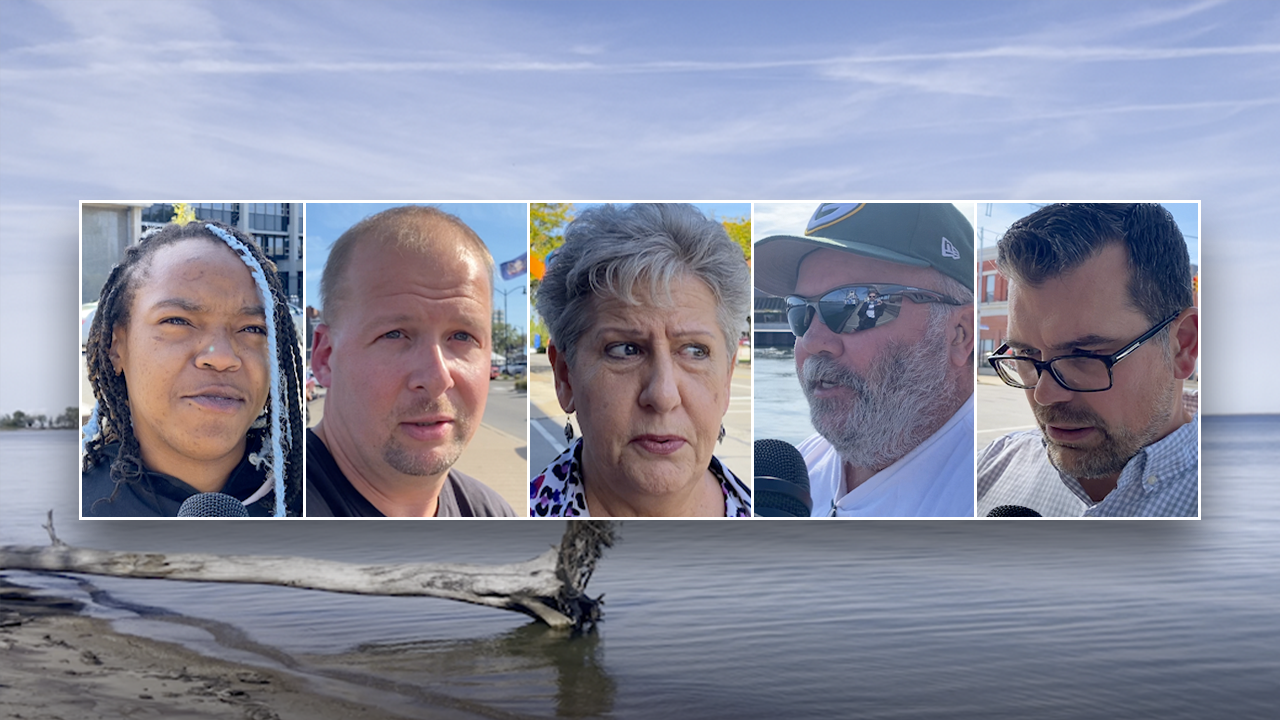
Voters on both sides of the political aisle in the crucial swing state of Pennsylvania admitted that former President Trump will do a better job securing the border than Vice President Kamala Harris if she gets into office.
Fox News Digital spoke to both Harris and Trump supporters in Erie, Pennsylvania, last month, a city in a swing county in a swing state that many pundits predict will decide the entire presidential race next Tuesday.
Although the voters differed on who they want to win the White House next week, most of them acknowledged that the lack of security on the U.S. southern border is a serious problem, and multiple Harris voters even said Trump would do better at securing it than their preferred candidate.
William from Erie said he’d go “with Trump on that one,” when asked about who would handle the border better. “He was doing a better job. He was the one that started the wall, you know, he was the one that backed it all, said, ‘We need to do this.’”
HARRIS WAS ‘RELUCTANT’ TO CHOOSE SHAPIRO BECAUSE OF HIS ‘JEWISH HERITAGE,’ SPEAKER JOHNSON SAYS: REPORT
Erie, Pennsylvania residents spoke to Fox News Digital about the problems at the U.S. southern border. (Fox News Digital)
“And Biden, he wasn’t addressing the border at all,” he added, though he indicated he would vote for Harris in this cycle.
Likewise, local resident Toni – who told Fox News Digital she would be voting for Harris – admitted that she trusted Trump more on securing the border.
“I’d probably have to say Trump on that one, because, I don’t know, it seems like that’s one of his big things.”
Despite being either Democratic or Republican voters, other Erie locals admitted to Fox that they believed that border security is a big issue this election cycle.
Henry, a Trump voter who says he became homeless under the Biden-Harris economy, stressed the dangers of criminal migrants coming across the border. He told Fox, “I believe they’re allowing too many undocumented, and they’re really dangerous people that they’re letting in. They’re not very friendly, I can assure you of that.”
Glenn, a retiree living in Erie who said he’s voting for Harris, admitted he’s not satisfied with the way the border’s being handled currently.
“I think border security needs beefed up,” he said. “We’re letting too many illegals get across, but I don’t think it’s Harris and Biden’s fault. I think it’s Congress’ fault for not doing what they need to do to give border security more money to do their job.”
When asked what he thought would happen to America if the border stayed as secure as it currently was, he replied, “We’ll just get overrun by illegals.” Still, he said he trusts Harris more with securing the border.
Matt, another Harris voter, told the outlet he believed the border is a “problem,” but mentioned it’s being too politicized. “I think immigration is a concern. I do not think it is – how it is being polarized right now where people are getting murdered from immigrants, and it’s basically taking over our country. I believe that it’s a concern and issue that needs to be addressed.”
However, Matt blamed Trump and the GOP for tanking a “bipartisan” border bill earlier this year and said “neither” when asked which of the two major candidates would better handle the border crisis.
PROTESTERS INTERRUPT KAMALA HARRIS’ MICHIGAN RALLY: ‘NO MORE GAZA WAR!’
“What’s going on at the border is inexcusable,” Diane, a Trump voter, told Fox News Digital She said she’s bothered by “the fact” that the southern border is “unmonitored – the fact that it’s come one, come all.”
“It’s destroying so many families, and we’re getting people who haven’t been vetted and are causing problems, and I can’t imagine being someone who lives on the border,” she said.
When asked who she trusts better on border security, Diane quipped, “The guy that was building walls.” She added her belief that if the current border policy continued for another four years, “We would just be a completely different country.”
Bradley, a Erie resident who leads a pro-Trump group in the city, told Fox News Digital that border security is a top concern for him behind the economy.
“I think it’s been horrible,” he said. “I mean they let millions of people in. There’s even terrorists they’ve admitted they’ve let in.”
The Department of Homeland Security last month said the terrorism threat environment in the U.S. will remain high over the next year, due in part to terror groups exploiting weaknesses at the southern border.
“Over the next year, we expect some individuals with terrorism ties and some criminal actors will continue their efforts to exploit migration flows and the complex border security environment to enter the United States,” the DHS assessment stated in October.
When asked what would happen if the policy continued, Bradley said, “I don’t think we’ll have a country left.”
Read the full article from Here


(WJAR) — Rhode Island will begin phasing out the sale of certain rat poisons after Gov. Dan McKee signed new legislation into law Thursday, making the Ocean State the second in the nation to adopt restrictions on the products.
The law targets first- and second-generation anticoagulant rodenticides, commonly used to control rats and mice.
Supporters say the poisons are harming wildlife, while critics argue they are among the most effective tools available to manage rodent populations.
Under the law, the sale of first-generation anticoagulant rodenticides will be prohibited beginning March 1, 2027.
Restrictions on second-generation anticoagulant rodenticides will take effect Jan. 1, 2028. A statewide prohibition on both types is scheduled to take effect Jan. 1, 2029.
Licensed commercial applicators and certain public health, agricultural and municipal uses are exempt from the restrictions.
Supporters said birds of prey such as hawks, owls and eagles are particularly vulnerable because they consume poisoned rodents. (WJAR file photo)
The legislation was backed by the Audubon Society of Rhode Island, which says the poisons can move through the food chain and kill predators that feed on rodents.
“Across the country, and again, with Rhode Island making this move, the second only to California, we’ve seen just too many cases of off-species targets either being sickened or worse with these rodenticides,” said Maxwell McFarland, director of advocacy for the Audubon Society of Rhode Island.
McFarland said birds of prey such as hawks, owls and eagles are particularly vulnerable because they consume poisoned rodents.
“What we’re seeing is these are accumulating in the natural predators meant to manage these rodent populations,” McFarland said. “So primarily our hawks, owls and eagles.”
According to McFarland, wildlife rehabilitators in Rhode Island have documented widespread exposure to the poisons among injured birds brought into their care.
“They’ve had hundreds of raptors admitted into their care over the past couple of years, and every single one has shown signs of anticoagulant rodenticide poisoning,” he said.
Supporters of the law say reducing the use of rodenticides will encourage communities to adopt alternative pest-control methods, including improved sanitation, securing trash and sealing buildings to prevent rodent access.
The law also creates a voluntary municipal Integrated Pest Management pilot program aimed at helping communities transition away from anticoagulant rodenticides.
Not everyone supports the change.

Tony DeJesus, former vice president of Big Blue Bug Solutions, said the restrictions will make it more difficult for homeowners and businesses to control rats and mice. (WJAR)
Tony DeJesus, former vice president of Big Blue Bug Solutions, said the restrictions will make it more difficult for homeowners and businesses to control rats and mice.
“It’s gonna have a major impact on our business. And not only that, but on the homeowners,” DeJesus said.
DeJesus said over-the-counter rodent control products commonly used by homeowners will no longer be available once the law takes effect.
“Homeowners will not be able to go out anymore and buy things like Decon and some of the other over-the-counter baits once this goes into effect,” he said.
He also expressed concern about the impact on restaurants and public health.
“The main thing is that when we start talking about how this is gonna affect it, rats carry disease,” DeJesus said. “Food poisoning is associated with both rats and mice in restaurants and things.”
DeJesus pointed to California, which enacted similar restrictions, as a cautionary example.
“The proof in the pudding is the state of California that did the same thing three years ago,” he said. “And now Los Angeles has been voted the rattiest city in the United States.”
McFarland said the legislation provides communities and pest-control companies with time to adapt before the restrictions fully take effect.
“We believe that it’s a fair timeline where communities, municipalities and pest management companies can learn, unlearn rather, the status quo of how they’re applying these rodenticides,” he said.
The Audubon Society said Rhode Island’s law follows similar action taken in California and comes as other New England states consider comparable legislation.
State officials say the first restrictions under the new law will take effect in March 2027.

QUECHEE, Vt. (WCAX) – Crews worked across the White River Valley on Friday to restore power and clean up debris after two EF-1 tornadoes touched down in Vermont, including one that swept through Quechee.
Joe Haynes stared over his yard in Woodstock, with chunks of his roof scattered across it, wondering about the next steps.
Reporter Connor Ullathorne: How long will this all take to clean up?
Joe Haynes: Oh, I have no idea.
He said he’s lucky he and his nearby neighbors are safe and are not blocked in.
“Some of the trees were down. They’ll be down for awhile but they can make their way out,” Haynes said.
Crews in Woodstock continued clearing trees and downed power lines along Route 4. That’s where Tiffany Miller was working inside the Mountain Creamery when the tornado passed right over the store. Nobody was injured, but their new walk-in storage ended up in the trees.
“It’s definitely a big setback for us. We were getting ready to have it wired up tomorrow. So I mean we definitely have a lot of elbow grease and hours to put in to get back up to where we were,” Miller said.
She said she was happy to see how many customers have checked in on them.
“It’s nice to see that no matter what, in some bad case– storms or indifferent– that we can still come together and be there for each other,” Miller said.
Farther east in Quechee, workers hacked away at trees and swept away debris along the golf course and roads.
“It’s crazy they want to see. Everybody cares about their community and all their assets and amenities, so it’s nice to see everybody come together,” Quechee Club General Manager Brian Kelley said.
Kelley said they were out early Friday, and many residents were shocked at the damage. He’s still hopeful the area can come together and support each other.
“We normally do about 200 rounds a day going into one of our peak weekends. We’ve got the balloon festival this weekend, so we have that population in town, so a little bit of disappointment but people have been great and supportive, and we’ll be back at it tomorrow,” Kelley said.
Kelley said it should be a few days until they are back to full force in Quechee.
Many others across the region told us they’re now focused on getting back to normal.
Click here for the latest forecast from the WCAX First Alert Weather Team.
Copyright 2026 WCAX. All rights reserved.

new video loaded: Fans Show Up to the Parade in Their Best Knicks-Themed Attire
transcript
transcript
Fans Show Up to the Parade in Their Best Knicks-Themed Attire
New York Knicks fans showed up in droves to a ticker-tape parade in Manhattan in their best orange and blue outfits to honor the N.B.A champions.
-
“Patrick Ewing. He didn’t get a ring. But I wear your sneakers, bro. When I was in high school, back in the ’90s, Patrick Ewing, John Starks, they were the team that I rooted for in the ’90s. They didn’t make it. So as a tribute to him because this is where I started at being a fan, Patrick Ewing. Knicks hat in denim — I’m a denim fanatic. So I love denim — Knicks hat. And yeah, that’s it.” “This is my style. I usually dress like this every day. But I did a special Knicks edition. It’s all really fun. I start with my makeup. I did really cute flames on my eyes because the Knicks are fire. I don’t really know what I’m going to do before I put it on. I just figure it out along the way. Like, this is a piece of fabric and I just layer in stuff.” “This is from my online boutique and the hat I just bought on the way to the parade because I wanted to match the jumpsuit, and that’s how I came up with the outfit.” “She was ready to go, man.” “Can you show your fingernail?” “She’s been sleeping in her Jalen Brunson jersey for the last 10 weeks. We’ve been watching all the games. You want to tell them who’s your favorite player?” “Jalen Brunson.” “I’m pretty sure this jersey was actually made for a human baby. But they’re selling them around the block. And we threw it on Chester and everyone started clapping. So — he wears it well.” “Blue and orange.” “So I did blue and orange.” “It had to be orange and blue. “Orange and blue. Orange and blue.”
By Meg Felling, Jeremy Raff, Ang Li and David Cheung
June 18, 2026
-

 Rhode Island3 minutes ago
Rhode Island to phase out sale of rat poisons under new law
-

 South-Carolina6 minutes ago
Texas A&M baseball lands LHP Logan Prisco from South Carolina
-
South Dakota11 minutes ago
SD Lottery Mega Millions, Millionaire for Life winning numbers for June 19, 2026
-

 Tennessee18 minutes ago
Tennessee baseball adds pitcher Ricky Ojeda, UC Irvine transfer
-

 Texas21 minutes ago
Fans erupt as U.S. wins in World Cup and North Texas builds buzz
-

 Utah26 minutes ago
United States is flying at men’s World Cup, and Utah soccer fans are taking note
-

 Vermont33 minutes ago
Vt. communities work to clean up after EF-1 tornadoes strike
-

 Washington36 minutes ago
IMPD adds third public safety camera along Washington St in three months

