Northeast
Four illegal immigrants linked to MS-13 indicted for allegedly murdering 14-year-old boy in Maryland park

NEWYou can now listen to Fox News articles!
Four illegal migrants, who are members of the notorious MS-13 gang, have been indicted after they allegedly brutally murdered a 14-year-old boy in a Maryland park.
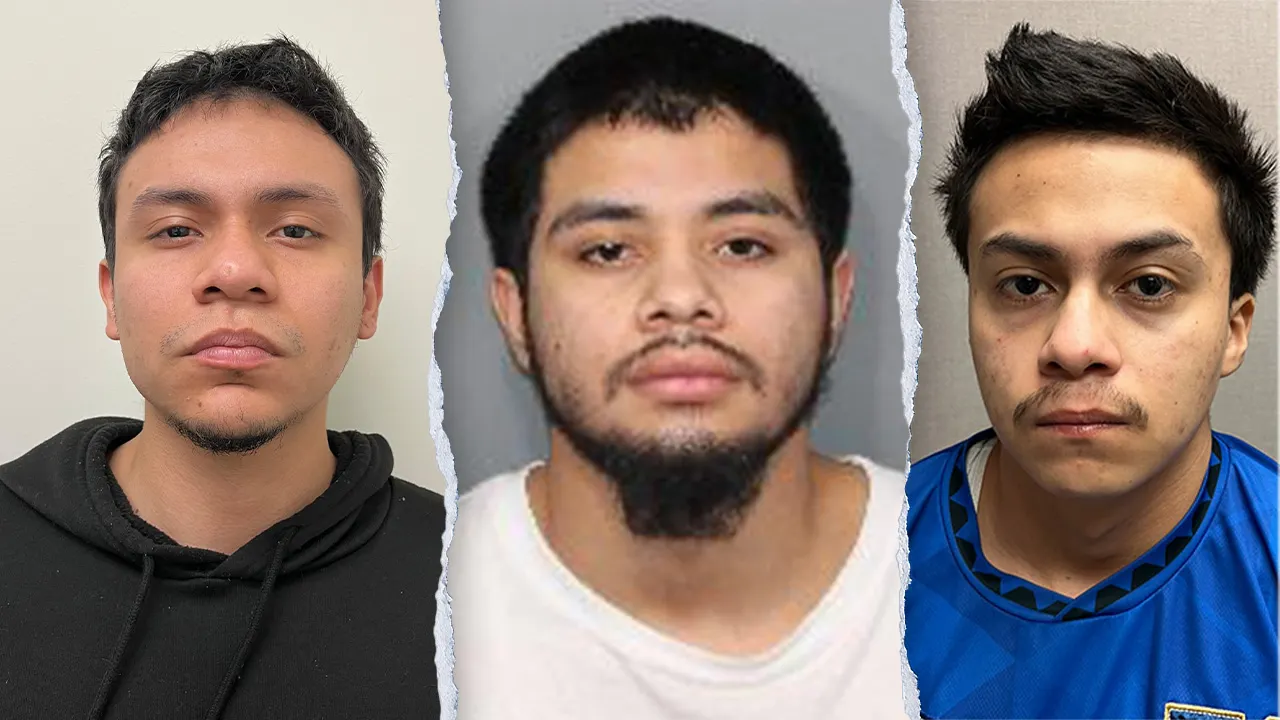
Jose Merlos-Majano, 18, Alan Josai Garcia-Padilla, 21, William Cuellar Gutierrez, 19, and a 17-year-old were indicted on charges, including first-degree murder, use of a firearm in the commission of a felony, and participation in a criminal organization, according to Prince George’s County State’s Attorney Tara Jackson.
All four indicted are MS-13 gang members and illegal immigrants, the Department of Homeland Security (DHS) confirmed.
SCHUMER, DEMS HOLD FIRM ON DHS FUNDING DESPITE NOEM’S BOMBSHELL OUSTING
MS-13 gang members Jose Merlos-Majano, Alan Garcia-Padilla, William Gutierrez and a 17-year-old are indicted on murder charges for allegedly killing 14-year-old Jefferson Amaya-Ayala. (Prince George’s County Police Department)
Jefferson Amaya-Ayala, 14, of Washington, D.C., was reported missing on Aug. 2, 2025. Nearly three months later, on Nov. 3, Prince George’s County police announced that officers had recovered “what appeared to be possible human remains” in a park in Prince George’s County.
The Office of the Chief Medical Examiner (OCME) later identified the remains as Amaya-Ayala and determined he died from “multiple injuries,” ruling the death a homicide.
Through their investigation, detectives identified the four suspects in the alleged homicide. Authorities said that their preliminary investigation found that Amaya-Ayala “was lured” to the park and murdered on Aug. 2.
GET BREAKING NEWS BY EMAIL
Police said that the teen “knew at least one of the four suspects,” adding that the murder appears gang-related. However, the motive remains under investigation.
GOT A TIP?
Police say that Jefferson Amaya-Ayala was allegedly lured to a Maryland park where he was brutally murdered in August. (Department of Homeland Security)
CLICK HERE FOR MORE US NEWS
DHS identified Merlos-Majano as a Salvadoran national, who authorities allege is affiliated with MS-13. DHS said he was previously arrested in Washington, D.C., on charges including defacing public property and possession of a prohibited weapon after allegedly spray-painting MS-13 gang symbols on homes.
DHS said Garcia-Padilla, 21, also a Salvadoran national alleged to be an MS-13 member, was previously convicted in the Superior Court of the District of Columbia of attempted unlawful possession of ammunition. He was also found in possession of fraudulent documents, including a lawful permanent resident card and a Social Security card, according to DHS. The agency said Garcia-Padilla was released from custody during the Biden administration.
The U.S. southern border near El Paso, Texas. (Fox News Photo/Joshua Comins)
CLICK HERE TO DOWNLOAD THE FOX NEWS APP
Cuellar Gutierrez was also identified by DHS as a Salvadoran national and alleged MS-13 member. He was previously arrested by the Metropolitan Police Department of the District of Columbia on multiple weapons-related charges, including possession of a large-capacity ammunition feeding device, possession of an unregistered firearm, carrying a pistol without a license, carrying a pistol without a license in a gun-free zone, and possession of unregistered ammunition.
DHS said he was released from custody during the Biden administration.
A fourth suspect, a 17-year-old, has also been charged.
FOLLOW US ON X
Read the full article from Here



Emergency crews were searching for a young girl and a man reported missing at Arrowhead Mountain Lake in northern Vermont on Wednesday night.
Vermont State Police said they responded to the lake in the Franklin County town of Georgia shortly before 8 p.m. Wednesday along with multiple emergency crews.
The incident was first reported around 7:50 p.m. near the intersection of Highbridge Road, also known as Route 104A, and Arrowhead Lake Road. Initial reports indicated that a group of relatives were fishing along the shore when a young girl fell into the water and a man jumped in to try to rescue her. Neither person has been seen since.
A search was underway Wednesday night on the water near where the Lamoille River empties into the lake. Agencies involved include fire departments from Fairfax, Georgia and Milton, Colchester Technical Rescue, Fairfax Rescue and multiple components of the Vermont State Police.
Search crews planned to remain on scene as long as conditions permitted Wednesday night, returning as needed first thing Thursday morning.
No additional were released. State police said they will provide updates as the search continues.

GMC and their flagship Yukon brings all-around excellence with this week’s tester: the 2026 GMC Yukon Denali Ultimate
This cousin to the Chevrolet Tahoe provides all of the space, comfort, style and luxury anyone could want.
In 2026, the GM brand worked wonders on their existing fleet and added nice trim levels to keep the competition always thinking about what they’re doing next.
Our Glacier White Tricoat tester was flawless and completely destroys the competition in the American Luxury market.
Known for its high MSRP and resale values, the Yukon Denali Ultimate has a base price of $103K and is powered by a 6.2L ECOTEC3 V8 engine and 10-speed automatic transmission. With 420 horsepower and 460 lb-ft of torque, our weeklong tester had a 8,400 pound towing capacity.
The Yukon Denali Ultimate had a slew of standard features including a 16.8-inch premium infotainment system, 24-inch wheels and a 15-inch head-up display. Upgrades include second-row captains seats, BOSE performance sound system with 22-speakers and Night Vision – all totaling an additional $7,090. Boasting a Woodland Mahogany interior, the Yukon Denali Ultimate is certainly classy for all consumers and exemplifies the American Luxury that GMC provides.
In Grasso’s Garage, the Flagship GMC Yukon Denali Ultimate is the real deal. It looks stellar, rides good, and has good values. Although pricey for most consumers, the usage in this category is second to none. I was able to fit six adults on our way to dinner and heard a ton of compliments on its comfort and style, in addition to its spaciousness.
The GMC Yukon has a long-lasting history in the fleet, and in my opinion, having the Denali Ultimate package added is just the way it has to be to experience its full offerings.
Grasso’s Garage is here for you! Looking for more auto reviews or are you in the market for a new car? Head to https://www.bostonherald.com/tag/automotive/. Also, for honest input, reach out to me directly: marc.grasso@bostonherald.com.
2026 GMC Yukon 4WD Denali Ultimate
MSRP: $103,900
MPG: 14 city / 18 highway / 16.2 as tested
As Tested: $113,785

-

 Texas2 minutes ago
QUICK LOOK: Gas prices in Texas ahead of Fourth of July
-

 Utah4 minutes ago
Utah State celebrates a new era, as Aggies join the Pac-12 Conference
-

 Vermont10 minutes ago
Police, rescue crews searching for 2 missing people in Vermont lake
-
 Virginia17 minutes ago
Virginia Heat Wave: Richmond high temperatures near or above 100°. Heat index could exceed 110°.
-

 Washington20 minutes ago
Kalispel students experience international conference at WSU
-

 Wisconsin25 minutes ago
Wisconsin’s highest-rated players in EA Sports College Football 27
-

 West Virginia32 minutes ago
Fire in Barbour County leaves four dead – WV MetroNews
-

 Wyoming34 minutes ago
These Wyoming Towns Have Banned Fireworks – 2026

