Northeast
Butler lawmaker slams ‘inappropriate’ treatment of local police after Trump incident: ‘Thrown under the bus'
MARS, Pa. – A Pennsylvania state lawmaker whose district inculdes the Butler Farm Show grounds called out the national media for throwing local law enforcement and first responders “under the bus” after the attempted assassination of former President Trump last month.
State Rep. Aaron Bernstine, a Republican who represents Butler and Lawrence counties, said Saturday the media has wrongly criticized Butler County and other local agencies, adding the culpability for security breakdowns falls at the feet of the U.S. Secret Service.
“Our first responders in this situation have been thrown under the bus by those in the national media. That is entirely inappropriate,” Bernstine told Fox News Digital. “These individuals did everything that they should have done and took every precaution. This is a complete failure from a tactical standpoint, to a communication standpoint, by the United States Secret Service.”
Bernstine said in the time since the shooting, his office has dealt with an uptick in constituent issues as the press, federal agencies, lawmakers and others descend on northwest Pennsylvania.
TOP DEM WHO VISITED BUTLER SAYS LOCAL OFFICIALS TOLD HIM ‘WE NEED TO TALK MORE’ ABOUT USSS FAILURES
Former President Trump, the Republican presidential candidate, is rushed offstage during a rally in Butler, Pa., July 13. (Anna Moneymaker/Getty Images)
“That being said, we have great people here. (It is) a great conservative area. I couldn’t be more proud to represent these folks,” Berstine said.
“What transpired had nothing to do with our local law enforcement. Our local law enforcement did every single thing that was asked of them. We’re so proud of the work that they did. This was a complete security fail by the United States Secret Service.”
Bernstine added that he and the state Legislature — currently out of session — originally planned to hold hearings after the deadly rally, but Congress’ response changed minds.
“Congressman Mike Kelly, R-Pa., and Speaker Mike Johnson, R-La., are going to do everything they can to uncover what transpired and make sure it never happens again,” Bernstine said, adding that the swiftness with which Johnson responded to the tragic event led him to believe Harrisburg didn’t need to get involved.
TOP REPUBLICAN CALLS CHEATLE’S SLOPED ROOF DEFENSE THE ‘FINAL STRAW’
U.S. Rep. Mike Kelly, R-Pa., speaks to the press July 22, in Butler, Pa. (Derek Shook for Fox News Digital )
“Our original plans when this horrible situation occurred were to have hearings, where we would bring people in front of the Pennsylvania State House of Representatives. My position on that has changed,” he said.
Kelly, who represents Butler and Erie, took part in a bipartisan congressional tour of the rally site and now leads a House task force investigating the assassination attempt.
Bernstine said he and others believe federal House Republicans have directed sufficient resources to their own investigation but that many Harrisburg lawmakers stand ready to pitch in if asked.
After years of full Republican control, the Pennsylvania House has a one-seat Democratic majority, while the GOP retains comfortable command of the state Senate.
Bernstine, who was first elected in what he characterized as the 2016 Trump wave, said he invited the GOP nominee back to his district as soon as he is ready.
“With what transpired — words can’t even express the difficulty of what’s been on our community — we welcome President Trump back. We look forward to having President Trump back.
“We’re going to have a huge rally that is beyond secure for President Trump.”
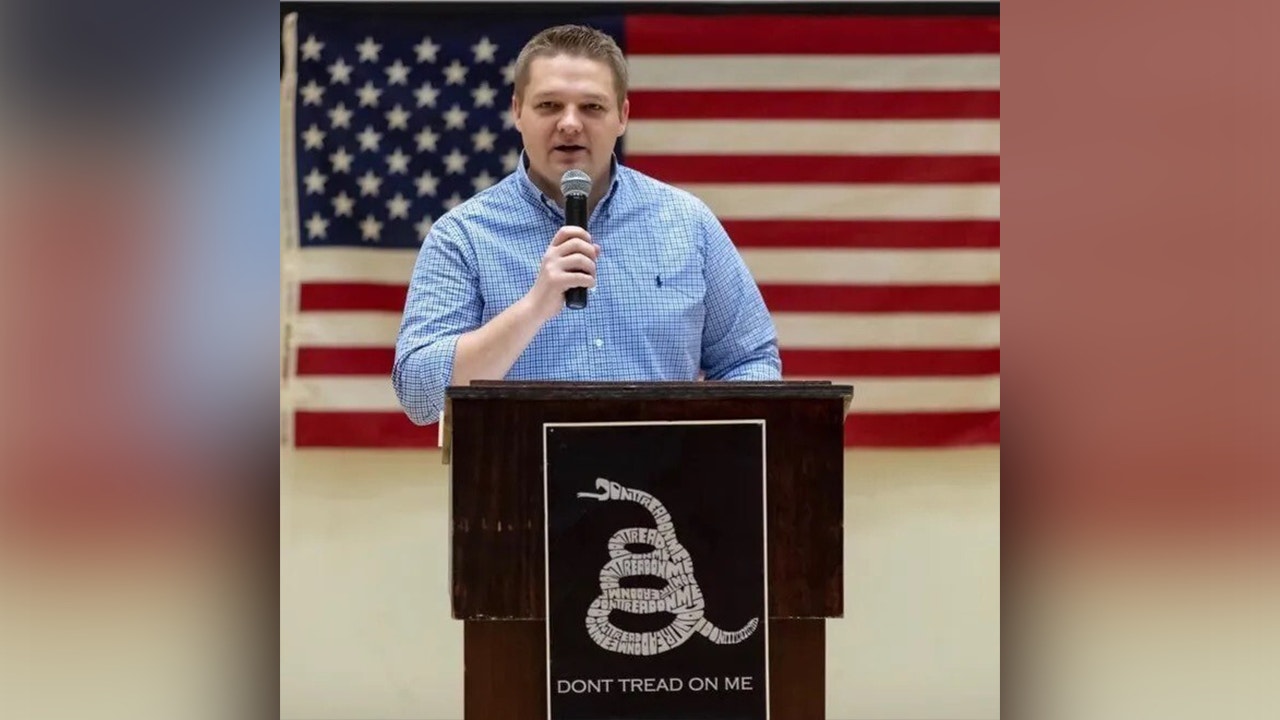
Pennsylvania state Rep. Aaron Bernstine represents parts of Lawrence and Butler counties. (Office of State Rep. Aaron Bernstine/Pennsylvania House of Representatives)
Trump held his first Pennsylvania event since the shooting last week, speaking to an enormous crowd at the Pennsylvania Farm Show complex west of Harrisburg.
The former president quipped during his remarks that the crowd and complex — which similarly fills up for the century-old agricultural celebration every January — reminded him of Madison Square Garden.
During his interview, Bernstine also paid respects to Corey Comperatore, the Butler-area firefighter who was murdered by attempted assassin Thomas Crooks.
“[He was] one of our neighbors who gave so much to the community,” Bernstine said. “This has obviously been a major burden on our community and something that has really been a major burden across this entire nation. And that’s why I have done everything in my power to — No. 1 — help our community.
“But, in addition to that, [we must] be supportive of the work that’s being done in Congress to understand what happened, why it happened, who was involved and what are the things that we can do to ensure this never happens again.”
Read the full article from Here
Pittsburg, PA
Head priest of Episcopal Church in Pittsburgh accused of stealing baseball cards from Walmart
PITTSBURGH — The head priest and dean of Trinity Episcopal Cathedral in downtown Pittsburgh is facing charges after being accused of stealing more than $1,000 in baseball cards from a Walmart.
The Very Rev. Aidan Smith was arrested Feb. 27 by police just after leaving the Walmart in Economy Borough, just outside Pittsburgh, with 27 packs of baseball cards concealed under his clothing and in a cardboard box, according to court records.
Smith, 42, was charged with receiving stolen property and retail theft.
Police responded to a call from Walmart security, who said Smith was in the store again after having stolen from it in previous days. Police said Walmart security video shows Smith also taking baseball cards each of the four previous days and leaving without paying.
Walmart valued the stolen baseball cards at $1,099.99, police said.
In a message last week to the cathedral’s members, the Right Rev. Ketlen Solak, bishop of the Episcopal Diocese of Pittsburgh, said diocese officials will investigate the situation and follow the church canons that lay out the process for handling clergy misconduct.
“I have spoken with Aidan and assured him of our prayers for him in this difficult time. Please pray for Aidan, for Melanie and their children, for the entire cathedral congregation as we grieve this news, and for everyone involved in this hard situation,” Solak wrote.
Smith had been on administrative leave since late January, Solak’s message said. The diocese did not explain why. Smith’s defense lawyer declined comment.
Connecticut
Hundreds of people flood public hearing on Connecticut vaccine bills
Hundreds of people signed up to speak out about two controversial bills dealing with vaccines in Connecticut.
Opponents are concerned that the bills will lead to government overreach, while supporters say the bills simply ensure that people who want to get vaccinated still have access.
“I don’t want to be told what to do. It’s my body, my choice,” said Joe Murphy of Meriden.
From people gathered outside the state Legislative Office Building in Hartford to those inside, many voiced their opposition to proposals related to vaccines.
“We just want transparency in government. We want them to listen to what we’re here to say,” said Katerina Bouzakis of Wolcott.
Hundreds of people signed up to speak about the vaccine legislation. Democrats say the plans help make sure people can get the vaccines they want.
“It was very clear from the conversation that we’re having a lot of people who are here have misinformation about what the bill does,” said Sen. Saud Anwar (D–South Windsor).
Under these two bills, state recommendations for immunization would be based on a broader group of experts, not just a CDC advisory group that was overhauled by the Trump Administration and has recently been making changes to vaccines.
Lawmakers say the state proposals would help with insurance coverage, and any updates would still have to go through a regulatory process.
“Passing this law will allow us to maintain our current access and purchasing power,” said Dr. Manisha Juthani, Public Health Commissioner. “I want to be very clear that this bill in no way institutes any new vaccine mandates for children or adults.”
Opponents also worry about how the bills might impact a fight to restore religious exemptions for school vaccinations. And they also pushed back on the decision to cut off the hearing.
“Democracy does not end at 12:15 a.m. this morning. It continues on,” said Sen. Heather Somers (R – Groton). “I think that this is an absolute gross overreach of the majority party that doesn’t want your voices to be heard.”
Republicans say they will continue to listen to comments even after the official hearing ends.
Democrats argue that, compared to other places in the country, 14 hours is a long time for a public hearing on this issue, and that previously, when it came up here, about 40% of the speakers were from out of state.
Maine
There’s Something in the Air in South Portland, Maine – Inside Climate News
SOUTH PORTLAND—It’s one of Maine’s most desirable locations—home to a vibrant and diverse community, nearby beaches, and close proximity to Portland’s downtown. But for years, residents in South Portland have wondered: With 120 massive petroleum storage tanks dotting the shore and knitted into some neighborhoods here, is the air safe to breathe?
Now the first answers are in, thanks to a year of emissions monitoring along the fencelines of the city’s tank farms. At two of those locations, in particular, the results showed levels of benzene—a known carcinogen—well above the state’s limit.
“We’re about 300 feet from those tanks,” said Ted Reiner, whose home is surrounded by three of the city’s tank farms. It’s where he and his wife raised their two daughters, now 38 and 28. Around Christmas, Reiner had surgery for bladder cancer. Now he’s undergoing immunotherapy, and he can’t help but wonder whether his environment is contributing to his health woes.
“You just don’t know what the cumulative effect is,” he said. “I think about it a lot.”
Reiner lives closest to the Citgo South Portland Terminal, in a part of South Portland known as Turner Island. The tanks there primarily hold gasoline, while others in the city contain an array of petroleum products, including heating oil and asphalt. He and his family are among the more than 12,600 people who live within a mile of the tank farm, according to EPA data.
According to data collected by Maine’s Department of Environmental Protection, the CITGO terminal is one of two tank farms in the city where emissions exceed the state limit. Average benzene levels were measured at 2.18 micrograms per cubic meter, well above Maine’s allowed limit of 1.28 micrograms.
The highest levels in the city—3.05 micrograms—were measured at South Portland Terminal LLC owned by Buckeye Partners, which, unlike Citgo’s tanks, does not have people living nearby. A tank farm owned by Sunoco, meanwhile, had measurements just below the state guideline.
Long-term inhalation of benzene can damage bone marrow and blood-forming cells, suppress the immune system, and increase the risk of leukemia. According to the World Health Organization, there is “no safe level of exposure.”
Each reported number from the state is the average of a two-week continuous sample. Citgo’s final number for the year is the average of all those two-week samples. When examining a year’s worth of data, higher emissions levels get masked. But levels spike: For one two-week period in particular, the average benzene level recorded near the Citgo facility was 11.8 micrograms per cubic meter, nearly 10 times the state limit.

Those shorter-lived “burst emissions” can be dangerous in their own right.
One to 14 days of exposure to higher levels of benzene can cause headaches and breathing issues for sensitive individuals, such as children, older adults, or people with preexisting health conditions. The risk level for short-term exposure for benzene is 30 micrograms per cubic meter. What’s not clear in the state’s data is whether benzene levels get high enough to trigger those responses.
Rich Johnson, a spokesman for Citgo, said the company takes the concerns of South Portland residents seriously and is continuing to work with state regulators. “We believe it is important that any study of air monitoring results support accurate, representative conclusions about community-level air quality,” Johnson said.
Buckeye Partners did not respond to multiple emails requesting comment.
Petroleum companies and oil terminal owners use various technologies to eliminate emissions, but they still happen. Most often, chemicals escape from tank vents, equipment leaks and loading rack operations.
Anna O’Sullivan, a 42-year-old artist and therapist, thinks about all of this. She worries when her 7-year-old son, Henry, plays in the yard. “Is he just, like, absorbing what’s in the air?” she wonders.
This story is funded by readers like you.
Our nonprofit newsroom provides award-winning climate coverage free of charge and advertising. We rely on donations from readers like you to keep going. Please donate now to support our work.
Donate Now
She’s hesitant to eat anything grown in the soil there. She’s concerned that staying put means poisoning them both.
But she’s also stuck. O’Sullivan bought her three-bedroom cape, built in 1904, with a big backyard for $190,000 in 2017—a charming and impossible find in the market today.
“I can see the tanks from my house,” she said. The feeling is: “I need to move. I can’t raise my kids in an area where it’s just, like, poisonous air.”
But also: “I like my house. … It’s hard to move, it’s hard to buy a house.”
The science supports these emotions.
The readings are high enough “to merit serious attention,” said Drew Michanowicz, a senior scientist at Physicians, Scientists, and Engineers for Healthy Energy, an independent scientific research institute that brings science to energy policy.
Across South Portland, most people don’t live immediately next to the tanks, which lessens their exposure because emissions are quickly dispersed. But especially around the Citgo facility, some live quite close.


Until last fall, when she had to move following a house fire, Jacky Gerry was living near the Citgo tanks. “Did I ever think we were safe? Probably not,” she said. “But did a lot of people have a choice as to where you live? No.”
People in South Portland first became concerned about the tanks in 2019, after the EPA announced consent decrees, a resolution of a dispute without an admission of guilt, with two companies with tanks here—Global Partners LLC and Sprague Energy. In both cases, heated petroleum storage tanks containing asphalt and a thick fuel oil were emitting what are known as volatile organic compounds—chemicals that include benzene—in violation of their state permits. That issue was specific to tanks containing asphalt and number 6 fuel oil, which were previously thought to have no emissions, and is not the situation with the Citgo tanks.
As a result of the consent decrees, the operators installed systems to capture emissions that appear to have worked. In the most recent testing, emissions levels around both tank farms were below Maine’s threshold.
The consent decrees also helped put the tanks on the radar of lawmakers. In 2021, a newly passed law mandated that all petroleum tank farms in the state begin fenceline monitoring for chemicals including benzene. That monitoring began in August 2024, and the first results were released late last year.
Residents here have long taken the fight against industrial emissions into their own hands, including in a high-profile—and successful—fight to keep oil from Canadian tar sands from being piped into the city in 2018.
It was in that spirit that South Portland resident Tom Mikulka, a retired chemist with a Ph.D. in biochemistry from Cornell, opted to analyze the state results so residents would be able to start understanding the implications.
“I wouldn’t want to go to sleep knowing there’s high benzene levels that close to my home,” said Mikulka, referring to the houses that stand just feet from a fenceline monitor mounted along the Citgo property. “While there is diffusion, I can’t imagine the data is much different just a few feet away.”
The state findings validate the concerns he’s had all along. Mikulka first began testing emissions in the neighborhood back in 2020, when he used COVID relief checks to purchase air monitoring equipment. He hung one of the monitors on Reiner’s property, near the swing his grandkids like to play on.
Now, six years later, with official data in hand, Mikulka hopes the findings will be harder for regulators to dismiss.
That’s Jacky Gerry’s hope, too.
“Now that we have these answers, who’s stepping up to the plate to say, ‘Let’s try to fix that?’” she said. “Is it a city problem? An oil company problem? Where does it fall?”
About This Story
Perhaps you noticed: This story, like all the news we publish, is free to read. That’s because Inside Climate News is a 501c3 nonprofit organization. We do not charge a subscription fee, lock our news behind a paywall, or clutter our website with ads. We make our news on climate and the environment freely available to you and anyone who wants it.
That’s not all. We also share our news for free with scores of other media organizations around the country. Many of them can’t afford to do environmental journalism of their own. We’ve built bureaus from coast to coast to report local stories, collaborate with local newsrooms and co-publish articles so that this vital work is shared as widely as possible.
Two of us launched ICN in 2007. Six years later we earned a Pulitzer Prize for National Reporting, and now we run the oldest and largest dedicated climate newsroom in the nation. We tell the story in all its complexity. We hold polluters accountable. We expose environmental injustice. We debunk misinformation. We scrutinize solutions and inspire action.
Donations from readers like you fund every aspect of what we do. If you don’t already, will you support our ongoing work, our reporting on the biggest crisis facing our planet, and help us reach even more readers in more places?
Please take a moment to make a tax-deductible donation. Every one of them makes a difference.
Thank you,
-
Wisconsin1 week agoSetting sail on iceboats across a frozen lake in Wisconsin
-
Massachusetts1 week agoMassachusetts man awaits word from family in Iran after attacks
-
Detroit, MI6 days agoU.S. Postal Service could run out of money within a year
-
Pennsylvania6 days agoPa. man found guilty of raping teen girl who he took to Mexico
-
Miami, FL1 week agoCity of Miami celebrates reopening of Flagler Street as part of beautification project
-
Sports7 days agoKeith Olbermann under fire for calling Lou Holtz a ‘scumbag’ after legendary coach’s death
-
Michigan2 days agoOperation BBQ Relief helping with Southwest Michigan tornado recovery
-
Virginia1 week agoGiants will hold 2026 training camp in West Virginia