Connect with us

News

Syria’s President Ahmed al-Sharaa visits White House for historic Trump meeting

Published

on

Syria’s President Ahmed al-Sharaa visits White House for historic Trump meeting

Ahmed al-Sharaa — who 20 years ago was thrown into a US detention centre in Iraq after he joined al-Qaeda militants fighting the Americans — on Monday became the first Syrian president to visit the White House since the country’s independence in 1946.

During his meeting with Donald Trump, Sharaa formally joined the 89-country coalition to defeat the militant group Isis, capping an extraordinary transformation for the erstwhile rebel leader who toppled dictator Bashar al-Assad nearly a year ago.

Trump said in the Oval Office on Monday: “He’s a very strong leader. He comes from a very tough place. And he’s a tough guy. I like him, I get along with him. We want to see Syria be successful along with the rest of the Middle East. So I have confidence that he’ll be able to do the job, absolutely.”

Since seizing power last December, Sharaa, 43, has worked hard to court friends and allies after decades of Assad family rule and 14 years of ruinous civil war left Syria internationally isolated.

His charm offensive has largely worked. Western and Arab states — spurred by Washington — have lifted most of the economic sanctions imposed in the Assad era and built closer ties with a state they had long shunned.

Advertisement

Sharaa met privately with the US president for nearly an hour and a half on Monday, after which he was expected to hold meetings with lawmakers in an effort, backed by the White House, to permanently repeal US sanctions.

Sharaa’s government has appealed to western sensibilities by touting free markets and foreign investment, political inclusion and a pluralistic society.

Top US lawmakers in both parties have broadly welcomed his message and have thrown their support behind a vote to repeal Washington’s most stringent sanctions, known as the Caesar Act.

But Sharaa’s government is dominated by Hayat Tahrir al-Sham, the Islamist insurgent group the Syrian leader once led, and critics say attempts at political inclusion have been superficial.

They also point to eruptions of sectarian violence in Syria over the past year, including clashes between government-backed forces and gunmen from the country’s Alawite and Druze religious minorities in which hundreds of civilians from both communities were killed. The government pledged to hold the perpetrators accountable, but many Syrians, particularly among minority groups, remain sceptical.

Advertisement

Trump in May waived most of the Assad-era sanctions on the country to give the nascent Syrian government “a chance”, after being impressed by the “tough” and “handsome” Syrian leader during a meeting in Saudi Arabia.

After Monday’s meeting, the Trump administration suspended the bulk of the Caesar Act sanctions for a further 180 days, replacing the president’s earlier waiver. The measures will still apply to “certain transactions” relating to Russia and Iran, the Treasury said.

The World Bank estimates it will take more than $200bn to rebuild the war-ravaged nation. Syria’s economic recovery has stalled amid the lingering sanctions, with foreign companies wary of investing until they are fully repealed.

Syrian companies, in turn, have found it difficult to raise funds or import goods because of concerns about complying with sanctions.

The Israeli government and its allies in Washington have warned the White House against placing its trust in Sharaa and have urged Congress not to support a full repeal.

Advertisement

Sharaa “has deep roots in the global jihad”, a pro-Israel advocacy group, the Jewish Institute for National Security of America, warned in a recent report, which called on Congress to slow its “rush to repeal the Caesar Act permanently”.

Sharaa on Sunday met Republican congressman Brian Mast, chair of the House foreign affairs committee and a key Republican holdout on lifting sanctions.

Mast, who lost both of his legs to an improvised bomb while serving as a soldier in Afghanistan, on Monday said he and Sharaa had “a long and serious conversation about how to build a future for the people of Syria free of war, Isis and extremism”.

“He and I are two former soldiers and two former enemies,” Mast said. He added Sharaa told him of his desire to “liberate from the past and have a noble pursuit for his people and his country and to be a great ally to the United States of America”.

Urged on by Washington, the UN Security Council has lifted terror-related sanctions on Sharaa and his interior minister and former al-Qaeda member Anas Khattab. The UK and US followed suit.

Advertisement

Talks between Sharaa and Trump on Monday were expected to focus on security, including Israel, Isis and Kurdish-led forces.

Syria’s formal entry into the global anti-Isis coalition helps to seal Sharaa’s partnership with Washington and strengthens his anti-jihadi credentials with sceptics. While HTS was briefly allied with Isis in the fight to oust Assad, it has fought the group since they parted ways.

Despite no longer having territorial control, Isis cells continue to carry out attacks in Syria. Sharaa’s security forces have conducted raids on the group in recent weeks.

For years, Washington’s main ally in fighting Isis has been the Kurdish-led Syrian Democratic Forces, which control the country’s north-east. Talks to merge the SDF and Damascus’s security forces have stalled, despite pressure from Washington to come to a resolution.

The US military has increased its co-operation with Damascus on Isis in recent months and is said to be considering an expansion of its military presence in Syria by sending troops to an air base in the Syrian capital. This would be a boost to Sharaa’s fledgling presidency, analysts said.

Advertisement

Syrian analyst Malik al-Abdeh said: “It’s great for Sharaa, in that he will be backed up by a major power, and great for the US in terms of its footprint in the region and having decisive influence over Damascus. It’s a win-win.”

Moscow, a financial and military backer for Assad, has sought to smooth things over with Sharaa’s government over the past year in order to keep its strategically important air base and naval port in the country. Last month, Sharaa met Russian leader Vladimir Putin in Moscow in what was billed as a “reset” in relations.

News

Instructure Strikes Deal for Hackers for Return of Canvas Data

Published

on

Instructure Strikes Deal for Hackers for Return of Canvas Data

The maker of Canvas, the software used by thousands of schools and universities around the world, said on Monday that it had reached a deal with the hackers that recently breached its systems for the return of stolen data and the destruction of any copies.

ShinyHunters, a hacking group, had claimed responsibility for the attack on Instructure, the Salt Lake City-based company that provides Canvas to about half of all colleges and universities in North America.

The hackers said they had accessed the data of more than 275 million users at nearly 9,000 schools worldwide, including private conversations between students and teachers as well as personal identifying information such as names and email addresses. Canvas was shut down for hours after the cyberattack on Thursday.

The agreement, Instructure said in a statement, involved the return of the stolen data and confirmation that the data had been destroyed at the hackers’ end. Instructure added that it had been informed that none of its customers would face extortion as a result of the theft.

“While there is never complete certainty when dealing with cybercriminals, we believe it was important to take every step within our control to give customers additional peace of mind, to the extent possible,” the company said.

Advertisement

Instructure did not say what it had given the hackers in exchange for the return of the data. The company did not immediately respond to questions about the deal.

Canvas has more than 30 million active users around the world, according to Instructure. The platform is used by teachers and students for coursework management and communications. Instructure said the data compromised in the hack included usernames, email addresses, course names, enrollment information and messages.

ShinyHunters on Thursday claimed the attack in a message that appeared on students’ Canvas pages and was obtained by The New York Times. The group warned that it would leak an unspecified amount of data on May 12 if it did not receive a response from Instructure. In its May 3 ransom note, the group had threatened to leak “several billions of private messages among students and teachers.”

Not much is known about ShinyHunters, which is believed to have been formed around 2020. Its goal appears to be to obtain personal records and sell them. One of its high-profile attacks was against Ticketmaster in 2024, when the hackers said they had stolen the user information of more than 500 million customers.

Instructure said it first detected unauthorized activity in Canvas on Apr. 29, and again on May 7. The company said it took Canvas offline to investigate the breach, and also informed the F.B.I., the U.S. Cybersecurity and Infrastructure Security Agency and other international law enforcement partners.

Advertisement

Instructure did not immediately respond to questions about whether any law enforcement agencies were involved in its dealings with the hackers. The F.B.I. advises against paying ransom to hackers, saying it does not guarantee data security and encourages attackers to target more victims.

Continue Reading

News

Why cruise ship passengers with possible hantavirus exposure went to Nebraska

Published

on

Why cruise ship passengers with possible hantavirus exposure went to Nebraska

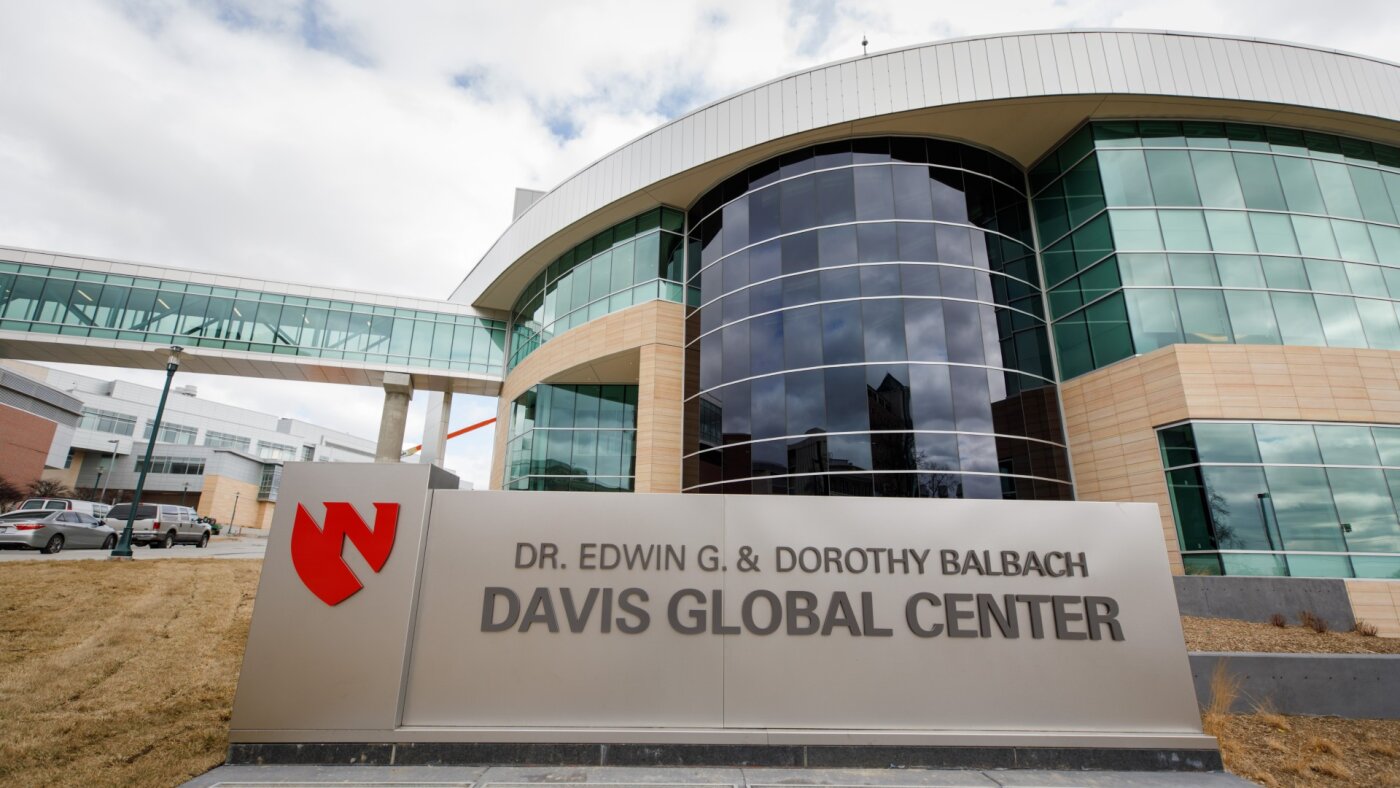
The National Quarantine Center is located at the University of Nebraska Medical Center in Omaha.

Nebraska Medicine


hide caption

toggle caption

Advertisement

Nebraska Medicine

Sixteen of the 18 passengers transferred to the U.S. from a cruise ship where there was an outbreak of hantavirus arrived in Omaha, Neb., on Monday for evaluation after disembarking the vessel in Spain’s Canary Islands over the weekend.

Of the 15 U.S. citizens and one dual U.S.-British citizen who arrived in Nebraska, all but one are currently being housed in the National Quarantine Unit. That patient tested positive for the virus and was being housed in the Nebraska Biocontainment Unit, officials said at a Monday news conference. The 15 people in the quarantine unit will continue to be monitored for signs of the illness.

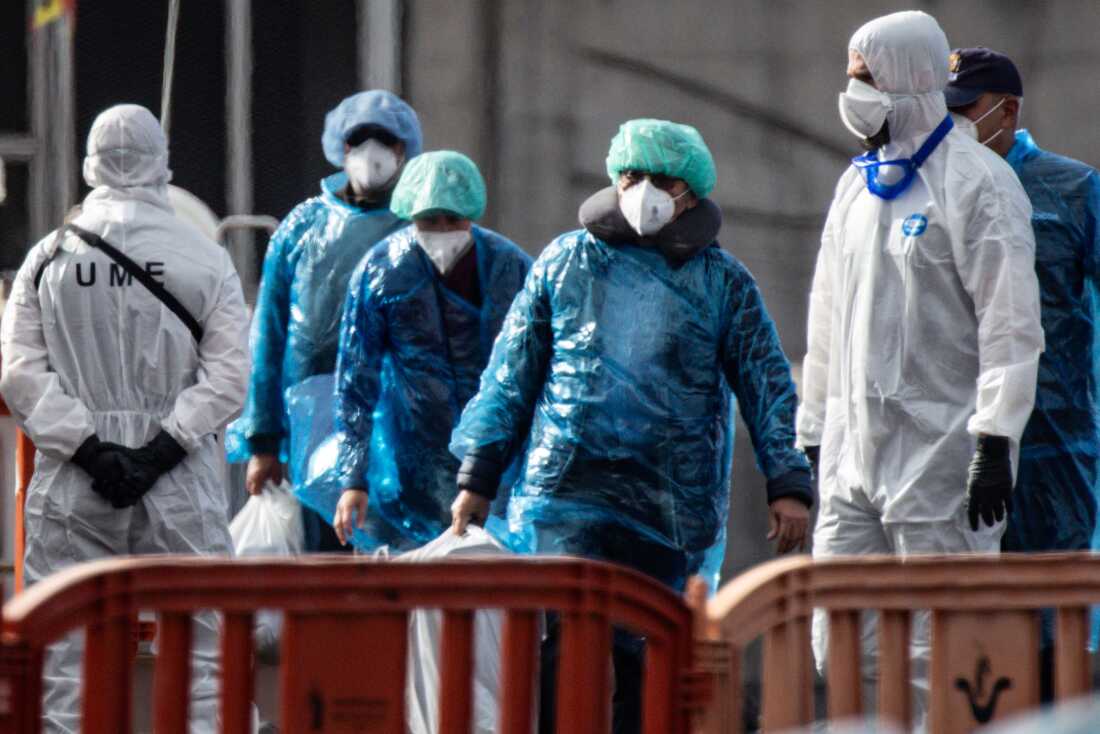
Passengers carry their belongings in plastic bags after being evacuated from the MV Hondius after docking in the Granadilla Port on May 10, 2026 in Tenerife, part of the Canary Islands, Spain.

Passengers carry their belongings in plastic bags after being evacuated from the MV Hondius after docking in the Granadilla Port on Sunday in Tenerife, part of the Canary Islands, Spain.

Chris McGrath/Getty Images

Advertisement


hide caption

toggle caption

Chris McGrath/Getty Images

Advertisement

Nebraska may seem an unlikely location to process these individuals, but it is home to the National Quarantine Unit — the only federally funded quarantine unit in the U.S. — and the separate Nebraska Biocontainment Unit. They are highly specialized facilities located at the University of Nebraska Medical Center (UNMC) and widely considered among the best in the world.

The $1 million, five-room biocontainment unit was dedicated in 2005. It was a joint project with Nebraska Health and Human Services and the UNMC. It is set up to safely provide medical care for patients with highly hazardous and infectious diseases and was used in 2014 to treat two doctors infected with Ebola. The National Quarantine Unit was completed in late 2019. It cost nearly $20 million, according to the Associated Press. Both facilities were used during the COVID-19 epidemic.

“We are prepared for situations exactly like this,” Dr. Michael Ash, CEO of Nebraska Medicine, said in a statement. “Our teams have trained for decades alongside federal and state partners to make sure we can safely provide care while protecting our staff and the broader community. We are proud to support this national effort.”

Two additional U.S. passengers on the cruise ship — a couple, with one showing symptoms of hantavirus — were transferred for monitoring to Emory University Hospital, where another advanced biocontainment facility is located.

When the biocontainment unit was first dedicated more than 20 years ago, the biggest concerns were anthrax attacks and severe acute respiratory syndrome, more commonly known as SARS, Dr. Phil Smith, who spearheaded the efforts at Nebraska Medical Center to create the biocontainment unit, told the AP in 2020. Smith died last year.

Advertisement
A hallway leading to rooms at the Nebraska Biocontainment Unit at the University of Nebraska Medical Center.

A hallway leading to rooms at the Nebraska Biocontainment Unit at the University of Nebraska Medical Center.

Nebraska Medicine


hide caption

toggle caption

Nebraska Medicine

Advertisement

The quarantine unit features 20 negative-pressure rooms designed to keep potentially harmful particles from escaping by maintaining lower air pressure inside than outside the rooms. The single-occupancy rooms provide patients with attached bathrooms, exercise equipment and Wi-Fi, according to the medical center.

“We have protocols in the quarantine unit that provide for safe care of these of these persons, including just all the activities of daily living so that they can … have a comfortable stay but also have it in an area that’s protected and limits spread of the pathogen,” Dr. Michael Wadman, the medical director of the National Quarantine Unit, said at a Friday news conference. 

The biocontainment unit, by contrast, is a patient-care space where people are able to receive medical treatment, Dr. Angela Hewlett, medical director of the biocontainment unit, told reporters Monday.

She emphasized that the facility — which has a 10-bed capacity — operates independently from the quarantine unit and has its own dedicated air-handling system. “We don’t share [it] with any of the rest of the facility,” she said, noting that the unit uses rooftop HEPA filtration and is designed “very differently” from what most people typically imagine in a hospital setting.

Advertisement
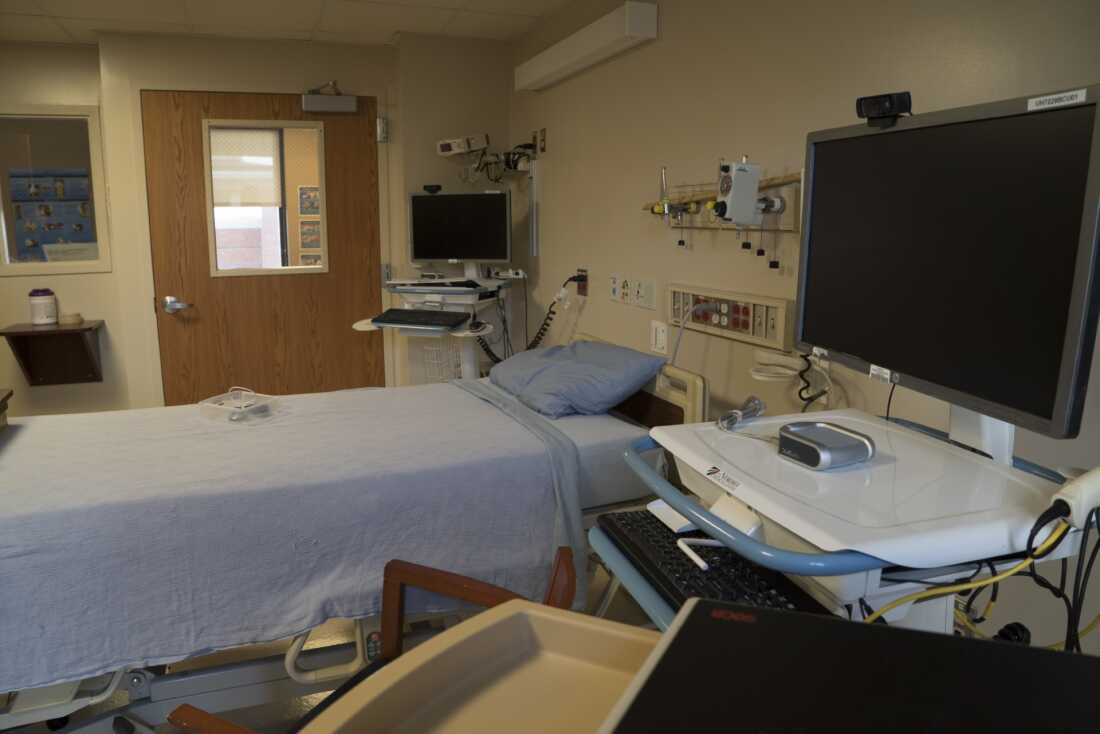
One of the rooms in the Nebraska Biocontainment Unit.

One of the rooms in the Nebraska Biocontainment Unit.

Nebraska Medicine


hide caption

toggle caption

Nebraska Medicine

Advertisement

Nebraska Gov. Jim Pillen, speaking at Monday’s news conference, welcomed the recently arrived patients, who are among nearly 150 people from 23 different countries who were aboard the MV Hondius when the illness most commonly transmitted to humans through contact with infected rodents broke out. As of Monday, the World Health Organization has reported at least nine cases of hantavirus, including three deaths.

“We’re glad that you’re here,” Pillen said. “We’re going to ensure that you have the best world-class care possible.”

Pillen also sought to reassure Nebraskans that the facilities are safe and secure: “We’re working diligently to ensure no one leaves the security in an unsecured way at an inappropriate time,” he said. “No one poses a risk to public health, just walking out the front door of the streets of Omaha.”

The hantavirus outbreak on the cruise ship has been identified as the Andes strain of the illness, one that can be spread, though rarely, from person-to-person, according to the Centers for Disease Control and Prevention. It can cause severe respiratory disease, with early flu-like symptoms.

Advertisement

“The Andes variant of this virus does not spread easily, and it requires prolonged, close contact with someone who is already symptomatic,” according to Adm. Brian Christine, the assistant secretary for health at the U.S. Department of Health and Human Services, who spoke at Monday’s news conference. “Even so, we have taken this situation very seriously from the very start.”

“The risk of hantavirus to the general public remains very, very low,” he said.

The full quarantine period for hantavirus is 42 days, Christine said, but he added that the patients would be allowed to go home if they remained asymptomatic.

“Right now, the passengers that are all in the assessment phase — they’re going to be here for at least a few days while we do assessments and the coordination on what happens next,” he said, adding that they had the option to remain in the quarantine facility for the full period, for “the safest and most effective option for them.”

Advertisement
Continue Reading

News

Video: Americans Exposed to Hantavirus on Cruise Ship Arrive in United States

Published

on

Video: Americans Exposed to Hantavirus on Cruise Ship Arrive in United States

new video loaded: Americans Exposed to Hantavirus on Cruise Ship Arrive in United States

transcript

transcript

Americans Exposed to Hantavirus on Cruise Ship Arrive in United States

Eighteen passengers who were aboard the MV Hondius, a cruise ship with a deadly hantavirus outbreak, landed in Omaha on a U.S. government medical flight. The passengers were being monitored at medical facilities in Nebraska and Georgia.

We’re working diligently to ensure no one leaves the security in an unsecured way at an inappropriate time. No one who poses a risk to public health is walking out the front door of the streets of Omaha or beyond.

Advertisement
Eighteen passengers who were aboard the MV Hondius, a cruise ship with a deadly hantavirus outbreak, landed in Omaha on a U.S. government medical flight. The passengers were being monitored at medical facilities in Nebraska and Georgia.

By Axel Boada

May 11, 2026

Continue Reading
Advertisement

Trending