News
House passes bipartisan tax bill to expand child tax credit


The House voted to approve a short-term expansion of the child tax credit along with restoring some business tax credits.
Catie Dull/NPR
hide caption
toggle caption
Catie Dull/NPR

The House voted to approve a short-term expansion of the child tax credit along with restoring some business tax credits.
Catie Dull/NPR
The house has overwhelmingly approved a bipartisan tax package that pairs a temporary expansion of the child tax credit with business tax breaks and credits to develop more low-income housing.
The bill includes $33 billion to expand the widely used child tax credit for three years — including the tax season currently underway, provided the bill quickly passes the Senate. The changes would allow more low-income families to access the credit and would allow many families to receive a larger credit. The figures would also be adjusted for inflation in the coming years. The deal is the result of negotiations between House Ways and Means Committee Chairman Jason Smith, R-Mo., and Senate Finance Committee Chairman Ron Wyden, D-Ore., and has provided a rare moment of bipartisanship at a time when Congress has been paralyzed by divisions of all kinds.
The legislation also restores several business tax credits, including deductions for research and development and interest expensing for businesses. These provisions are supported by many members of both parties, though Republicans have primarily focused on the business credits as their motivation for backing the package.
The Senate has not scheduled a vote on the bill but Senate Democrats have generally supported the legislation and it could come up for a vote quickly.
Some Democrats criticized the bill for failing to go far enough to provide support for low-income families.
The current version of the child tax credit expansion is not as generous as a COVID-era policy that is credited with bringing roughly 3 million children out of poverty while it was available. Several outside organizations have estimated that the current version would similarly help families struggling to make ends meet. The nonpartisan Center on Budget and Policy Priorities estimates the bill could benefit roughly 16 million children in low-income families in the first year. The group estimates half a million children could be lifted out of poverty.
House Speaker Mike Johnson, R-La., praised the package Wednesday ahead of the vote despite days of acrimony among Republicans about the bill. Ultimately, Johnson focused on only the business tax credits when announcing his support.
“The Tax Relief for American Families and Workers Act is important bipartisan legislation to revive conservative pro-growth tax reform,” Johnson said in the statement. “Crucially, the bill also ends a wasteful COVID-era program, saving taxpayers tens of billions of dollars.”


The National Quarantine Center is located at the University of Nebraska Medical Center in Omaha.
Nebraska Medicine
hide caption
toggle caption
Nebraska Medicine
Sixteen of the 18 passengers transferred to the U.S. from a cruise ship where there was an outbreak of hantavirus arrived in Omaha, Neb., on Monday for evaluation after disembarking the vessel in Spain’s Canary Islands over the weekend.

Of the 15 U.S. citizens and one dual U.S.-British citizen who arrived in Nebraska, all but one are currently being housed in the National Quarantine Unit. That patient tested positive for the virus and was being housed in the Nebraska Biocontainment Unit, officials said at a Monday news conference. The 15 people in the quarantine unit will continue to be monitored for signs of the illness.
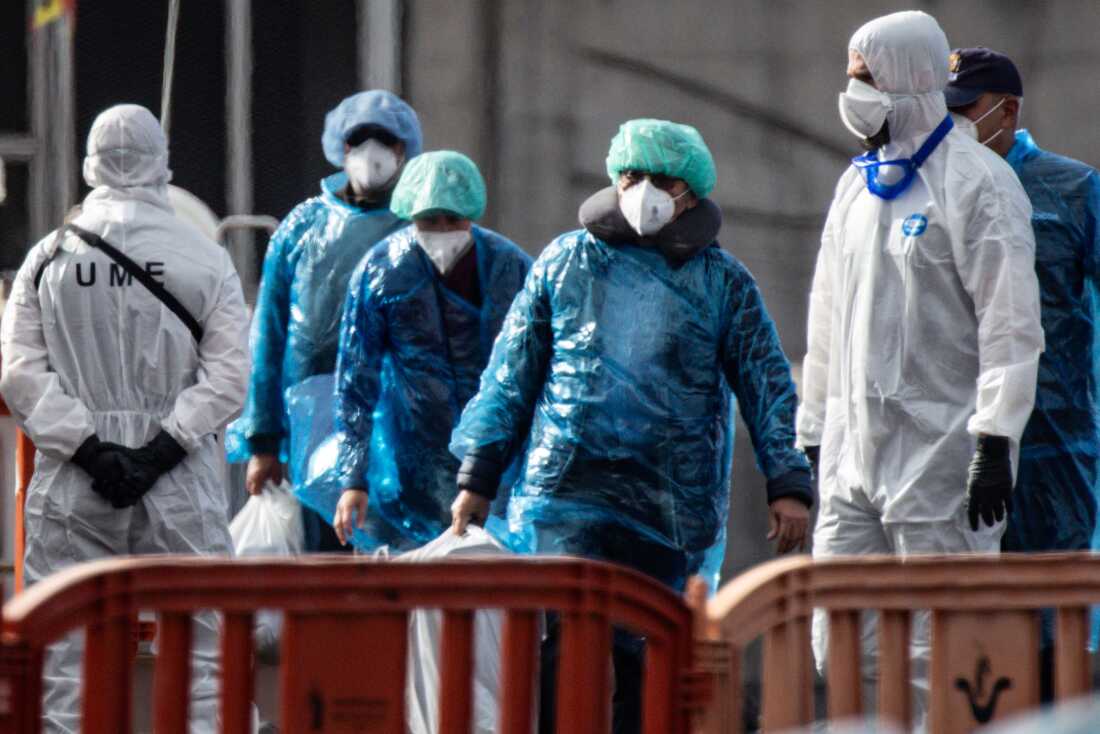
Passengers carry their belongings in plastic bags after being evacuated from the MV Hondius after docking in the Granadilla Port on Sunday in Tenerife, part of the Canary Islands, Spain.
Chris McGrath/Getty Images
hide caption
toggle caption
Chris McGrath/Getty Images
Nebraska may seem an unlikely location to process these individuals, but it is home to the National Quarantine Unit — the only federally funded quarantine unit in the U.S. — and the separate Nebraska Biocontainment Unit. They are highly specialized facilities located at the University of Nebraska Medical Center (UNMC) and widely considered among the best in the world.
The $1 million, five-room biocontainment unit was dedicated in 2005. It was a joint project with Nebraska Health and Human Services and the UNMC. It is set up to safely provide medical care for patients with highly hazardous and infectious diseases and was used in 2014 to treat two doctors infected with Ebola. The National Quarantine Unit was completed in late 2019. It cost nearly $20 million, according to the Associated Press. Both facilities were used during the COVID-19 epidemic.

“We are prepared for situations exactly like this,” Dr. Michael Ash, CEO of Nebraska Medicine, said in a statement. “Our teams have trained for decades alongside federal and state partners to make sure we can safely provide care while protecting our staff and the broader community. We are proud to support this national effort.”
Two additional U.S. passengers on the cruise ship — a couple, with one showing symptoms of hantavirus — were transferred for monitoring to Emory University Hospital, where another advanced biocontainment facility is located.
When the biocontainment unit was first dedicated more than 20 years ago, the biggest concerns were anthrax attacks and severe acute respiratory syndrome, more commonly known as SARS, Dr. Phil Smith, who spearheaded the efforts at Nebraska Medical Center to create the biocontainment unit, told the AP in 2020. Smith died last year.

A hallway leading to rooms at the Nebraska Biocontainment Unit at the University of Nebraska Medical Center.
Nebraska Medicine
hide caption
toggle caption
Nebraska Medicine
The quarantine unit features 20 negative-pressure rooms designed to keep potentially harmful particles from escaping by maintaining lower air pressure inside than outside the rooms. The single-occupancy rooms provide patients with attached bathrooms, exercise equipment and Wi-Fi, according to the medical center.
“We have protocols in the quarantine unit that provide for safe care of these of these persons, including just all the activities of daily living so that they can … have a comfortable stay but also have it in an area that’s protected and limits spread of the pathogen,” Dr. Michael Wadman, the medical director of the National Quarantine Unit, said at a Friday news conference.
The biocontainment unit, by contrast, is a patient-care space where people are able to receive medical treatment, Dr. Angela Hewlett, medical director of the biocontainment unit, told reporters Monday.
She emphasized that the facility — which has a 10-bed capacity — operates independently from the quarantine unit and has its own dedicated air-handling system. “We don’t share [it] with any of the rest of the facility,” she said, noting that the unit uses rooftop HEPA filtration and is designed “very differently” from what most people typically imagine in a hospital setting.
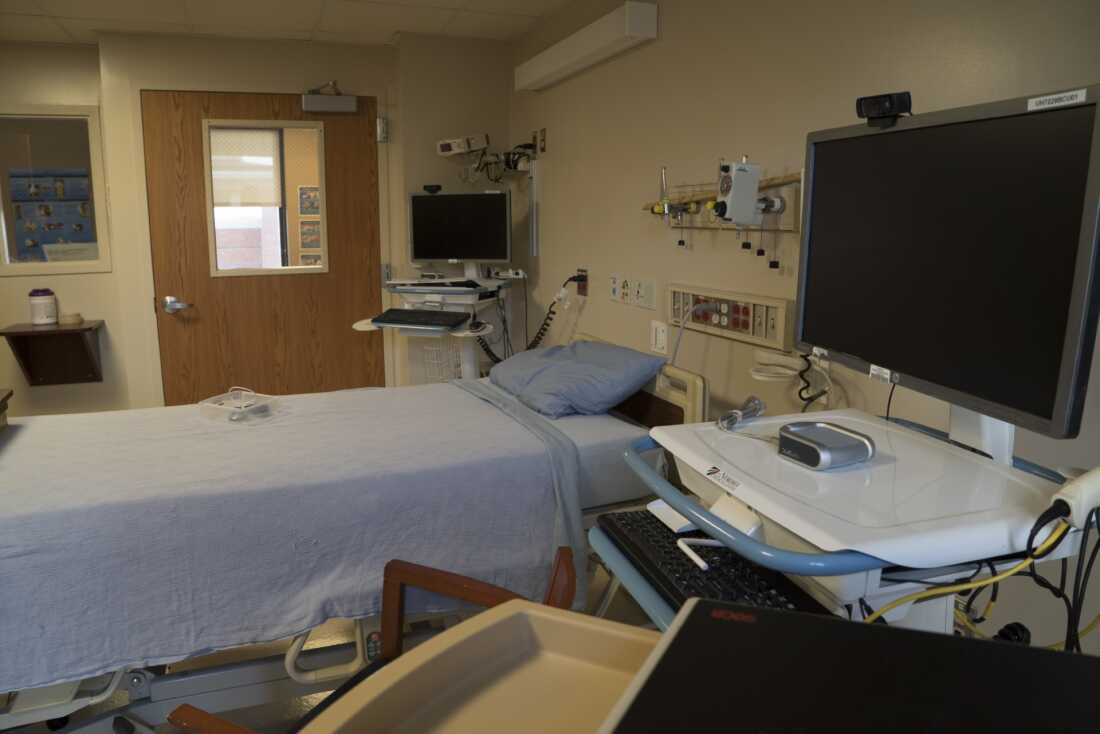
One of the rooms in the Nebraska Biocontainment Unit.
Nebraska Medicine
hide caption
toggle caption
Nebraska Medicine
Nebraska Gov. Jim Pillen, speaking at Monday’s news conference, welcomed the recently arrived patients, who are among nearly 150 people from 23 different countries who were aboard the MV Hondius when the illness most commonly transmitted to humans through contact with infected rodents broke out. As of Monday, the World Health Organization has reported at least nine cases of hantavirus, including three deaths.
“We’re glad that you’re here,” Pillen said. “We’re going to ensure that you have the best world-class care possible.”
Pillen also sought to reassure Nebraskans that the facilities are safe and secure: “We’re working diligently to ensure no one leaves the security in an unsecured way at an inappropriate time,” he said. “No one poses a risk to public health, just walking out the front door of the streets of Omaha.”

The hantavirus outbreak on the cruise ship has been identified as the Andes strain of the illness, one that can be spread, though rarely, from person-to-person, according to the Centers for Disease Control and Prevention. It can cause severe respiratory disease, with early flu-like symptoms.
“The Andes variant of this virus does not spread easily, and it requires prolonged, close contact with someone who is already symptomatic,” according to Adm. Brian Christine, the assistant secretary for health at the U.S. Department of Health and Human Services, who spoke at Monday’s news conference. “Even so, we have taken this situation very seriously from the very start.”
“The risk of hantavirus to the general public remains very, very low,” he said.
The full quarantine period for hantavirus is 42 days, Christine said, but he added that the patients would be allowed to go home if they remained asymptomatic.
“Right now, the passengers that are all in the assessment phase — they’re going to be here for at least a few days while we do assessments and the coordination on what happens next,” he said, adding that they had the option to remain in the quarantine facility for the full period, for “the safest and most effective option for them.”

new video loaded: Americans Exposed to Hantavirus on Cruise Ship Arrive in United States
transcript
transcript
Americans Exposed to Hantavirus on Cruise Ship Arrive in United States
Eighteen passengers who were aboard the MV Hondius, a cruise ship with a deadly hantavirus outbreak, landed in Omaha on a U.S. government medical flight. The passengers were being monitored at medical facilities in Nebraska and Georgia.
-
We’re working diligently to ensure no one leaves the security in an unsecured way at an inappropriate time. No one who poses a risk to public health is walking out the front door of the streets of Omaha or beyond.

By Axel Boada
May 11, 2026

The man charged with attempting to assassinate President Donald Trump at the White House Correspondents’ Association dinner last month pleaded not guilty at a Monday arraignment in federal court.
Cole Tomas Allen, 31, wearing an orange shirt and trousers, was handcuffed and shackled as he was brought into the courtroom in Washington, D.C., federal court. His handcuffs were attached to a chain around his waist, which clanked as he was led to the defense table.
Speaking on behalf of Allen, federal public defender Tezira Abe said her client “pleads not guilty to all four counts as charged,” including attempting to assassinate the president of the United States, in connection with the April 25 incident at the Washington Hilton hotel.
Assistant U.S. Attorney Charles Jones advised the court that they plan to start producing their first tranche of discovery to the defense by the end of the week.
Officials said Allen, a California teacher and engineer, was armed with multiple guns, as well as knives, when he sprinted through a security checkpoint near the event where Trump and other White House officials had gathered with journalists.
He was arrested after an exchange of gunfire with a U.S. Secret Service officer who fired at him multiple times, a criminal complaint said. Allen was not shot during the exchange. The officer, who was wearing a ballistic vest, was shot once in the chest, treated at a hospital and released.
Trump and top members of his Cabinet and Congress were quickly evacuated from the room as others ducked under tables.
Allen was initially charged with attempting to assassinate the president, transportation of a firearm and ammunition through interstate commerce with intent to commit a felony, and discharge of a firearm during a crime of violence. On Tuesday, a federal grand jury indicted him on a new charge in the shooting of a Secret Service agent.
Moments before the attack, Allen had sent his family members a note apologizing and criticizing Trump without mentioning the president by name, according to a transcript of some of his writings provided to NBC News by a senior administration official. Allen also wrote that “administration officials (not including Mr. Patel)” were “targets.”
He also appeared to have taken a selfie in his hotel room. Prosecutors said Allen, who was dressed in a black button-down shirt and black pants, was “wearing a small leather bag consistent in appearance with the ammunition-filled bag later recovered from his person,” as well as a shoulder holster, a sheathed knife, pliers and wire cutters.
Officials have said they believe Allen had traveled by train from California to Washington, D.C., before checking into the hotel.
Allen’s sister, Avriana Allen, told law enforcement that her brother would make radical comments and constantly referenced a plan to fix the world, but said their parents were unaware that he had firearms in the home and that he would regularly train at shooting ranges.
Records show that he had purchased a Maverick 12-gauge shotgun in August 2025 and an Armscor Precision .38 semiautomatic pistol in October 2023.
After his arrest, Allen told the FBI that he did not expect to survive the incident, according to Assistant U.S. Attorney Jocelyn Ballantine. He was briefly placed on suicide watch at the Washington, D.C., jail, where he’s being held.
Allen is expected to appear in court for a June 29 hearing.
At Monday’s arraignment, his legal team said they plan on asking for the “entire office” of the U.S. attorney for the District of Columbia to be recused because of U.S. Attorney Jeanine Pirro’s apparent involvement in the case in a “supervisory role.” Federal public defender Eugene Ohm said some of the evidence they receive from the government will further inform that decision.
-
 Sports24 seconds ago
High school boys volleyball: City Section playoff scores and pairings
-

 World12 minutes ago
Bolivia issues warrant for Evo Morales’s arrest after court no-show
-
News42 minutes ago
Why cruise ship passengers with possible hantavirus exposure went to Nebraska
-

 New York2 hours ago
Airbnb Turns to Black Leaders in Its Bid to Make a Comeback in New York
-

 Detroit, MI3 hours ago
Metro Detroit braces for Frost Advisory, Freeze Warning overnight before rain arrives
-

 San Francisco, CA3 hours ago
50 Beagles Rescued From Wisconsin Lab Arrive in Bay Area, SF Activist Faces Felony Charges
-
Dallas, TX3 hours ago
Former Cowboys QB Craig Morton passes away at age 83
-

 Miami, FL3 hours ago
Brickell Avenue Bridge openings spark rush hour gridlock concerns in downtown Miami

