Wisconsin
Gov. Tony Evers increases Wisconsin’s commitment to plant 100 million trees by 2030


Earth Day: 5 facts on evolution of pollution awareness
Discover how Earth Day evolved from an awareness campaign aimed at college students to a worldwide movement.
WAUNAKEE — On the shore of Lake Mendota at the state park named for the holiday’s founder, Gov. Tony Evers on Earth Day signed an executive order pledging that the state will plant 100 million trees by the end of 2030 — an increase from the state’s initial commitment of 75 million.
Wisconsin first joined the global Trillion Trees Initiative, led by the World Economic Forum and American Forests, with an Evers executive order in 2021. The order also included a pledge to conserve 125,000 acres of forestland by 2030.
The governor told cabinet members and state employees gathered at Governor Nelson State Park on Monday that he was a freshman at the University of Wisconsin-Madison when Earth Day was first celebrated in 1970 — a result of Wisconsin’s former governor and senator Gaylord Nelson’s advocacy.
“We actually, at the UW-Madison campus, had a full day of Earth Day, and professors and others had teach-ins, and it was really extraordinary,” Evers told reporters after planting a tree with a group. “It’s something I still remember to this day.”
Here’s what to know about Earth Day and the governor’s tree-planting pledge.
How many trees have been planted since the 2021 pledge?
The state has planted more than 32 million trees since Evers issued his 2021 executive order.
According to an annual report from the state Department of Natural Resources, more than 9.8 million trees were planted and more than 3,000 acres of forestland were conserved last year. More than two-thirds of seedlings were provided by the DNR. About 22% were planted on private lands. and about 19% were planted on DNR, federal, tribal and other public lands. About 100,000 were planted in county forests, 31,000 in school forests and more than 37,000 were given to elementary school students last Arbor Day.
Since the early 1900s, the DNR’s reforestation program has supplied landowners in the state with more than 1.6 billion seedlings.
Private nurseries partnering with the DNR supplied more than 3 million tree for conservation purposes, in addition to trees supplied by private nurseries for landscaping.
What will 100 million trees do for the environment?
According to the U.S. Department of Agriculture, a mature tree can store and exchange about 48 pounds of carbon dioxide from the atmosphere in one year. That means 100 million mature trees could store and exchange an expected 4.8 billion pounds of carbon dioxide per year.
The state’s updated goal will also contribute to the Great Lakes St. Lawrence Governors and Premiers’ bipartisan pledge to plant 250 million trees by 2033.
How many trees did Wisconsin plant in a normal year?
In the years before Wisconsin joined the Trillion Trees Initiative, the DNR nursery had distributed about 2.5 million to 3 million seedlings per year.
Why do we celebrate Earth Day?
While in the Senate, Nelson was frustrated by the lack of federal action on pressing environmental issues during. He advocated for “environmental teach-ins” at schools to prompt change, and on April 22, 1970, 20 million people, showed up at events across the country in support of a cleaner environment.
In the following years, Congress passed the Clean Water Acts, Clean Air Act, the National Wild and Scenic Rivers Act, the Federal Pesticides Act, the Environmental Education Act, the National Hiking Trails and the National Scenic Trails Acts. Under President Richard Nixon, the federal government also created the Environmental Protection Agency.
Earth Day has since become an international event celebrated in more than 180 countries.
What does Evers hope will come from the tree-planting effort?
“Certainly all the stuff that the trees do is right on target. They take carbon dioxide and release oxygen to the air and sequester the carbon into the ground. So they are doing their part,” Evers said when asked about his hopes for the new tree-planting commitment. “I think we as human beings can do a little bit better. We’re working on it. We have (electric vehicle charing stations) going now, and as people participate in purchasing those vehicles, that’s going to make a difference as well as, obviously, our big, big issues around making sure that we’re getting enough solar energy in our system and making that happen. So, we’re on the right track, but we have a long, long way to go.”
Laura Schulte of the Milwaukee Journal Sentinel contributed.
Jessie Opoien can be reached at jessie.opoien@jrn.com.



Wisconsin
A Wisconsin family is suing Target after their 10-month-old died from swallowing a water bead

A Wisconsin family lost their ten-month-old daughter after she swallowed a water bead. They blame Target and the water bead manufacturer for her death.
This week, Taylor and Tyler Bethard filed a lawsuit against Target in Hennepin County, claiming that the company failed to warn them and other customers about the dangers of a water beads product that used to be sold exclusively at Target.
Water beads are marketed as toys that come with sensory kits or craft sets, but data shows the products are prone to injuring young children. The polymer material is extremely absorbent, allowing water beads – which are often colorful – to expand around 100 times their original size when they interact with water or liquid. This presents a hazard for kids; the United States Product Safety Commission states that between 2017 and 2022, there were 6,300 water bead-related ingestion injuries that required treatment from emergency departments across the country.
In 2023, a 10-month-old girl died. Her name is Esther “Jo” Bethard. According to court filings, Taylor Bethard found her daughter unresponsive in her crib on the morning of July 7, 2023, after she had suffered symptoms of a stomach illness overnight. Medical examiners told the family that her death was caused by swallowing a single water bead.
The Bethards had purchased a Chuckle and Roar water bead set in the spring of 2022 for Esther Jo’s older siblings, never intending for the infant to interact with the water beads.
Target and the Chuckle and Roar manufacturer, Buffalo Games LLC, mutually agreed to pull the product from the shelves in November of 2022. Court records show an email exchange between Buffalo Games and a product safety employee at Target where the manufacturer noted that while their water beads had met safety standards at the time, they wanted to “avoid any future unintended misuse of the product.”
That conversation was prompted after Buffalo Games was informed that an infant required surgery after ingesting a water bead from the Ultimate Water Beads kit. Target agreed to end sales, indicating that this would be classified as a “safety removal.”
The Bethard’s lawsuit alleges that Target clearly knew how dangerous these water beads could be, but failed to warn them or other customers. Target stopped selling the product about eight months before Esther Jo died. Daniel Mann, a personal injury attorney representing the Bethards in this case, said that Esther Jo would still be alive if Target had acted.
“With all this information Target didn’t do anything to reach out to the family or other consumers to let them know about this problem,” Mann said, “I think 10/10 people would say Target had a responsibility to do more than what they did, which was nothing.”
A spokesperson for Target said that they would not comment on ongoing litigation, but the company had already responded to an identical complaint filed by the Bethards in the State of New York. In 2025, the Bethards sued both Target and Buffalo Games in Erie County, N.Y., because that was where the manufacturer was based. In response to the lawsuit there, court filings show that Target denied the allegations that they knew of an extraordinary danger posed by the water beads and failed to notify customers.
The complaint was dismissed against Target in New York, Mann explained, due to jurisdiction. This lead to them refiling in Hennepin County this week.
In a statement to WCCO on the new legal action, a Target spokesperson said “We extend our deepest sympathies to those affected by this tragedy, and we worked closely with the manufacturer of the product at the time the incident occurred.”
Taylor Bethard, Esther Jo’s mother, has lead the charge to ban water beads entirely. Her efforts lead to the United States Consumer Product Safety Commision recalling the more than 52,000 Chuckle and Roar Ultimate Water Beads Activity Kits that were in circulation. The recall took effect in September of 2023. Target, Walmart and Amazon announced that they would stop marketing water beads to children.
Bethard is also working with Wisconsin U.S. State Senator Tammy Baldwin to establish federal legislation to permanently outlaw all water beads. This past spring, the CPSC established new legal guidelines that restrict the size of water beads to try to ensure high safety standards.

(WLUK) — Wisconsin State Patrol troopers are teaming up with truckers to better spot dangerous driving behaviors.
The annual Trooper in a Truck initiative kicks off next week in Wisconsin.
Troopers will ride along with with semitruck and bus drivers to use the higher vantage point to spot dangerous driving behaviors, especially near commercial motor vehicles.
Troopers will be looking for risky driving behaviors, including distracted driving, speeding, following too closely and seatbelt violations. When an officer identifies a violation from the truck or bus, they will radio to patrol cars in the area for appropriate enforcement action.
Drivers can expect to see Trooper in a Truck enforcement in the following areas:
BE THE FIRST TO COMMENT
- Monday, July 13: Eau Claire
- Tuesday, July 14: Waukesha
- Wednesday, July 15: Madison
- Thursday, July 16: Green Bay
- Friday, July 17: Wausau

New Wisconsin athletic director Shawn Eichorst, who spent the last eight years at Texas, believes his new and old schools have much in common.
Both are well-regarded research universities in state capitals that belong to major conferences and have relatively similar enrollments.
He also pointed out one difference.
“There’s swag at Texas, right?” Eichorst said Tuesday during his introductory news conference. “There’s 30 million people in Texas. We’ve got swag, too, but we have a little humility with that deal. We need to get our shoulders up. We need to feel good about what it is that we’re doing.”
Wisconsin could gain more of that Texas swagger if its football program gets back to winning the way it did the last time Eichorst was employed in Madison. Eichorst, who most recently worked as a deputy athletic director at Texas, received a five-year deal worth $1.6 million annually, with provisions for increases and incentives. He was hired 2½ months after Chris McIntosh left to become the Big Ten’s deputy commissioner for strategy.
Eichorst worked at Wisconsin from 2006-11 when Barry Alvarez was AD and Bret Bielema was leading the football program. He followed that up with stints as an athletic director at Miami (2011-12) and Nebraska (2012-17) before Texas athletic director Chris Del Conte hired him in 2018.
He returns to Wisconsin with the Badgers coming off back-to-back losing seasons in football, a notable fall for a program that had 22 straight winning seasons from 2002-23. Wisconsin coach Luke Fickell has gone 17-21 after posting a 53-10 record with one College Football Playoff appearance in his last five years at Cincinnati.
Eichorst hasn’t worked with Fickell before but said he’s encouraged by their initial conversations.
“Obviously he’s won every place he’s been,” Eichorst said. “My expectation is more of me than him, meaning I need to pour into him, learn more about his program, how he has things set up, how his athletes are taken care of, how we’re supporting that endeavor. And then we can figure out, as we move along, what that might look like.”
Football struggles led to Eichorst’s downfall the last time he was an athletic director.
He fired Nebraska coach Bo Pelini in 2014 and hired Mike Riley, who had gone 93-80 in 14 seasons at Oregon State. Eichorst was dismissed shortly after Nebraska suffered an early-season loss to Northern Illinois in 2017. Riley was fired at the end of that season after going 19-19 in three years.
When Eichorst’s hiring was announced last week, he spoke about how much he had grown from that Nebraska stint. Wisconsin interim chancellor Eric Wilcots led the search and has emphasized Eichorst’s accomplishments at Texas, which has won the Learfield Directors’ Cup all-sports standings five times in the last six years.
Texas ranked anywhere from fifth to ninth in the Directors’ Cup standings in the five years before Wilcots’ arrival. Texas’ football team went a combined 23-27 from 2014-17 but has made two College Football Playoff appearances in the last three years.
“Everybody looks at the end result of what we did at Texas,” Eichorst said. “When we got there in 2018, we weren’t very good in a lot of areas. And that didn’t change overnight.”
Eichorst said one thing that has caught his attention about Wisconsin is the overall quality of its head coaches.
“You’re going to be as good as your coaches,” Eichorst said. “That’s it. If you have an elite group of coaches who are working together and uniting and galvanizing and learning from one another and taking it out to their individual programs, I think you can start to build something special. I go back to Texas. We built a room of really elite head coaches and put them at the top of everything we did to help guide us.”
Eichorst said this job is particularly important to him because of his Wisconsin roots. He was born in Lone Rock, about 45 miles northwest of the Madison campus.
He treasured his previous stint at Wisconsin and says he believes this school “represents everything that is great about higher education and college athletics.”
“Nobody will work harder for Wisconsin athletics,” Eichorst said. “I love this state, and I love everything that it represents. The passion is there. You can see it. I don’t have to make it up. I’ve lived it. It’s in my heart.”
___
AP college sports: https://apnews.com/hub/college-sports
-

 Iowa5 minutes ago
McKeever’s 7′3″ frame made Iowa the ‘obvious choice’ in the transfer portal
-
 Kansas12 minutes ago
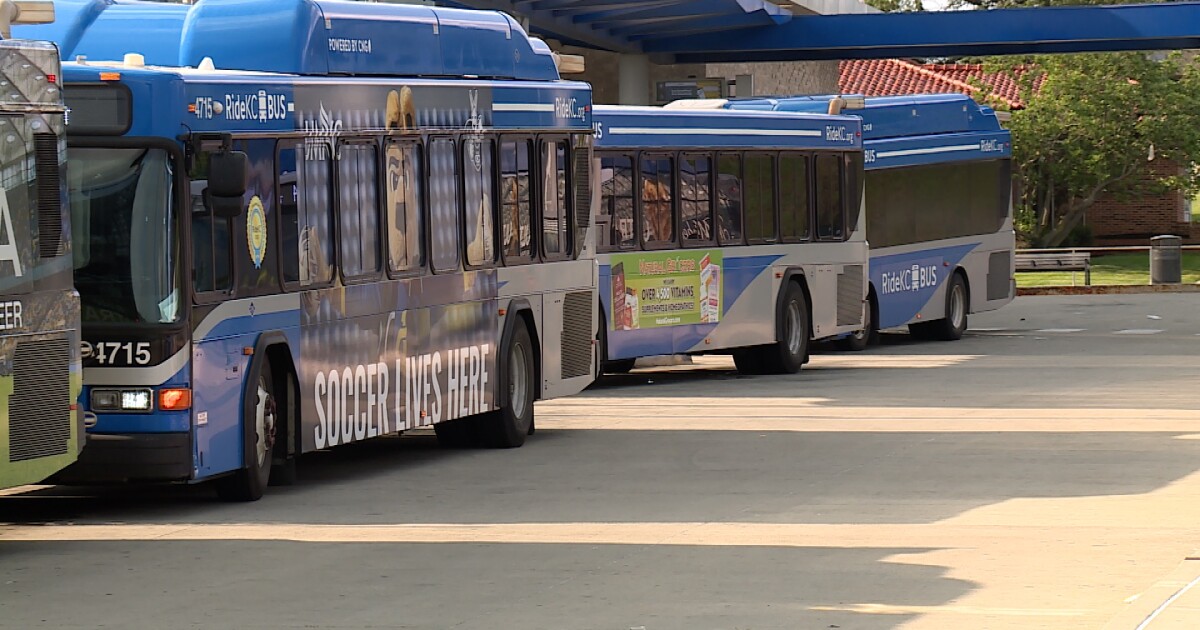
Kansas City to reduce bus transit frequency, extended hours after World Cup matches end
-

 Kentucky15 minutes ago
Public Health Student Hollie Hagan found her calling in rural Kentucky
-

 Louisiana20 minutes ago
Inside the lab at the heart of Louisiana’s mosquito-borne disease prevention network
-
 Maine27 minutes ago
Meet 16 obscure Maine Democrats shaping Graham Platner’s replacement
-

 Maryland29 minutes ago
Justice Department sues Maryland over immigration policies
-

 Michigan35 minutes ago
How two Michigan stamping plants power Stellantis turnaround plan
-

 Massachusetts42 minutes ago
3 hospitalized after vehicle crashes into Danvers business

