Sports
Premier League salary cap mailbag: Why? Who wins and loses? How would it work?


Premier League clubs this week opted to push on with plans for a hard spending limit — a de facto salary cap tied to the income of the lowest earning side in the top flight.
OK, we hear you say, but what on earth does it all really mean?
Who better to answer your questions than Matt Slater, who broke the original story? If you prefer, you can listen to Matt for free on Apple Podcasts, Spotify and the usual listening places on The Athletic FC Podcast.
Let’s dive in…
What are the real motivations for such a rule? — Adam M
Do I detect a note of suspicion, Adam?
For some, such as Crystal Palace chairman Steve Parish, who has been talking about this idea longer than most, there are sincere concerns about the competitive balance of the league.
They worry that the revenues of the ‘Big Six’ — which already feels like a ‘Big Seven’ and might be a ‘Big Eight’ before long — are growing faster than the revenues of the Premier League’s middle and lower classes, and that is before you factor in the increased sums they will receive from playing more Champions League games and occasional appearances in the FIFA’s revamped Club World Cup. Financial fair play regimes that tie your ability to spend to your own revenues play into the big clubs’ advantage, which compounds with each passing year.
So, “anchoring” is an attempt to slow the big clubs down. It’s a backstop to the squad cost rule that UEFA has already introduced and the Premier League is moving towards. The two are meant to be complementary, with anchoring being the backstop — a hard cap that even the richest/most successful/most ambitious club cannot go beyond.
Follow the Champions League on The Athletic…
What is the role of the Professional Footballers’ Association (PFA)? — Peyton B
Is there any chance the PFA will agree to a hard spending limit of 5x? And, if yes, what concessions would they require from the owners? — Dave D
The PFA calls itself the players’ trade union and it is, officially, the world’s oldest players’ union. But it has spent most of its history acting more like a lobby group, with a large charitable arm and growing education and healthcare sections. Unlike the North American players’ unions, it has not engaged in big disputes about profit-sharing with the clubs, the players’ employers, and it has not signed formal collective bargaining agreements with them.
Instead, there is almost a gentleman’s agreement between the leagues, on behalf of the clubs, and the PFA that the former will fund the union’s work in looking after former professionals who need new hips, providing counselling for those who need it, funding grants for second careers and backing research into conditions such as dementia.
The PFA, unsurprisingly, hates the idea of salary caps. Would you like it if a third party said your employer was not allowed to pay you over a certain level, even if that employer wanted to and could afford it?
Erling Haaland with the 2022-23 PFA Player of the Year award (PFA)
This is why European football’s governing body UEFA and everyone else have always had to step carefully when introducing cost controls. To avoid breaking European Union and national laws on restraint of trade, governing bodies have neeed to prove that what they are doing is justified by a legitimate aim — the sustainability of a culturally significant industry — and the proposed measure is fair, proportionate and transparent. In other words, they cannot push it too far.
So, rules that tie a club’s ability to spend to its ability to earn have, until now, been OK with lawmakers, as there is a clear link to sustainability. But linking a club’s ability to spend to someone else’s earnings? Hmmm. Debatable.
And it is almost certainly a debate the PFA will enter. As things stand, it is aware of the Premier League’s anchoring proposal and some preliminary conversations have taken place, but it is adamant that a proper consultation on the matter, at the relevant body, has not started.
The body in question is the ‘Professional Football Negotiating and Consultative Committee’, which is comprised of members from the PFA, the English Football League, the English Football Association and the Premier League. It is where all matters relating to employment in the game are discussed. If its members cannot agree, the dispute goes to independent arbitration. And there has been a lot of that in football of late.
Which clubs will benefit the most and the least from this? The clubs that objected to this seem very different, so it’s hard to tell — Andrew R
Good question!
Crystal Palace chairman Parish clearly believes it will help his team continue to compete in the Premier League. Anything, even something as loose as the proposed 5x anchoring cap, will help Palace put out a competitive team every week in the Premier League.
And every other team in Palace’s tax bracket seems to agree. For them, letting Manchester City and the rest spend 70 per cent of their ever-growing total revenues on their squads will destroy what is left of the jeopardy when City meets a team from the league’s lower half.
But the other big potential beneficiaries of anchoring are those clubs directly competing with Manchester City right now, and worried about the rising threat of Newcastle United. They want to tie their rivals to a more transparent cost-control mechanism. So, this would explain the support from Arsenal, Liverpool and Tottenham Hotspur.
Manchester United would ordinarily be in that gang but their new increasingly de-facto owner INEOS is concerned about anchoring slowing down its ability to perform the radical surgery United’s squad requires. So, their opposition is more tactical than strategic.

Sir Jim Ratcliffe, part-owner of Manchester United (right), with Sir Dave Brailsford (Robin Jones/Getty Images)
Aston Villa’s opposition to the idea is interesting as it reveals just how ambitious their billionaire owners Wes Edens and Nassef Sawiris are for the club. In the past, Villa would have been in favour of something that constrains the league’s elite. Now, they see themselves as potential aristocrats.
And Chelsea, well, they abstained probably because they realised a vote against the idea was not going to stop it from proceeding to the next stage in the consultation and legal process, so there was no point voting against it. But, equally, they could hardly back a rule that they are probably the only club to be in immediate danger of breaching. So, they did neither and abstained.
Will the players not just go to a league without a cap? — Darragh N
All of them, Darragh? And where? Which league pays average salaries anywhere near as high as the Premier League?
I understand the concern, and it will be voiced as a reason not to do this by those who hate the idea. I just do not think it is very likely.
According to the most recent data from UEFA, 10 of the top 20 wage bills in European football are in the Premier League. No other league has more than three representatives.
The two biggest wage bills in Europe, and therefore global football, are at Barcelona and Paris Saint-Germain, but they can only field 11 players at a time, and both are trying to trim their wage bills, with Barca badly needing to stop their slide towards bankruptcy and PSG moving towards a more sustainable model.

GO DEEPER
Who is the best-paid player at every Premier League club?
Nothing lasts forever, of course, but there is no evidence of any short- or medium-term threat to the Premier League’s status as the richest domestic league in global football.
Could the Saudi Pro League be the threat? It might, one day, but I would argue there is just as much chance of the SPL going the same way as the Chinese Super League in a decade as there is of it becoming a genuine challenger to the Premier League, La Liga, Bundesliga and other major leagues.
If I were in charge of the Premier League, I would be more worried about Major League Soccer but, as we know, North American sports owners love cost controls, so I cannot imagine them getting into an arms race for players with the Premier League, particularly as half of those owners are likely to own Premier League teams, too.
GO DEEPER
It’s a controversial topic, but does taking a Premier League game to the U.S. make sense?
How punitive are these rules on the richer clubs? A circa £500m limit on spending is hardly forcing teams to scratch around the bargain bin — Tom N
I think you have answered your own question, Tom. And the answer is… not very! Not yet, anyway.
We have estimated each club’s squad cost calculation for the 2022-23 season. The numbers that go into that calculation are the wages for your first-team squad players and coaching staff, your annual amortisation bill (the cost of your transfers spread across the length of their contracts) and any agents’ payments you make.

Now, some of those numbers are publicly available but we have had to make educated guesses on the biggest one, the wage bill, as clubs only publish their total wage bills — for all their staff — and not what they pay their players. However, most clubs spend about 70 per cent of their total wage bill on their players, so that is the amount that we have used.
The result is that only Chelsea spent more than five times what the Premier League’s bottom club, Southampton, received from the league in central payments. The Saints’ share of the league’s broadcast and sponsorship cash was £103.6million, which would have set a 5x cap at £518million. Chelsea’s estimated squad cost that season was £539million.
So, no, you’re right, if the only club to possibly breach the proposed anchor was Chelsea, after their wild shopping spree, this would not appear to be particularly restrictive.
Curious how it will work, timing-wise. Will they confirm the amounts available to spend the next season, once the season is over? — Courtney A
You are not the only one to be curious about the details of this, Courtney, and you ask a good question.
Whether the Premier League bases the cap on the multiple of the previous season’s bottom club’s central income or an estimate of the new season’s bottom club’s number is not clear yet. But I do not see how they can set the cap retrospectively. Clubs must know where they stand, so the cap will have to be set in advance.
I wonder if the cap should be linked to rolling three-year domestic TV rights deals.
The actual calculation is not that difficult, as most of the numbers are easy to predict. Every club receives a basic award of about £90million, with each place in the table worth a £3.1million merit payment, so the bottom club gets 1 x £3.1million and the top club 20 x £3.1m.

The only real variable is the facility fee, as that is the payment clubs receive each time they appear on live television in the UK, and it is not often the case that the team that finishes 20th is the least-picked team.
The facility fee is just over £1million a game and every team is guaranteed a minimum number of televised games. The range for facility fees in 2022-23 was £25.3million (Manchester City) to Bournemouth (£10.2m).
So, there is some variability in the exact amount your bottom club will earn but not much. The facility fees make up 25 per cent of amount clubs make from the domestic deal, which is about half of the total income. As previously mentioned, Southampton received £103.6million last season and that seems like a good benchmark for a bottom-placed team in the current broadcast rights cycle.
How will this new rule tie in with UEFA’s rules? Could you have a situation where a team spends more than £500million and wins the Premier League fairly but is not allowed to play in Europe? — Ben H
This proposal will work in tandem with UEFA’s squad cost rules and the Premier League’s version of the same concept. Think of anchoring as a backstop or a relatively distant line in the sand that nobody can cross.
Your second question is an intriguing hypothetical but does not seem very likely to me.
Even if we ignore the numbers and just pretend that there is a way for a club to emerge from the pack and win the league, while breaching UEFA’s 70 per cent threshold, do not forget that winning the league will bring a big TV merit payment, increased commercial income and the promise of at least £45million of Champions League prize money.
So, they might bust the 70 per cent limit in the year they win the Premier League, but they are unlikely to do so the following season. We have a very recent example of such a club: Leicester City. They made a record profit the year after they won the Premier League.
Finally, even if your champion still, somehow, manages to breach UEFA’s threshold, the European governing body does not like banning champions from its competitions. It has a long track record of dishing out fines, which they collect by withholding some of the prize money, and squad restrictions.
This approach is actually baked into the new squad cost rules, as UEFA has published a penalty schedule that links the size of the fine to the scale of the breach.
(Top photo: Michael Regan/Getty Images)



Sports
Kylian Mbappé’s seventh goal of the World Cup lifts France past Paraguay in physical Round of 16 match

NEWYou can now listen to Fox News articles!
The United States may not have been in action on Independence Day, but France — who fittingly played an important role in the Revolutionary War — was on the pitch in Philadelphia against Paraguay in a massive Round of 16 clash for a trip to the quarterfinals.
It was a hot day in the birthplace of our nation, and that made things difficult for both teams in more ways than one.
While Paraguay is a great squad, they were significant underdogs against a heavily favored French team led by superstar Kylian Mbappé, who has been lighting it up this tournament.
THIS ‘AMERICA THE BEAUTIFUL’ RENDITION BEFORE THE FRANCE VS PARAGUAY MATCH WILL GIVE YOU GOOSEBUMPS
French and Paraguayan players get into a shoving match during their Round of 16 match on Saturday in Philadelphia. (Kyle Ross-Imagn Images)
Obviously, the heat itself is a factor, but it also made for a slower pitch, something that was believed to play into the hands of Paraguay.
However, most of the action in the first half was played on their end as France put the pressure on through the first half hour of the match.
It was intense, and that intensity boiled over in the 35th minute with some pushing and shoving after Mbappé and Paraguay’s Andrés Cubas started a wild shoving match.
VAR DENIES CROATIA’S GAME-TYING GOAL AS CRISTIANO RONALDO LEADS PORTUGAL TO ROUND OF 16
But while the intensity ramped up — and stayed high for pretty much the entire game — Paraguay weathered the storm and had every reason to feel good about reaching halftime with the game scoreless.
France got some more scoring opportunities in the early part of the second half, including a near-breakaway for Mbappé.
France’s Kylian Mbappe scored the go-ahead and ultimately game-winning goal against Paraguay on a penalty kick. (James Lang-Imagn Images)
In the 67th minute, France was awarded a penalty kick for a foul against Desire Doue that had to go to VAR for review, and it was Mbappé who took it.
MESSI, ARGENTINA AVOID A SHOCKING UPSET IN WILD KNOCKOUT STAGE MATCH AGAINST CAPE VERDE
Mbappé has tended to do most of his damage in the second half, and that trend continued here with him drilling the penalty past Paraguay goaltender Orlando Gill.
That was his 19th career World Cup goal, and his seventh of this tournament alone, tying him with Argentina’s Lionel Messi for the tournament lead.
Paraguay seemed to fade after the Mbappé goal, but turned it on again late, forcing Mike Maignan to make his first save of the day about 89 and a half minutes into the match.
CLICK HERE TO DOWNLOAD THE FOX NEWS APP
It seemed like Paraguay’s plan was to try and get a rise out of the French, and they succeeded in drawing three yellow cards. In fact, they even tried to keep that going after the match with players meeting near midfield for some more pushing and shoving.
But France is moving on, and they will take on Morocco in a quarterfinal match on Thursday in Boston.
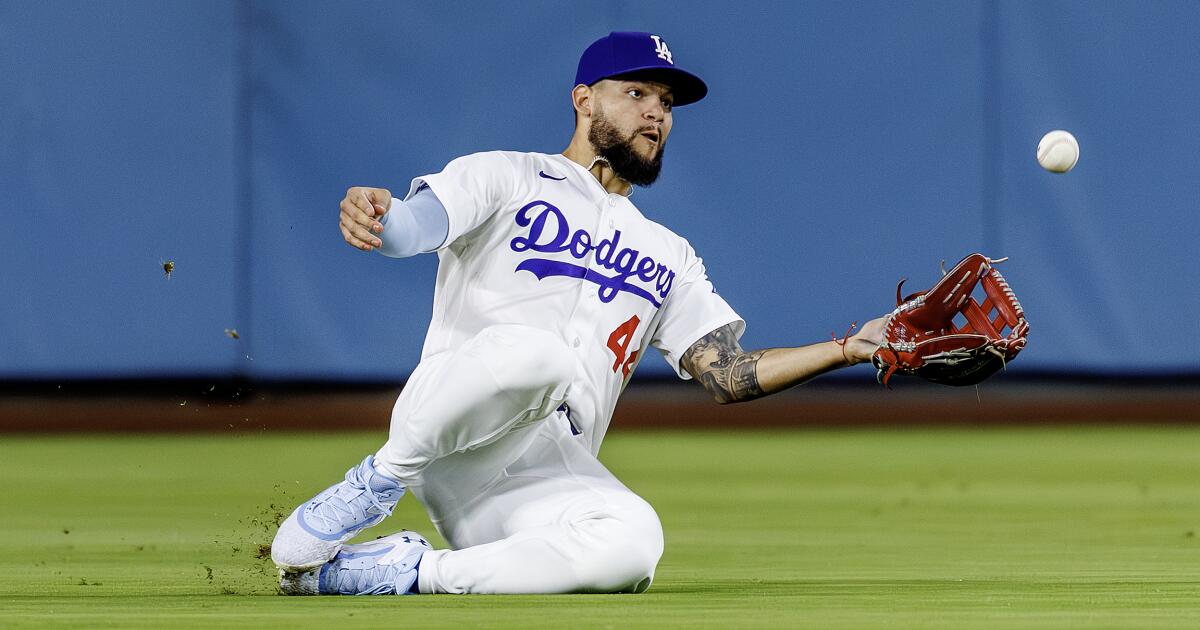
The Dodgers have four more 2026 All-Stars joining Shohei Ohtani on the National League squad.
Center fielder Andy Pages claimed the first All-Star nod of his career. And third baseman Max Muncy (three) first baseman Freddie Freeman (10) and pitcher Yoshinobu Yamamoto (two) added to their Midsummer Classic honors.
Ohtani (six) bypassed phase two of All-Star voting by earning the most fan votes of any player in the first phase.
All of the Dodgers position players were elected as starters, marking the first time since 1980 that the team has had four All-Star starters.
The MLB All-Star Game will be played in Philadelphia on July 14.
Sports
Chris Johnson’s former teammate reflects on ex-star’s surprise ALS diagnosis, tight-knit bond after milestone

NEWYou can now listen to Fox News articles!
The NFL world was stunned on Monday when it became public that Chris Johnson, one of just nine players ever to rush for 2,000 yards in a season, is suffering from ALS.
The news hit close to home for Ryan Fitzpatrick, who played for Johnson’s Tennessee Titans for a season. And despite it being just one year, the two have a special connection.
“He was a great teammate when I got to play with him for the one year, and obviously a super talented guy on the football field. We texted about a year ago. I was just looking back at our text messages, and one of the things that I had sent him — the 100th touchdown pass that I threw in the NFL was to CJ2K, and he signed the football for me and gave it to me. It says, ‘To my cool white boy. Congrats on number 100,’” Fitzpatrick recalled in an interview with Fox News Digital. “So the amount of street credit I have from Chris Johnson calling me a cool white boy has always been awesome to me.”
Quarterback Ryan Fitzpatrick, No. 4 of the Tennessee Titans, hands off to running back Chris Johnson, No. 28, against the Seattle Seahawks at CenturyLink Field on October 13, 2013 in Seattle, Washington. (Otto Greule Jr/Getty Images)
But ALS is just such a tough thing to have to deal with, obviously for Chris and for everybody around him. You can just imagine the frustrations of his mind being there but his body starting to fail him and how difficult that is. We’re obviously all hoping for the best for him, and all our love and support goes to him and his wife and his family.”
In a lengthy social media post, Johnson said that there is growing research that shows a link between repetitive head trauma and ALS, and studies have shown that NFL players are four times as likely to develop ALS as the general population.
Fitzpatrick, personally, said that when it comes to football, he would do it all over again, even as the risks are more prevalent now than ever before. However, what comes with age is more grim reality.
Tennessee Titans running back Chris Johnson runs against the Carolina Panthers at Bank of America Stadium in Charlotte, N.C., on Aug. 28, 2010. (Sam Sharpe/USA TODAY Sports)
FORMER NFL STAR CHRIS JOHNSON SAYS HE’S BEEN DIAGNOSED WITH ALS
“I do think guys playing football understand at least the broad scope of what the risks are. I think a lot of guys would tell you, and I would be the same way, football has given me so much in my life that it’s something I would do again in a heartbeat. And for my kids that want to pursue it, I’m happy for them to pursue it,” Fitzpatrick said.
“But as you get older, I’m 43, as you get older, and your parents get older, I lost my mom five years ago, there’s just more stuff that seems to happen. It’s really sad. One of my best friends from high school was diagnosed with ALS. So seeing that firsthand, and the difficulties that come with it, not just for him but everybody that is around him, it’s really hard. As you get older, stuff happens, and there are things that you have to deal with and figure out. So unfortunately, it’s a tough part about aging.”
There is no known cure for ALS – known as amyotrophic lateral sclerosis. It’s a progressive disease in which the brain loses connection with the muscles, according to the ALS Association. The afflicted slowly lose their ability to walk, talk, eat, dress, write, swallow and, eventually, breathe.
Tennessee Titans running back Chris Johnson breaks free for a long run against the San Francisco 49ers in the fourth quarter at Candlestick Park in San Francisco, Calif., on Nov. 8, 2009. The Titans defeated the 49ers 34-27. (Cary Edmondson/USA TODAY Sports)
CLICK HERE TO DOWNLOAD THE FOX NEWS APP
The former running back played in the NFL from 2008 to 2017 with the Titans, New York Jets and Arizona Cardinals.
Fox News’ Ryan Gaydos and Angelica Stabile contributed to this report.
Follow Fox News Digital’s sports coverage on X, and subscribe to the Fox News Sports Huddle newsletter.
-
 News4 minutes ago
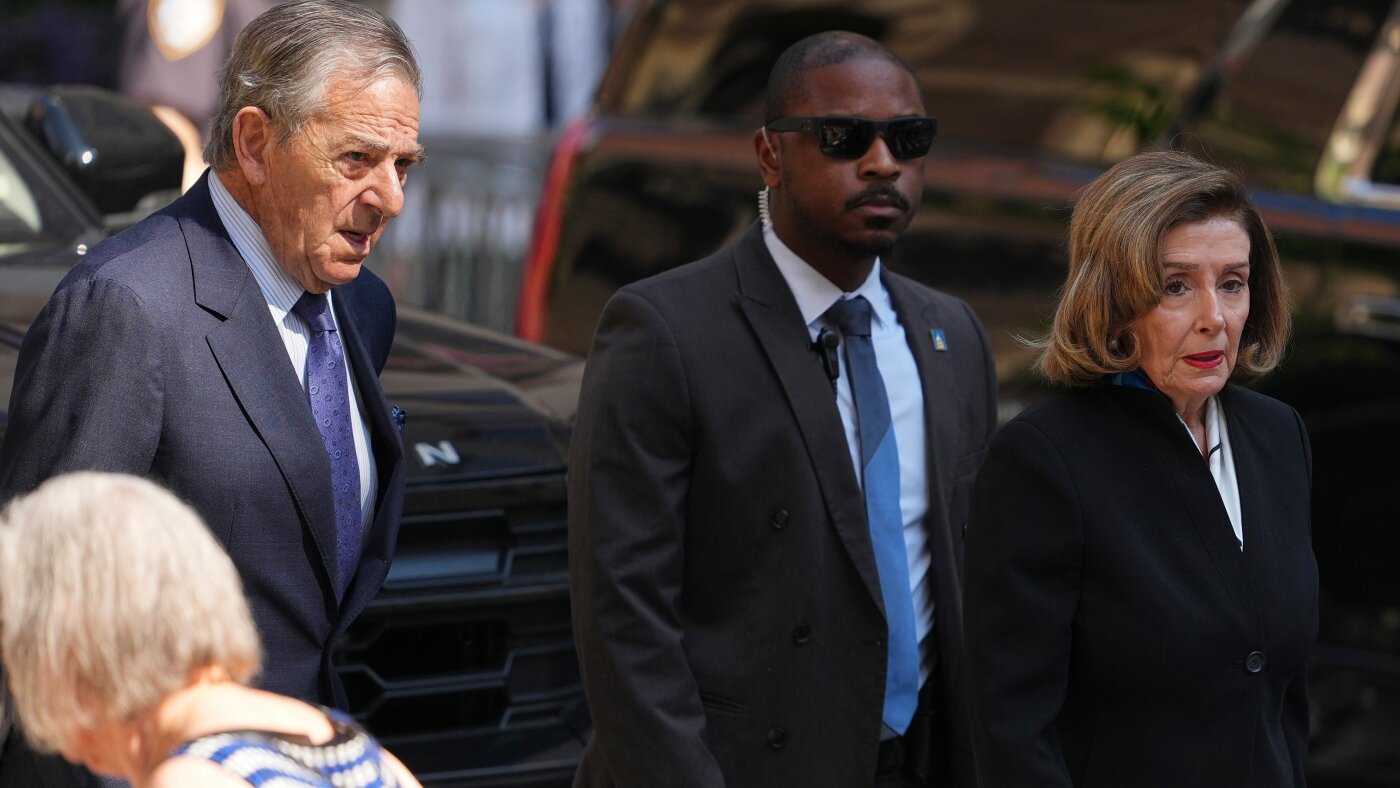
Paul Pelosi in hit-and-run in California, car left with major damage, authorities say
-

 Los Angeles, Ca1 hour ago
Firefighters battle Fourth of July blazes around Los Angeles
-

 Detroit, MI2 hours ago
Storm chances linger into the start of the week across Metro Detroit
-

 San Francisco, CA2 hours ago
Relay for America runs flag from San Francisco to D.C. in message of unity
-

 Dallas, TX2 hours ago
Cowboys newcomer already looks like a waste of money in Dallas
-

 Miami, FL2 hours ago
Police search for suspect after man is shot while on a boat near hotel in Fort Lauderdale on 4th of July
-

 Boston, MA2 hours ago
Sonny Gray shines again, and the Red Sox make it two straight wins at the Angels to start grinding road trip – The Boston Globe
-

 Denver, CO2 hours ago
Aldi expanding into Colorado, applies for permits at two Denver locations

