Midwest
Two young unidentified Black girls found dead inside buried suitcases in Ohio

NEWYou can now listen to Fox News articles!
Police in Cleveland, Ohio, are asking the public for tips after two young Black girls were found dead inside separate suitcases buried in shallow graves on Monday.
Cleveland Police Chief Dorothy Todd said during a news conference that the girls, believed to be between the ages of 8 and 13 and 10 and 14, were found Monday evening.
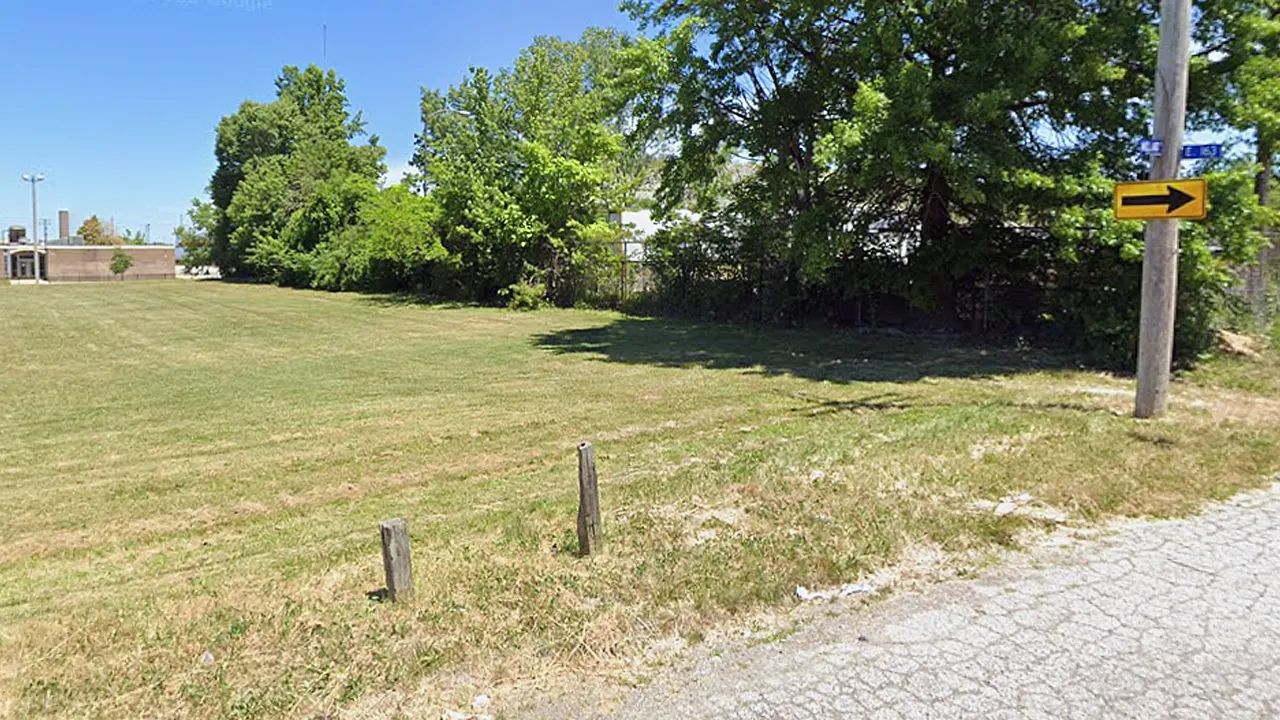
The discovery was made Monday evening after a man walking his dog near East 162nd Street and Midland Avenue, in a field near Ginn Academy, found a partially buried suitcase and called police.
Police responded and located a shallow grave and found a deceased individual in a suitcase. After canvassing the area, police found a second shallow grave and another suitcase containing a second individual.
Police searched the area near East 162nd Street and Midland Avenue following the discovery of two buried suitcases. (Google Maps)
The man who discovered one of the suitcases told Fox 8 that his dog ran toward a fence near a playground where the partially buried suitcase was found. He said he called police after unzipping the suitcase and seeing a head.
The girls have not been identified, and authorities have not determined a cause of death.
There are no active missing persons reports in Cleveland matching the victims, according to police, and it was unclear how long the girls had been inside the suitcases.
DOORBELL VIDEO SHOWS AUSTIN MASS SHOOTING SUSPECT LEAVING APARTMENT BEFORE DEADLY RAMPAGE
Authorities responded to a field in Cleveland where two girls were discovered in buried suitcases. (Tom Szczerbowski/Getty Images)
Todd described the discovery as a “terrible, horrific situation.”
“This is a traumatic event for our officers, for the community. This is just such a tragic incident, but we are trying to develop any leads we can. That’s why we are also asking for the community’s help,” Todd said.
“We know that this didn’t just happen. We still have to develop exactly when this happened. We don’t have any indication this is a clear threat to safety,” Todd said.
WHO IS MELANIE MCGUIRE? WHAT TO KNOW ABOUT THE ‘SUITCASE KILLER’ CONVICTED OF KILLING HER HUSBAND
On March 2, two girls were found dead in suitcases buried in shallow graves, police said. (Cleveland Division of Police)
The Cuyahoga County Medical Examiner’s Office has custody of the bodies.
Todd said the bodies had not been dismembered.
CLICK HERE TO DOWNLOAD THE FOX NEWS APP
The Cleveland Division of Police Homicide Unit launched a 24-hour tip line at 216-623-5464.
Related Article

Read the full article from Here



San Francisco voters will decide whether the city should have a public bank after city supervisors this week approved such a proposal to appear on the November ballot.
The city would be the first in the nation to have a municipal government-owned bank. Only the state of North Dakota runs a major public bank in the nation.
But the city’s proposal gives no answer as to where the estimated $325 million in start-up costs will come from as the city faces a $643 million budget deficit.
“In a moment like this, asking voters to commit San Francisco to potentially running a financial institution is asking for trust the city has not yet earned,” said Supervisor Alan Wong, one of the two votes against placing the measure on the ballot.
“Our city’s track record shows that meeting those demands is harder than it sounds, even for institutions designed with the right intentions,” he added.
Socialist Supervisor Jackie Fielder, who just returned from a months-long mental health leave, indicated that future legislation would figure out a revenue steam. Supporters of a bank wanted to get ahead of a 2028 expiration date for a state law that gives cities the power to create their own public banks.
“It feels like an incredible tool to add to the city’s tool kit,” Misha Steier, a spokesperson for the San Francisco Public Bank Coalition, told the San Francisco Chronicle. The coalition was founded by Fielder.
“This is the culmination of years and years of movement effort,” Steier said.
A city bank, supporters say, would unlock financing for thousands of housing units that lack funding to address the housing crisis. It could finance climate goals or lend to small businesses in the area.
“This ensures we have an institution run by real bankers that is accountable, nevertheless, to public priorities and public policy priorities,” Fielder said.
“We can build a public bank that prioritizes reinvesting back into what we all need to sustain our local communities,” added Supervisor Chyanne Chen, who brought forth the measure. “Let us use every tool at our disposal to keep the city affordable and to drive an economic recovery that leaves no one behind.”
The bank would be run by qualified bankers appointed by an oversight committee whose members would be selected by local officials. While it does not establish a revenue stream, the ballot measure would at least enshrine the bank’s rules, structure and mission in the city’s charter — including a provision that it would never lend to fossil fuel corporations or weapons manufacturers.
How startup costs will be funded seems to be difficult to answer. Fielder in February attempted another ballot measure that would impose a higher tax on lending companies to help fund such a bank, though that effort was paused to focus on this new ballot proposal.
Any new taxes may be difficult in the current political environment; this past June, voters in the progressive city even voted down a tax hike on highly paid CEOs.
North Dakota’s bank sees deposits mostly from the state’s collections of taxes and fees and corporate accounts. A very small portion comes from residents as “it is the Bank’s policy not to compete with the private sector for retail deposits,” it said on its website.
The bank has mostly seen success and has turned a profit for many years, which can be returned to the state government’s general fund or used for economic development initiatives. A lot of the success can be traced to the the state’s fracking boom, according to research by University of Illinois Chicago professor Robert S. Chirinko.
But unlike commercial banks, deposits into the public bank are not insured by the federal government, which means North Dakota takes on all the risk. California’s law requires federal insurance, which will give the city more regulatory hurdles as no public bank has sought that approval before.
Chirinko said any success replicating North Dakota’s model will heavily depend on funding. San Francisco’s proposed focus on investing in climate-friendly technology or housing may also not pay off immediately.
“There could be a role there for government, but you have to recognize that you’re not going to get your money back,” he said.
Such banks also can face accusations of unfair political influence. In 2016, North Dakota’s bank financed local law enforcement’s militarized response to controversial protests against the Dakota Access Pipeline, sparking liberal backlash.
Already, critics in San Francisco are saying the same political favoritism could happen for how loans and other financial products would get issued.
“What do they want? An SF Public Bank staffed by cronies of absentee SF Supervisor Jackie Fielder,” claimed tech figure and Y Combinator CEO Garry Tan. “It’ll be a tremendous grift mill robbing the city blind.”
Download The California Post App, follow us on social, and subscribe to our newsletters
California Post News: Facebook, Instagram, TikTok, X, YouTube, WhatsApp, LinkedIn
California Post Sports Facebook, Instagram, TikTok, YouTube, X
California Post Opinion
California Post Newsletters: Sign up here!
California Post App: Download here!
Home delivery: Sign up here!
Page Six Hollywood: Sign up here!

Where do bed bugs come from? How they get could get into your home
Does the thought of bed bugs keep you up at night? Here’s what to know.
Columbus remains one of the nation’s top cities for bed bug treatments, according to Orkin’s latest annual rankings, while Ohio continues to dominate the list more than any other state.
Orkin ranked Columbus eighth on its 2026 list of U.S. cities with the most bed bug treatments, the same position the city held last year. Cleveland ranked even higher at No. 4. Cincinnati came in at No. 15.
Overall, six Ohio cities made the Top 50, more than any other state: Cleveland, Columbus, Cincinnati, Youngstown, Dayton and Toledo. The rankings are based on residential and commercial bed bug treatments Orkin performed between May 2025 and May 2026.
Chicago claimed the top spot for the sixth consecutive year, followed by Los Angeles, Detroit, Cleveland and Indianapolis.
Ohio continues to rank high for bed bugs
Ohio’s strong showing on the list comes as the state has repeatedly appeared near the top of national pest rankings.
A recent USA TODAY report, citing an analysis by Casino.ca, estimated Ohio has the second-highest bed bug risk for travelers in the country, behind only Michigan.
The Orkin rankings do not measure the total number of bed bugs in a city. Instead, they reflect where the company performed the greatest number of residential and commercial treatments over the past year.
Columbus has dealt with bed bug sightings before
The rankings also follow several high-profile bed bug incidents in downtown Columbus government offices.
Last fall, The Dispatch reported a bed bug was discovered inside the Ohio Department of Medicaid’s downtown office, prompting treatment of the affected area.
The Dispatch also reported that employees at the Ohio Bureau of Workers’ Compensation had reported bed bug sightings, leading to inspections and pest-control efforts.
Those incidents highlighted the challenges large office buildings face when dealing with pests that can hitch rides on clothing, backpacks and luggage rather than originating inside the buildings themselves.
It’s not just bed bugs
Bed bugs aren’t the only pests putting Columbus on Orkin’s radar.
In October 2025, Orkin ranked Columbus No. 21 on its annual “Rattiest Cities” list, a slight improvement from previous years but still among the nation’s leading metro areas for rodent treatments.
Taken together, the rankings suggest central Ohio remains a busy market for pest-control companies as the city holds steady on this year’s bed bug list.
Which Ohio cities made Orkin’s 2026 list?
Among Ohio cities, the rankings were:
- Cleveland– No. 4
- Columbus– No. 8
- Cincinnati– No. 15
- Youngstown– No. 32
- Dayton– No. 38
- Toledo– No. 42
Trending reporter Amani Bayo can be reached at abayo@dispatch.com.

Under state law, any “interested person” can petition state boards to change administrative rules.
But South Dakota citizens and organizations don’t qualify as “persons” under that chapter of state law. The existence of that limitation surprised some members of the state Board of Elections on Wednesday during a meeting called for the express purpose of voting to advance or defeat a rules package the body spent two hours pondering last week.
The League of Women Voters leaned on what it believed to be its right to petition state board earlier this month when it offered the board a series of rule changes the group argued were necessary to standardize the administration of a new state law that requires first-time voter registrants to provide proof of U.S. citizenship.
The board dismissed the petition in a 5-2 vote on Wednesday after one of the board members told the group that the advocacy nonprofit lacks the legal standing to ask for the changes.
Last minute check of statutes calls petitioners’ status into question
The definition of a “person” able to petition a state board for a rule change only includes political subdivisions or agencies of the state, board member and retired Rapid City attorney Scott McGregor said.
McGregor did not attend the initial board meeting last week when the petition was presented, but he reviewed the matter over the weekend, he told South Dakota Searchlight after the meeting. With a 40-year career “making legal arguments based on statutory interpretations,” McGregor also reviewed relevant laws regarding the petition process.
McGregor said he wanted to see if “interested person” had a broad enough definition to include organizations such as the League of Women Voters.
“‘Person’ in various contexts has an awful lot of definitions,” McGregor said. “It depends on the section of the law you’re dealing with and the level of government you’re dealing with.”
McGregor spoke with the Secretary of State’s Office and its legal counsel earlier this week to confirm his interpretation. Deputy Secretary Tom Deadrick told McGregor that other agencies have accepted rule petitions from individuals.
“Even if other agencies have done it,” McGregor told Searchlight,” that doesn’t change the law.”
McGregor told board members he was “shocked” by the limitations.
“That may be an oversight, but that’s all that’s in there,” McGregor said during the meeting.
Board member Kent Alberty said he was “disappointed” that the law’s restrictions on petitioners wasn’t shared with board members earlier. Alberty, during last week’s meeting, said that he saw a need for at least some standardization in procedures in the administration of the citizenship requirement.
Alberty voted against the dismissal on Wednesday, as did Dewey County Auditor Jamalia Franzen.
McGregor told South Dakota Searchlight that the law should be reviewed legislatively.
“There is a certain unfairness to it,” McGregor said.
Acceptable documents for proving one’s citizenship under the new law in question on Wednesday include a birth certificate, passport, driver’s license, non-driver’s identification card or tribal identification card, or “any other type of acceptable documentation” under federal law. Photocopies of most of those documents are acceptable, but registrants using state- or tribally issued identification cards must have the physical cards with them.
If a voter does not provide necessary documentation, they are registered as federal-only voters and cannot participate in local or state elections.
The League of Women Voters proposals included:
- Allowing photocopies of identification cards, such as tribal IDs and driver’s licenses, to be used as proof of citizenship.
- Recognizing tribal identification cards from any federally recognized tribe, rather than just the nine tribes in South Dakota.
- Allowing voters designated as federal-only an opportunity to cast provisional ballots for local elections while appealing their eligibility.
- Adding specific language to the state’s voter registration form to explain that not offering a physical South Dakota address would cause them to be designated as federal-only voters.
- Adding language to notifications confirming a voter’s registration clearly saying if the registrant is a federal-only voter, as well as language explaining how to remedy the situation.
South Dakota Secretary of State Monae Johnson was ill during last week’s board meeting, at which the group took testimony from supporters of each rule. No one from her office was on hand to rebut the supporters, but her staff did file written responses in opposition.
On Wednesday, Johnson told the board that the new law, as written, does not allow photocopies of driver’s licenses, only the original card. She added that while no formal appeal process exists for voters registered as federal-only, they can remedy their status by resubmitting their registration with proper documentation.
“The League of Women Voters and other concerned organizations could look at amending the current law in the 2027 legislative session, if that is their wish,” Johnson said.
Johnson will not be seeking re-election for secretary of state in November. She lost the Republican nomination at last month’s state party convention to state Rep. Heather Baxter, who supported the bill that created the new law during the legislative session and will oversee its administration if elected. Baxter will face Democratic nominee Terrence Davis in the general election.
Baxter submitted public comment ahead of Wednesday’s meeting and compared the proposed changes to presenting a photocopy of identification to get through security at the airport or purchase alcohol. The state Department of Public Safety does not accept photocopies of identification documents, Baxter said.
“So why allow the League to make such changes to what law already clearly states as well as other state departments?!” Baxter wrote.
Amy Scott-Stoltz, president of the League of Women Voters of South Dakota, said the organization is “disappointed” in the board’s decision and “reviewing our options” regarding advancing its proposals and challenging the board’s dismissal.
The group’s petition was meant to make sure the new law is “uniformly implemented across the state and that voters and county auditors alike would have clear guidance about their obligations under the law in advance of the November election,” Scott-Stoltz said.
“We intend to continue our work in South Dakota to ensure that every American citizen can access the ballot box,” Scott-Stoltz said.
— This story was originally published on southdakotasearchlight.com.
-

 Nevada34 seconds ago
Local artists on Northern Nevada stages, now through Labor Day weekend
-

 New Hampshire3 minutes ago
Trans athletes drop lawsuit to gain access to girls’ sports in New Hampshire after SCOTUS ruling
-

 New Jersey8 minutes ago
Family describes frantic moments delivering baby on the NJ Turnpike
-

 New Mexico16 minutes ago
Hidden gem in Cloudcroft, New Mexico has best BBQ in US
-

 North Carolina19 minutes ago
North Carolina Airport Looks to Expand Commercial Service | AirlineGeeks.com
-

 North Dakota24 minutes ago
San Francisco plots risky socialist bank modeled after controversial experiment
-

 Ohio31 minutes ago
Feeling itchy? Ohio leads nation with 6 cities on Orkin’s 2026 bed bug list
-

 Oklahoma33 minutes ago
Oklahoma’s Brent Venables named to 2026 Dodd Trophy Preseason watch list

