Midwest
Trump ally Ramaswamy to make major announcement about his political future

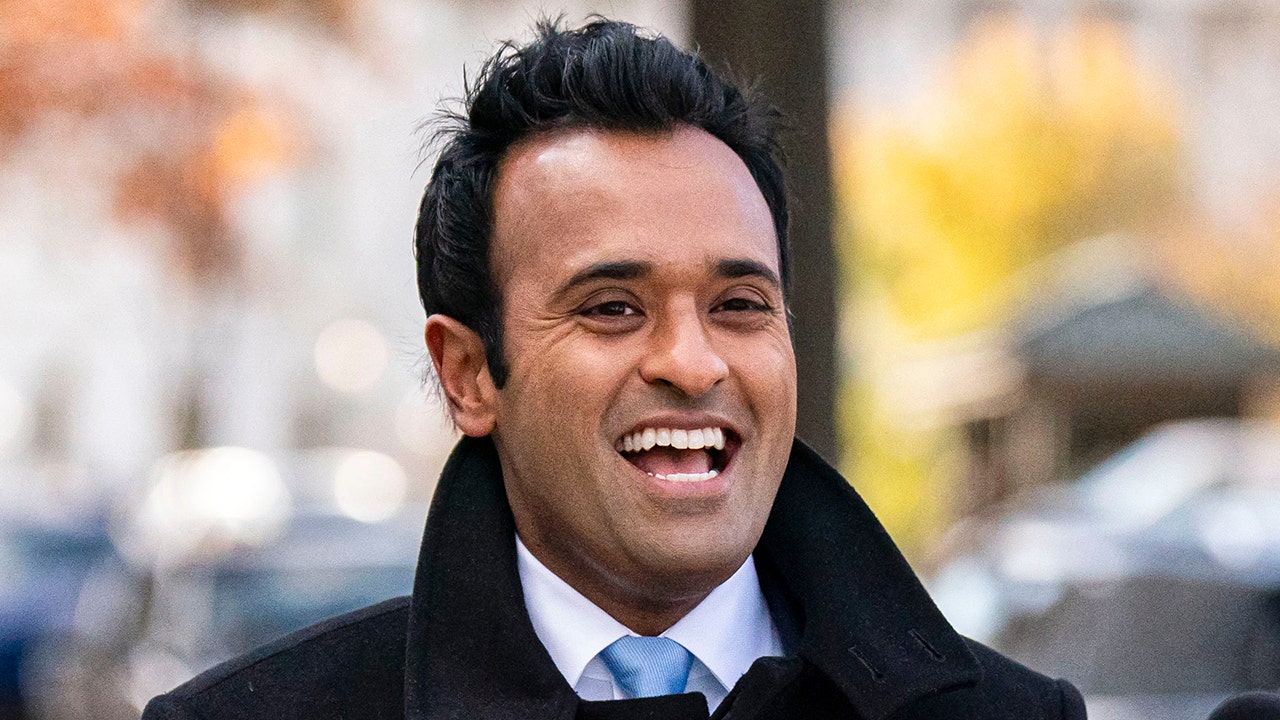
Vivek Ramaswamy will launch his 2026 campaign for Ohio governor in one week, sources confirm to Fox News.
The multi-millionaire biotech entrepreneur, who went from long shot to contender for the 2024 Republican presidential nomination before dropping out 13 months ago and becoming a top supporter and surrogate of now-President Donald Trump, will announce his candidacy on Feb. 24 in his hometown of Cincinnati.
Ramaswamy will kick off his campaign – in the race to succeed term-limited GOP Gov. Mike DeWine – at CTL Aerospace just outside of Cincinnati. AP was first to report the news.
Sources with knowledge say CTL Aerospace, a privately held company that specializes in aviation repair and original equipment manufacturing, symbolizes Ramaswamy’s push for a new age of growth of industry in Ohio.
RAMASWAMY DONE AT DOGE AS HE HEADS BACK ON CAMPAIGN TRAIL
Vivek Ramaswamy, who is expected to launch a Republican campaign for Ohio governor in the 2026 race to succeed term-limited GOP Gov. Mike DeWine, is seen arriving at Capitol Hill in Washington, D.C., on Dec. 5, 2024. (Al Drago/Bloomberg via Getty Images)
The candidate is expected to make stops over the following two days in the Columbus, Toledo and Cleveland areas.
Ramaswamy, who’s now 39 years old, launched his presidential campaign in February 2023 and quickly saw his stock rise.
CLICK HERE FOR THE LATEST FOX NEWS REPORTING ON VIVEK RAMASWAMY
He campaigned on what he called an “America First 2.0” agenda and was one of Trump’s biggest supporters in the field of rivals, calling Trump the “most successful president in our century.”
Ramaswamy dropped his White House bid in January of last year after a distant fourth-place finish in the Iowa caucuses and quickly endorsed Trump, becoming a staple for the former and future president on the campaign trail during the general election.
Vivek Ramaswamy endorses former President Donald Trump during a campaign event in Atkinson, New Hampshire, on Jan. 16, 2024. (Timothy A. Clary/AFP via Getty Images)
Trump, in the days after his November presidential election victory, named Elon Musk, the world’s richest person, along with Ramaswamy, to steer the Department of Government Efficiency initiative, which is better known by its acronym DOGE.
But late last month, as Trump was inaugurated, the new administration announced that Ramaswamy was no longer serving at DOGE. Ramaswamy’s exit appeared to clear the way for Musk, Trump’s top donor and key ally, to steer DOGE without having to share the limelight.
“It was my honor to help support the creation of DOGE. I’m confident that Elon & team will succeed in streamlining government. I’ll have more to say very soon about my future plans in Ohio. Most importantly, we’re all-in to help President Trump make America great again!,” Ramaswamy wrote at the time.
Elon Musk and Vivek Ramaswamy were named by President Donald Trump to lead the Department of Government Efficiency. (Andrew Harnik/Getty Images)
Ramaswamy and Musk sparked a firestorm among Trump’s hard core MAGA supporters over their support for H-1B temporary worker visas for highly skilled workers from foreign countries. Ramaswamy’s comments criticizing an American culture that he said “venerated mediocrity over excellence” received plenty of pushback from some leading voices on the right as well as some in Trump’s political circle.
DeWine announced last month that Lt. Gov. Jon Husted would fill the U.S. Senate seat that was held by JD Vance, Trump’s 2024 running mate, until he stepped down ahead of the inauguration.
Before the Senate announcement, Husted had planned to run for governor in 2026 to succeed DeWine. Ramaswamy, for his part, had expressed interest in serving in the Senate.
Gov. Mike DeWine announces his appointment of Lt. Gov. Jon Husted to fill the U.S. Senate seat formerly held by JD Vance, on Jan. 17, 2025, in Columbus, Ohio. (AP Photo/Julie Carr Smyth)
DeWine’s decision to choose Husted to fill the vacant Senate seat appeared to accelerate Ramaswamy’s move toward launching a run for governor.
Top members of Vance’s political team – including advisors Andy Surabian and Jai Chabria, who played major roles in Vance’s 2022 Senate race and in his vice presidential campaign last summer and autumn – are helping Ramaswamy as he runs for governor.
Tony Fabrizio, the veteran Republican pollster who worked on Trump’s 2016 and 2024 campaigns, as well as Vance’s 2022 Senate campaign, is also on board, as is Arthur Schwartz, a close ally to Vance and Donald Trump Jr.
The race for the GOP gubernatorial nomination could be competitive. Ohio Attorney General Dave Yost, 68, announced last month his candidacy for governor.
“This is my heart, my home,” Yost said in a press release announcing his candidacy. “I work for the people of Ohio, and I love my bosses. From the time I get up in the morning until I go to bed at night, I’m thinking about them and our future.”
Ohio Attorney General Dave Yost speaks at the Columbiana County Lincoln Day Dinner in Salem, Ohio, on March 15, 2024. (Bill Clark/CQ-Roll Call, Inc via Getty Images)
Yost also brought in staff from Trump’s political world, announcing that former Trump campaign official Justin Clark had joined the campaign as a general consultant.
Lt. Gov. Jim Tressel, a well-known former Ohio State University head football coach who was sworn in last month to succeed Husted, appears to be mulling a gubernatorial run.
Former Ohio Department of Health Director Dr. Amy Acton is currently the only Democrat in the race.
Ohio, which was once a top general election battleground, has shifted red over the past decade as Republicans have dominated statewide elections.
Ramaswamy was raised in Evendale, Ohio, in suburban Cincinnati by parents who emigrated from India. His father worked as an engineer at General Electric Aviation and his mother was a geriatric psychiatrist. Ramaswamy and his family currently live in suburban Columbus.
The soon-to-be candidate filed paperwork on Friday with the Ohio secretary of state’s office ahead of his campaign launch.
Read the full article from Here


The Detroit Pistons have put Isaiah Stewart on the trade block with multiple offers swirling around the ever-changing rumor mill.
Several teams would benefit from having Stewart, who averaged 10 points, five rebounds and 1.6 blocks per game last season, on a solid 55% from the floor. However, despite linking up well with Jalen Duren, Stewart earning a total of $30 million over the next two years simply doesn’t fit with their future outlook.
Stewart has been linked to the blockbuster three-team trade involving Giannis Antetokounmpo; however, if we set that aside, who else could use his talents ahead of the upcoming season?
Stewart embracing the north?
A possible swap involving the Toronto Raptors could be on the cards. The Raptors have been desperate for frontcourt depth, and the Pistons could definitely use more playmaking and shooting options on their roster.
For Detroit, trading Stewart for youngsters Gradey Dick and Jamal Shead makes perfect sense, with the Pistons able to mould them into backups for Cade Cunningham and Ausar Thompson.
While Shead provided relief for Immanuel Quickley, Dick fell out of the rotation and will be eager for a second chance in the Motor City.
Bringing a much-needed wing player to Detroit, via Cleveland
The Cleveland Cavaliers could bring a talented wing player to Detroit in the shape of Max Strus, whose presence would really help the Pistons.
What they’re short on is two-way wings who can ease the pressure off their stars, and Strus can fit perfectly into that gaping hole.
Beyond his floor-spacing ability, he can also create offense by attacking closeouts, addressing another area where Detroit has struggled.
Look no further than their playoff meeting, which the Cavs won with Strus averaging around 10 points per game in the series, capped with a 20-point showing off the bench in Game 5 that helped swing momentum in the Cavaliers’ favor.
Stewart’s salary and defense helps Denver
One issue that plagued the Denver Nuggets this season was their rim protection, and defense in the paint.
With Stewart, who posted just under two blocks per game last season, his defensive style would really help the Nuggets, but he would be in a similar position to the one he is currently in Detroit: A backup to Nikola Jokic.
Why does this move make sense for both parties? Well, look no further than the money involved. If Denver shipped Cameron Johnson and Christian Braun, who are both on the trade block, it would save the Nuggets money and give Detroit two strong players with championship pedigree.
Stewart is under contract for $15 million in 2026-27, with a team option for the same amount in 2027-28, bringing his total value to $30 million. Johnson’s set to make $23 million, and Braun’s is on $21.5 million. This works better for Denver than it would for the Pistons, but having Johnson and Braun only boosts Detroit’s championship credentials.
Follow

MILWAUKEE – One person was killed in a two-vehicle crash in Milwaukee in the early morning hours of Sunday, June 21.
The driver of the other vehicle was arrested at the scene.
Crash and arrest
What we know:
According to the Milwaukee Police Department, the crash happened at about 1:15 a.m. near 11th and Greenfield.
A vehicle crossed the roadway then struck another vehicle, killing the driver. The victim, a 47-year-old, was being treated for life-threatening injuries but died from those injuries at the scene.
FREE DOWNLOAD: Get breaking news alerts in the FOX LOCAL Mobile app for iOS or Android
It is suspected that the driver of the striking vehicle was impaired. The 24-year-old suspect was arrested on scene in connection with the accident, and charges will be referred to the Milwaukee County District Attorney’s Office for review.
The Source: The Milwaukee Police Department sent FOX6 the information.

MINNEAPOLIS (WJON News) — A popular Broadway show will be hitting a Minnesota stage this fall. Mamma Mia! will jump-start the Broadway on Hennepin series at the Orpheum Theatre in Minneapolis from September 15th to the 20th.
Mamma Mia! has been seen in 50 productions in 16 different languages.
The 25th Anniversary production of Mamma Mia! made its return to Broadway last year for a limited run at the Winter Garden Theatre, where it got its start. The show also had a record-setting 14-year run on Broadway and toured from 2000 to 2017 with four different touring companies.
Mamma Mia! has grossed over $7 billion at the box office.
It inspired the blockbuster smash starring Meryl Streep, Pierce Brosnan, and Amanda Seyfried as well. The 2018 follow-up, Mamma Mia! Here We Go Again is the most successful live musical movie sequel of all time.
Mamma Mia! is written by Catherine Johnson and directed by Phyllida Lloyd with choreography by Anthony Van Laast. Tickets for the show go on sale at 10:00 a.m. on Friday.
QUIZ: Can You Identify These Awesome ’80s Movies From Just a Single Freeze-Frame?
From a stranded alien trying to phone home to a group of kids on a treasure hunt, see how many of these iconic ’80s blockbusters you can recognize from a single freeze frame.
Gallery Credit: Stephen Lenz
Glaring Continuity Errors From Popular TV Series
Gallery Credit: Stacker
LOOK: Iconic TV Shows With Only One Cast Member Surviving
From Diff’rent Strokes to Gilligan’s Island, several of the most iconic TV shows in history now have only one surviving main cast member.
Gallery Credit: Stephen Lenz
-

 Lifestyle1 minute ago
Sunday Puzzle: B to the B to the B
-

 Technology9 minutes ago
Bose thinks it can be a media company for some reason
-

 World16 minutes ago
Meloni’s spat with Trump is calculated strategy to boost her approval ratings: expert
-

 Politics19 minutes ago
Trump’s Iran gamble divides GOP hawks and ‘America First’ conservatives over what victory looks like
-

 Health24 minutes ago
This one question may reveal whether your body is getting the rest it needs, study finds
-

 Sports31 minutes ago
Teenage golfer Miles Russell delivers his dad an all-time Father’s Day experience during US Open final round
-

 Technology34 minutes ago
Fake AAA email scam targets drivers
-
 Business39 minutes ago
This startup wants to bring driverless freight trucks to California’s roads, but drivers are pushing back

