Minnesota
Stamkos leads Predators past Wild 2-1, locking Minnesota into the West’s third seed


NASHVILLE, Tenn. — Steven Stamkos scored a goal and added an assist to lead the Nashville Predators to a 2-1 victory over Minnesota on Saturday, locking the Wild into the third seed in the Western Conference for the playoffs.
Matthew Wood also scored and Justus Annunen made 21 saves for the Predators, 4-1-1 in their last six.
Minnesota will face the Dallas Stars in the first round of the playoffs.
Michael McCarron scored and Jesper Wallstedt made 20 saves for the Wild, losers of two straight.
The Predators are now three points behind the Los Angeles Kings for the Western Conference’s second wild card. The Kings defeated the Edmonton Oilers earlier Saturday. Nashville has two games remaining and the Kings three.
Stamkos scored the game’s first goal with 4:59 remaining in the opening period on a wraparound tucked just inside the left post.
The goal was the 40th of the season for Stamkos, the eighth time in his career that he’s scored 40 or more.
Nashville Predators right wing Luke Evangelista (77) keeps Minnesota Wild left wing Kirill Kaprizov (97) away from the net during the first period of an NHL hockey game Saturday, April 11, 2026, in Nashville, Tenn. Credit: AP/Mark Humphrey
Wood made it 2-0 at 6:34 of the second after Stamkos corralled the rebound of Nick Perbix’s shot and found Wood in the slot, where he beat Wallstedt with a wrist shot.
McCarron, traded by Nashville to Minnesota prior to this season’s trade deadline, scored at 6:54 of the third to avoid the Wild’s first shutout of the season. It was his second post-trade goal.
The Wild did not dress forwards Joel Eriksson Ek and Mats Zuccarello or defenseman Jared Spurgeon for the game.
Nashville captain Roman Josi returned to the lineup after missing Thursday night’s game against the Utah Mammoth with an upper-body injury.
Minnesota Wild goaltender Jesper Wallstedt (30) blocks a shot by Nashville Predators right wing Matthew Wood (71) during the second period of an NHL hockey game Saturday, April 11, 2026, in Nashville, Tenn. Credit: AP/Mark Humphrey

Up next
Wild at St. Louis on Monday night.
Predators host San Jose on Monday night.



Minneapolis police are investigating a shooting that seriously injured a man on the city’s north side Wednesday afternoon.
The shooting happened just before 2 p.m. on the 1200 block of 36th Avenue North, according to the Minneapolis Police Department.
Upon arrival, officers found a man inside the living room of a residence suffering from a life-threatening gunshot wound. Police provided medical aid to the victim before he was transported by ambulance to an area hospital.
Officers are working to determine what led up the shooting, including if it was accidental, according to officials.
No arrest have been made so far.

The National Weather Service (NWS) has confirmed that the tornado that struck the Detroit Lakes area of northwestern Minnesota on July 6 was rated EF2, with estimated peak winds of 185 km/h (115 mph).
The tornado touched down at 19:47 local time (LT), approximately 3 km (2 miles) south-southwest of Westbury, according to the NWS.
It remained on the ground for about 10 minutes. The tornado had a path length of 10.93 km (6.79 miles) and reached a maximum width of more than 730 m (2 400 feet). It dissipated approximately 6 km (4 miles) northeast of Detroit Lakes at 19:57 LT.
The Becker County Sheriff’s Office (BCSO) said deputies and other emergency responders began monitoring the severe weather around 19:30 LT after receiving reports of a possible funnel cloud north of Lake Park.
At approximately 20:14 LT, the Sheriff’s Office received a report of a tornado near the Oakland Beach area, where it caused extensive damage to homes, buildings, and trees.
The NWS confirmed two injuries associated with the event, one of which was directly caused by the tornado.
“1 injury can be directly attributed to the tornado, as a homeowner was injured in their home when their roof was removed by the tornado. The second injury was after the tornado during the cleanup stage and could be due to shock or trauma, according to the county emergency manager,” the NWS reported.
“Responders went from home to home looking for residents and checking for the injured. Two individuals were transported to Essentia St. Mary’s Hospital with non-life-threatening injuries. One other patient went to the hospital by private vehicle,” the BCSO said.
-

Tornado damage in Detroit Lakes, Minnesota on July 6, 2026. Credit: Becker County Sheriff’s Office
-
Tornado damage in Detroit Lakes, Minnesota on July 6, 2026. Credit: Becker County Sheriff’s Office
-
Tornado damage in Detroit Lakes, Minnesota on July 6, 2026. Credit: Becker County Sheriff’s Office
-
Tornado damage in Detroit Lakes, Minnesota on July 6, 2026. Credit: Becker County Sheriff’s Office
-
Tornado damage in Detroit Lakes, Minnesota on July 6, 2026. Credit: Becker County Sheriff’s Office
-
Tornado damage in Detroit Lakes, Minnesota on July 6, 2026. Credit: Becker County Sheriff’s Office
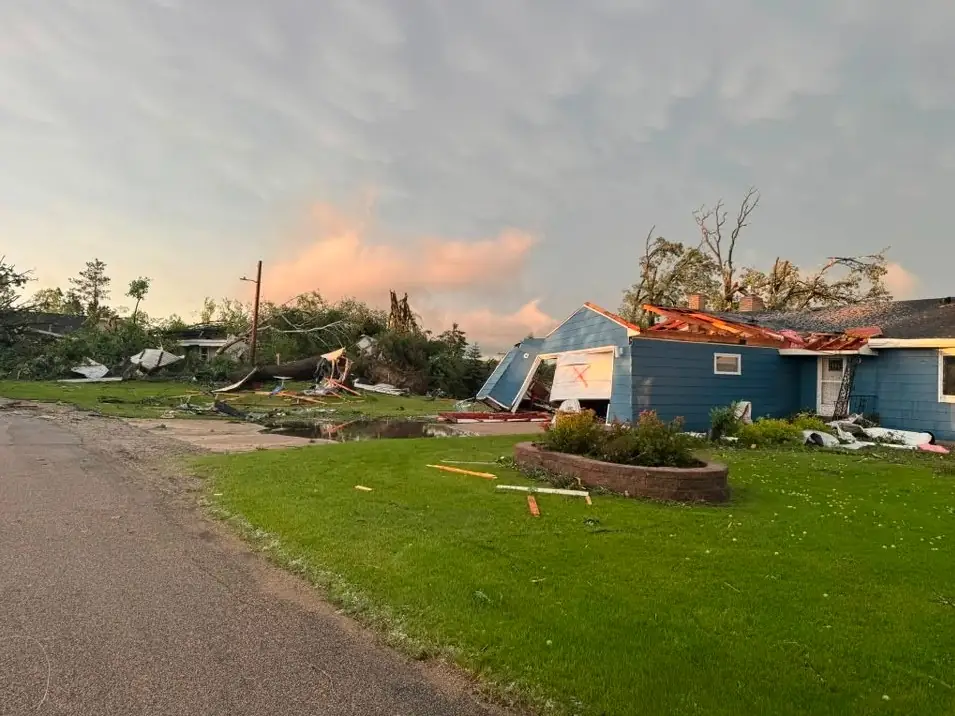
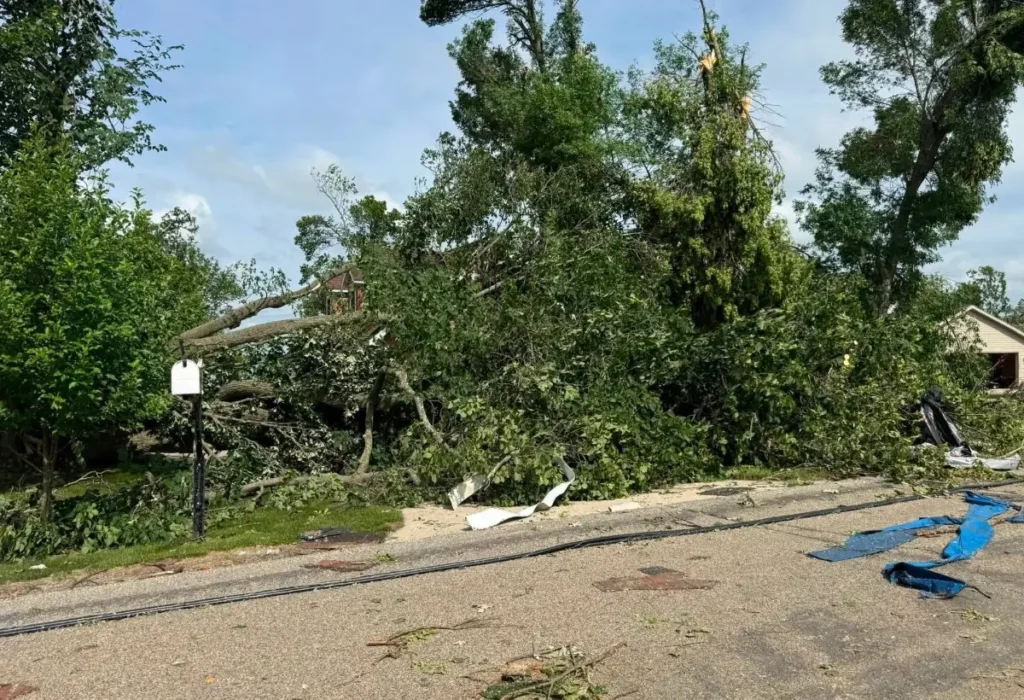
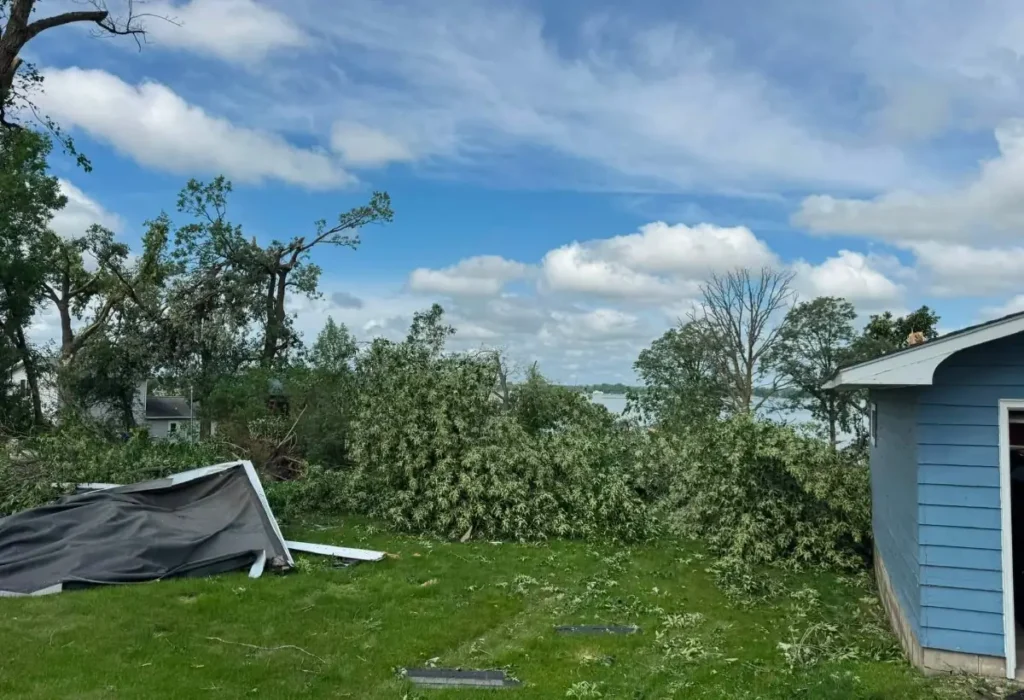
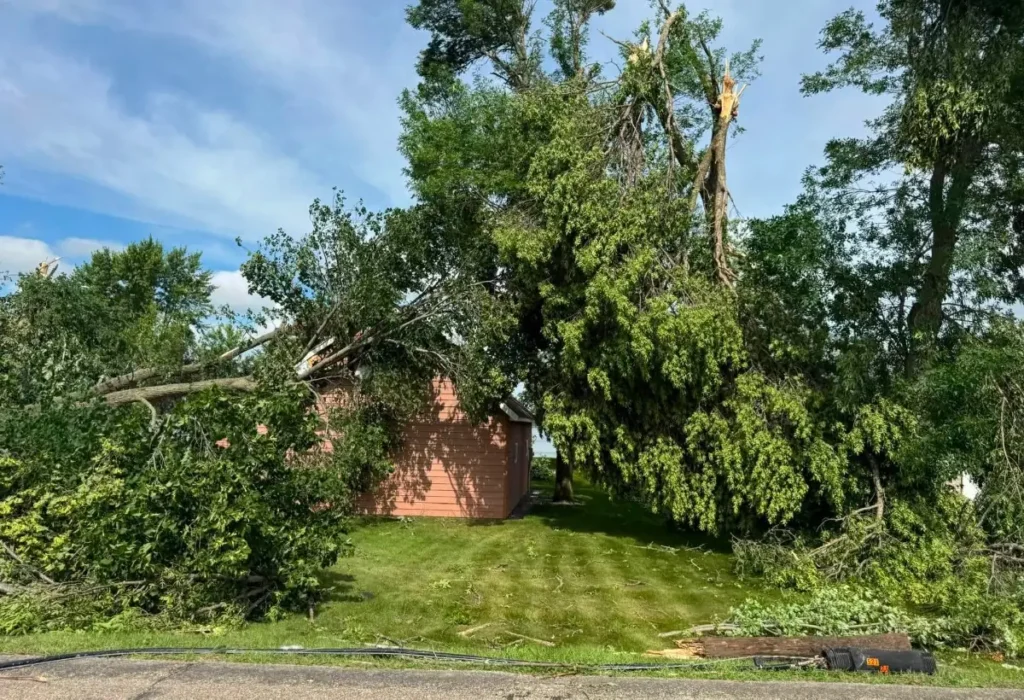
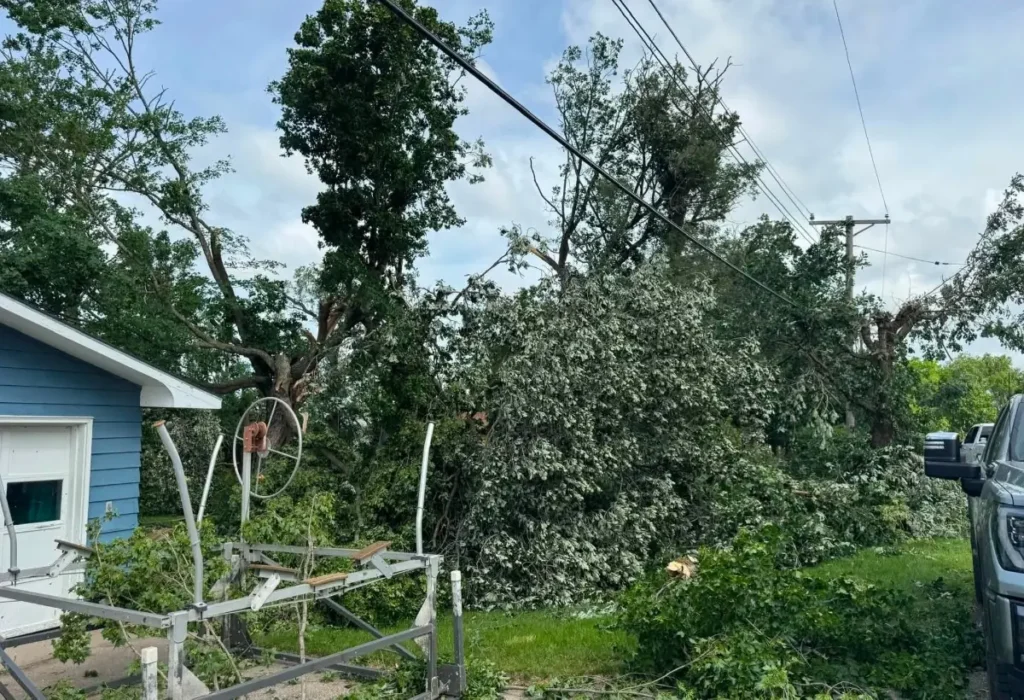
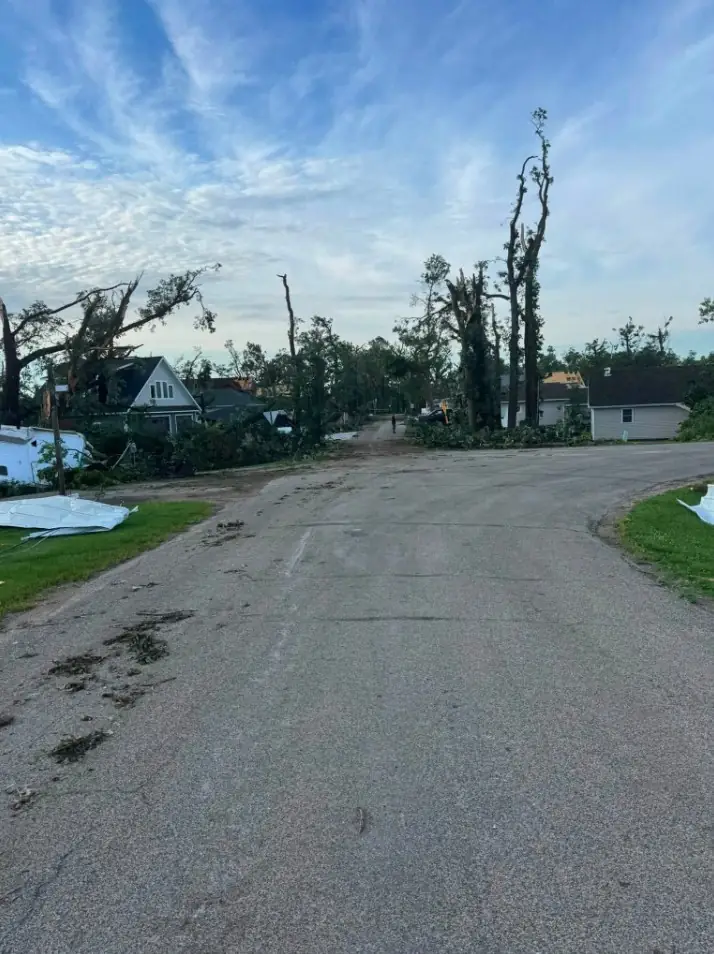
The tornado began about 2 km (1 mile) northwest of Wheeler Lake before crossing the lake, where it damaged the roofs of several homes and snapped the trunks of large oak and poplar trees.
It reached its maximum width near the western shore of Big Floyd Lake, with the Oakland Beach neighborhood sustaining the most severe damage.
Multiple garages and lighter outbuildings were swept away, while widespread roof and tree damage was reported. A 2 x 4 m (6 x 12-foot) horse trailer was lofted and carried about 200 m (656 feet) before the tornado crossed Big Floyd Lake and continued east. The last visible damage was identified near the intersection of County Highway 25 and Anchor Road.
More than 500 customers lost power as a result of the storms, according to Detroit Lakes Public Utility.
As the storm tracked east-southeast, strong winds, hail, and heavy rain affected areas north of Audubon before a tornado warning was issued for the Callaway and Rochert areas. Reports of downed trees, power lines, and debris soon followed from Detroit Township between U.S. Highway 59 and County Highway 21.
References:
1 Public Information Statement – NWS – July 7, 2026

Giordano’s, the famous pizzeria known for their deep-dish style Chicago pizza, is opening a second location in Minnesota at the Mall of America.
The pizza chain also has a location in Richfield, and previously had a location some years ago in Minneapolis in Uptown.
The grand opening of the Mall of America location will be on Thursday, July 16. The restaurant there will be unique, with the restaurant’s first self-service kiosk ordering. It will also have a grab-and-go area and a normal seated restaurant experience.
The Chicago deep-dish chain has been around since 1974, with the vast majority of locations in the Chicagoland area. They have 60 restaurants in nine states and are currently expanding nationwide.
-
 Lifestyle37 minutes ago
Appeals court denies Trump’s request to halt removal of his name from the Kennedy Center
-

 Technology45 minutes ago
Meta is reportedly working on smart glasses that would be recording all the time
-

 World52 minutes ago
Trump says ‘Iran lies and cheats’ as IRGC emerges as dominant force in negotiations with US
-

 Politics55 minutes ago
Who is Valli Geiger? Meet the Maine Dem that Platner urged to run for Senate
-

 Health60 minutes ago
Deadly Legionnaires’ disease outbreak sparks concern in major US city: Know the symptoms
-

 Sports1 hour ago
Caitlin Clark’s return falls flat after Fever coach limits her in loss to shorthanded Sparks
-
Business1 hour ago
Commentary: Trump wants to let companies make fewer disclosures, thus keeping investors in the dark
-
 Entertainment1 hour ago
Justin Baldoni and wife break silence after ‘It Ends With Us’ legal battle with Blake Lively


