Midwest
Illinois governor says Trump admin withholding $1.88B in approved taxpayer money, amid rift with president

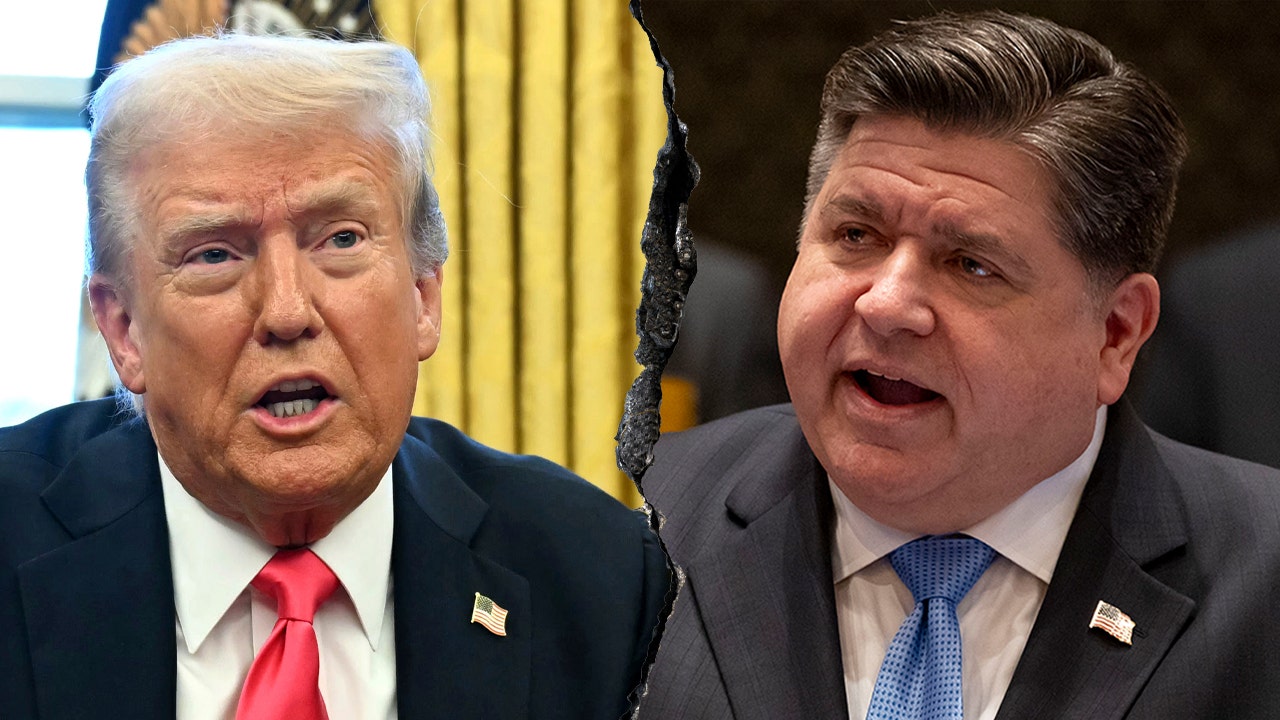
Illinois Gov. JB Pritzker signed a letter on Tuesday that calls for the White House to release $1.88 billion in approved federal funding that he says the Trump administration is withholding.
Pritzker, an outspoken critic of President Donald Trump, said in the letter addressed to Russel Vought, director of the Office of Management and Budget (OMB), that the nearly $2 billion in federal funds “were passed by Congress, signed into law, and promised to Illinois.”
“We have an obligation to Illinois taxpayers and residents to demand answers about the future of this funding,” the letter said, “including when the Trump Administration will follow the law and make good on the federal government’s promise to deliver hard-earned taxpayer dollars back into Illinois’ economy, workforce, and communities.”
The letter stated that nine Illinois agencies, boards and commissions are unable to access $692 million obligated but not yet received from the federal government. Ten state entities were expecting another $1.19 billion in federal funds yet to be obligated, and grants or programs have been “essentially paused.”
‘DULY OWED TO US’: BLUE STATE GOVERNOR SAYS $2.1B IN FEDERAL FUNDING RESTORED AFTER SUING TRUMP ADMIN
While the letter did not specify which state agencies and other entities were supposed to have received the funds, it shared some details on what kind of programs were affected.
Gov. JB Pritzker delivers his annual budget address at the state Capitol in Springfield, Illinois, on Feb. 19. (Brian Cassella/Chicago Tribune via AP, Pool)
“These frozen funds impact programs that provide technical assistance for small businesses, provide affordable solar energy for low-income residents, improve roads and bridges, and more,” according to the letter.
SHAPIRO LATEST DEMOCRAT SUING ‘UNCONSTITUTIONAL’ TRUMP ADMIN
President Donald Trump speaks during a Cabinet meeting at the White House on Tuesday. (Pool via AP)
The White House Office of Management and Budget directed agencies to halt federal funding on Jan. 27 in compliance with Trump’s executive orders. Federal judges had issued a temporary restraining order to block the funding freeze, but only states with litigation against the Trump administration were able to access the unfrozen funds.
CLICK TO GET THE FOX NEWS APP
The White House did not immediately respond to a request for comment.
Fox News Digital’s Deirdre Heavy contributed to this report.
Read the full article from Here

Cleveland, OH
‘Very special’ wedding moved to Cleveland Clinic so father can attend days after quadruple bypass

CLEVELAND, Ohio (WJW) — Rick Nelson has been recovering at his Seven Hills home for 10 days after a 10-day stay in the hospital. He and his family are grateful he could see his daughter get married, and be home for his 37th anniversary and Father’s Day because he almost didn’t make it to any of them.
On May 31, six days before his daughter Rachel’s wedding, Nelson was feeling chest pains. He was quickly taken to the Marymount Emergency Room. Within minutes of being there, he was taken via helicopter to Cleveland Clinic’s main campus in Cleveland.
A mechanical device was put in his heart to keep it pumping and he was given blood thinners after it was discovered he had severe blockage. Because of the blood thinners, it wasn’t safe to perform open-heart surgery for several days.
It was scheduled as early as possible, which turned out to be June 4 — just two days before the wedding.
The surgeon who performed the procedure, Dr. Faisal Bakaeen, told FOX 8 that it takes five days to be healthy enough to be discharged after a procedure like this, but Nelson was telling every caregiver he could that he needed to be at that wedding.
Cleveland Clinic staff decided that since Nelson couldn’t travel to the wedding, they were going to help bring the wedding to him.
They coordinated to change the venue of the ceremony to the hospital’s rooftop and got Nelson cleaned up and dressed for the wedding.
Bakaeen said Nelson’s power of the mind over his body helped his recovery.

“He was really determined to get better and that helped. I’m a true believer in that, and he did it. We did our part, but he did his part and we are very happy with the outcome,” he said.
It was an emotional moment. Every Cleveland Clinic employee who wasn’t helping a patient watched Nelson get wheeled up to experience a first look with his daughter and then escort her down the aisle with nearly 100 friends and family members watching.
Rachel, who’s last name is now Schultz after marrying her husband Dana, told FOX 8 those moments took away all the stress of nearly losing her father and then seeing him go through a major surgery while also dealing with last-minute wedding preps.
“It was just so reassuring just in that moment of like, OK, all the worry kind of washed away,” Schultz explained. “It’s not how I pictured it, but [it was] better than I could’ve imagined.”
“It meant the world to me,” Rick said. “I had something to come back and live for. I just kept saying why didn’t they take me, then I just started thinking about the wedding. I just want to see my daughter walk down the aisle.”
After the fact, as they sat on their couch, Rick and Gail Nelson were able to reflect on how scary the situation really was.
“I didn’t know how bad it was at that point,” Gail recalled thinking back to the first trip to the hospital on the 31st. “It wasn’t until after that it hits you that ‘Oh my god, I could’ve lost him.’”
But they were so thankful for the staff at the clinic and how accommodating and helpful they were. From getting Rick a clean shave, dressed, and all ready to go for the wedding to covering the parking for all of the wedding guests. They told FOX 8 it was top notch.
“The Cleveland Clinic, the doctors, the nurses, everything, were just fantastic. Couldn’t have asked for better,” Rick said.
Bakaeen told FOX 8 it was just as special for him and the team of caregivers who worked so hard to make sure Rick didn’t miss one of the most important days in Rachel’s life.
“I have a daughter and there’s nothing that would stop me from attending her wedding,” Bakaeen said. “This was special for him, but very special for me and the team.”
Illinois
Lake County detectives rescue girl from man they say drove to Illinois from Georgia to meet her

Detectives from Lake County, Illinois, Sheriff’s office rescued a girl under 14 from a grown man who had traveled from Georgia to meet her this weekend, authorities said Sunday.
At 4:40 a.m. Saturday, Lake County sheriff’s deputies were called to unincorporated Gurnee for a report of a missing girl under the age of 14. Deputies learned the girl had never run away before, and it was especially concerning that she did so in the middle of the night, authorities said.
Sheriff’s detectives learned the girl’s cellphone was not functioning, and she could not be found through any of her electronic devices. Detectives also found that a 24-year-old man from Norcross, Georgia, named Jordy Alexis Fuerte Perez had been communicating with her, authorities said.
Detectives learned that Fuerte Perez had made plans to drive to Illinois from Georgia and pick up the girl, and evidence indicates he told the girl he wanted a “romantic relationship” with her, authorities said.
Detectives homed in on a vehicle that Fuerte Perez may have been driving, and found the vehicle at the Independence Grove Forest Preserve near Libertyville, authorities said. Both Fuerte Perez and the girl were in the car in a parking lot when detectives arrived at 6 p.m. Saturday, authorities said.
The girl did not appear to be injured, but was taken to the Lake County Children’s Advocacy Center for specialized advocacy and attention, authorities said.
Fuerte Perez was charged with two counts of solicitation of child pornography, and one count of unlawful possession of a controlled substance, namely cocaine. More charges ar likely, authorities said.
“This type of case is a parent’s worst nightmare. Our Criminal Investigations Division took this case seriously and worked tirelessly from the moment the girl was reported missing until she was safely located,” Lake County Sherif John Idleburg said in a news release. “While there will undoubtedly be a long road to recovery and healing, I am grateful the victim was found safe and is physically okay. I am proud of everyone who played a role in rescuing this young girl and bringing the offender to the first steps of justice.”
Fuerte Perez was due in court on Sunday morning. The Lake County State’s Attorney’s office is asking to have him held while awaiting trial.

U.S. Education Secretary Linda McMahon, left, joins Indiana Gov. Mike Braun and state Education Secretary Katie Jenner for a ceremonial signing of the state’s waiver from provisions of the Elementary and Secondary Education Act on Tuesday, June 16, 2026, at Plainfield High School. Photo by Mackenzi Klemann, Indiana Capital Chronicle.
By Mackenzi Klemann
Indiana Capital Chronicle
PLAINFIELD — Indiana K-12 educators will soon have less paperwork following the U.S. Department of Education’s approval of a waiver exempting the state from provisions of the federal Elementary and Secondary Education Act.
The state applied for the waiver in December to streamline education spending and align its new A-F accountability measures with federal law.
The waiver consolidates federal funding from portions of Titles I, II, III and IV – grants used to support things like low-income students, teacher training, English language learners and school safety – totaling $50 million over the next four years.
U.S. Education Secretary Linda McMahon, who visited Plainfield High School Tuesday for a ceremonial signing of the waiver, said the change frees $20 million in state and local funds from “bureaucratic red tape” so schools can reallocate money to the classroom.
The waiver also OKs the use of college and career readiness metrics like work-based learning and credentials toward high school accountability scores, a crucial component of Indiana’s new A-F system.
“President Trump told me I’d be successful in my job when I fired myself or worked myself out of a job,” McMahon said, “but his vision isn’t about me or one position. It’s about breaking up the education bureaucracy in Washington, D.C., a system that too often enriches adults while stifling progress for kids and empowering states to drive a new era of excellence for students across the country.”
She added, “We must breathe innovation into education, not suffocate it with top-down mandates, because we certainly know that one size does not fit all in education.”
Indiana is the third state approved for the waiver, nicknamed “Return Education to the States,” following Iowa and Louisiana.
States already control educational standards, curriculum and assessments. The waivers grant states greater control over how to spend federal K-12 funding too.
Indiana’s waiver consolidates funding for various education programs, which McMahon likened to a block grant, so schools no longer need to meet separate reporting requirements for each grant.
“At the heart of all this there is a simple, urgent belief: We must focus our time and energy on the work that propels us forward,” Indiana Secretary of Education Katie Jenner said. “We work to serve students, not to serve bureaucratic, outdated processes and paperwork.”
Less Paperwork, More Classroom Time

Indiana Education Secretary Katie Jenner leads a discussion about the state’s new federal education waiver. Photo by Mackenzi Klemann, Indiana Capital Chronicle.
Educators in attendance Tuesday praised what they see as a move away from bureaucracy.
“Too often these programs had differing goals and really specific requirements that might have been at odds with one another,” said Betsy Wiley, president and CEO of the Institute for Quality Education.
“There’s just no proof that, that extra bureaucracy is leading to higher standard achievements,” said Keeanna Warren, chief executive officer of Purdue Polytechnic High School.
Plainfield Community Schools Superintendent Andy Allen said he anticipates significant savings as the district will be able to redeploy office staff, many of whom are trained educators, to the classroom due to the reduction in compliance paperwork.
“Just because we have less compliance (paperwork) doesn’t mean we just do less,” he said. “Now we get back out in the buildings, we get back in front of kids, we get back in front of teachers, get connected with our community to make sure we have our best voices leading work for our kids and our community.”
The waiver could also benefit outside programs like the Boys and Girls Club’s summer learning labs.
Duane Wilson, chief executive officer of the Boys and Girls Club for the northern Indiana corridor, said the organization serves 5,800 Hoosier students throughout the state, but with additional funding the club could reach 10,000 Hoosier children next year.
The club is “moving the needle for kids,” Jenner said, but its rapid growth exceeded what the state could provide. “We’re seeing it in the short-term assessments. We’re seeing it in our state assessments.”
-

 Washington, D.C48 seconds ago
Jeanine Pirro vows DC Reflecting Pool vandals will be ‘prosecuted to the fullest extent’ | Fox News Video
-

 Cleveland, OH8 minutes ago
‘Very special’ wedding moved to Cleveland Clinic so father can attend days after quadruple bypass
-

 Austin, TX11 minutes ago
Multiple agencies responding to ‘major’ crash on FM 973 in Manor
-

 Alabama16 minutes ago
Unsettled Through Friday – Alabama Emergency Management Agency (EMA)
-
:max_bytes(150000):strip_icc()/tl-upcycle-i-took-my-first-alaskan-cruise-here-are-7-packing-mistakes-you-should-avoid-and-what-to-bring-instead-tout-a648e8cb19fa4f50879919933ca6b4ed.jpg?w=400&resize=400,240&ssl=1 "I Took My First Alaskan Cruise—Here Are 7 Packing Mistakes You Should Avoid, and What to Bring Instead From")
:max_bytes(150000):strip_icc()/tl-upcycle-i-took-my-first-alaskan-cruise-here-are-7-packing-mistakes-you-should-avoid-and-what-to-bring-instead-tout-a648e8cb19fa4f50879919933ca6b4ed.jpg?w=80&resize=80,80&ssl=1 "I Took My First Alaskan Cruise—Here Are 7 Packing Mistakes You Should Avoid, and What to Bring Instead From") Alaska23 minutes ago
Alaska23 minutes agoI Took My First Alaskan Cruise—Here Are 7 Packing Mistakes You Should Avoid, and What to Bring Instead From $6
-

 Arizona26 minutes ago
Dana Kennedy: A caregiver advocating for Arizona’s aging population | Arizona Capitol Times
-

 Arkansas31 minutes ago
Washington isn’t watching Arkansas? Pete Buttigieg says it should be.
-

 California38 minutes ago
Is California home insurance cheap, considering the risks?

