Lifestyle
The best things to do, see and eat at Disneyland during its magical 2025 holiday season


There’s a reason crowds endure yearly price increases and jammed sidewalks at Disneyland each November through early January. It’s the merriest time of the year — and arguably when the resort is at its glistening, glowing best with seasonal food offerings, holiday ride makeovers and unique live entertainment options.
Disneyland, of course, is home to the long-running A Christmas Fantasy Parade, but I’d argue it’s not even the best processional happening this time of year. And this year, even Star Wars: Galaxy’s Edge, though not part of Disneyland’s holiday programming, is finding new ways to get festive.
Here’s a sample of some of my favorite things to do at the park this holiday season, which runs through Jan. 7. If you’re curious to check it out but looking to save a little on tickets, Disneyland has announced a new California ticket offer that goes on sale Dec. 3 and takes effect Jan. 1. The deal is for a three-day park-hopper ticket, which can be used on non-consecutive visits, and starts at $249 per person, which amounts to $83 per day.
If you go, don’t be shy, and say hi, as it’s the time of the year when I visit most often.
Don’t miss Disneyland’s best street party
The ¡Viva Navidad! street parade is one of Disney California Adventure’s most lively, diverse and dance-focused offerings.
(Disneyland Resort)
There’s one show at the Disneyland Resort that each year, without fail, brings me to tears — tears of joy, but also tears of surprise that something so lively, diverse and dance-focused exists at a Disney park. That show is California Adventure’s ¡Viva Navidad!
A boisterous celebration of Latin art and music from beginning to end, ¡Viva Navidad! uses the characters from Disney’s mid-1940s goodwill film “The Three Caballeros” as a jumping-off point to showcase folklórico dancers, mariachis and 12-foot-tall mojiganga puppets (large-scale, papier mâché sculptures that dizzyingly rocket up and down a small portion of California Adventure). The show, which came from the minds of Susana Tubert and her team at Disney Live Entertainment, feels a bit like a Mexican street parade and works because it extends a hand to guests of all walks of life. Though launching with Paul McCartney’s “Wonderful Christmastime,” it ends with the always-festive “Feliz Navidad” from José Feliciano.
Running since 2014, ¡Viva Navidad! is a blast. It’s a treasure. The only quibble is the show primarily runs on weekends only.
Embrace a cultural tradition — with stories, candles and thoughtfulness

“A Musical Christmas With Mariachi Alegría de Disneyland & Miguel” is an evening performance at Disneyland that centers on a mariachi band and is inspired by Las Posadas.
(Joshua Sudock / Disneyland Resort
)
Introduced last year, California Adventure’s “A Musical Christmas With Mariachi Alegría de Disneyland & Miguel” features the star of Disney/Pixar film “Coco” but, like ¡Viva Navidad!, is rooted in cultural traditions. Specifically Las Posadas. Think a festive procession that travels among the community, Las Posadas are traditionally staged in Mexico between Dec. 16 and 24. In their purest form, Las Posadas depict the biblical story of Joseph and Mary and the search for shelter at the time of Jesus’ birth.
The Disney performance, which typically runs on weekdays, deviates from the religious overtunes. But some of the key touchstones — a mix of music and stories, a centering of children with candles — are present. It begins with a trot to the center of California Adventure to the tune of “El Burrito de Belén” and throughout the course of the show it will touch on such staples as “Jingle Bells” and “Santa Claus Is Coming to Town,” albeit in bilingual renditions.
The show’s narrator and singer regales guests with tales of how different Latin countries present stories of Santa Claus, or, say, the joy of unwrapping a tamale. The climax instead of the street performance is a candlelit rendition of “Silent Night,” with audience participation. What a moment ago was festive theme park fare becomes something more reflective, all while slightly nodding to the holiday’s more spiritual underpinnings.
Participate in a fantastical holiday at Star Wars: Galaxy’s Edge
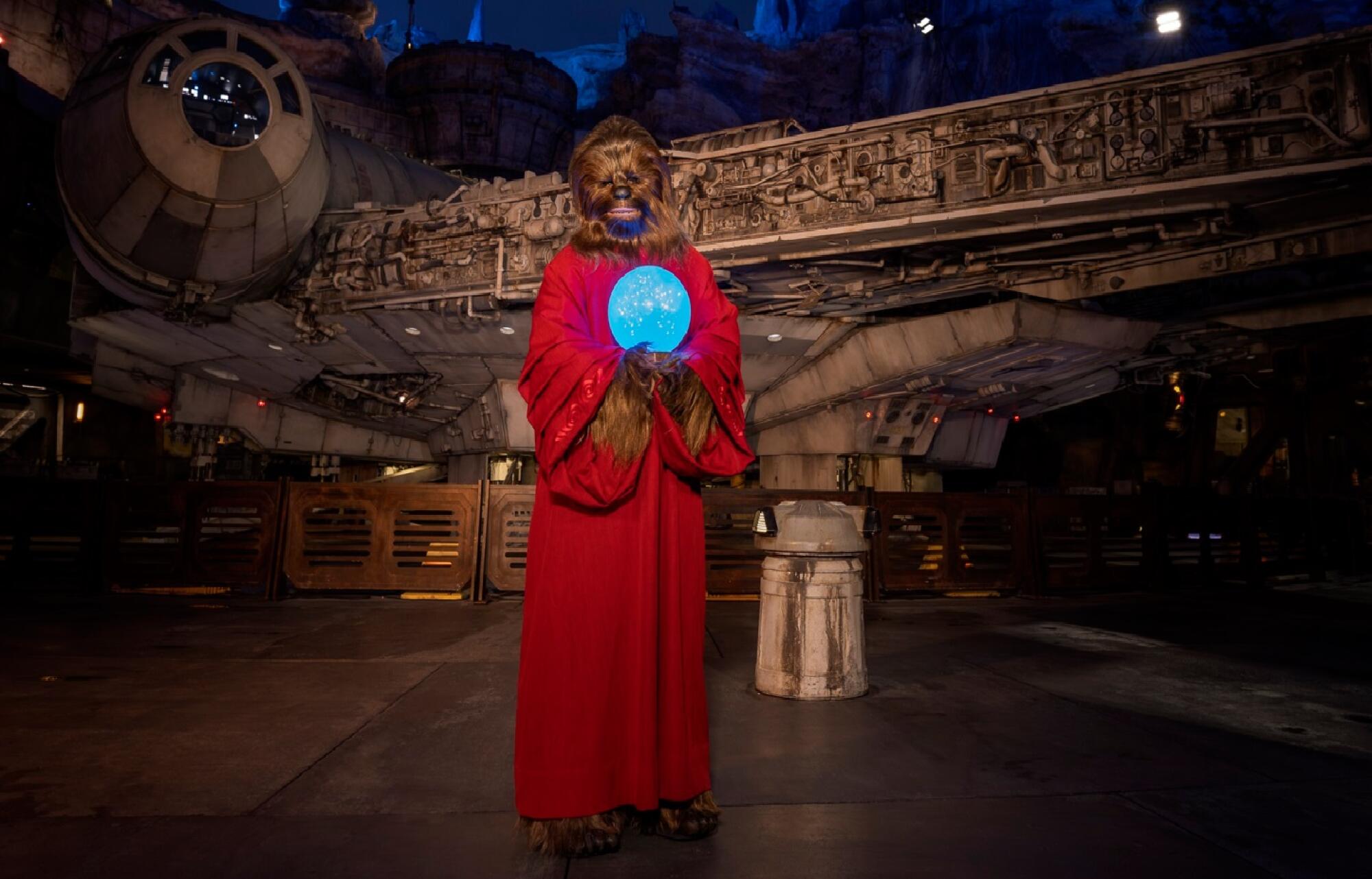
Life Day is a fictional holiday exclusive to the “Star Wars” universe.
(Disneyland Resort)
OK, so this is a bit of a curve ball. It should be noted that what happens in Star Wars: Galaxy’s Edge is not part of Disneyland’s traditional holiday programming, as Life Day is not an actual holiday, unless, perhaps, your religion is “Star Wars.” It’s also lighthearted good fun. Life Day has its roots in the beloved but campy and culturally questionable “Star Wars Holiday Special” as an event that originated on the Wookie home planet of Kashyyyk.
When Galaxy’s Edge opened in 2019, fans wondered if during the holiday season the land would get in on the Life Day action. Initially, fans started showing up on Nov. 17, the day the television special aired, for impromptu celebrations of their own. Credit Disneyland for embracing the guest-driven activity, so much so that the park started developing Life Day ornaments and shirts as well as offering limited time food specials.
This year, a red-robed Chewbacca holding a glowing orb — the official symbol of Life Day — will for the first time wander Galaxy’s Edge to meet with visitors. Disney hasn’t said for exactly how long this festive version of Chewbacca will be present in the land, but here’s hoping Life Day is celebrated at least until the end of Disneyland’s more conventional holiday proceedings.
After all, I enjoyed my morning paying respects to the fictional holiday, as I indulged in a limited-run anise-spiked sangria at Oga’s Cantina (the Joh Blastoh Sangria Gocola, $19.50) along with a large, fluffy slice of cinnamon toast topped with a richly sweet, cheesecake-inspired frosting and ornamental lychee pearls (Millaflower Toast, $13). The latter meant I essentially had dessert for breakfast, and while it was too sugary to finish — definitely share it — I couldn’t help but smile at the fact that Disneyland has embraced one of the silliest aspects of the space fantasy the land is dedicated to.
You’ll love the gingerbread (and other tasty delights)

The Festival of Holidays in Disney California Adventure is serving up two types of mac and cheese this year. On the left is the al pastor mac and cheese and on the right is the savory kugel mac and cheese.
(David Nguyen / Disneyland Resort)
I stopped in the lobby of the Grand Californian on my way out of the park for some Mickey-shaped gingerbread cookies and balked at a line that some guests said they had spent 40 minutes standing in. But having had it in year’s past, as well as a Halloween version of the cookie just a couple weeks ago, I can vouch for the fact that it is quality, soft gingerbread. Worth the wait? Your mileage may vary, but know that the best gingerbread cookie in Disneyland is actually inside the park at the Harbor Galley, where the cookies are smaller and rounder but also spicier and chewier. And 13 of them cost just $13.79, making them one of the more budget-friendly snacks in the resort. They’re a must.
Yet there’s much to sample across Disneyland’s two parks, its shopping district and hotels, so much so that I spent much more time on Sunday eating than going on rides. The bulk of my afternoon was devoted to the food booths of Disney California Adventure’s Festival of Holidays, where most items run between $6 and $9 (or buy a passport to try six items for $49). The highlight was an al pastor mac and cheese where I slathered the cubes of pork in the finest theme park cheese slop. Don’t miss some returning favorites, such as the barbacoa tamal de res, in which the beef is pleasantly tender, or the braised pork belly adobo, one of the heartier dishes at the festival. Just know that throughout the day booths may periodically run out of items, so be prepared to pivot.
Elsewhere, I sampled the creamy, rum-forward horchata with whipped cream ($18) at Downtown Disney’s Centrico, a frosty, mid-afternoon cinnamon-focused dessert drink, and made a note to come back for the seasonal, mole tamales. It wouldn’t be the holidays without a little eggnog, so I made it over to the Disneyland Hotel’s Broken Spell Lounge for its $19 cognac and rum-spiked rendition. It’s heavily alcohol forward, so next time I may simply stick to the space’s spirit-less house-made eggnog at $9. While there, don’t miss the French dip, which, albeit pricey at $34, is an ample, filling sandwich that debuted during last year’s holidays and became so popular with guests it stuck around.
Still on my must-try list: a gingerbread-cranberry cheesecake trifle at Disneyland’s Jolly Holiday Bakery Cafe and the gingerbread pancakes at River Belle Terrace.
And of course, don’t miss the holiday ride makeovers, including Haunted Mansion and It’s a Small World

The Haunted Mansion is currently themed to “The Nightmare Before Christmas,” a charming, Christmas-focused makeover.
(Disneyland Resort / Christian Thompson)
In a way, Disneyland has been celebrating Christmas since August. That’s when its Haunted Mansion was remade into its “Nightmare Before Christmas” form and became a ride that largely cheers the Dec. 25 holiday.
While Disneyland’s original Haunted Mansion is the one after my heart, the overlay has its charms, namely the demented gingerbread house in the ballroom scene. This year’s rendition is filled with murderous red-eyed ravens up to no good, and in true Haunted Mansion fashion it has a pun for a name. The 13-foot gingerbread house is titled “A Murder So Fowl.” Pay close attention as you glide by, as not all these ravens and crows appear to survive a visit to the gingerbread mansion.
And while Disneyland’s early evening tree lighting tends to draw a crowd, you’ll want to make your way to Fantasyland at 5 p.m. for the nighttime illumination of the It’s a Small World facade. Here, tens of thousands of lights instantly flip on for arguably Southern California’s most memorable Christmas light display. It’s so bright, that nearby walkways will glow red and green and twinkle along with the playful piece of mid-’60s architecture.
The attraction itself remains a joy. The ride’s namesake song plays give and take with “Jingle Bells” and seasonal adornments adorably enliven the leisurely boat ride with even more cheer. The regular version is my favorite ride at Disneyland, and during the holidays it’s like riding through a giant, wintry music box.

The holidays may be one of the busier times to visit the Disneyland Resort, but it’s also a time when the theme parks are at their best.
(Christian Thompson / Disneyland Resort
)

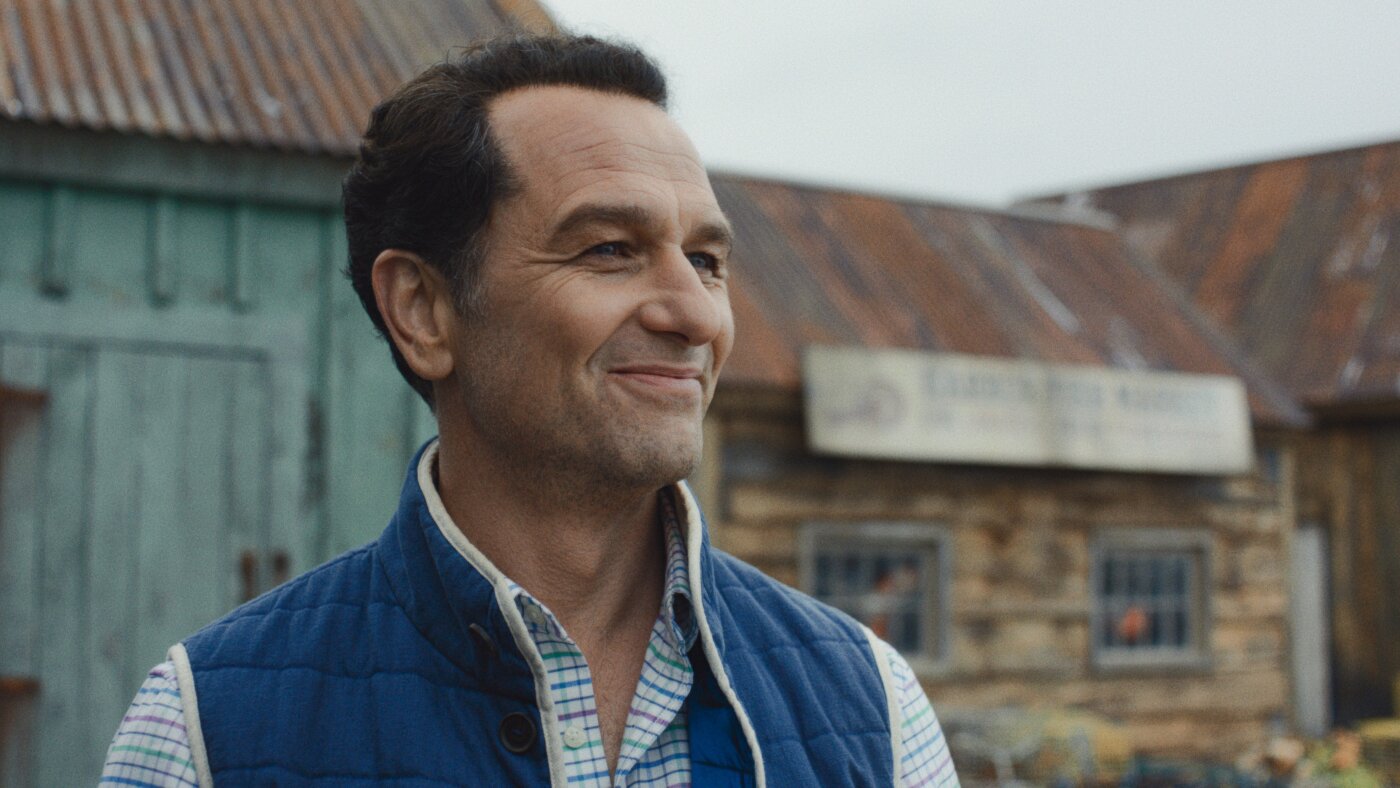
Matthew Rhys was nominated for his role in Widow’s Bay.
Apple TV
hide caption
toggle caption
Apple TV
The 2026 Emmy nominations are here. We’re unpacking the record-breaking nominations for Hacks, plus a big day for Widow’s Bay, The Pitt, and The Bear. We’ll also talk about the snubs and make some early predictions of who will win.
Connect with Pop Culture Happy Hour:
Letterboxd / Facebook
Our weekly newsletter
Support Pop Culture Happy Hour+


Can you say no to a friend’s wedding?
Getty Images/Getty images
hide caption
toggle caption
Getty Images/Getty images
Are we spending too much on other people’s weddings?
Going to a friend’s weddings can be so fun and meaningful… but it can also really hurt your wallet. A survey by LendingTree found that 31% of people who had been to a wedding in the past five years had accrued debt to attend. So what’s driving up the cost of weddings for guests? And what makes it so hard to say no to these expenses?
Brittany breaks it down with Allyson Rees, senior analyst at trend forecasting firm WGSN, and Annie Joy Williams, assistant editor at The Atlantic.
This episode was produced by Liam McBain, with additional support from Corey Antonio Rose. It was edited by Neena Pathak. Our Supervising Producer is Cher Vincent. Our Executive Producer is Barton Girdwood. Our VP of Programming is Yolanda Sangweni.
-

 Pennsylvania5 minutes ago
60th annual Central Pennsylvania Festival of the Arts now underway in State College
-

 Rhode Island8 minutes ago
Handshake Initiative instills confidence, motivation in students
-

 South-Carolina13 minutes ago
ESPN recruiting writers break down five-star Josh Dobson’s fit with South Carolina
-

 South Dakota20 minutes ago
South Dakota man faces abuse charges after authorities called to NW Iowa casino
-

 Tennessee23 minutes ago
Data centers driving up Tennessee power bills, report finds
-

 Texas28 minutes ago
Family demands investigation after US man killed by ICE agent in Texas
-

 Utah35 minutes ago
Turn your miles into meals
-

 Vermont38 minutes ago
Poll: Most young Vermonters say they’re likely to leave state amid affordability concerns – VTDigger

