Lifestyle
Do you know the Issey Miyake dress that was set on fire? Pechuga Vintage has a treasure-trove of stories

This story is part of Image’s April issue, “Reverie” — an invitation to lean into the spaces of dreams and fantasy. Enjoy the journey.
When Johnny Valencia was 14, a kid growing up in Koreatown obsessed with biology and entomology, he learned about a rare butterfly, the Papilio hospiton, that was endemic to the French island of Corsica. “I love the rarest of the rare,” Valencia says. “I’ve always loved the rarest of the rare.”
He thought about the butterfly for 10 years, until he eventually made it to Corsica while studying abroad and was able to acquire it for himself. Today, the delicate creature sits in a frame hung on the wall behind the desk in his sun-drenched L.A. showroom. It’s a totem that represents Valencia’s dedication to the rare, the special, the hard-to-get — and it’s found a home among the many other grails of the vintage collector. In this room you’ll find a Vivienne Westwood “SEX” choker, John Galliano-era Dior logo rings, a Gucci silver crystal mesh mask from fall/winter 2017, a pair of spring/summer 2017 Saint Laurent roller skate shoes, original Marc Jacobs Kiki boots from fall/winter 2016 and pieces from Jean Paul Gaultier’s cyberdot 1995 collection. The list goes on, and it goes deep.
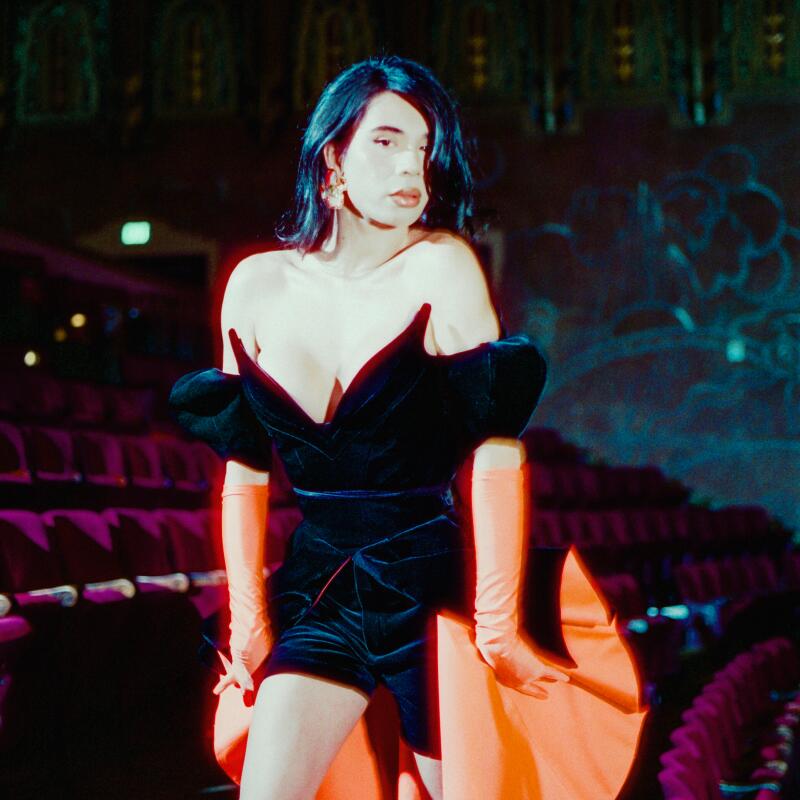
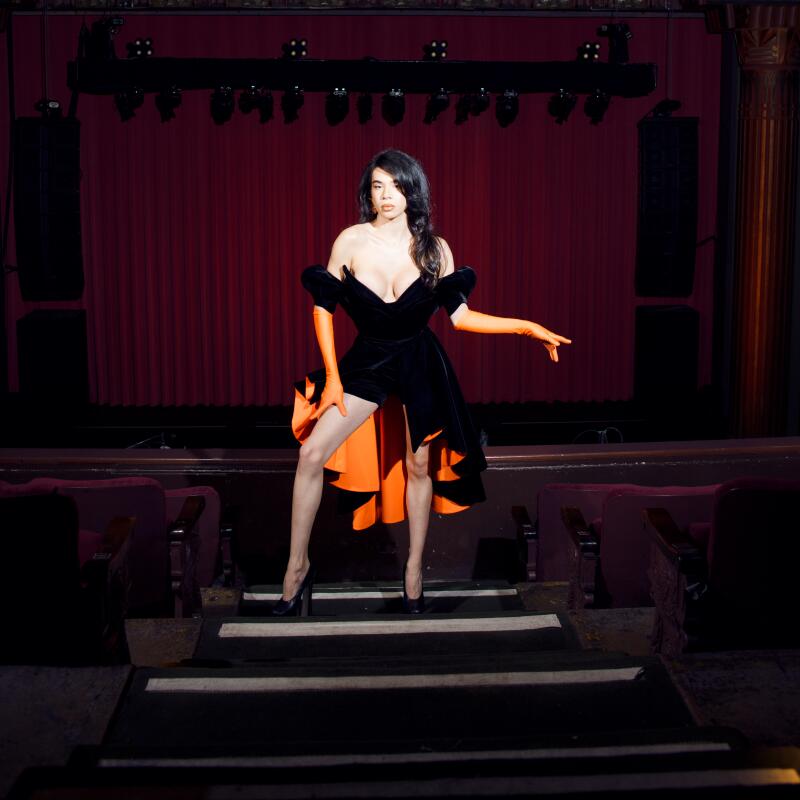
Vivienne wears Thierry Mugler AW90/91 dress, shorts and gloves, Vivienne Westwood AW93/94 pumps, Schiaparelli SS23 earrings.
Valencia, who was dubbed the King of Corsets by Vogue for his deep knowledge and archive of the signature Vivienne Westwood pieces, is also the king of his self-created universe, his Bichon Lucas lounging on a custom-made dog bed like one of Marie Antoinette’s pugs while classical music purrs softly in the background. The collection that surrounds him is the result of his obsession with acquiring precious things, which may have started with butterflies but has grown to include rare vintage runway pieces from Comme des Garçons, Chanel, Louis Vuitton, Alexander McQueen and Saint Laurent. “I look around me and I’m like, ‘Yeah, there has to be a touch of madness to pursue something you’re so passionate about,” Valencia says. “Not only to pursue it, but to have it come to fruition and materialize. It’s a whole different thing.”
Pechuga Vintage, Valencia’s vintage archive and business, has become a go-to for amateur fashion freaks and professionals alike. Stylists, hardcore collectors, It girls: They all flock to Johnny. Last year, Beyoncé purchased a pair of Vivienne Westwood fall/winter ’10 Red Label armor boots from Valencia. On a red carpet recently, Katy Perry wore the Vivienne Westwood mock croc Super Elevated Court Pumps from his shop. Rihanna recently was spotted with a Dior Hardcore fall/winter ’03 bag she purchased from the archive.
Before Valencia became the source for rare designer pieces, he studied animal sciences while living on a farm at UC Davis, and later studied international relations and economics, which led him to attending Sciences Po in France. He would end up working for the Salvadoran Consulate. He once harbored ambitions to become a vet, or, as his grandma would have hoped, the president of El Salvador, where his family immigrated to L.A. from. But in fashion — using Vivienne Westwood as his gateway drug — Valencia found it all: history, politics, nature, curiosity and, ultimately, freedom.
While he was pursuing his diplomatic ambitions, Valencia took a role as an unpaid intern at Vivienne Westwood and switched his focus to fashion, working his way up to being a buyer. (Before starting his business, Valencia also dabbled in PR and event marketing.) “In Westwood’s designs, I found a lot of liberty because it was so well made,” Valencia says. “It fit into every portion of life.”
Oscars weekend was on the horizon, and Valencia would end up working with Adore the Couture to get a pair of vintage couture silk Chanel opera gloves to supermodel Irina Shayk for the Vanity Fair Oscars party. On Instagram, Valencia posted a screenshot of a last-minute request from Shayk’s team, and the process of making a pull like that happen — which he does all the time with the help of his staff and Virgo moon.
It was a particularly insane week at Pechuga. Oscars weekend was on the horizon, and Valencia would end up working with Adore the Couture to get a pair of vintage couture silk Chanel opera gloves to supermodel Irina Shayk for the Vanity Fair Oscars party. On Instagram, Valencia posted a screenshot of a last-minute request , and the process of making a pull like that happen — which he does all the time with the help of his staff and Virgo moon. (For the record, Pechuga is a Scorpio sun and Leo rising, evident in his deeply mystic undertones and great hair.) He regularly gives followers a backstage pass to his process, highlighting the community that keeps Pechuga going behind the scenes, which often includes Latinos and trans women. “I’m so passionate about dressing women and being there for women,” Valencia says. “It spills over to my love for the trans community. I see that connection with marginalized communities, and I’m so impassioned to stand up for people that have been historically neglected.”
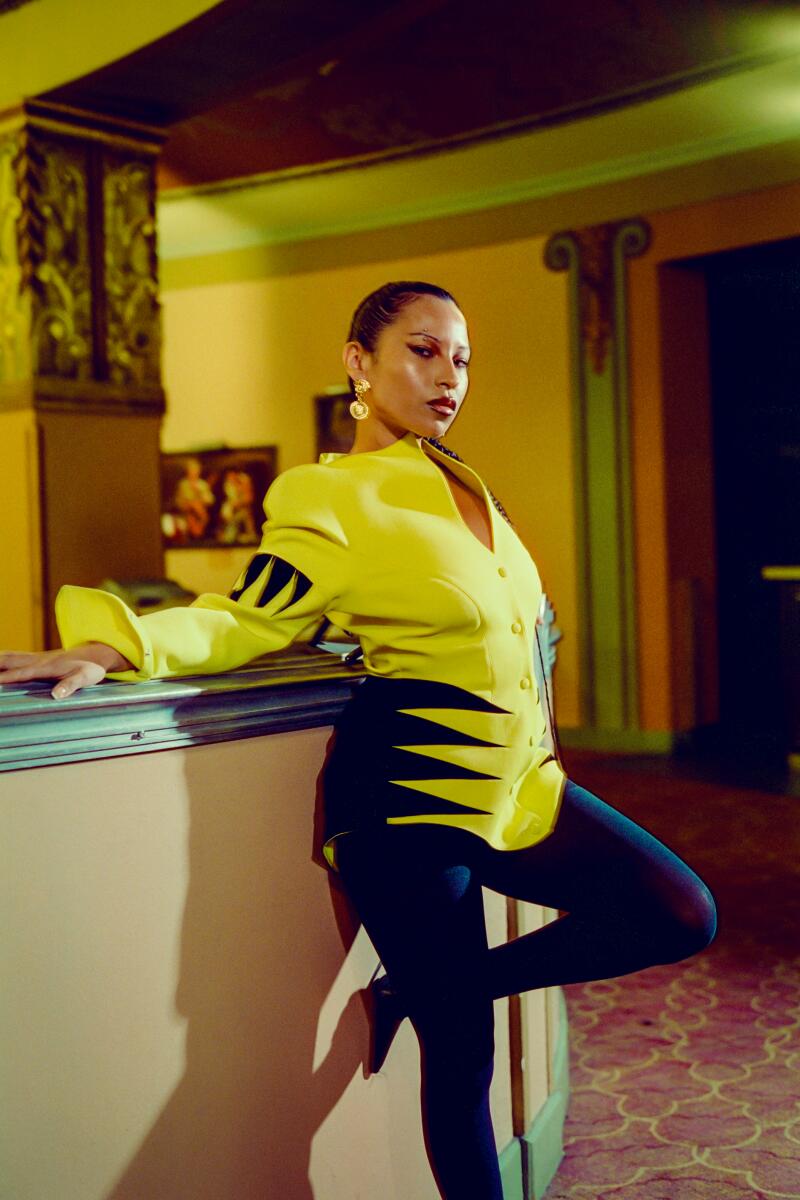
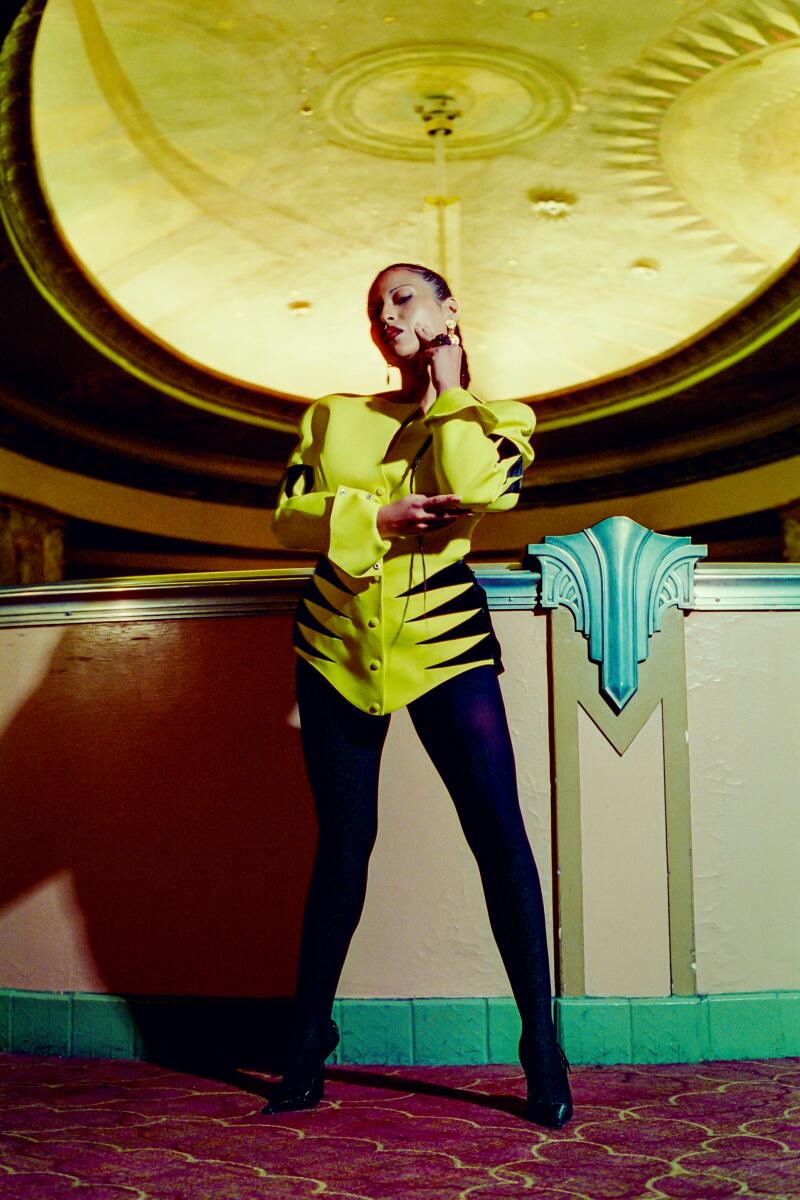
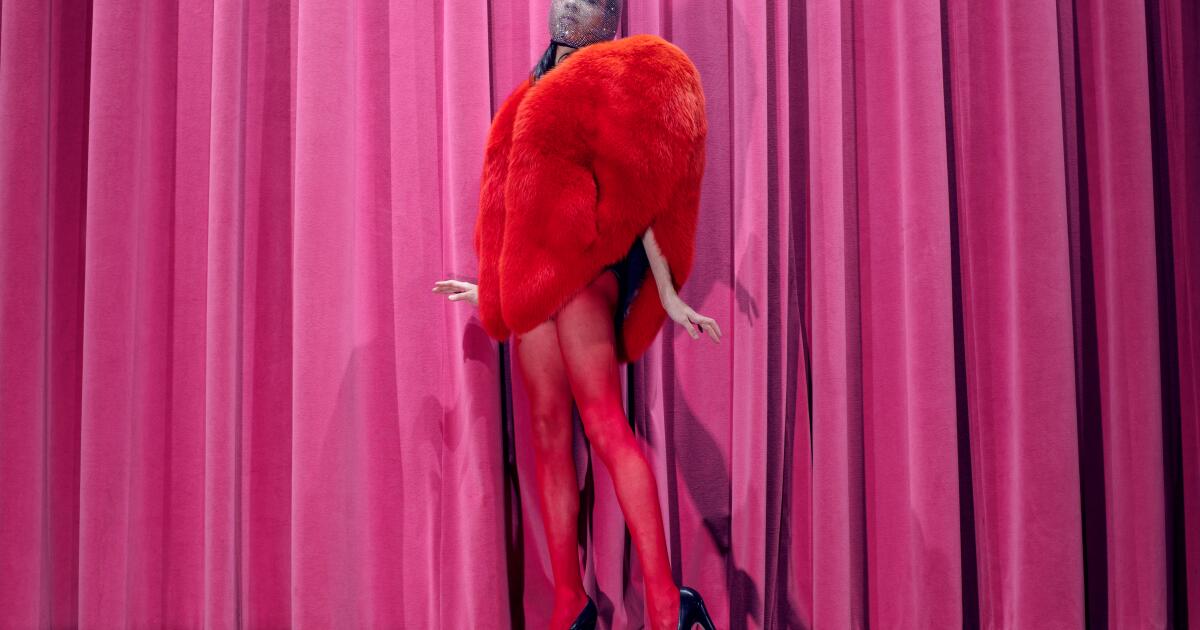
Mercy wears Thierry Mugler AW90/91 jacket, Versace SS92 earrings, Saint Laurent heels, Wolford tights, Valentino ring.
Pechuga enthusiasts will recognize Valencia’s two assistants and friends, Priscilla Yael and Sophia Jaime, who make regular appearances on his social channels, along with endearing videos of his grandmother trying on pieces from the shop. What did she think of the Marni X No Vacancy Inn orange raffia hat with cutout sunglasses that Valencia had her wear? “Esta pretty.”
“For a very long time, until recently, she thought it was still a hobby,” Valencia says of his grandmother, whom he considers one of his first mentors. “One day — this was fairly recent — I was like, ‘I’m very stressed out. I have a lot of work.’ And she was like, ‘Why? This is your hobby.’ I had to make the distinction for her. Hobbies don’t pay you. This might be a passion. But I’m working.”
If Pechuga’s Instagram and TikTok are our classroom, Valencia is our teacher in Tabis, doing deep dives into specific eras in fashion history — like Marc Jacobs’ time at Louis Vuitton — or giving context to an item that’s re-entered the discourse, like that Alexander McQueen Dante mask from ’96. But it’s his unboxing videos that are truly addicting, almost as if we, the viewer, were absorbing that surge of dopamine that comes from finally opening up something special we bought off the internet. Valencia has a distinctive, infectious giggle that serves as the soundtrack to these videos. It’s like watching a little kid open a new toy. He holds up pieces he won at auction or scored through private collectors — like the armor jacket from Vivienne Westwood’s ’88/’89 Time Machine collection, or a dress from Thierry Mugler’s fall/winter ’86 collection. “I live for documentation,” Valencia says. “It’s a natural thing.”
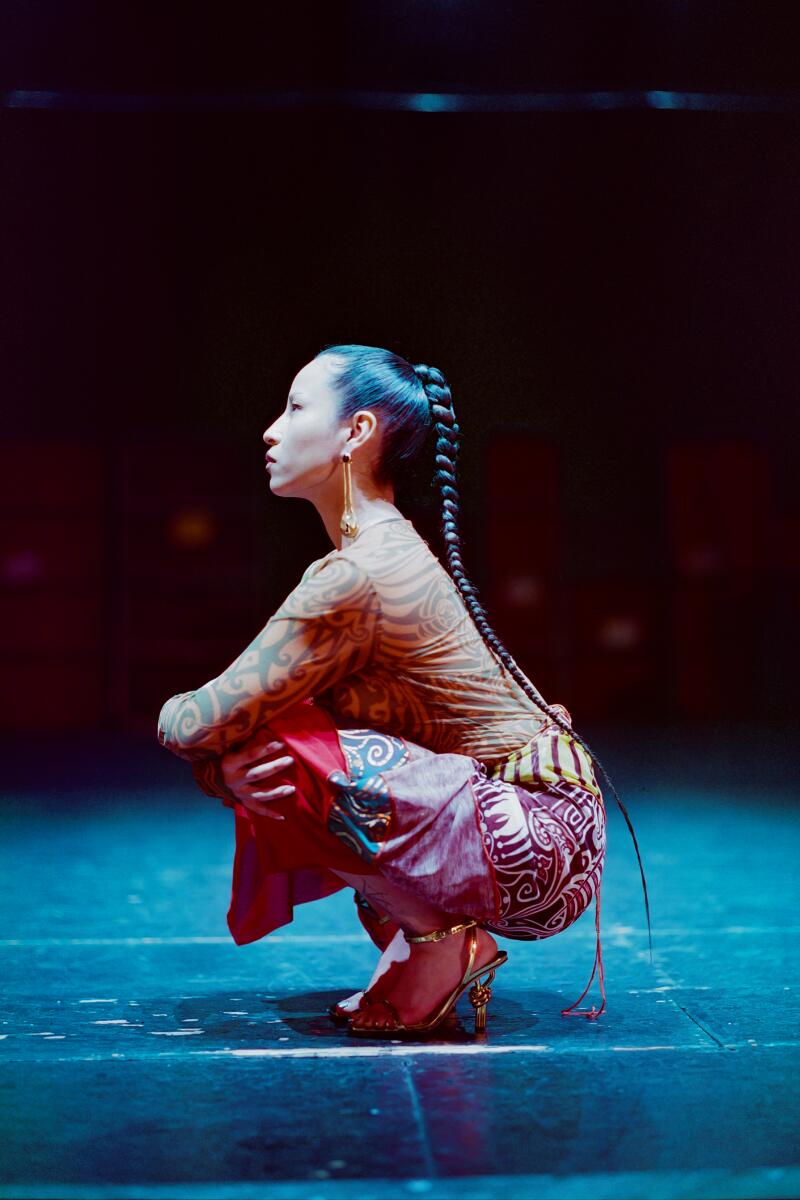
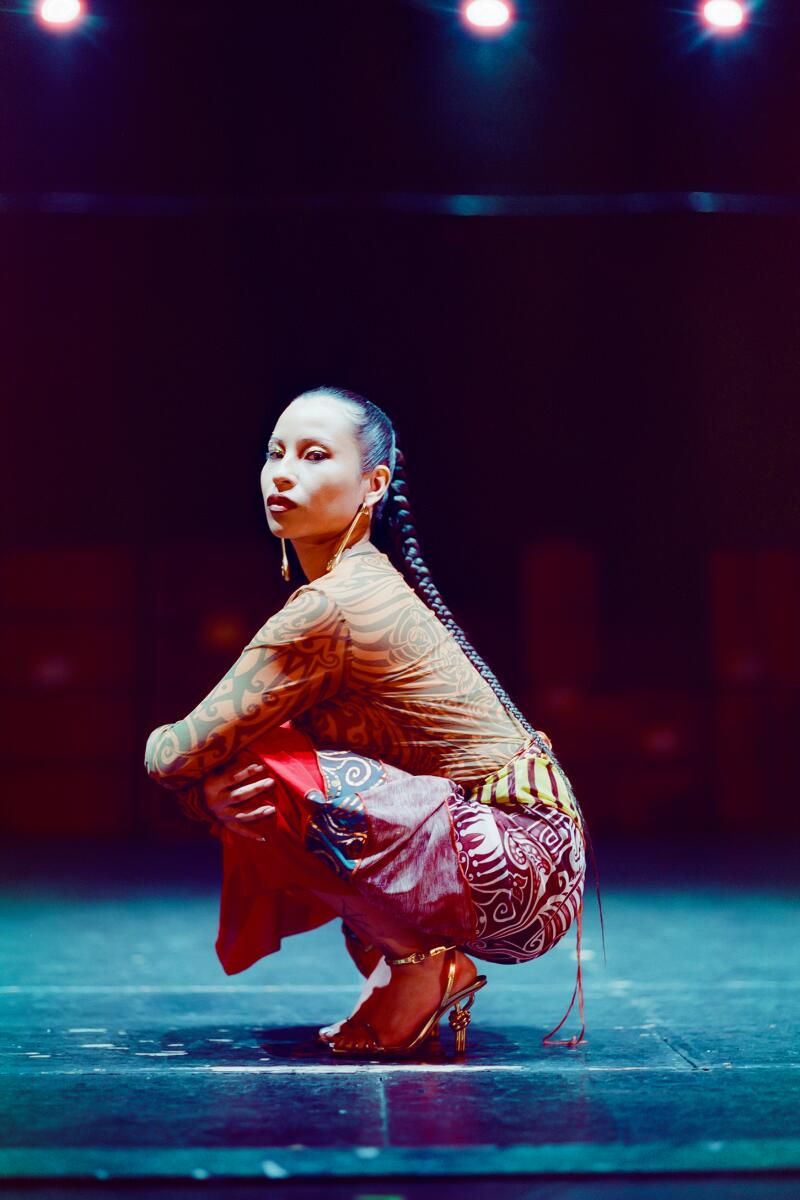
Mercy wears Jean Paul Gaultier SS96 top and bottom, Schiaparelli AW21 earrings, Bottega Veneta heels.
Any fashion addict visiting the Pechuga showroom will clock a palpable energy radiating from the clothes — tension, desire, amazement filling the showroom. (Listening back on my audio recording from our interview, I’m pretty sure I audibly moaned when Valencia pulled out a Comme des Garçons latex vest from its fall 2019 ready-to-wear collection. Embarrassing, but valid.) When John Galliano paid Valencia’s showroom a visit last year, he summed it up: “There’s magic here,” Valencia remembers the designer saying.
The way Valencia sees it, he’s only the latest stop in a long journey that these pieces have taken throughout history. “It precedes me,” he says. “Westwood had to make those boots and those shoes. And women in the 18th century had to make those corsets. There’s a lot that’s implied with the items that we see.”
We asked Valencia to give us brief history lessons and share memories of some of the most special pieces in his archive, the grails that still spark that same level of curiosity and desire he had as a kid chasing rare butterflies.
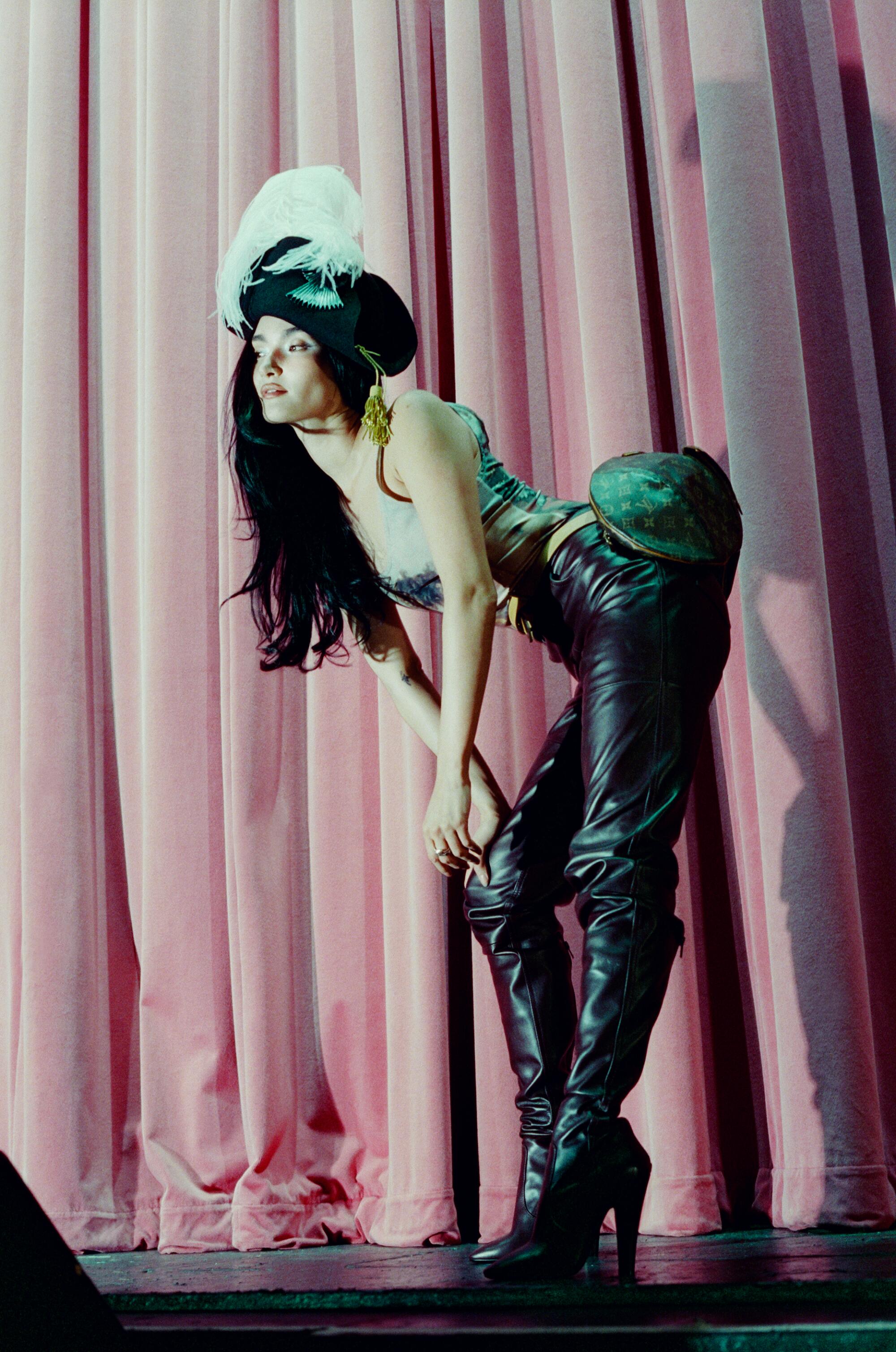
Minji wears Vivienne Westwood Pirate Hat, Saint Laurent pantaboots, Vivienne Westwood SS91 bodysuit, Vivienne Westwood X Louis Vuitton 1996 bum bag, Dilitru “City Ring,” Gucci “Chicken” ring.
Louis Vuitton X Vivienne Westwood Bum Bag (1996)
There were only 100 made. [We have the 84th piece.] Vivienne Westwood made it in collaboration with Louis Vuitton to celebrate their centenary — the monogram was turning 100 in 1996. The shape of it: Vivian took inspiration from the bustle. In essence, she was the designer that brought back that silhouette in 1995. And her logic was that she wanted the silhouette to look like a sketch. She was like, “I want my women to look like croquis.” She accentuated the bum. The bust. In hindsight, everything aligned. The first time I encountered [one], I sold it immediately. [This is the second Louis Vuitton X Vivienne Westwood bum bag Valencia has had in his collection.]
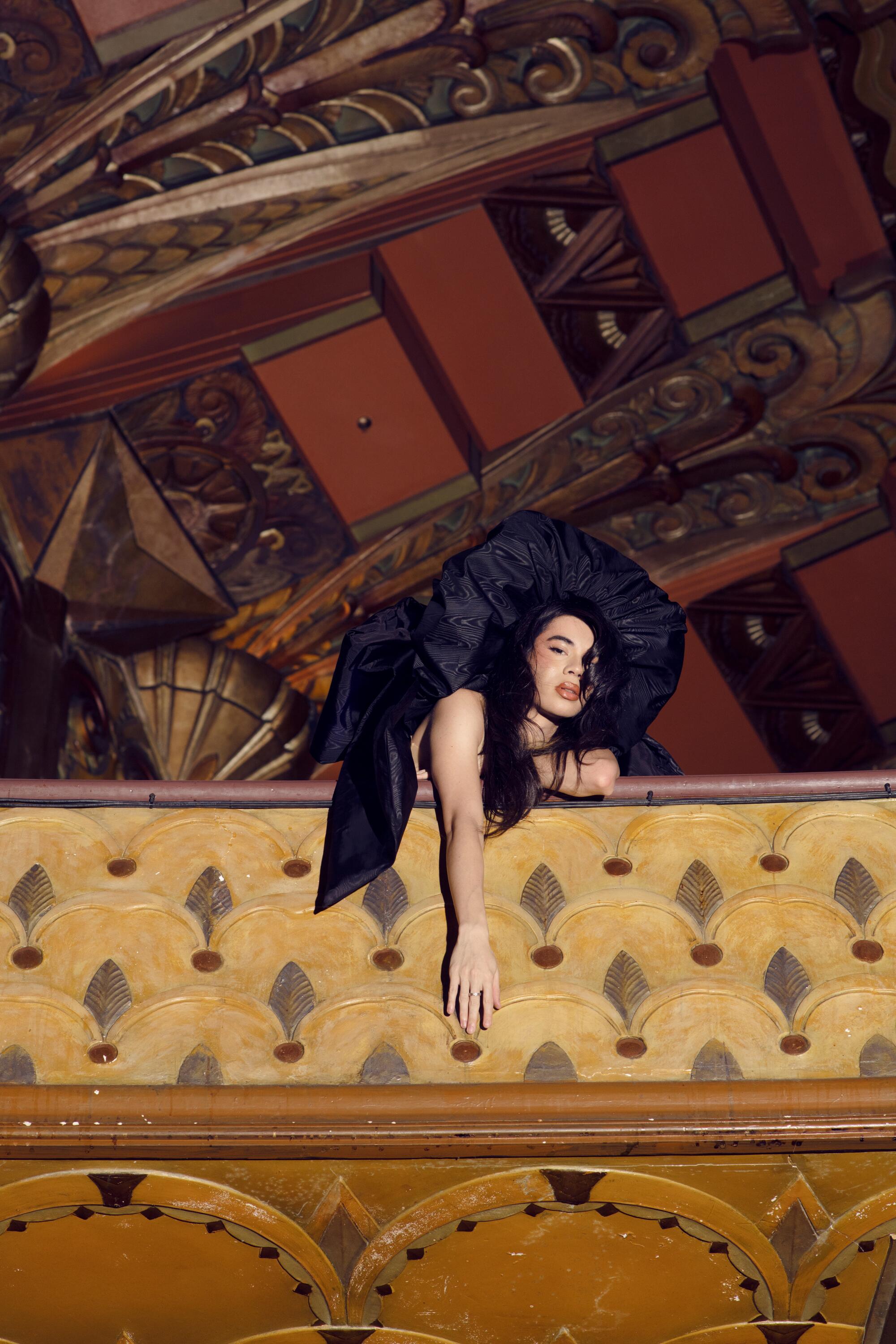
Vivienne wears Alexander McQueen AW98 “Life is Pain” top, Andrew James hat.
Alexander McQueen “Life Is Pain” shirt (Fall/Winter ’96)
That was an ego purchase. I was going through a really difficult time in my life and I related to the message a lot. There’s a fascination with it. I purchased it, got out of the turmoil that I was in. It’s like, pain is inevitable, but suffering is optional. I think the experience you feel when you put something on can be very spiritual because everything has an energy.
Vivienne Westwood Silver Horn Tiara With Orb (Fall/Winter ’05)
It’s interesting, because people think that it has some sort of allusion to the devil but it’s the complete opposite of that. They represent satyr horns. In the ’90s, Westwood took a lot of inspiration from pagans. Even with the draping of her garments, she looked at Grecian and Roman paintings and emulated that style. And one of the things to come out of that exploration were these horns. They represented, for her, fecundity and paganism. It alludes to the horn of plenty — the cornucopia and abundance.
Issey Miyake Plastic Body bodice (Fall/Winter ’80/’81)
I love corsets. I love what they do to the body. And I love Issey Miyake’s intention with that particular collection. One, because it came as a series. In the ’80s, Issey was exploring different materials. He would make pieces out of straw. Then Plastic Body came out. I love the juxtaposition. There’s clearly a feminine aspect to it, or what we attribute to feminine energy. And then the hard exterior. I told myself if I ever find this piece, I have to buy it. It’s probably one of my most expensive pieces — 50 grand.
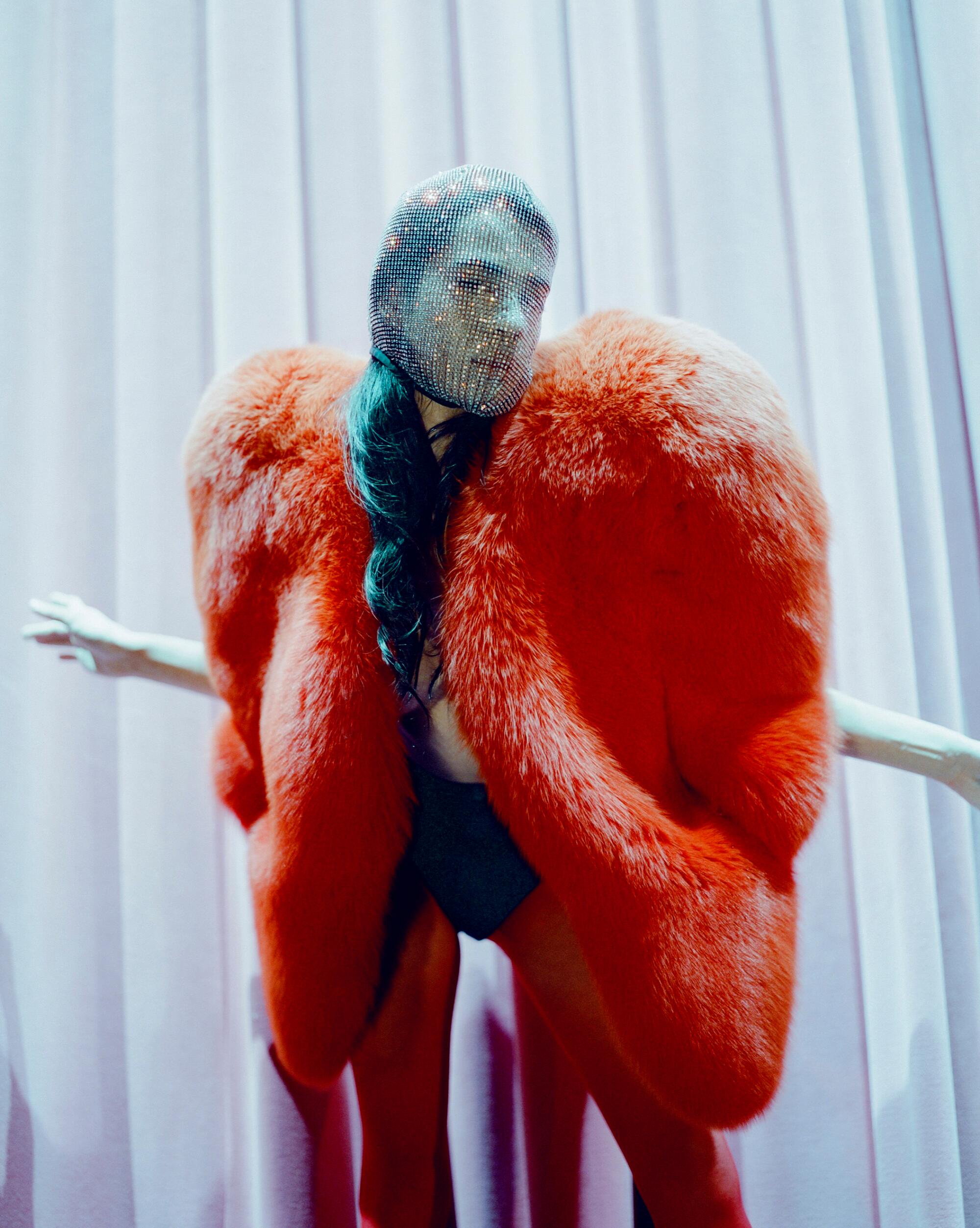
Vivienne wears Gucci AW17 mask, Saint Laurent AW16 heart coat, Claude Montana X Byronesque tights, Y/Project mini-shorts.
Gucci Silver Mesh Mask (Fall/Winter ’17)
There was such a transition from Tom Ford’s Gucci to Alessandro Michele’s Gucci. To me, it’s embodied in this. Because how do we go from Gucci ’96, the wet look, to this? I mean, it’s also really cool. Rihanna wearing it [to Coachella in 2017] makes it so [powerful].
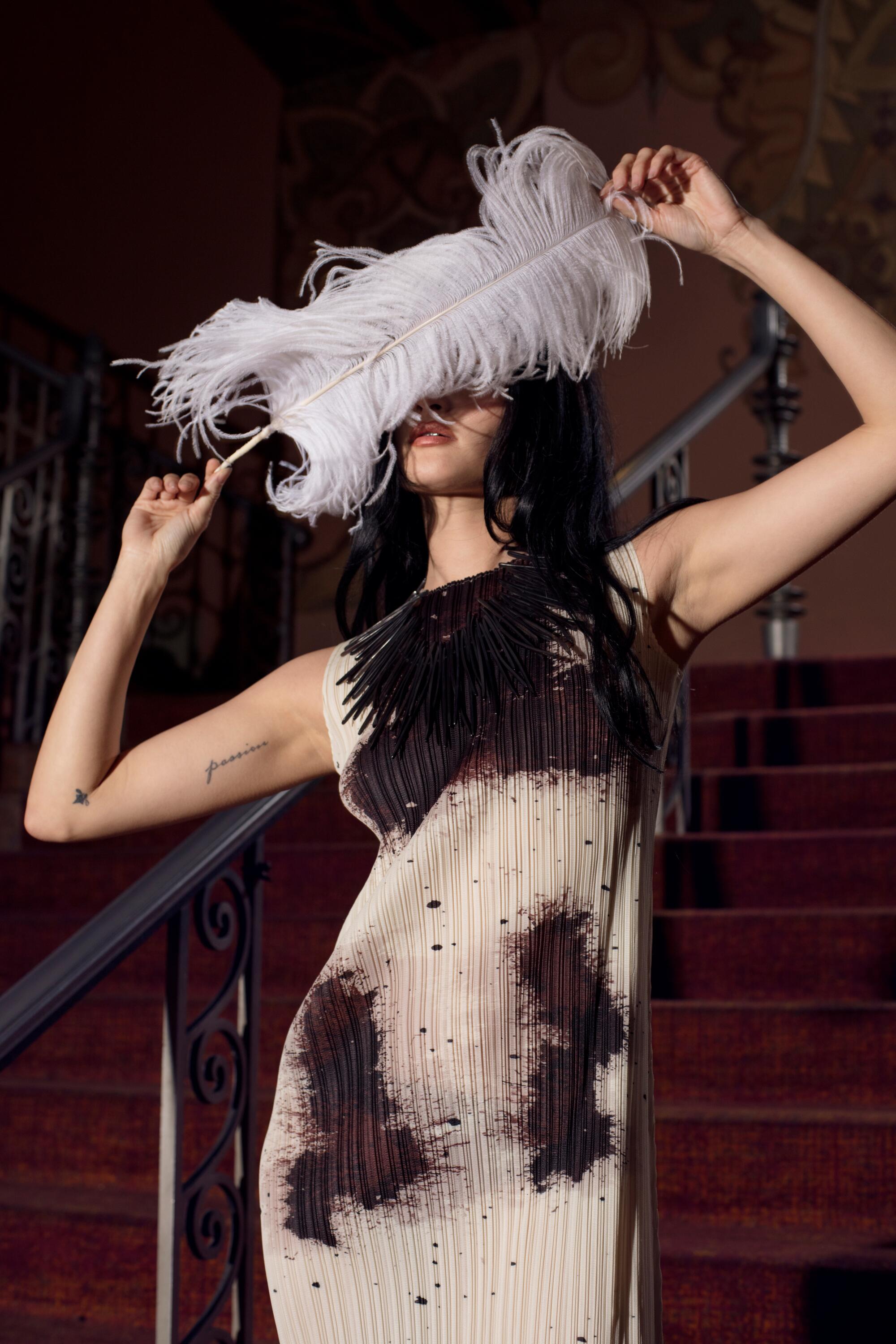
Minji wears Issey Miyake AW98 dress, Monies necklace.
Issey Miyake Gunpowder dress (1998)
With Issey and Cai Guo-Qiang [the artist who collaborated with Miyake on this Pleats Please collection] there was such an elaborate setting for [the process]. Guo-Qiang set down all this pleated fabric on the floor and put gunpowder on it, then he set it on fire. And the imprint that was left behind was then translated onto the garment, like printing. It’s my mission to tell you about this process because in the moment it was happening, yes, it was quite the spectacle. But it’s gone. And who knows how that conversation was initiated? We know that Issey started the artists series and this was one of the installations. I believe there were four [in total]. What does it mean now to wear it in 2024?
Location: The Wiltern
Producer: Mere Studios
Models: Vivienne Gomez, Minji M., Mercy Rivera
Makeup: Jaime Diaz
Hair: Belen Gomez
Photo assistant: Brandon Young
Styling assistant: Sophia Jaime


In central London’s Waterloo Place, a life-size statue that emerged overnight in late April has been creating a stir. When I visited a few weeks after it was erected, local authorities had already set up protective barriers around it.
The installation — signed by the famed street artist Banksy — depicts a man in a suit hoisting a flag as he strides over a precipice. As he marches on, the flag blows backward to cover his face, leaving him unaware he’s only a step away from a perilous fall.
Set among grand monuments celebrating Britain’s past, the “flag man” takes on a particular visual irony at a time when the country — and much of the world — is debating its path forward.
Like many viewers there, I found myself wondering whether this statue is Banksy’s warning about the consequences of uncritical nationalism, or simply a reflection on human shortsightedness. Or, perhaps, it is just prompting us to ponder a broader question: What happens when devotion to a symbol prevents us from seeing what lies ahead?
Whatever the message, the work feels remarkably attuned to the current moment.
For more Far-Flung Postcards, click here.
Lifestyle
Wait, it’s a candle? Her beeswax fruit and veggie ones look so real, you’ll want to take a bite
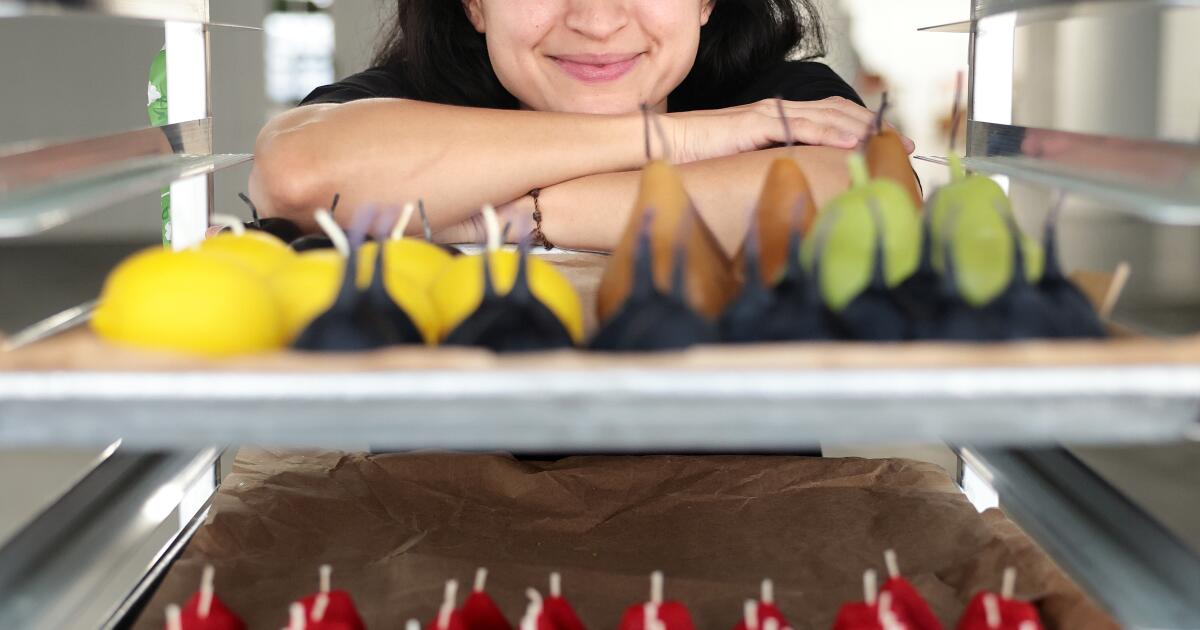
Jessica Gonzalez hustles behind her booth at the recent Renegade Craft Fair, frantically ringing up sales, answering questions and packaging her beeswax candles.
It’s hot on the grounds of the Los Angeles State Historic Park in April, but 35-year-old Gonzalez and her fiancé, Jordan Colindres, keep their cool as a crowd gathers to admire her Happy Organics candle collection, a homage to her family’s produce company in the Central Valley that looks like real fruits and vegetables.
“I love doing in-person events because it’s so fun to see people’s reactions,” she said a few months later. “It makes me feel good to see other people finding joy in my candles. They often say, ‘Oh, that’s really funny.’ And it is funny to have a cherry candle on top of your birthday cake.”

3

1. A staff member pulls a beeswax corn candle, $26, out of its mold at Happy Organics’ studio in downtown Los Angeles. 2. Each Beeswax Mixed Berry Birthday Candles set is cast from real mixed berries — strawberries, raspberries, blackberries, blueberries and cherries. A set of 10 is $30. 3. Bartlett green pears and heirloom tomatoes, $24 to $40.
Judging by the smiles and charmed looks on shoppers’ faces, her produce-inspired candles are less about illuminating rooms and more about sharing the joy she sought when she first started the company in 2018.
In this series, we highlight independent makers and artists, from glassblowers to fiber artists, who are creating original products in and around Los Angeles.
But then, it’s hard not to smile at the playfully elegant Bosc pears, puckered mandarins and green-and-purple asparagus taper candles which range in price from $12 to $40. Some are molded into corn on the cob, celery and rhubarb shapes. Others are made to look like mushrooms, figs, tomatoes and snap peas. The most popular are the small birthday candles shaped like raspberries, cherries and blackberries, packed in molded-pulp baskets just like you’d find at the grocery store or farmers market.

-
Share via
Gonzalez didn’t start out as a designer. The youngest of nine children, she was born in 1991 in Salinas and later moved to Merced, where she grew up on a 10-acre farm. She studied computer science at Mills College, then worked in tech consulting in the Bay Area and eventually became the CTO of an ag-tech company. When her mother, Angela, became ill in 2016, she returned to Merced to be with her family.
When her mom died suddenly soon after she moved home, Gonzalez left the tech industry. “I wasn’t connected with what I was doing,” she said. “I wanted to find something more meaningful; something I loved. I didn’t want my ego to keep me stuck in what I studied in college. I decided to let myself try new hobbies and passions and look for joy again.”
After her mother’s death, she began working with her father, Salvador, and her uncles at the family’s apiary, where they managed more than 30 hives. (Her grandfather was also a beekeeper in Michoacán, Mexico.) Soon, she began selling their raw honey at local farmers markets. In a heartbreaking turn, her father was diagnosed with cancer a year later, so she started making cannabis-infused honey, balms and chocolates to help ease his pain.
When she saw that the beeswax candles, which last significantly longer than paraffin candles, were selling faster than the honey, she decided to focus on making candles from the leftovers from her uncles’ hives.
She was only 25, but it was a turning point. “It was one of those moments where I felt like I needed to change my path,” she said. “I needed to change everything in my life.”

Jessica Gonzalez and her father Salvador on their family farm in Merced. (Gonzalez family)

Gonzalez at Happy Organics’ studio in downtown Los Angeles. (Christina House / Los Angeles Times)
When her father died in 2018, she inherited his bees and started Happy Organics, although she hadn’t planned on starting a business. After experiencing so much loss, making candles became a kind of therapy. “It felt great to work with my hands again, something I thought I’d never have time for,” she said.
Her oldest sister, Sonia Gonzalez, said Gonzalez reminds her a lot of their father, who reinvented himself many times over the years.


The nopal cactus is cast from a real nopal and hand-poured in 100% pure beeswax in the Los Angeles studio.
“He grew up as a village boy in the rural mountains of Michoacán, Mexico, and went on to work in restaurants, cut down Christmas trees and pick strawberries and broccoli in the fields of Salinas,” she wrote in an email. “From there, he started selling produce door-to-door, then at flea markets and eventually built his own produce distribution business from the ground up. As the youngest of nine kids from a working-class family, Jessica’s always been incredibly resourceful, responsible, and amazing at reinventing herself.”
Like a lot of millennials, Gonzalez taught herself how to make candles by watching YouTube videos. She started with hand-dipped tapers, working in the garage on the farm that helped her feel safe and connected to her parents. “It was a really nice environment to try something new and creative,” she said.
Inspired by her family’s produce, she cast real corn, strawberries and cherries in plaster, then made a silicone mold to create copies. Even when using the same mold, color can vary from batch to batch, and how it cools also affects the result. “That’s just how handmade things are,” she said. “There’s always some variation.”

Cherry molds make cherry candles at Happy Organics’ studio in downtown Los Angeles.

A variety of fruit and veggie candles.
When she moved to Los Angeles in 2023 to be with Colindres, her business took off. “L.A. is a great place to grow,” she said. “There’s so much opportunity here. When I go to a farmers market, I never know who I’ll meet.”
She sold her candles in person at craft shows, the Hollywood Farmers’ Market and most recently, during a residency at the P.F. Candle Co. showroom in Echo Park.

2

3

1. A staff member trims the wicks on a pair of carrot birthday candles, $22. 2. Gonzalez passes by shelves of candles at Happy Organics’ studio in downtown Los Angeles. 3. Asparagus taper candles, $30.
“I have a lot of respect for her as a fellow candle maker (making molds is not easy), but getting to know her story more and how her choice of foods and wax is reflective of her family’s history gave it so much meaning,” P.F. Candle Co. founder and creative director Kristen Pumphrey said in an email. “It’s been a tough couple of years for L.A. businesses, so we gotta stick together — there’s this wonderful sense of community hosting a local brand that’s so passionate about their work.”
As her business has expanded, her products are now available at Terrain, Joan’s on Third and the MoMA Design Store in addition to her website. She has also had to source beeswax from other vendors across the country to keep up with demand.
Kimberly Curtis, owner of Hide & Seek Vintage in Studio City, said Gonzalez’s strawberry and cherry birthday candles “flew off the shelves last year” during the holidays. “Our customers love them,” she added.

Gonzalez holds a cabbage candle.
Still, Gonzalez stays connected to her Central Valley roots. Everything she and her small team make in downtown Los Angeles is handmade and “takes time,” she said, describing the steps involved in crafting quality candles. Right now, her favorite is the Nopal Cactus candle, which she made using a clipping from an employee’s yard. While others help her with production, wholesale management and packaging, she focuses on sales, content and all-new product development.
When asked if she has advice for others who want to start their own business, Gonzalez admits she sometimes feels overwhelmed.

In 2013, Gonzalez and her family gathered at their Merced ranch to celebrate her parents’ anniversary.
(Gonzalez family)
“The biggest thing that has gotten me through the toughest spots is my why or my reason for starting,” she said. “I think that has to be really strong. That’s what brought me a lot of comfort when I felt like quitting: going back to the beginning and remembering why I started this.”
For Gonzalez, her reason is always close to her heart. “I wanted to feel connected to my parents in some way,” she said. “This was a good representation of my upbringing.”

The Kennedy Center, the facade of which remains covered with a tarp, is seen in Washington, DC, on June 28, 2026. A US federal judge asked on June 24 for an explanation for why a tarpaulin continues to cover the facade of the Kennedy Center where President Donald Trump’s name was recently removed. District Judge Christopher Cooper gave the board of trustees of the performing arts venue until the end of July to explain “the purpose for and status of the tarp and scaffolding that Defendants have erected on the front portico of the Center.”
ALEX WROBLEWSKI/AFP via Getty Images
hide caption
toggle caption
ALEX WROBLEWSKI/AFP via Getty Images
More than two weeks ago, President Trump’s name was removed from the Kennedy Center facade though it is still covered by a tarp and the legal battle continues.
On Monday, a U.S. Department of Justice filing on behalf of the Kennedy Center included some surprises. The document was submitted in response to issues raised by lawyers for ex-officio board member Rep. Joyce Beatty of Ohio who is suing to remove President Trump’s name from the center and stop its closure for renovations.
Among the revelations, the Kennedy Center admitted that, during a board meeting on December 18, 2025, Beatty had been “muted and prevented from speaking.” It was at that meeting that the board voted to add President Trump’s name to the center. The filing later acknowledges the congresswoman was “prevented from voicing her opposition.”
The John F. Kennedy Center for the Performing Arts is a living memorial to its namesake. The guidelines for how the theatre complex spends federal dollars are very specific. Among other rules, it states that “no additional memorials or plaques shall be designated or installed.” Beatty argues adding Trump’s name runs afoul of those rules and that any change requires approval from Congress.
According to one of Beatty’s filings, “There was no advance notice in the agenda that the Board would be considering a name change,” a statement the Kennedy Center now does not deny. The center admits that, prior to voting, there was “no discussion about potential risks or downsides of the vote to adopt a secondary name for the Center.” Nor was there a board discussion “about any potential conflict of interest that might result from the vote.”
The center’s lawyers previously contended that if Trump’s name were to be removed, it would “lose money from donors who support” him and “impede the Center’s fundraising efforts.”
Closing for renovations
Earlier this year, Trump announced on social media that the Kennedy Center would close for two years for renovations. He wrote that he made the decision after “a one year review” with “Contractors, Musical Experts, Art Institutions, and other Advisors and Consultants.”
But, according to the center’s lawyers, Trump’s announcement “was made without presenting any plans, analyses, timelines, or funding information to his cotrustees and without any Board vote.”
The Kennedy Center has long denied reporting by The Washington Post that ticket sales plummeted after President Trump became the Center’s board chair. In Monday’s legal filing, the Center admits that, by October 2025, “nearly half of the Center’s tickets were going unsold.”
-
Lifestyle10 minutes ago
Greetings from London, where Banksy’s flag man is a warning cry
-
Education13 minutes ago
This Little Robot Cleans Windows
-

 Technology18 minutes ago
Comcast’s split could make or break Peacock
-

 World25 minutes ago
State Department congratulates Keiko Fujimori as Peru’s president-elect following razor-thin vote count
-

 Politics28 minutes ago
Mamdani ripped for claiming victory over capitalism after NYC’s multi-billion dollar taxpayer funded bailout
-

 Health33 minutes ago
American vaccines that transformed public health over 250 years: ‘Outweighs harm’
-

 Sports40 minutes ago
Ex-NFL reporter Dianna Russini interaction with police officer to dodge traffic ticket comes to light
-
 Business48 minutes ago
Joby Aviation creates a joint venture with Toyota to build air taxis

