Fitness
Should you sync your exercise time to your chronotype?


A new study suggests that exercising at times that match whether someone is naturally a morning or evening person could reduce their risk of heart problems.
Researchers in Britain and Pakistan determined the chronotypes of 150 people aged between 40 to 60 through questionnaires and 48-hour core body temperature measurements.
Chronotype refers to the tendency to be naturally more active or wakeful at a particular period of the day.
All participants in the study – which was published in the journal Open Heart – had at least one cardiovascular risk factor, such as high blood pressure, obesity or physical inactivity, and were randomly assign-ed to exercise at times that either aligned with their chronotype or did not.
Workouts were scheduled either in the morning (8am-11am) or evening (6pm-9pm).
Out of the group, 134 participants completed all 60 exercise sessions.
Over 12 weeks, the study found that both the matched and mismatched groups show-ed improvements in heart risk factors, aerobic fitness and sleep quality.
However, it discovered that those who exercised in alignment with their chronotype experienced greater reductions in blood pressure.
They also demonstrated better improvements in measures such as heart rate, aerobic capacity and sleep quality, compared to those whose exercise timing did not match their natural preferences.
In light of these findings, we spoke to Nuffield Health personal training lead Sam Quinn in Britain, to find out whether or not he thinks we should all sync our exercise with our chronotype.
What are the main categories of chronotypes?
Chronotypes are often simplified into “morning larks” (early birds) and “night owls” (evening types).
“Morning people or early risers are people who find that their energy levels are optimal first thing in the morning and often find that they are more productive during the first part of the day,” says Quinn.
“Whereas, a night owl, or someone who is more of a night person, would be someone whose energy levels are optimal later in the day or the evening.
“These are generally people who like to stay up late and maybe into the early hours in the morning.”
What are some benefits of trying to sync exercise with your chronotype?
“The main benefit is that it can help you stay consistent with your exercise,” says Quinn.
“We’ve all got busy lives and everyone’s got different preferences, but the best programme is going to be the one that you’re going to be able to stick to.
“For example, if you set a workout programme where you have to go to the gym at eight o’clock in the morning and you’re a night person, you might fail before you’ve even started.
“However, if you select a time which is more suited to your preferred time of day and your body clock, where you feel more energised and it works better for your schedule, you’re going to be much more consistent and much more likely to achieve your goals, whether that’s improving your mental health, an aesthetic goal or a performance-related goal.”
Are there any signs that might indicate someone is working out at the “wrong” time of day?
“I think the main physical signs to look out for are to do with energy levels and performance,” says Quinn.
“For example, someone’s output might be affected.
“They might be struggling to train that day, are not turning up consistently and are struggling to hit their designated reps or loads, therefore might not be able to accomplish their physical goals in the gym.
“Also, sometimes, people look visibly deflated.
“Their energy levels are depleted, they’re looking lethargic and might not be engaging with conversation.
If someone is feeling lethargic and tired, they’re not going to get the most out of their session and they’re not going to enjoy it.”
What other factors might affect your energy levels during workouts?
The quantity and quality of your sleep can have a big impact on your energy levels during a workout.
“If you’re training regularly, but you’re not sleeping and recovering adequately, you’re not going to be energised and are not going to be able to perform at your best during your workouts,” highlights Quinn.
Stress can also sabotage your workouts.
“I would say that lifestyle-related stress is one of the biggest factors that impacts people’s energy levels, focus, motivation and frequency of workouts,” he adds.
“When people come in to train, they might vent about their work-related stress and might only get through 50% of the work that was planned for that session.
“So, stress can be a really big obstacle.”
Fuelling yourself adequately is also key.
“Make sure that you’re recovering appropriately from your workouts with the correct nutrition and are fuelling yourself appropriately, depending on what your goal is,” says Quinn.
ALSO READ: Here’s the proper way to fill your ‘tank’ for exercise
“Try to educate yourself on these variables that are going to impact your goals – such as your sleep, nutrition, hydration and recovery – so that you can utilise all of this to help you to achieve your long-term goals.”
How can someone figure out what their chronotype is and find a routine that works for them?
“Many people think they are a morning person or have read that the best time of day to train is the morning, but when they train in the morning they feel tired and lethargic,” says Quinn.
“Some people also don’t sleep as well because they’re anticipating trying to get into the gym in the morning.
“I find that many people want to be a morning person, but actually train much better in the afternoon or the evening, when they’ve had a couple of extra hours of sleep.”
Sometimes finding a routine that works for you takes a bit of time.
“Finding the right time to train and exercise can take a bit of trial and error, and can sometimes take quite a long time to figure out,” he says.
“Be flexible and try a few different times to see what’s optimal for you, what works with your lifestyle and what is going to enable you to be consistent over time.”
When figuring this out, listening to how your body and mind feels can help guide you.
“I regularly have to communicate with my clients and ask them, ‘How are you feeling? Is this the most suitable time for you?’” he adds.
Most importantly, Quinn reminds people to choose a type of activity that they actually enjoy and will stick to.
“Find out what type of exercise you actually enjoy and that you are going to be consistent with,” he recommends.
“It doesn’t have to be strength training – it could be a dance class or yoga or endurance running.” – By Camilla Foster/PA Media/dpa
ALSO READ: Figuring out the best time to exercise



Fitness
80-year-old fitness icon Joan MacDonald reveals her simple exercise for a stronger, more stable core

Joan MacDonald didn’t enter a gym until she was 70. Really. Since then, the 80-year-old has transformed her health by losing three stone and building significant muscle, and now coaches other women through her training platform, Train With Joan, which she launched to help others boost their fitness at any age.
The premise of her app is simple: minimal-equipment workouts built around no-fuss, effective exercises that can be done anywhere. One ‘powerful core and stability exercise’ she swears by is alternating bodyweight clock taps. ‘This movement helps strengthen the muscles that keep you stable, balanced and moving well as you age,’ Joan explains.
Bodyweight clock taps benefits
Think they look too simple? That’s the point. Joan is adamant that ‘You don’t need complicated workouts to start getting stronger. Sometimes the most effective movements are the simple ones you do consistently.’
According to Joan, regularly performing bodyweight clock taps help:
- ‘Strengthen your core which supports your spine and reduces strain on your lower back.
- ‘Improve balance and coordination, helping you stay steady on your feet.
- ‘Increase hip stability, which supports your knees and joints.
- ‘Build functional strength for everyday movements like stepping, turning and reaching.
- ‘Help reduce fall risk by improving control and body awareness’
How to do bodyweight clock taps
Find a demo from Joan above, along with instructions for how to do them with proper form below.
- Stand on one leg with a slight bend in your supporting knee and brace your core.
- Keeping your hips level, reach your free foot forward to lightly tap the floor in front of you (12 o’clock), then return to the centre.
- Continue tapping to different “clock” positions—such as 3, 6 and 9 o’clock—maintaining your balance and control throughout.
- Complete all reps on one leg before switching sides.
Form tip: Move slowly and focus on staying stable. The goal is controlled movement, not how far you can reach.
How many reps and sets to do
Joan shares her advice, according to your fitness level.
- Beginners: ‘3 taps per leg x 8-10 reps’
- Intermediate: ‘3 taps per leg x 10-12 reps’
- Advanced: ‘3 taps per leg x 12-15 reps’

One of our most frequently asked questions here at Women’s Health? How to build muscle and burn fat at the same time. So, we asked superstar trainer Oyinda Okunowo exactly how to do it. In this 4-week plan – created exclusively for Women’s Health COLLECTIVE members – you’ll get the workouts and nutrition guidance needed to help you on your way to better body composition. Tap the link below to unlock 14 days of free access to Oyinda’s plan and start training today.
Get the plan

As Women’s Health UK’s fitness director and a qualified Pilates and yoga instructor, Bridie Wilkins has been passionately reporting on exercise, health and nutrition since the start of her decade-long career in journalism.
After earning a first-class degree in journalism and NCTJ accreditation, she secured her first role at Look Magazine, where she launched the magazine’s health and fitness column, Look Fit, before going on to become Health and Fitness writer at HELLO!
Since, she has written for Stylist, Glamour, Cosmopolitan, Marie Claire, Elle, The Metro, Runner’s World and Red. Today, she oversees all fitness content across Women’s Health online and in print, spearheading leading cross-platform franchises, such as ‘Fit At Any Age’, which showcases the women proving that age is no barrier to exercise.
She has also represented the brand on BBC Radio London, plus various podcasts and Substacks – all with the aim to encourage more women to exercise and show them how. Outside of work, find her trying the latest Pilates studio, testing her VO2 max for fun (TY, Oura), or posting workouts on Instagram.

In the 19 years since retiring from professional tennis, Tim Henman has barely aged. A large part of that comes down to his approach to fitness. The 51-year-old believes that ‘being active is always going to be a part of my identity’, which helps him maintain a consistent training routine.
Even while spending much of his time covering tennis as a commentator and pundit, and serving on the board at Wimbledon, Henman still makes time for his own athletic pursuits. Especially now that he has a different kind of motivation.
How Tim Henman Stays Fit After Retirement
‘I’ve got a gym at home and I try to exercise pretty regularly because I feel much better for it,’ Henman tells Men’s Health. ‘But one of my passions is wine. So if I’m having a few glasses of wine – you’ve got to treat yourself – then that definitely incentivises me to get in the gym. I’ve always exercised and I think it’s good for me both physically and mentally.’
That doesn’t mean Henman is completing brutal workouts or chasing specific performance goals. Instead, he prefers a straightforward routine that supports his lifestyle and helps him manage the wear and tear accumulated during his tennis career.
‘I don’t run that much anymore. We’ve got dogs at home, so I walk them a lot, and if I’m at tournaments or working, I’ll do quite a bit of incline walking on the treadmill. Then it’s just a good mix of weights and core work. I’m not trying to run any marathons – I’m just trying to stay in relatively good shape,’ he says.
‘I understand my body and know what I can and can’t do, especially because I’ve had three elbow surgeries and a shoulder surgery. So I’m a little careful around those joints.
‘Posture is so important for shoulder health. I focus on resistance-band exercises to make sure I’m strong through my back and maintaining good posture. Then the core is so important, so I try to stay strong through planks and side planks as much as possible.’
Why Henman Is Excited for the Laver Cup
His approach to fitness has changed dramatically over the past two decades. Where he once played tennis every day, Henman admits he’s now lucky if he gets on court twice a year. These days, golf is his sporting obsession.
That doesn’t mean he’s any less passionate about tennis, however, as he prepares to return as Team Europe vice-captain at the Laver Cup this September at The O2.
‘I’m so excited,’ he says. ‘The first time I ever experienced the Laver Cup was at The O2 when Roger Federer was retiring. I’d never seen the event live and I was probably a bit sceptical at that stage. But I was there working for television and, for those three days, I was completely blown away by the delivery of the event, the intensity of the players and the quality of the matches.
‘Tennis is an individual sport and players spend most of the year competing on their own. But I’d struggle to name any player, male or female, who doesn’t enjoy being in a team environment every once in a while.
‘The way the Laver Cup has evolved and grown is so special, and Federer deserves a lot of credit for that vision.
‘With an arena like The O2, it’s one of the biggest venues in tennis. There’ll be 17,000 or 18,000 people packed in there and, with the roof on, the atmosphere is incredible.’
Laver Cup returns to The O2, London, from 25-27 September, bringing together many of the world’s biggest tennis stars as Team Europe takes on Team World in the sport’s unique team competition. Tickets are on sale now via AXS, the official ticketing partner of The O2. Visit lavercup.com for more information.
Ryan is a Senior Writer at Men’s Health UK with a passion for storytelling, health and fitness. Having graduated from Cardiff University in 2020, and later obtaining his NCTJ qualification, Ryan started his career as a Trainee News Writer for sports titles Golf Monthly, Cycling Weekly and Rugby World before progressing to Staff Writer and subsequently Senior Writer with football magazine FourFourTwo.
During his two-and-a-half years there he wrote news stories for the website and features for the magazine, while he also interviewed names such as Les Ferdinand, Ally McCoist, Jamie Redknapp and Antonio Rudiger, among many others. His standout memory, though, came when getting the opportunity to speak to then-Plymouth Argyle manager Steven Schumacher as the club won League One in 2023.
Having grown up a keen footballer and playing for his boyhood side until the age of 16, Ryan got the opportunity to represent Northern Ireland national futsal team eight times, scoring three goals against England, Scotland and Gibraltar. Now past his peak, Ryan prefers to mix weightlifting with running – he achieved a marathon PB of 3:31:49 at Manchester in April 2025, but credits the heat for failing to get below the coveted 3:30 mark…
You can follow Ryan on Instagram or on X
Fitness
Quote of the day by Cher: ‘Nothing lifts me out of a bad mood better than a hard workout on my…’ – motivating life lessons by Oscar-winning actress of Moonstruck and singer of Believe on exercise, mental health, fitness and how this daily habit can transform your mood and mindset

Quote of the Day Today: Cher on Exercise
Cher said, “Nothing lifts me out of a bad mood better than a hard workout on my treadmill. It never fails. Exercise is nothing short of a miracle,” as per BrainyQuote.
What Cher’s Quote Means: Why Exercise Can Transform Your Mood
Cher’s quote highlights the powerful connection between physical activity and emotional well-being. Rather than seeing exercise as only a fitness routine, she describes it as something that consistently helps improve her mood and clear her mind.
Her words suggest that movement can provide more than physical benefits. A workout can help reduce stress, increase energy, and shift attention away from negative thoughts. By calling exercise “nothing short of a miracle,” Cher emphasizes the positive impact it has had on her own life.
Life Lesson from Cher’s Quote
The quote reminds readers that small, healthy habits can make a significant difference in everyday life. While exercise may not solve every problem, making time for physical activity can help people feel stronger, calmer, and better equipped to handle daily challenges. Cher’s message encourages people to view exercise not as a chore, but as an investment in both physical and mental well-being.
Who Is Cher
Cher (born May 20, 1946, in El Centro, California) is an American singer, actress, and entertainer whose career has spanned more than five decades. According to a Britannica report, she is known for her success in music, film, and television and for continually reinventing herself.
Cher’s Early Life
Born Cherilyn Sarkisian, Cher faced financial hardships during childhood and struggled with undiagnosed dyslexia. She left school at age 16 and moved to Los Angeles, where she began her entertainment career.
Cher’s Rise to Fame
Cher found success with Sonny Bono as part of Sonny and Cher. Their 1965 hit “I Got You Babe” launched their careers, and she later became a solo star with number one hits including “Gypsys, Tramps & Thieves,” “Half-Breed,” and “Dark Lady,” as per the Britannica report.
Cher’s Acting Career
Cher earned critical acclaim for films including Silkwood and won the Academy Award for Best Actress for Moonstruck (1987). She also starred in Mask, The Witches of Eastwick, Burlesque, and Mamma Mia! Here We Go Again.
Cher’s Legacy
Cher made a successful music comeback with Believe, winning a Grammy Award for the hit song. She later received Kennedy Center Honors in 2018, was inducted into the Rock and Roll Hall of Fame in 2024, and published Cher: The Memoir, Part One the same year, as per the Britannica report.
-
 Science1 minute ago
Nobel Prize winner leaving UC Berkeley for new role in China
-
 Sports8 minutes ago
Mikel Merino lifts Spain over Belgium, setting up World Cup showdown with France
-

 World16 minutes ago
Belgium to introduce new road tax in 2027, even for transiting drivers
-
 News41 minutes ago
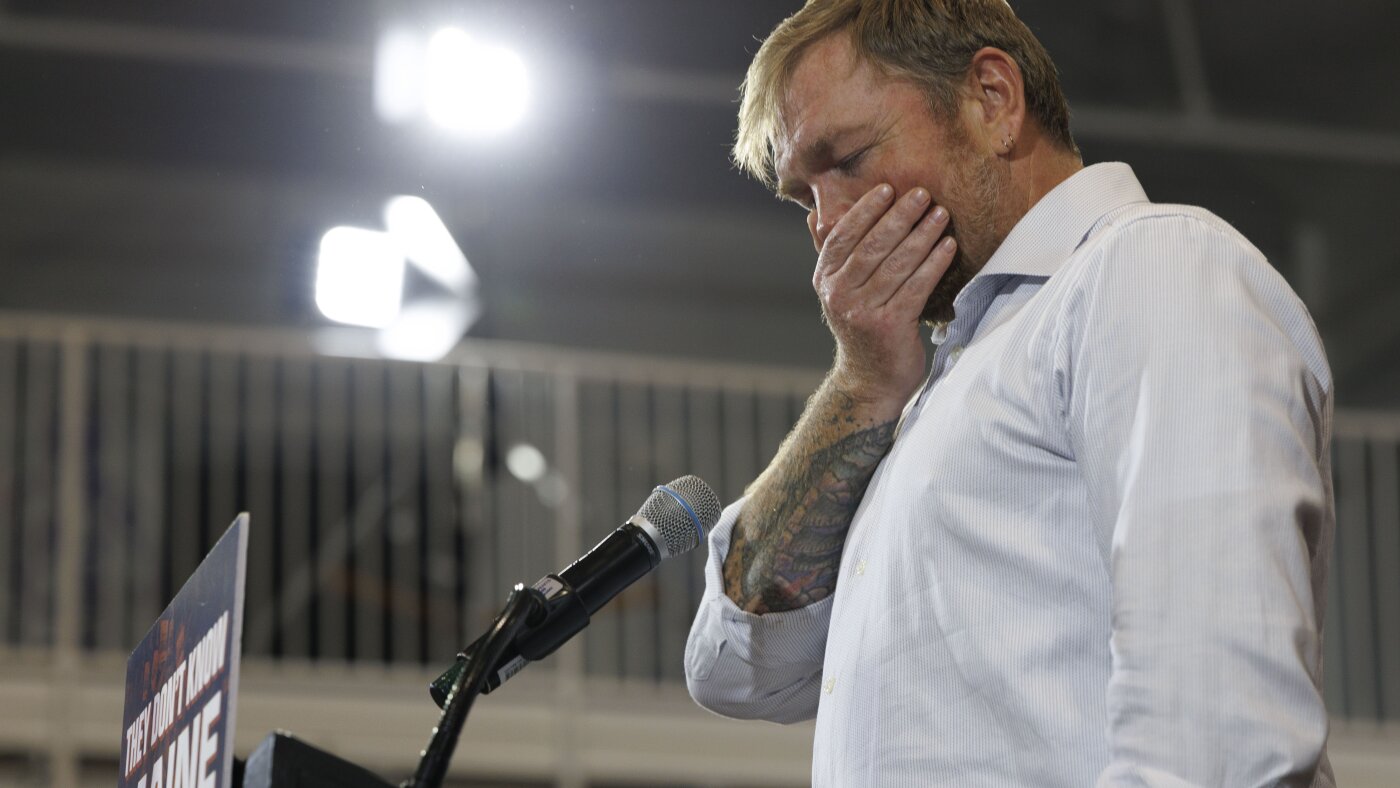
Graham Platner makes it official in Maine, submitting paperwork to leave Senate race
-

 Los Angeles, Ca2 hours ago
Knee irritation forces Shohei Ohtani out of Friday start, All‑Star game
-

 Detroit, MI2 hours ago
Detroit Evening Report: Waymo cars blocking first responders – WDET 101.9 FM
-

 San Francisco, CA3 hours ago
San Francisco Mayor Daniel Lurie Blocks Vacant Grocery Store Tax Proposal | KQED
-

 Miami, FL3 hours ago
Oregon Battling Miami, Mario Cristobal for Four-Star EDGE Recruit

