World
North Korea says it is not bound by any treaty on nuclear non-proliferation


Pyongyang says its status as nuclear-armed state ‘will not change based on external rhetorical claims’.
Published On 7 May 2026
North Korea’s envoy to the United Nations has declared that Pyongyang will not be bound by any treaty on atomic weapons and that no external pressure will change its status as a nuclear-armed state.
Ambassador Kim Song’s statement – carried by state media on Thursday – came as the United States and other countries criticised North Korea’s nuclear programme at the ongoing UN conference reviewing the Nuclear Non-Proliferation Treaty (NPT).
list of 4 itemsend of listRecommended Stories
Pyongyang withdrew from the NPT in 2003 and has since conducted six nuclear tests, promoting multiple UN Security Council sanctions.
The country is believed to hold dozens of nuclear warheads.
“At the 11th NPT Review Conference currently under way at UN headquarters, the United States and certain countries following its lead are groundlessly calling into question the current status and exercise of sovereign rights,” Kim said, according to the official Korean Central News Agency.
“The status of the Democratic People’s Republic of Korea as a nuclear-armed state will not change based on external rhetorical claims or unilateral desires,” he added.
“To make it clear once again, the Democratic People’s Republic of Korea will not be bound by the Non-Proliferation Treaty under any circumstances whatsoever.”
He continued that the country’s status as a nuclear-armed state has been “enshrined in the constitution, transparently declaring the principles of nuclear weapons use”.
North Korea has long insisted that it will not give up its nuclear arsenal, describing its path as “irreversible” and pledging to strengthen its capabilities.
It has sent ground troops and artillery shells to support Russia’s invasion of Ukraine, and observers say Pyongyang is receiving military technology assistance from Moscow in return.
The nine nuclear-armed states – Russia, the US, France, the United Kingdom, China, India, Pakistan, Israel and North Korea – possessed 12,241 nuclear warheads in January 2025, the Stockholm International Peace Research Institute (SIPRI) reported.
The US and Russia hold nearly 90 percent of nuclear weapons globally and have carried out major programmes to modernise them in recent years, according to SIPRI.
The nuclear issue has been at the heart of the US and Israel’s war on Iran, with US President Donald Trump saying that Tehran – a signatory to the NPT – can never have a nuclear weapon.
Iran denies seeking an atomic weapon and has long demanded Washington acknowledge its right to enrich uranium.



Published on
NATO must become more European to reduce its long-standing reliance on the US security umbrella, Ursula von der Leyen and Mark Rutte said on Tuesday as leaders of the 77-year-old alliance gathered in Ankara, Turkey, for their annual summit.
ADVERTISEMENT

ADVERTISEMENT
“We both know how important close cooperation between the European Union and NATO is,” the European Commission president said alongside the NATO secretary general at an industrial forum ahead of the summit.
“But to make this possible, what we need is interoperability.”
Rutte echoed von der Leyen’s remarks, highlighting the “clear division of labour” between the two organisations: NATO oversees the command structure, capabilities and standards, while the EU is responsible for industry, investment and regulation.
Twenty-three of the EU’s 27 member states are also members of NATO.
“We cannot continue, as we did, being over-reliant on the United States. We need a much stronger Europe within a stronger NATO,” Rutte said, hailing an “unparalleled” transformation driven by closer EU-NATO cooperation.
“To stay transatlantic, we have to become more European.”
The Ankara summit comes after months of growing tensions across the Atlantic, fuelled by the White House’s unilateral decision to strike Iran and its gradual reduction of military assets stationed in Europe.
Rattled by the deepening fractures, Europeans are determined to show US President Donald Trump that they are pulling their weight and stepping up their defence investment at a rapid pace, a trend often described as the “Europeanisation of NATO”.
But while some nations, such as Poland, the Baltics and the Nordics, have drastically increased their military spending towards the new 5% of GDP target, others, such as Spain, Belgium, Luxembourg and the Czech Republic, still lag far behind.
On Tuesday, von der Leyen touted the financial plans that her Commission has put forward to ramp up homegrown defence capabilities: €150 billion under the SAFE loan programme and €135 billion provisionally allocated in the next EU budget.
“In this geostrategic and geopolitical environment, we need a massive surge in defence investment,” she said.
“With this taxpayers’ money, we want, of course, a return on investment. And we want good jobs in Europe. We want research and development in Europe. So that’s important for us,” she added.
Rutte said NATO requires a “huge increase” across its entire defence industrial base, on both sides of the Atlantic, to keep up with Russia’s all-consuming war machine.
“Russia has the whole of its economy now on a war footing. The car industry in Russia is producing for the war effort, and that means that we’ve got to do this also in Europe, Canada and the US,” Rutte said.
“We have to defend ourselves. It’s the first task for every government. And the threat is there. Russia are working with North Korea, Iran and China. Let’s not be naive.”

“Respect the grind you never see,” Kerr Kriisa wrote in an Instagram post on Oct. 30, captioning a series of stylized photos showing him clutching a basketball and flexing his muscles in the jersey of his new team, the University of Cincinnati. Presumably, the well-traveled guard was referring to the unseen work of preparing for another college basketball season at his fourth school in four years, following stints at Arizona, West Virginia and Kentucky.
But according to a federal grand jury, Kriisa might as well have been referring to a much more sinister kind of hidden hustle.
On Monday, federal prosecutors unsealed a grand jury indictment charging the Estonian-born basketball player with orchestrating a yearslong wire fraud scheme that used fabricated personal crisis, false identities and other deceptions to induce two victims to send him roughly $2.2 million.
The indictment, returned in the U.S. District Court for the Northern District of West Virginia—where Kriisa played for the Mountaineers for the 2023-24 season—traces the alleged scheme back to at least 2022, when he was heading into his junior year at Arizona. The following year, after transferring to West Virginia, Kriisa would face a nine-game suspension for violating NCAA rules governing impermissible benefits while with the Wildcats.
Those unrelated NCAA infractions, however, pale in comparison to the federal allegations he now faces.
Prosecutors’ timeline suggests Kriisa’s alleged criminal conduct tracked closely with his college basketball career, with many of the acts occurring during the heart of the season.
Sportico was unable to identify an attorney representing Kriisa and his agent did not respond to an email request for comment.
According to the indictment, his alleged scheme involving the first victim began in August 2022 and continued through April 2025, when he was transferring from Kentucky. Prosecutors allege that Kriisa began targeting a second victim on Nov. 18, 2025, three days before Cincinnati lost to No. 6 Louisville in a game in which Kriisa, then a starter, shot 2-for-7 from the field.
Much of the alleged activity involving the second victim occurred in late December, as Cincinnati went on holiday break. On Dec. 29, prosecutors allege, Kriisa sent the second victim an email while posing as a fictional person named “Irene.” That same day, Cincinnati played Lipscomb, with Kriisa coming off the bench for the first time that season. He scored 15 points on 5-of-8 shooting from 3-point range.
Prosecutors allege Kriisa sent another email as “Irene” on Jan. 28, the same day Cincinnati beat Baylor. Kriisa played limited minutes that game while still recovering from an injury he suffered earlier that month. The five charged wire-fraud counts stemmed from emails and text messages Kriisa sent Feb. 1 to Feb. 4, a day before Cincinnati lost at home against West Virginia, his former team. Kriisa played 15 scoreless minutes that game, a loss, while posting the worst +/- of any player on either team.
The indictment says that the victim who was the recipient of those messages received them in Morgantown, W.Va., where WVU is based, but does not explain how Kriisa was connected to them.

NEWYou can now listen to Fox News articles!
An island-wide blackout plunged Cuba into darkness Monday as the country’s deepening energy crisis continues to strain its fragile power system.
The outage affected roughly 10 million people before limited electricity service was restored in some areas.
“A total disconnection of the National Electric Power System is occurring,” Cuba’s state-run Electric Union said Monday morning. “The causes are being investigated.”
Cuba has faced increasingly frequent power outages in recent years as the country struggles with chronic fuel shortages and deteriorating electrical grids. The crisis worsened when President Donald Trump imposed additional sanctions in January and threatened tariffs on countries that provide oil to the island.
MILLIONS LOSE POWER ACROSS CUBA AS TRUMP SANCTIONS CONTINUE TO FUEL ONGOING ENERGY CRISIS
People walk on the street during a blackout in Havana, Cuba, Monday, July 6, 2026. (Ramon Espinosa)
During Monday’s blackout, public transportation was largely halted, and officials said tens of thousands of surgeries were canceled nationwide, according to The Associated Press (AP).
Authorities later said one generating unit had resumed operations roughly two hours after the collapse.
“Microsystems are already operational throughout the country, to ensure protection for vital services,” the Electric Union said.
RUSSIAN ‘DARK FLEET’ TANKER BELIEVED TO BE DELIVERING OIL TO CUBA, DETECTED OFF US COAST AMID TRUMP BAN
A child walks with a bottle of oil past a solar panel set up on the street to charge batteries during a blackout in Havana, Cuba, Monday, July 6, 2026. (Ramon Espinosa)
The energy minister said officials were working to restore power while accusing the U.S. of contributing to Cuba’s energy struggles.
“Vital services continue to be protected, amidst this complex situation exacerbated by the energy blockade we face,” Vicente de la O Levy said.
Cuban President Miguel Díaz-Canel also blamed U.S. policies, describing the energy blockade as a “genocidal” measure imposed by Washington.
“While the U.S. tries to induce a social explosion through asphyxiation by blocking fuel access to #Cuba, the UNE mobilizes to reverse the SEN outage,” Díaz-Canel said, referring to Cuba’s National Electric Power System.
“What the electrical workers are doing in the midst of a genocidal energy blockade is heroic.”
A woman with her son signals a car on a dark street during a blackout in Bauta municipality, Artemisa province, Cuba, on March 18, 2024. (YAMIL LAGE/AFP via Getty Images)
CLICK HERE TO DOWNLOAD THE FOX NEWS APP
Cuba’s energy crisis intensified earlier this year after a U.S. military operation captured Venezuelan President Nicolás Maduro and halted Venezuelan oil exports, cutting off a key source of fuel for the island.
While Cuba produces only about 40% of the fuel it needs, a Russian tanker delivered roughly 730,000 barrels of oil to the country in March, supplies that were depleted by the end of April, according to The AP.
To conserve fuel, the Cuban government has imposed scheduled power outages that have lasted more than 24 consecutive hours in some areas, the outlet said.
A blackout in early March affected Cuba’s western provinces, while a separate outage in mid-March plunged the entire island into darkness.
-

 Lifestyle1 minute ago
Jessica McCormack: How a Challenger Is Seizing the Jewellery Opportunity
-
 Politics4 minutes ago
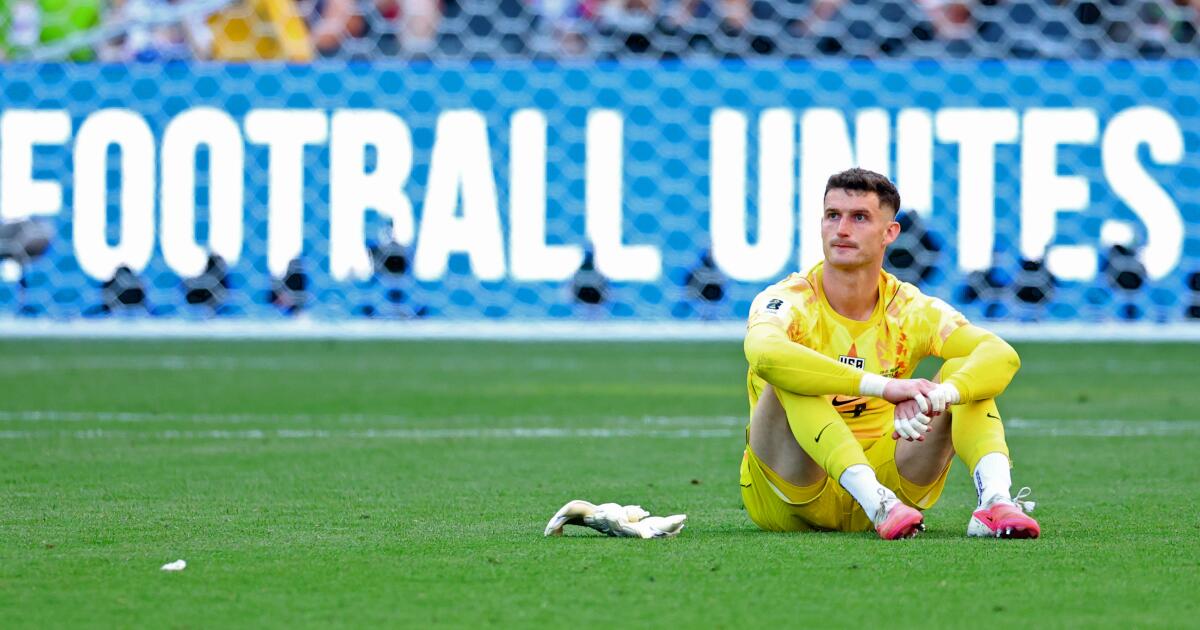
Commentary: Trump’s World Cup meddling only made matters worse for rattled U.S. squad
-
 Sports16 minutes ago
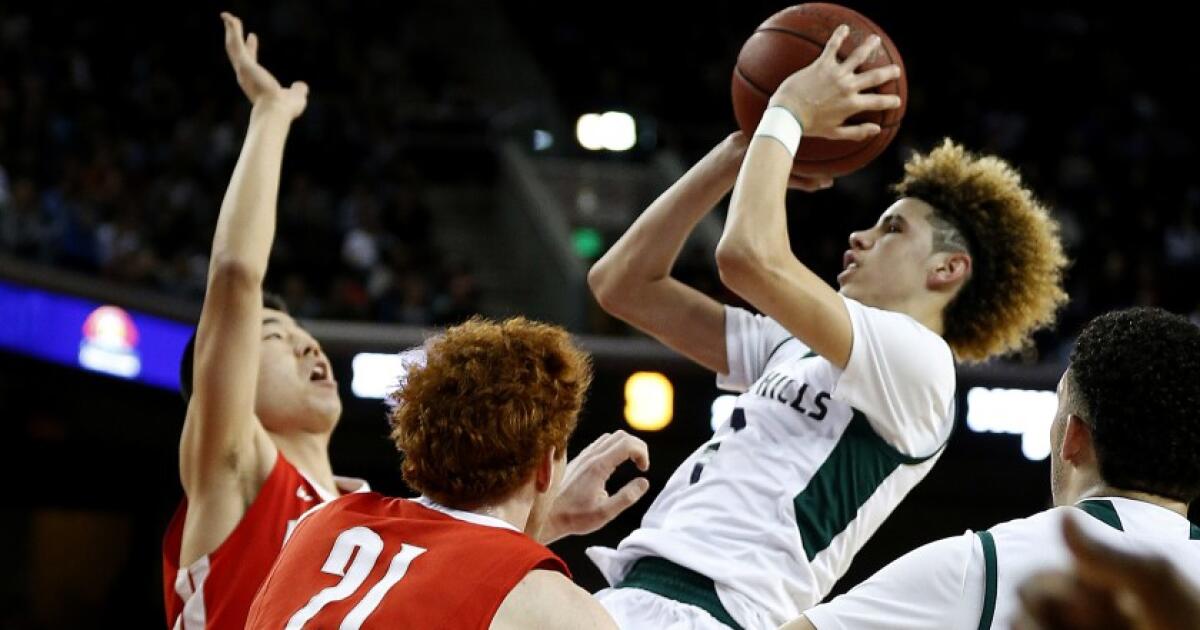
Looking back at the greatest high school basketball doubleheader in 2017
-

 World24 minutes ago
NATO must become more European, von der Leyen and Rutte say
-

 News49 minutes ago
Top Senate Democrats push Trump-affiliated companies for answers about IRS settlement
-

 Los Angeles, Ca2 hours ago
Missing 13-year-old with autism last seen at Los Angeles beach
-

 Videos2 hours ago
Charlie Kirk’s alleged killer appears in court
-
Detroit, MI3 hours ago
GET TO KNOW: Wide receiver Kendrick Law


