Florida
Voting underway for HGTV Smart Home in Florida. When the contest ends


When does voting end for 2026 HGTV Smart Home near Orlando, Florida? 5 pm ET Friday, June 19, 2026, on hgtv.com and foodnetwork.com.
Voting is underway for the 2026 HGTV Smart Home in Florida − who’s going to win?
The home and garden network’s sweepstakes contest began last month, and those interested in the $1.3 million grand prize − a fully furished poolside paradise near Orlando and some cool cash − have just over a month to try their luck.
Voting continues twice a day at HGTV and Food Network sites. Here’s what we know.
What to know about 2026 HGTV Smart Home in Florida
The three-bedroom, three-bath HGTV Smart Home in Apopka, which is about 20 miles from Orlando, boasts a so-Florida vibe with its upscale tropical, relaxed decor. But what makes it a “smart home?” The state-of-the-art technology, functionality and mindful use of space when it came to the design. Or so says the designers and hosts of the 2026 HGTV special, Brian and Mika Kleinschmidt. The HGTV reality show hosts, who live in Tampa, made the inside and outside living spaces comfortable and compatible with Florida’s relentless summer heat, yet magazine cover-worthy.
Over the years, the Kleinschmidts have hosted “100 Day Dream Home,” “White House Christmas 2024,” “100 Day Hotel Challenge” and “Barbie Dreamhouse Challenge,” all on HGTV. Their inside knowledge as Florida residents came into play with the 2026 HGTV Smart Home design.
It’s not the first time the home and garden network picked a site in the Sunshine State for its sweepstakes contest: Most recently, the 2024 HGTV Dream Home was on Anastasia Island, Florida, near St. Augustine, and the 2021 HGTV Smart Home was in Naples on the West Coast of the state.
How much is 2026 HGTV Smart Home near Orlando, Florida, worth?
The grand prize for the 2026 HGTV Smart Home in Apopka, Florida, is worth more than $1.3 million. The newly built, fully furnished resort-style home about 20 miles from Orlando is a 3,000-square-foot three-bedroom, three-bathroom home with a pool and outdoor living space. The winner of the HGTV Smart Home sweepstakes contest will receive the keys to the home, the furnishings and decor inside and out, plus $100,000 in cash.
The home was built by Hartizen Homes with interior design by husband-and-wife HGTV stars Brian and Mika Kleinschmidt.
The outside living space includes a swim-up bar, outdoor projector, putting green and gourmet grill station. Inside, the HGTV Smart Home evokes an upscale Florida design featuring a game room, movie theater lounge with multiple screens, open-concept living spaces and lots of skylights.
What does 2026 HGTV Smart Home in Florida look like? Tour it with hosts Mika and Brian Kleinschmidt

HGTV Smart Home 2026 sweepstakes in Florida. See features, video tour
HGTV Smart Home in Apopka, Florida, by Orlando is worth $1.3 million. Voting is April 21, 2026, through June 19, 2026, at hgtv.com and foodnetwork.com
Video courtesy of HGTV
When does voting end for 2026 HGTV Smart Home near Orlando, Florida?
According to sweepstakes contest rules, voting for the HGTV Smart Home 2026 giveaway runs 9 a.m. ET Tuesday, April 21, 2026, to 5 p.m. ET Friday, June 19, 2026. During that time, viewers can enter twice daily at hgtv.com/smart and foodnetwork.com/smarthome. A one-hour special about the 2026 HGTV Smart Home sweepstakes contest aired April 24, though streaming is available on HBO Max and Discovery+.
Photos of 2026 HGTV Smart Home near Orlando, Florida
Sangalang is a lead digital producer for USA TODAY Network. Follow her on Twitter or Instagram at @byjensangalang. Support local journalism. Subscribe to the free Florida TODAY newsletter.



The number of fatalities because of Brightline train collisions since 2017 unofficially stands at about 214, including 17 in 2026. The company says that is down 30% compared to 2025.
Nearly halfway through 2026, high-speed Brightline trains in Florida have now been involved in over 200 deaths since 2017, even as the company stresses its ongoing safety improvements.
The number of fatalities because of Brightline train collisions since 2017 unofficially stands at about 214, including 17 in 2026 according to media reports, law firms and third-party observers. The company says incidents, which include any contact a train has with another object, have dropped 30% compared with the same time last year.
The company also said it is in the midst of implementing a series of safety improvements using a $45 million federal grant, plus $10 million from Brightline itself. These include fencing, warning and suicide prevention signs and other installations at 327 crossings from Miami to Cocoa.
“These enhancements to the corridor, combined with our education and enforcement efforts, reflect our commitment to continually prioritizing safety and preventing avoidable incidents,” said Brightline Florida CEO Patrick Goddard in a news release.
It’s been well-established that privately owned Brightline, which runs from Miami to Orlando, has the highest death rate per mile traveled of any railroad in the U.S. As of 2025, that figure was 25 deaths per million miles, or about one person every 13 days.
In comparison, that per-mile number is three times higher than Tri-Rail (8.12 deaths per millions miles) and SunRail (8.04) and nearly six times higher than Amtrak (4.20), according to the Florida-based Meldon Law firm.
Where do most Brightline accidents happen in Florida?
In densely populated South Florida, the trains run at speeds of 79 mph or above, with a top speed of about 125 mph in open areas. The vast majority of fatalities occur in the stretch between Miami and West Palm Beach.
Some are suicides. Some are people in vehicles or on bicycles trying to beat the trains or stuck at a crossing. Others are people simply walking on the tracks, apparently unaware a speeding train approaches.
In two recent incidents, a 68-year-old bicyclist was killed May 26 after he was struck by a Brightline train in Stuart. On May 24, two people died when their car was hit by a train in West Palm Beach even though the crossing gate arms were down.
In urban Miami-Dade, Broward and Palm Beach counties the trains run at grade level, meaning no elevation above the ground. There are also numerous “quiet zones” along the route where the trains do not sound their horns to avoid disturbing residents and businesses.
Where are the least amount of fatal Brightline train accidents in Florida?
The route from Cocoa to Orlando goes through a more rural area, with fewer crossings and 6-foot fencing along the tracks. In 27 months since that section opened, no fatal accidents have been recorded, according to an Orlando Sentinel analysis.
In the long term, Brightline hopes to connect Orlando with the Tampa Bay area. The timing for that proposed extension is uncertain.
What is Brightline’s financial situation?
As deaths continue to mount, so does debt.
The rail line lost more than $233 million in 2025 despite higher revenues than 2024, according to its annual financial statement, prepared by consulting firm Ernst & Young and released April 30.
“Substantial doubt exists about the company’s ability to continue as a going concern,” the firm wrote. Brightline acknowledged it lacks the money to pay off more than $5 billion in debt and interest on schedule.
At the same time, Brightline passengers’ average fares fell during first three months of this year compared to the first quarter of 2025, another company report shows, and its trains carried a quarterly record of more than 900,000 passengers.
Credit-rating agencies have said the company needs either much higher fares or ridership to stay solvent.
The Miami-to-Orlando train company made $214 million in 2025, an increase from about $188 million in 2024, the audit shows.
Palm Beach Post Staff Writer Chris Persaud contributed to this report.
Curt Anderson is the Policy and Politics Reporter for The USA TODAY NETWORK-FLORIDA. You can get all of Florida’s best content directly in your inbox each weekday day by signing up for the free newsletter, Florida TODAY at https://tallahassee.com/newsletters.

Push for Elevate Florida funding
Almost two years after Hurricane Helene, some people are still waiting to get back into their homes. They’ve been on hold waiting for help from the Elevate Florida program. FOX 13’s Kylie Jones reports.
ST. PETERSBURG, Fla. – Some homeowners in St. Pete are still waiting for funding to raise their home after it flooded during Hurricane Helene.
One couple is still waiting for an update on their application to the Elevate Florida program — after about a year with no progress.
PREVIOUS: Thousands denied in first round of Florida’s new home elevation program
Elevate Florida program delays
What we know:
Jason and Carrie Nash’s home in Shore Acres had about four feet of water inside after Hurricane Helene. It solidified their decision to raise their home.
The Florida Division of Emergency Management opened the Elevate Florida program following Helene. The program is expected to cover approximately 75% of the costs to lift homes using federal grant money from FEMA. The homeowner would be expected to cover the remaining 25% of the cost.
The couple applied to the program and received an email last summer from Elevate Florida, saying the state had sent their application to FEMA for further review. Jason Nash says in November, they still hadn’t heard anything.
Mixed reactions as Shores Acres awaits ‘Elevate Florida’ decisions
He says they got an email from Elevate Florida in March, explaining that FEMA processing has been repeatedly delayed by factors outside the control of the Florida Division of Emergency Management and Elevate Florida. Last week, Pinellas County state lawmakers signed a letter to congressional leaders, calling on them to urge federal agencies to expedite the grant approval process.
“To put some more staffing, expedite the awards of these programs,” Rep. Lindsay Cross said.
Cross says that because the grant money being awarded is coming from federal funding, they don’t have direct control at the state level.
“Once that award comes, there’s still the stages of designing and permitting and getting people temporary housing in some cases,” she said.
According to the Elevate Florida website, federal grant requirements added extra review steps in June of last year, which could impact the timeline of the program.
St. Pete housing gridlock
What they’re saying:
Nash and his wife haven’t been able to live in their home for almost two years. The couple has been renting, while they wait to hopefully get awarded a grant from Elevate Florida.
“We not only have double rent, double bills, double everything, but on top of that, we’re paying for a storage unit to house all of our belongings in,” Nash said.
Nash says he’s reached out to leaders on the local, state and federal level, but feels like he isn’t getting answers.
“The worst thing that somebody can tell you in life is ‘Maybe’, because it still gives you hope,” he said. “And that’s all we’re getting, is ‘Maybes.’”
Stalled federal grant awards
What we don’t know:
It remains unclear exactly when FEMA will finalize the remaining applications. Nash says they received an email from Elevate Florida last week, saying 16 projects had been awarded funding, and that FEMA was continuing to award grants and would update homeowners.
FOX 13 reached out to the Florida Division of Emergency Management and is waiting for a response.
The other side:
On Monday night, a FEMA representative shared the following statement:
“FEMA obligates Hazard Mitigation Grant Program funds to the state, not homeowners directly. Elevate Florida is a state-managed mitigation program. Questions should be sent to the Florida Division of Emergency Management.”
FEMA also directed people to its latest updates on funding awarded in Florida here.
The Source: The information in this story was gathered from an interview with a St. Pete homeowner, an interview with Rep. Lindsay Cross, a letter written by state representatives from Pinellas County, the Elevate Florida website and a statement from FEMA.

A 40-year-old man accused of using an AR-style rifle to threaten another man in a Wawa parking lot was arrested, according to a recently-obtained affidavit.
Jeremy Vigil, of the 700 block of Southwest Estate Avenue in Port St. Lucie, was arrested June 15 on aggravated assault with a deadly weapon and battery charges after the incident at a Wawa at Southwest Becker Road and Southwest Port St. Lucie Boulevard.
A man about 10 p.m. June 15 told Port St. Lucie police that he and Vigil completed a job together the weekend before, and Vigil was angry about payment.
The man said Vigil contacted him, telling him to meet with his money. He arrived at Wawa and met Vigil, with their vehicles positioned window to window.
He described Vigil as “extremely angry,” and accused Vigil of pointing an AR-style rifle out of his truck at him.
“I’m a gangster (expletive),” Vigil is quoted as saying. “I’ll (expletive) kill you.”
The man said Vigil’s son was in the truck, and tried to get the rifle away from his father.
The man reportedly tried to record the encounter on his phone but said Vigil knocked the phone from his hand.
The man said he drove off and circled around to get his phone from the ground near the air pumps.
Ultimately, he said Vigil approached again without the rifle. Vigil reportedly “prevented him from leaving by chest-bumping (the man’s) vehicle.”
Vigil and the man got in a physical altercation near the gas pumps. Vigil then is accused of chasing the man into Wawa and yelling before leaving the scene.
Police viewed video surveillance of the incident.
Police reported they couldn’t definitively see a firearm in the video, noting the quality of the footage and distance away made it difficult.
The store manager told investigators it was the third incident involving Vigil at the location.
Police went to Vigil’s home, and he finally came outside after officers used a public address system and made a number of phone calls.
Vigil allowed officers to search his home, and they reported finding an AR-style rifle inside a safe.
Vigil initially denied the allegations.
Parts of the affidavit that appear to contain some of Vigil’s statements with police were redacted.
Vigil was taken to the St. Lucie County Jail, but it couldn’t immediately be determined June 22 whether he’d been released on bond. Attempts to reach the booking desk via phone were unsuccessful.
Will Greenlee is a breaking news reporter for TCPalm. Follow Will on X @OffTheBeatTweet or reach him by phone at 772-267-7926. E-mail him at will.greenlee@tcpalm.com.
-

 Technology2 minutes ago
The best robot vacuum deals available during Prime Day
-

 World7 minutes ago
Turkey detains over 200 suspects, including alleged ISIS militants, in sweeping raid ahead of NATO summit
-

 Politics14 minutes ago
Trump foe wins crucial Dem primary as 2028 presidential speculation swirls
-

 Sports22 minutes ago
Wizards select AJ Dybantsa first overall in 2026 NBA Draft
-
Business32 minutes ago
SpaceX stock returns to Earth after record IPO
-
 Entertainment37 minutes ago
This is why the Madonna biopic starring Julia Garner isn’t happening after all
-
 Lifestyle44 minutes ago
‘Worth every penny’: This is how much fans spent to attend the World Cup in L.A.
-
 Politics47 minutes ago
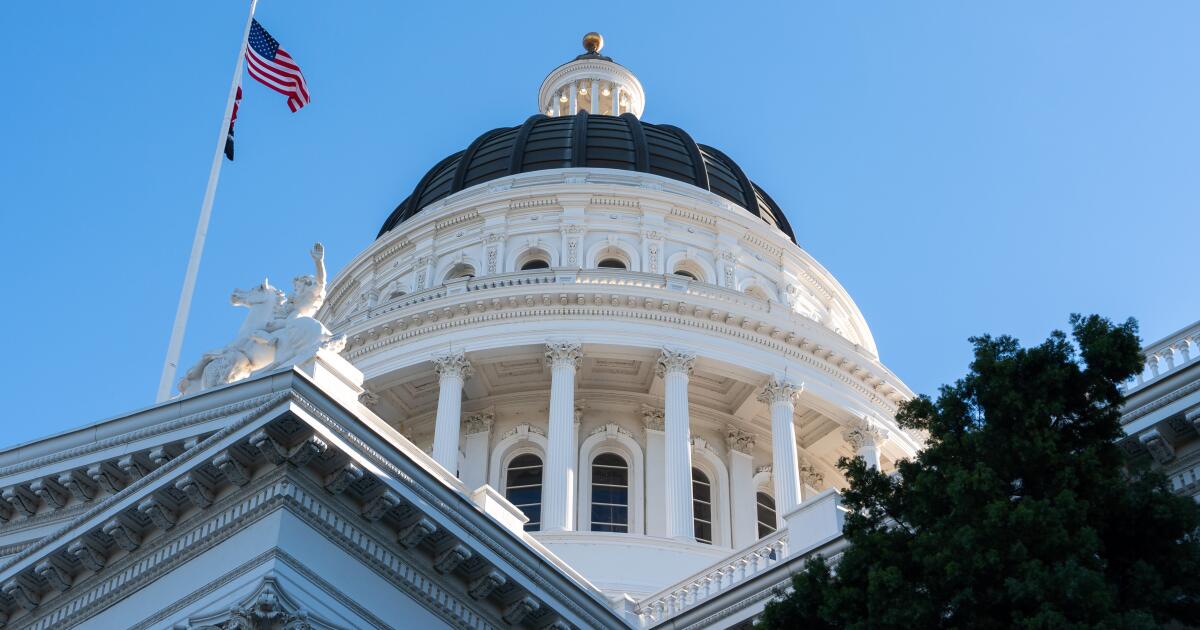
Democrats want California voters to give them more flexibility over spending


