Lifestyle
Paige DeSorbo, Carol Lim and Other Fashion Tastemakers Share Where They Love to Shop


Ina, Manhattan (Chelsea) A plethora of secondhand designer merchandise to choose from. All the items — dresses, suits, blouses, shirts, ties, clutches, shoes — are in top-notch condition. Plenty are unique or hard to find. Whether you are buying or simply browsing, the staff are most civilized. They keep their distance and remain friendly. An airy shop (and one of three in Manhattan), it is well lit — not too bright, not too dim, just smooth and easy on the eye.
Natty Adams, New Orleans Natty Adams’s custom and ready-to-wear clothes are as natty as his first name (no pun intended). A New Yorker, he has set up shop in the heart of New Orleans’s French Quarter, a stone’s throw from the former residence of the playwright Tennessee Williams. Graced with a courtyard and a flowering garden, his shop has the best qualities of Paul Smith, Paul Stuart and Ralph Lauren with a youthful vigor all his own.
Crowley Vintage, Brooklyn (Dumbo) Sean Crowley, who formerly designed for Ralph Lauren, caters to gentlemen invested in unimpeachable elegance — those who are always in search of the perfect fit, the perfect fabric, the perfect shirts, trousers, shoes, scarves, ties and Mackintosh coats. All items are vintage, with innumerable more decades of wear left in them.
Dover Street Market, Los Angeles Everybody in the store, the clientele and the sales people, are all hipper than you. Mostly dressed in black, they look like glamorous characters in an Italian movie. It’s very aspirational: If you just spent enough money, you too could be an artistic interesting person with a bohemian life.
The Los Angeles store (one of a few worldwide) is huge! You could get lost in it for days. Fortunately, I have a capable salesperson, Nathaniel, who looks like a stylish vampire and glides elegantly through the maze of fashion, always emerging with something surprising and unexpected for me to try on.
Buoyed by the seductive promise of Dover Street, I have purchased the most unlikely items. A Balenciaga coat that drags on the ground, a tiny Stephen Jones hat with a bright daisy blooming behind black voile and a furry Simone Rocha purse the size of a large dog.
I have not worn any of these items. I hoard them greedily in my closet waiting for the day when my fantasy life begins and I emerge grandly, my tiny daisy hat balanced precariously on my head, clutching my giant dog purse and Balenciaga trailing behind me.
James Veloria, Manhattan (Chinatown) Some of the most insane vintage — think archive Jean Paul Gaultier and Tom-Ford-era Gucci. A place to go to for something one of a kind. The New York store (there’s another in Los Angeles) is on the second floor of a very unassuming shopping mall under the Manhattan Bridge. People are sometimes confused by the location at first, but once you arrive, you understand why you made the journey.
ESSX NYC, Manhattan (Lower East Side) The curation of designers and selection is so sharp. It’s catered toward downtown types who love fashion and aren’t afraid to stand out. I don’t shop in person very often. This is one of the few stores that I genuinely enjoy.
Just One Eye, Los Angeles Worth a visit even if you don’t buy anything. Fashion from brands like The Row and Prada sits alongside Damien Hirst artworks and Franco Albini furniture. When I was growing up in Los Angeles, I couldn’t dream of affording anything, but I would still stop by and leave inspired.
Desert Vintage, Manhattan (Lower East Side) One of the most tastefully curated vintage stores. You can find special pieces that no one else will be wearing. Upon walking in, you will want to become a person who can effortlessly throw on a caftan to run to the bodega for a bacon egg and cheese.
Ted Muehling, Manhattan (TriBeCA) Mesmerizing jewelry and objects. You can’t stop yourself from wanting to touch and hold everything. The “rice” and “berries” earrings are the perfect gift — for yourself or for anyone.
Staklena Kuća, Los Angeles Shopping here is like looking through a well-assorted closet: You might like half of everything in it, and half of it might not be for you (this time). The store strikes the hard balance between over-curated and overwhelming. Vintage tees, embroidered satin slippers — this place has those and more.
Drop Your Jeans, Covina, Calif. An excellent selection of vintage work wear, from Levi’s cutoffs to dead-stock Dickies to worn-in Carhartt jackets. A large poster selection is another reason to go.
Bliss’ Department Store, Shelter Island Heights, N.Y. A seriously vintage jolt of Americana. The store is aptly named. Its third-generation family owner purveys the blissful necessities of life. Recently bought there by me: water bootees, a hoodie, sewing supplies, a jaunty hat and super glue.
Modern Appealing Clothing, San Francisco The merch edit is primo and eccentric, but also wearable. We’re talking Comme des Garçons, Sacai, Walter Van Beirendonck and many other avant-gardists, plus a plethora of strange footwear. The brother-and-sister owners have built a loyal following by treating every customer like an old pal. Clothes sold here will make you appear more interesting than you are, which should always be the primary goal of fashion.
J.C. Western Wear, West Palm Beach, Fla. A family-owned vestige of “Old Florida” with a staggering selection of nonchalant head-to-toe cowboy duds: jeans, boots, cowboy hats and belts and buckles for men, women and children. Another (larger) location in Jupiter is across the street from Dune Dog Café, an old-school alfresco Florida eatery.
Maxfield, Los Angeles A store that all others watch, it specializes in audacious new ideas and strange vintage artifacts. It has maintained its mystique for half a century, a gob-smacking accomplishment for any store, with an exquisite edit of every headline making designer — from Rick Owens to The Elder Statesman to Willy Chavarria — and exclusive sneaker and jewelry collaborations.
Stand Up Comedy, Portland, Ore. An under-the-radar women’s wear institution with a chic but unwaveringly funky vision. It’s stocked with independent designers whose work verges on art practice: Bless, Julia Heuer and Martine Rose, to name a few. Walking into the space — a former jewelry store that was barely altered, with plush blue carpeting and glowing vitrines — feels a little like being on the set of a David Lynch movie.
Rennes, Philadelphia Rennes often gets rare artisan lines from Europe and Japan before any other shop in North America. Spindly-legged tables inside the light filled space in Philadelphia’s Old City neighborhood hold stacks of Japan-made socks, and exquisite linen dresses hang from Shaker-style pegboards lining the walls. It could feel precious, but it’s not.
Slash Denim, Berkeley, Calif. The most magical pant-buying experience. Go around the main storefront into the basement entrance in the back. There, among the musky piles of vintage Levi’s, you will be confronted by three denim witches — or veteran saleswomen — not unlike the witches in “Macbeth.” They will look you up and down, converse with each other in Levi’s-ese (514 or a 551?) and conjure a perfect pair of jeans for you.
Bungee Space, Manhattan (Lower East Side) The shop feels funky and haphazard, like rifling through your cool cousin’s dorm room. It’s a bookstore, a zine distributor, an events center and one of my favorite places to discover new and emerging designers. You’re just as likely to pick up an SC103 handbag or a Comme des Garçons shirt as you are to learn about a couturier who makes dresses from T-shirts or an artisanal women’s wear collective from Guatemala. You feel absolutely welcome to try on clothes, leaf through books, buy a cup of tea or maybe have a conversation.
Front General Store, Brooklyn (Dumbo) The curation is irresistible: vitrines of sterling silver jewelry, racks of vintage French chore coats and Issey Miyake Pleats Please, rows of colorful pens and milk glass mugs. A very very back room is where they keep cowboy shirts from the 1920s, Aloha shirts from the 1940s, all kinds of rare military surplus and souvenir jackets. If a garment looks like it has a story behind it, just ask one of the very kind shopkeepers. They’ll tell you.
Ven. Space, Brooklyn (Carroll Gardens) It carries some of the best men’s designers from around the world, some established (Dries Van Noten), some emerging (Auralee), some medium-size (Lemaire), some tiny (Unkruid). The store has not merely managed without e-commerce, but thrived. Pop in on a Thursday at 3 p.m. and the place will be full. Small touches speak to a broader philosophy at work: For instance, custom hanger covers that hide clothes’ tags, so that you focus on the garment before you know who made it.
Evan Kinori, San Francisco As a designer, Evan Kinori works slowly and carefully, refining a small set of minimalist designs that tend not to change much from season to season. He uses very special fabrics, many of them developed custom with Japanese mills and dye-houses, and the result is clothes that look cool in photos but truly come alive in person. He sells them at an airy store on the southern edge of the Mission district, along with ceramics and hand-loomed textiles.
Funky Finds, Des Moines, Iowa It’s two floors. Browsing feels like stepping back in time: There’s an expansive collection of home goods and records, but the vintage clothes really stand out. Men’s, women’s, kids — everything on the racks is in exceptional condition and priced very affordably. I bought my senior prom dress here over a decade ago.
Old Gold, Burlington, V.T. Organized, affordable vintage denim. You won’t get the hands-on experience that some vintage retailers offer these days, but it’s not too overwhelming — light curation, approachable prices and a clean setting.
Westerlind, Millerton, N.Y. An insane curation of heritage brands, stunning design and, at this location (one of six), a darling pantry section in the back. Sales associates are kind and extremely knowledgeable about the area. I found a new real estate agent here while my husband was trying on pants.
Ontario Mall Antiques, Farmington, N.Y. A great antique mall with an excellent jewelry collection, ranging from costume to fine.
Departamento, Los Angeles Great for discovery, with brands I have often never heard of alongside established names like The Row and Wales Bonner. It might have the best men’s buy in America. What I am most interested in when I go into a shop is organization and presentation. Are the products laid out in a thoughtful way? Departamento takes the cake in terms of design.
Scully & Scully, Manhattan (Upper East Side) It’s like Disneyland for refinement. The Park Avenue shop, founded in 1934, sells everything from silver money clips to horse head cuff links to diamond necklaces. It has a doorman and the shopkeepers are as refined as the merchandise. I shop for canes here — the most ornate canes, made with silver duck, fox and owl handles. When I’m walking with one in New York, as tough a city as it is, people become tender to me.
JJ Hat Center, Manhattan (Midtown) One of the city’s oldest hat shops, it’s a narrow store with chandeliers and hats stacked atop each other everywhere you look — fedoras, homburgs, Stetsons, trilbies. There are always people in front of mirrors trying hats on, this way and that, like Humphrey Bogart. Even if you don’t wear hats, you can be initiated into the hat world here. I’ve been buying hats here for 30 years.
Fashion Full Circle, West Hollywood, Calif. A vintage and consignment shop with a large clothing section. But I go for the shoes. Hundreds of heels, bootees, sneakers — you can find fun and unique footwear here.
Aralda Vintage, Los Angeles A funky, tried-and-true vintage store started by a former model. A great selection, especially of dresses — some outfits from the TV show “Euphoria” were sourced here. The space’s bright orange walls and neon signs make shopping feel a bit like a game.
Allens Boots, Austin I never considered wearing cowboy boots until visiting this place (which has two locations). Thousands of styles line the walls and racks. I bought a black pair with white stars. They make me feel powerful.
Circa, New Bedford, Mass. Walking in for the first time felt like walking into a 1930s Coney Island fun house with mannequins in old costumes and the most beautiful old outfits everywhere. I wasn’t sure if you were supposed to buy the clothes or just admire them. The owner was incredibly friendly.
The Quality Mending Co., Manhattan (East Village) It’s what you’d imagine a New York City vintage store to look and smell like — the CBGB of vintage stores. Old Levi’s, worn-in tees, tinted sunglasses, lots of attractive people shopping. The best selection of vintage punk t- shirts. Most are out of my price range, but they’re such beautiful relics of the past.
Just One Eye, Los Angeles Stepping inside the bright airy space is exciting and inspiring. I’ve found some of my favorite pieces here. It’s like walking into an art gallery or museum, except you’re allowed to touch. The clothing, jewelry and housewares are beautifully curated — unique items from local artisans, along with clothing and shoes from big-name brands.
The Webster, Manhattan (SoHo) It’s big enough that you feel like you are shopping around, but still small enough that it feels quaint (there are 13 locations). Right when you walk in, you get hit with the store’s signature scent. It is the best smelling scent.
Heart and Lou’s, Manhattan (Lower East Side) A woman-owned vintage shop — I love the shoes.
Lucia Boutique, Saratoga Springs, N.Y. The cutest little women’s clothing store outside Albany, my hometown.
A’maree’s, Newport Beach, Calif. It’s in an impressive building on the water: You can pull up in a boat, dock and come inside for some shopping and a cocktail. The selection is upmarket — the Row, Alaïa, Gabriela Hearst — and is merchandised in a loose, fun way.




Sam Neill arrives at the premiere of “Apples Never Fall” on March 12, 2024, in Los Angeles.
Richard Shotwell/AP Photo/Invision
hide caption
toggle caption
Richard Shotwell/AP Photo/Invision
WELLINGTON, New Zealand — Sam Neill, a smoothly elegant and versatile actor whose career moved from art film to blockbuster as he dodged velociraptors in “Jurassic Park” to playing Holly Hunter’s husband in “The Piano,” has died. He was 78.
In 2023, Neill disclosed he had been diagnosed with angioimmunoblastic T-cell lymphoma, a rare type of non-Hodgkin lymphoma. Neill died on Monday in Sydney, according to a statement posted to the actor’s social media page.
His death was “sudden and unexpected,” the statement said, adding that he “remained cancer free” when he died. A cause of death wasn’t specified.
“Sam was surrounded by family and passed with the dignity that has characterised his whole life,” his family wrote.
Actor came to world’s notice with ‘Dead Calm’ and ‘My Brilliant Career’
Neill was one of a host of actors and directors who achieved international fame after an explosion of Australian films that began in the late 1970s, a list that includes Paul Hogan, Mel Gibson, Geoffrey Rush, Russell Crowe, Jane Campion, Peter Weir and Gillian Armstrong. His range was remarkable, playing opposite Helena Bonham Carter in the Alan Ayckbourn comedy “Sweet Revenge” to chopping off Hunter’s finger in “The Piano” to poking his own eyes out in the sci-fi horror “Event Horizon.”
In “Omen III: The Final Conflict,” he played Damien the Antichrist and he also played Cardinal Thomas Wolsey in “The Tudors.”
The actor first came to the attention of international audiences in Armstrong’s 1979 film “My Brilliant Career,” which also introduced Judy Davis. He later appeared in Phillip Noyce’s “Dead Calm,” a classy thriller set at sea and co-starring the then-relatively unknown Nicole Kidman.
Neill twice co-starred with Meryl Streep, in Australian director Fred Schepisi’s “Plenty” and — again for Schepisi — in “A Cry in the Dark,” a film about the sensationalized aftermath of a dingo killing a baby in the Australian Outback. He earned an Emmy nomination for his performance in the title role of the 1998 miniseries “Merlin” and another as narrator of 2017’s “Wild New Zealand.”
‘Jurassic Park’ was his best-known film
Perhaps Neill achieved his highest level of fame in “Jurassic Park” playing paleontologist Alan Grant, who is summoned to an island off Costa Rica where a theme park has been built to house herds of cloned dinosaurs. He co-starred alongside Laura Dern, Jeff Goldblum and Richard Attenborough.
His character was thoughtful and reasonable, a scientist who warned the mastermind of the theme park before the chaos: “Dinosaurs and man, two species separated by 65 million years of evolution have just been suddenly thrown back into the mix together. How can we possibly have the slightest idea what to expect?”
Grant survived the harrowing events when the creatures get loose, but didn’t return for “The Lost World: Jurassic Park II” in 1997. He came back for the third episode in 2001 and “Jurassic World: Dominion” in 2022.
“It’s probably a little late to learn these things,” he told the Daily New of New York in 2001, “but I finally feel I’ve worked out how to be an action hero. I’m happier with Grant this time. He’s gnarly and grizzled, but he looks like he knows what he’s doing.”
Neill grew up in Northern Ireland, then New Zealand
Born in 1947 in Northern Ireland, Neill emigrated to New Zealand at the age of 7. He was born Nigel Neill, but told interviewers he started to go by Sam because there were too many Nigels at his school.
His family settled in Dunedin on the South Island and he was sent to boarding school in Christchurch. After college, he took the lead in “Sleeping Dogs” in 1977, the first feature made in New Zealand in more than a decade.
Neill’s other film roles included playing a Soviet submarine officer who memorably dreams of a home in Montana in “The Hunt for Red October” and an investigator in director John Carpenter’s “In the Mouth of Madness.”
On the small screen, Neill played the malign Chester Campbell in TV’s “Peaky Blinders” and Thomas Jefferson in the four-hour CBS miniseries, “Sally Hemings: an American Tragedy.” On Apple TV+, he was on “Invasion,” playing Oklahoma Sheriff John Bell Tyson, a man late in his career searching for his purpose. In 2024 he starred opposite Annette Bening in the Peacock series “Apples Never Fall.”
Actor beloved in New Zealand as an unassuming celebrity
The actor became known in New Zealand as a modest and unassuming person who didn’t embrace celebrity. On social media, he often posted images of his farm animals, many of them affectionately named after celebrities and friends, like Laura Dern the chicken, Kylie Minogue the duck and Helena Bonham Carter the cow.
New Zealand Prime Minister Christopher Luxon mourned Neill as “one of the greats” in a statement posted to social media.
“He started out when there was barely a film industry to speak of,” Luxon wrote. “For more than fifty years he took New Zealand stories to the world and his talents helped make our film industry into what it is today.”
Neill was also a vintner and under his Two Paddocks brand, he produced pinot noir and riesling wines from his winery in the Central Otago region of New Zealand’s South Island.
His memoir “Did I Ever Tell You This?” came out in March 2023 and he was awarded a knighthood in recognition of his “outstanding contribution to film,” a title approved by the late Queen Elizabeth II.
“I can’t pretend that the last year hasn’t had its dark moments,” Neill told The Guardian in 2023, referring to his cancer diagnosis and treatment. “But those dark moments throw the light into sharp relief, you know, and have made me grateful for every day and immensely grateful for all my friends.”
He is survived by his four children and eight grandchildren.

The Huntington’s long-awaited stink has arrived. Two corpse flowers nicknamed Odora and Odorysseus have bloomed at the San Marino conservatory, drawing thousands for the rare occasion and quickly surpassing last year’s numbers.
Corpse flowers have been a staple of the Huntington since 1999, when the garden exhibited its first corpse flower. Native to Sumatra, Indonesia, these plants are endangered in the wild and only bloom for 24 to 48 hours every few years. Once bloomed, they reek of rotting flesh.
As the day goes on, these smelly specimens will close back up and collapse, losing their infamously rotten odor.
The double bloom this summer was “definitely a surprise,” said Brandon Tam, the Huntington’s associate curator of orchids. The last time multiple corpse flowers bloomed on the same day at the Huntington was in 2018.
“We knew that Odorysseus was going to bloom probably Sunday,” Tam said. “But what surprised us was that we saw that Odora was opening just a few hours after.”
As an “inflorescence” — a plant structure containing hundreds of male and female flowers at the base — the plant usually staggers its bloom to avoid self-pollination.
A developmental irregularity caused Odora’s spadix to cave in, but the plant remains healthy, said Brandon Tam, the associate curator of orchids at the Huntington.
(Kayla Bartkowski / Los Angeles Times)

Jaime Holmes from San Gabriel holds her nose in front of the blooming corpse flowers.
(Kayla Bartkowski / Los Angeles Times)
But sometimes, “these plants have a mind of their own,” Tam said.
Climate factors can influence when they bloom. Tam said Southern California’s recent high humidity may have signaled a prime environment for the plants to unfurl.
Visitors may have noticed that Odorysseus’ spadix — the conic protrusion emerging upward from the plant — was much taller than Odora’s, which had caved in. Tam said Odora’s spadix was a developmental irregularity, but emphasized the plant remains healthy.
“It just looks a little different — completely normal,” Tam said. “When it reblooms for us in three to four years, it’ll look just perfectly fine.”
At the time of the bloom, Odorysseus measured 71 inches in height, and Odora measured 41.
As of 8:51 a.m., the Huntington recorded over 5,700 reservations, said Keisha Raines, the Huntington’s assistant director of news and media relations. That number easily surpassed last year’s bloom, which drew about 4,900 visitors. It also excludes walk-ins and any more reservations made throughout the day.
Parking lots quickly filled inside the Huntington, forcing some visitors to park on the streets outside.
Raines thinks the rare double bloom influenced the spike in reservations. She also believes general awareness of the corpse flower increases each summer.
“It’s kind of lore,” Raines said. “It’s just continuing to build, and more people want to see it.”
Inside the conservatory, eager sniffers took selfies and marveled at the plants’ size and smell. Outside, the line ran all throughout the walkways, extending past the exit.
Ventura resident Michelle Shock and her 8-year-old daughter, Fable, initially came to the Huntington for a tea party at the Rose Garden, and dressed for the part in light-colored, semi-formal dresses. They scheduled the party two weeks ago and got lucky when they heard the corpse flowers were in bloom on the same day.
“I’ve always wanted to see one,” Shock said while waiting in line. “I think the last time I knew of one blooming was when I was pregnant with her. We were up in the Bay, and I missed it. So here we are now, together, which is better.”

Gastonia Goodman, 72, peers through the window at the blooming corpse flowers.
(Kayla Bartkowski / Los Angeles Times)
Fable predicted the plants would smell like “rotten flesh from Minecraft.” Shock guessed they’d smell like forgotten meat in a broken freezer or animal remains on a farm.
For spouses Jennifer Kraus and Abigail Cruz, the plants smelled like rotten garbage.
“It was pretty ripe,” Kraus said. “Totally enjoyed it though.”
The couple drove two hours from the Inland Empire to catch the bloom, which had been on Cruz’s bucket list.
“The minute that we saw it on Facebook, [Kraus] started following it and making sure that we’re here when it had bloomed,” Cruz said.
They were among the first to arrive, so the wait was short. “We were here at o-dark-30 this morning, ready to go,” Kraus said.
North Hollywood resident Lilla Saito took two hours off work to witness the corpse flowers for the first time and tracked the livestream every day, “just waiting for it to bloom.” Saito stood in line for about 45 minutes to catch a whiff, which Saito said “smelled like a trash room.”
It was Paige Patino’s first bloom too. Patino lives 10 minutes away from the Huntington and wore a T-shirt with flowers on it for the occasion. It was “really cool” to “see both of them active,” Patino said.
For Tam, this year’s stench ranks in the top three. He thinks each individual plant stinks more than previous blooms, but on top of that, he said: “The fact that we have two in bloom makes it stinkier.”

California Attorney General Rob Bonta is one of several attorneys general seeking to stop the merger of Paramount and Warner Bros. Discovery.
Bloomberg via Getty Images/Bloomberg
hide caption
toggle caption
Bloomberg via Getty Images/Bloomberg
Stay up to date with our Up First newsletter, sent every weekday morning.
A dozen states, led by California, are suing to block Paramount from buying Warner Bros. Discovery in a Hollywood mega-merger that would unite some of the nation’s largest movie studios, television newsrooms, and other entertainment properties.
“The unlawful merger of these two entertainment behemoths would lead to higher prices, lower quality, and less content for film and television, harming movie theaters, basic cable distributors, and ultimately, audiences on every sofa and movie theater seat in the U.S.,” California Attorney General Rob Bonta said in a statement announcing the suit, which was filed in federal court in California’s Northern District.
The deal would give a wealthy family that has taken pains to show its allegiance to President Trump the effective ownership of the companies’ competing movie studios, streamers (Paramount+ and HBO Max), sports programming (CBS Sports and Turner Sports) and news divisions (CBS News and CNN) as well as a suite of cable channels, such as Comedy Central, VH1, MTV, TNT, TBS, HGTV and Discovery, among others.

The president has repeatedly praised Larry and David Ellison, the digital titan and his son who are the controlling owners of Paramount. And he has publicly urged the sale of Warner’s CNN to new owners.
“We’re trying to have CNN go in a normal path,” Trump told CNN anchor Jake Tapper yesterday at the end of an interview about the late Sen. Lindsey Graham.
In his statement Monday, Bonta said, “With this lawsuit, California and our sister states are fighting for free and fair markets, not rigged markets. America has no kings in government or our economy.”

Paramount is inviting in sovereign wealth funds from Saudi Arabia, Qatar and the United Arab Emirates as major investors who will forego voting rights. The financing proposal also envisions that the company will take on $80 billion in new debt. That will assuredly trigger major cuts throughout the combined company. Warner dramatically reduced its own debt after slashing budgets, but is still tens of billions of dollars in the red, which helped set the stage for Paramount’s unsolicited bid.
Bonta sees “red flags”
In late June, Bonta told MS NOW’s Jacob Sobroff that the deal presented “red flags in the air everywhere.” The acquisition is valued at approximately $111 billion, including debt and major (though nonvoting) investment stakes from Saudi and other sovereign wealth funds. Bonta has armed his office for potentially costly legal battles by hiring a new batch of lawyers, including some who left the U.S. Justice Department after Trump took office a second time. He also secured new funds from the state legislature specifically for antitrust enforcement.
The other states involved in the lawsuit are Arizona, Colorado, Connecticut, Massachusetts, Minnesota, Nevada, New Jersey, New Mexico, New York, Oregon, and Washington. An overlapping cadre of Democratic state attorneys general have sued to block the takeover of local TV giant Tegna by Nexstar, the nation’s largest owner of television stations. A federal judge in Sacramento has put the full integration of the two station groups on hold in advance of a trial that is scheduled to be heard a year from now.
Paramount has argued that the entry of streaming giants such as Netflix, Amazon and Apple into entertainment has altered the landscape, rendering such antitrust concerns obsolete. Anticipating the same vast shifts, Disney swallowed up most of Fox’s Hollywood holdings in 2019.
Any delay caused by the attorneys general could prove costly, securities filings show. Starting Oct. 1, Paramount has to pay Warner shareholders a “ticking consideration” of roughly $650 million for every 90 days the deal is set back. If the deal is not consummated by next June 4, Paramount will have to pay Warner $7 billion.
A Silicon Valley titan expands power in Hollywood
Though Paramount’s new chairman and CEO is Hollywood producer David Ellison, a past financial donor to the campaigns of Presidents Barack Obama and Joe Biden, the takeover bid was financed and guaranteed by Ellison’s father: Oracle co-founder Larry Ellison.
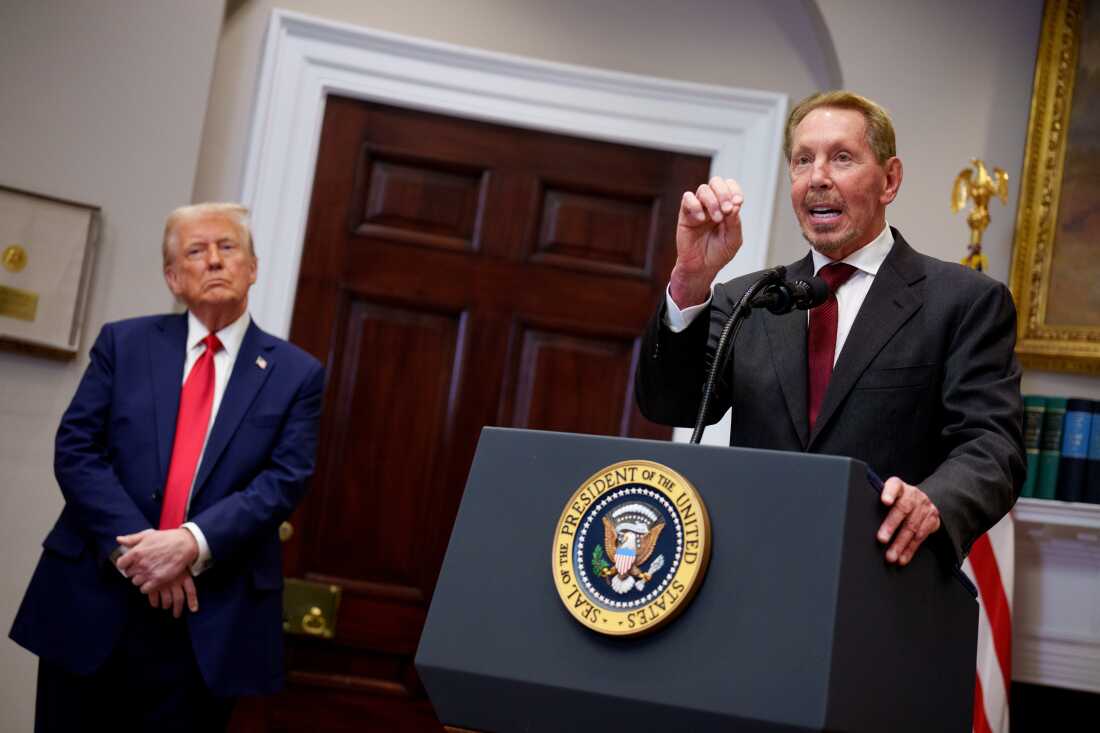
Oracle co-founder Larry Ellison, a friend and adviser of President Trump, is backing Paramount’s $111 billion plan to buy Warner Bros. Discovery.
Andrew Harnik/Getty Images/Getty Images North America
hide caption
toggle caption
Andrew Harnik/Getty Images/Getty Images North America
Larry Ellison is one of the richest people on Earth. He is also a Trump supporter and adviser — both formally and informally — serving, for example, on a board counseling the White House on artificial intelligence. Last fall, Trump made good on his plans to grant Larry Ellison and Oracle a controlling stake in TikTok’s U.S. operations.
The Ellisons took over Paramount just last summer, making concessions to Trump’s chief broadcast regulator and earning the president’s vocal support.
“The Ellison family, two great people, great people,” Trump said in March, ahead of a dinner David Ellison threw in Trump’s honor. “It’s a great family.”
David Ellison hired a new editor in chief for CBS News: Bari Weiss, founder of the center-right The Free Press. She arrived with a record of deeming mainstream media, including CBS News, to be too reflexively “woke” and anti-Trump. Her effort to reshape coverage has been met with a series of controversies, including firings and fiery resignations by CBS journalists accusing her of bias, which the network and Weiss deny. Bonta’s announcement did not focus on the combining of CBS News and CNN.
Given that Oracle provides the software skeleton on which much of the nation’s commerce and government runs, and that the Ellisons now control major media platforms and the digital data they gather, the family has the ability to create a vast reservoir of information about how people act online.
Trump’s remarks on the Paramount-Warner deal — and especially on CNN’s fate —represent a sharp break from past administrations. Predecessors both Republican and Democrat tended to respect the independence of regulators in the antitrust division of the Justice Department and the Federal Communications Commission.
Past Warner deals led to a trail of debt
Makan Delrahim, who is now Paramount’s chief legal officer, ran the Justice Department’s antitrust division during Trump’s first term. He led an ultimately unsuccessful effort to block AT&T’s takeover of TimeWarner, the precursor company to Warner.
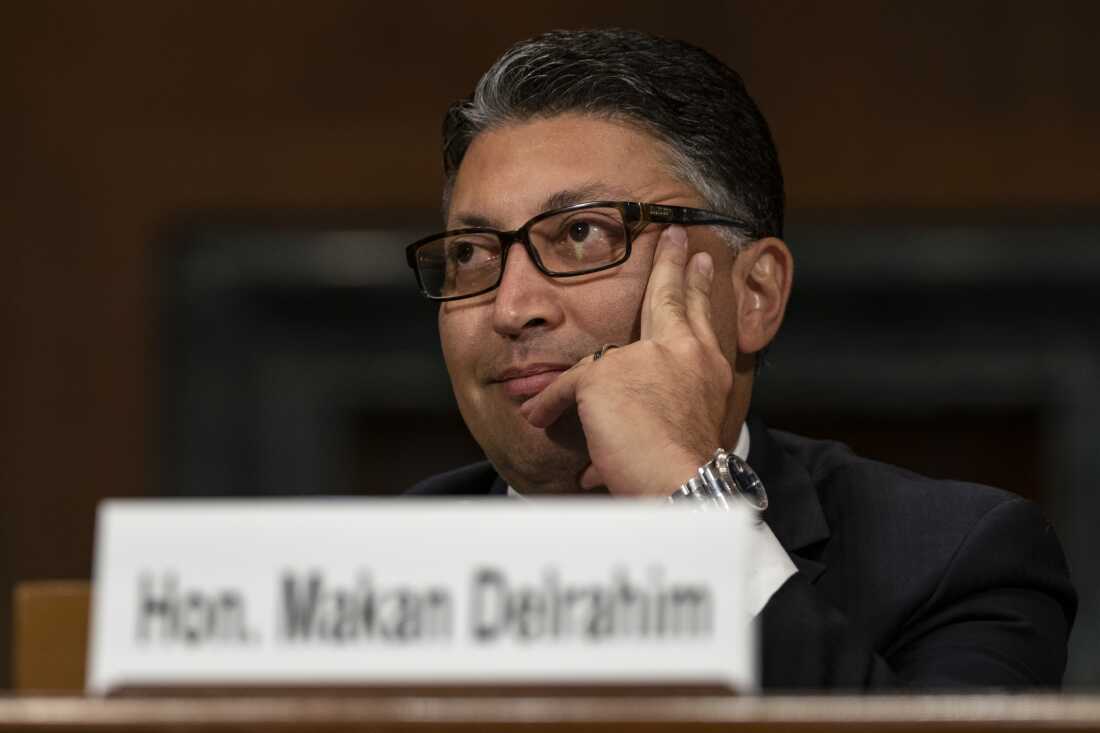
Makan Delrahim was U.S. assistant attorney general for the Justice Department’s antitrust division during President Trump’s first term. He is now the chief legal officer at Paramount.
Bloomberg/Bloomberg via Getty Images/Bloomberg
hide caption
toggle caption
Bloomberg/Bloomberg via Getty Images/Bloomberg
In retrospect, AT&T may have preferred Delrahim to prevail; the deal was brutally panned by analysts and the stock market. The telecom giant unloaded the media properties less than four years later. They were taken over by Discovery in a deal that burdened the new cable TV conglomerate with tens of billions of dollars of debt. Warner CEO David Zaslav was able to reduce it significantly, but not overtake it, and announced plans last summer to split the company in two in seeking to get ahead of an undesired offer from Paramount.
The Warner board initially struck a deal with Netflix valued at nearly $83 billion for much of the company, not including CNN and other basic cable channels. Then Paramount raised its offer for the whole company and Netflix pulled out rather than compete.
While the top British regulator has expressed qualms too, signaling a possible review that could delay the process, Paramount has won approval from the Justice Department and many regulators abroad. The Justice Department approved the acquisition last month after an eight-month review.
The Wall Street Journal reported senior officials at the Justice Department fast-tracked its process for approval before career attorneys, who were weighing filing suit to block the deal, could intercede. The outgoing antitrust chief denied that in an interview with Politico.
The FCC has not yet signed off. It is involved because Paramount holds broadcast licenses for the 28 local television stations it owns. The FCC is led by Brendan Carr, a Trump appointee and vocal ally who has endorsed Paramount’s bid.
“I think this is a good deal, and I think it should get through pretty quickly,” Carr told CNBC back in March.
Paramount has made minor concessions to try to win approval from officials in Europe. The European Union undertook formal reviews of both the consolidation of assets and its reliance on foreign investors, which are set to conclude soon.
The litigation from the states could tie Paramount up for far longer.
-

 San Francisco, CA11 minutes ago
Sold-Out SF Marathon 2026: The Races, Routes and Road Closures (Plus How to Watch It All) | KQED
-

 Dallas, TX16 minutes ago
Top 10 Dallas Cowboys of 2026: Rashan Gary is Complete EDGE Dallas Needed
-

 Miami, FL23 minutes ago
Girl, 12, shot while sitting in parked car in northwest Miami-Dade, deputies say
-

 Boston, MA29 minutes ago
GBH Daily: Come sail away
-

 Denver, CO34 minutes ago
New ice cream shop with a ‘waffle theater’ bets big on downtown Denver
-

 Seattle, WA41 minutes ago
Seattle weather: Sunny skies and warmer temperatures Tuesday
-

 Milwaukee, WI53 minutes ago
Milwaukee cooling centers, heat advisory tips; what to know
-

 Atlanta, GA59 minutes ago
Warnock, Dickens talk about new housing legislation

