Utah
Ryan Smith of Utah Jazz, Utah Hockey Club launches new sports-tech investment fund


Ryan Smith and Ryan Sweeney have long had a close relationship that goes beyond just their shared name.
Sweeney, a longtime venture capitalist and partner at Accel, was the first to invest in Qualtrics, the tech company that gave Smith success and the wealth to buy the Utah Jazz. When he did that in 2020, Sweeney came in as a minority owner.
Over the last two years, Sweeney has been pushing Smith to join him on their next big idea, a fund devoted exclusively to the intersection of sports and technology. Finally, he got Smith to budge.
On Tuesday, Smith and Sweeney launched Halo Experience Co., a new investment firm that the two have founded together. The two believe that their sports holdings — and specifically the experiential elements of live events — can be a backbone for their investments and help pull tech companies into that space.
“Part of the evolution of this experience movement within sports and entertainment is that we are a microcosm of the entire economy,” Smith said. “We’re a healthcare company. The amount of money we’re spending on healthcare is insane within these sports franchises. We’re a payments company. We’re a security company for events and digital and everything else. We’re a streaming company; we have full over-air media, and we’re selling advertising.
“We are in the music industry because people are making money on live events now, not CDs like they used to. So, concerts are everything. We’re a social media company; I think 10 million followers between our brands. You look at the areas that we touch, it’s easy to be like, OK, would we be a buyer of this? Would this help us? Would it help one of our partners?”
While Smith owns the Jazz and Utah Hockey Club, along with Smith Entertainment Group, the firm will be separate from those properties, and it will not be a part of Accel, although it will operate with some of its support. Initial investors include Smith, Sweeney, Sweeney’s Accel partners investing as individuals and limited partners they declined to disclose.
The new firm, which Smith and Sweeney have nicknamed “HXCO,” plans to raise $750 million to $1 billion, Sweeney said, and already has 5-6 deals in its pipeline. The two intend to find companies that they can bring into the sports and live events ecosystem, or have a role in it and invest in them.
Halo Experience would be another example of how the sports world continues to bring in financial capital that had previously remained out of the sector. Private equity companies have started investing in North American professional sports teams in recent years, from the NBA to the NFL, and some, like Arctos Sports Partners, have even deployed funds centered around sports team ownership.
“There’s two revolutions going on,” Smith said. “One’s definitely in AI, where every venture capital firm is, you know, doing this movement where they’re renaming everything AI, dot ai, which is real and it’s not going away. We’ve also seen this movement in sports. We’ve seen it kind of come from the inverse of what we’re doing. We’re seeing a bunch of funds being created to buy a bunch of sports teams. And I understand why. I think the background of all those people are very different. It’s private equity, it’s everything else.
“We just have a unique background. We come from tech, and we’re still young, and we’re involved. If you look at consumer spending, if you look at where things are going, if you look at what people are prioritizing, everything is around experiences right now, and you know the amount of tech plays that have to tap into that to be successful is enormous. And so we’re bringing this kind of the other way, where, for the first time ever, there’s a tech fund that has the ability to lean into tech, do it with sports on that platform.”
Sweeney believes that the sports investment market is “massive” and growing. The surge in demand for live events since the pandemic has not stopped, Smith said.
They have also seen big tech companies come into the sports world recently and get involved in media, which, Smith believes, has led to media being nationalized and no longer local. Amazon, Netflix and Apple have all grabbed portions or all of significant league media rights packages over the last five years.
The Jazz have been an example of that, as their media distribution deal has morphed in recent years from a cable regional sports network to a combination of an over-the-air channel and a streaming app, Jazz+, both of which have created different needs for technology partnerships.
The two hope that by using their networks and their resources, they can pull companies into their orbit. The fund is going to be evaluating both early-stage and later-stage opportunities.
“This is going to be a fund that harnesses the power of sports, and it’s real, and it’s a real movement,” Sweeney said. “And as we started this conversation, you compare and contrast with a movement like AI, which gets a lot of press within the tech ecosystem right now, the size of this economy is very similar, and I would say, oftentimes less competitive, right?
“You can go disrupt it, and you can go become a player that gains significant market share relatively quickly as an investor, and that’s all you’re looking for. You’re looking for big untapped markets, and this feels like one where disruption from technology is certainly there for the taking.”
(Photo: Alex Goodlett / Getty Images)



SALT LAKE CITY — The Huntsman Center was a sleeping giant on Saturday afternoon as Cam Boozer and the Memphis Grizzlies crushed the Oklahoma City Thunder.
As that game concluded, empty seats began to fill and anticipation grew in the Utes’ home arena.
That anticipation culminated in an explosion of cheers as the Utah Jazz took the court, led by none other than rookie guard Darryn Peterson.
Darryn Peterson Shows Out In Salt Lake City Summer League Debut
Peterson’s first game with Utah draped across his chest was all that fans and the front office could’ve hoped for, and then some.
The first possession of the game for the Jazz ended with a layup from Peterson, and the points seemingly never stopped rolling in. The rookie was the team’s leading scorer at the end of each quarter.
The positive signs weren’t only when he had the ball in his hands, though. He finished with two blocks, but his defensive impact extended far past the box score. He often matched up with Atlanta guard Kingston Flemings, who finished the night shooting 4/16 from the field.
Darryn Peterson and Cody Williams each with a big block early. Good defensive activity from both.
— Chandler Holt (@CHoltSports) July 4, 2026
What was maybe most impressive was his efforts in the fourth quarter and in overtime. He scored 10 points in his last 8:35 on the court, and willed the Jazz to a win with some big plays late.
Peterson finished with 28 points, five rebounds, two assists, and two blocks. He shot 52 percent from the floor and 57 percent from three.
The only real blemish on his performance was eight turnovers. However, many of those are shared fault, if not totally on teammates for dropping well-placed passes.
Peterson is the first Jazzman since Donovan Mitchell to score 20+ points in his SLC Summer League debut, eclipsing Mitchell’s 23-point mark from the 2017 event.
Ace Bailey, Cody Williams Shine Against Atlanta Hawks
The performances of Cody Williams and Ace Bailey almost went under the radar as a result of the hype built around Peterson. But they still came to play. That trio of Jazz players were likely the three best players on either side in Saturday’s contest.
Bailey only played 20 minutes, but still finished with 10 points, six rebounds and two stocks. The sophomore forward was ruled out for the rest of the game early in the second half with back spasms.
Williams played the most minutes on the team at 34 and finished with 17 points, five rebounds, one assist, and three stocks.
Both of the forwards looked to have added noticeable weight so far in the offseason and used it to their advantage to generate easy looks. Williams specifically threw down a pair of poster dunks that caused fans in the arena to jump to their feet.
Easily the dunk of the day.pic.twitter.com/vVxNEMKMQQ https://t.co/7DirAGYUz8
— Chandler Holt (@CHoltSports) July 4, 2026
About Darryn Peterson
Peterson, born in Northeast Ohio, quickly rose through the ranks as one of the best basketball prospects in the country.
He played prep basketball at Cuyahoga Valley Christian Academy in his home state before moving to West Virginia and then California for his junior and senior years.
On November 1, 2024, Peterson made his commitment to the University of Kansas.
In his lone year with the Jayhawks, Peterson averaged 20.2 points, 4.2 rebounds, and 1.6 assists on 43.8/38.2/82.6 shooting splits.
Austin Ainge, Utah Jazz unfazed by Darryn Peterson injury history
In 2026, the Utah Jazz selected Peterson with the No. 2 overall pick, tied for the highest selection in the franchises history.
Salt Lake City Summer League History
The annual showcase of both rookies and young talent in the NBA is returning to Utah for the 11th time.
The modern iteration of the event debuted in 2015 with the Rocky Mountain Revue moniker, a nod to the pro-am roots of a similar event that was held in the late 1980s, 1990s, and into the 2000s.
The event was rebranded to the Utah Jazz Summer League in 2017, and changed once again in 2019 to the Salt Lake City Summer League.
Memphis has competed in the event for seven straight years. 2026 will make it eight in a row. OKC will reach its fifth year in a row this summer.
The list of notable names to hoop in Utah in early July is a long one. Aside from the obvious Jazz stars over the last decade, Jaren Jackson Jr., Ben Simmons, Trae Young, Jayson Tatum, Chet Holmgren, and more have all competed in the SLC Summer League.
Chandler Holt is the Utah Jazz insider for KSLSports.com and co-host of the Jazz Notes podcast. Follow Chandler on X for Jazz and NBA updates.
Take us with you, wherever you go.
Download the new & improved KSL Sports app from Utah’s sports leader. You can stream live radio, video and stay up to date on all of your favorite teams.

MONTICELLO, Utah (KUTV) — The second-largest wildfire in the nation has burned more than 87,500 acres and destroyed five structures in southeastern Utah.
The Babylon Fire reached a total of 87,554 acres in San Juan County, officials with the U.S. Forest Service said in a Saturday morning update.
More resources arrived in the area, with 730 firefighters now working to control the wildfire, which remains at 0% containment.
The cause of the fire, which ignited on June 26, has not yet been determined.
MORE | Utah Wildfires:
Utah has the two largest wildfires in the nation, with the Babylon Fire about 9,000 acres smaller than the Cottonwood Fire. The Cottonwood Fire has burned 94,417 acres in Beaver and Piute Counties and is 25% contained.
While the fires both saw little growth overnight, officials said hot, dry weekend temperatures could potentially lead to increased fire activity. They said a Fire and Fuels Advisory has been issued for the state of Utah.
“This extreme dryness, combined with an unstable atmosphere, will naturally increase the potential for the fire to flare up and create large smoke columns,” officials said.
BE THE FIRST TO COMMENT
___

According to Shams Charania, the Utah Jazz signed Josh Okogie to a 2-year $12M deal.
Okogie shot 38.5% from three last season in Houston, as Charania mentions, and fills a need for the Jazz, who are looking for defensive help on the perimeter.
It’s a clear sign that Utah is in the business now of building its roster to compete next season for a playoff spot. After the Walker Kessler trade, the starting lineup will likely be Keyonte George, Darryn Peterson, Lauri Markkanen, Jaren Jackson Jr., and Jusuf Nurkic. But Utah needs depth and defense. With Okogie on the roster, the team gains a veteran presence and a defense-first player who can also shoot. It’s likely to be a trend for Utah going forward that they bring on players with size who defend but are also capable shooters and scorers on offense. At this point, Utah is not in the business of taking on project players but is looking to fill needs on its roster. Okogie does just that.
At this point, the most likely potential signings, or trade, could be more center depth after the Kessler trade, and possibly another ball-handling guard. It’s not clear if Utah is done with the roster but this signing will add nice depth.
-

 Technology3 minutes ago
China’s robot-run hotel opens to public in 2027
-
 Business10 minutes ago
China-backed AI tool behind fake Brad Pitt fight making Hollywood inroads
-
 Entertainment13 minutes ago
Don Was produced the Rolling Stones, Bob Dylan and Ozzy. At 73, he found his voice in Detroit — and the Dead
-
 Politics25 minutes ago
Commentary: Happy Birthday, America! You’ve weathered another rough year
-
 Sports33 minutes ago
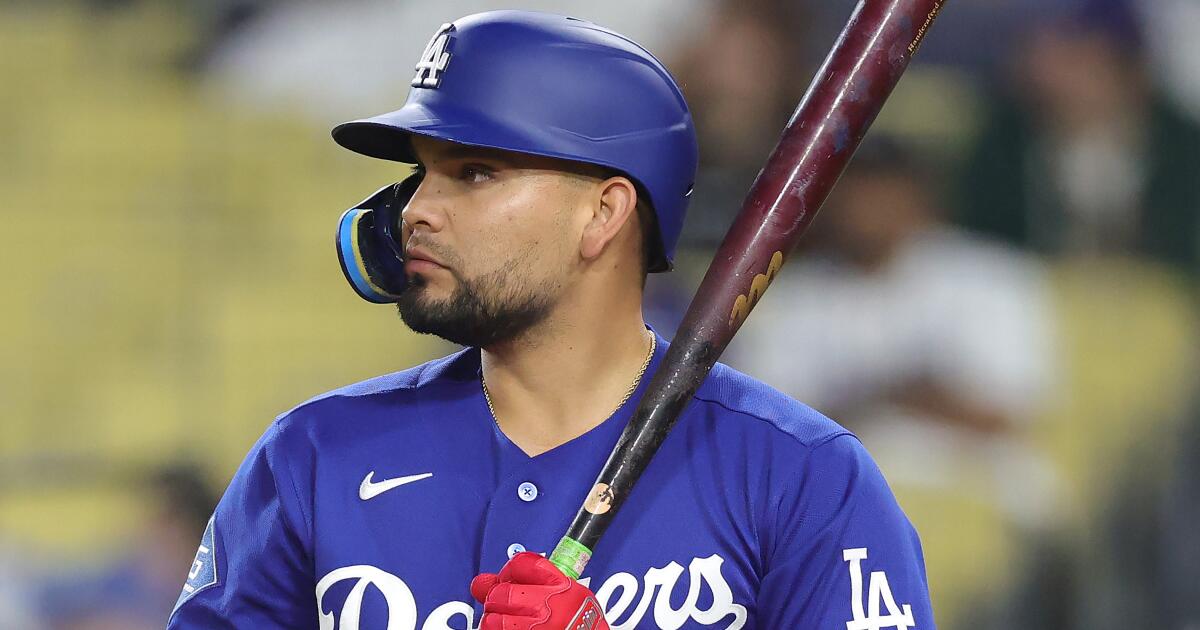
Dodgers’ Eliezer Alfonzo praying his sister and stepmother will be found in Venezuela
-

 World43 minutes ago
Reform UK’s Farage failed to disclose funds from convicted criminal: Report
-
 News1 hour ago
Paul Pelosi in hit-and-run in California, car left with major damage, authorities say
-

 Los Angeles, Ca2 hours ago
Firefighters battle Fourth of July blazes around Los Angeles

