Connect with us

West

Charles Manson's cult killings fueled by 'perfect storm' as theories get new analysis: criminal profiler

Published

on

Charles Manson's cult killings fueled by 'perfect storm' as theories get new analysis: criminal profiler

Join Fox News for access to this content

Plus special access to select articles and other premium content with your account – free of charge.

By entering your email and pushing continue, you are agreeing to Fox News’ Terms of Use and Privacy Policy, which includes our Notice of Financial Incentive.

Please enter a valid email address.

Having trouble? Click here.

The mystery of Charles Manson’s motive in notorious cult killings is getting a fresh look as an FBI criminal profiler reveals a “perfect storm” of factors came together for the infamous murders. 

Countless theories about how Manson managed to convince a group of young adults to kill for him have been dissected, but director Errol Morris is offering a new perspective into the mind of the notorious cult leader in his Netflix documentary “CHAOS: The Manson Murders.”

Advertisement

Based on the 2019 book “CHAOS: Charles Manson, the CIA, and the Secret History of the Sixties,” authored by Tom O’Neill and Dan Piepenbring, the documentary delves into the theory Manson may have been influenced by an external force when directing his followers. 

NEW CHARLES MANSON MURDER ADMISSIONS COULD POINT TO EVEN DARKER PATTERN FOR PSYCHOPATH: EXPERTS

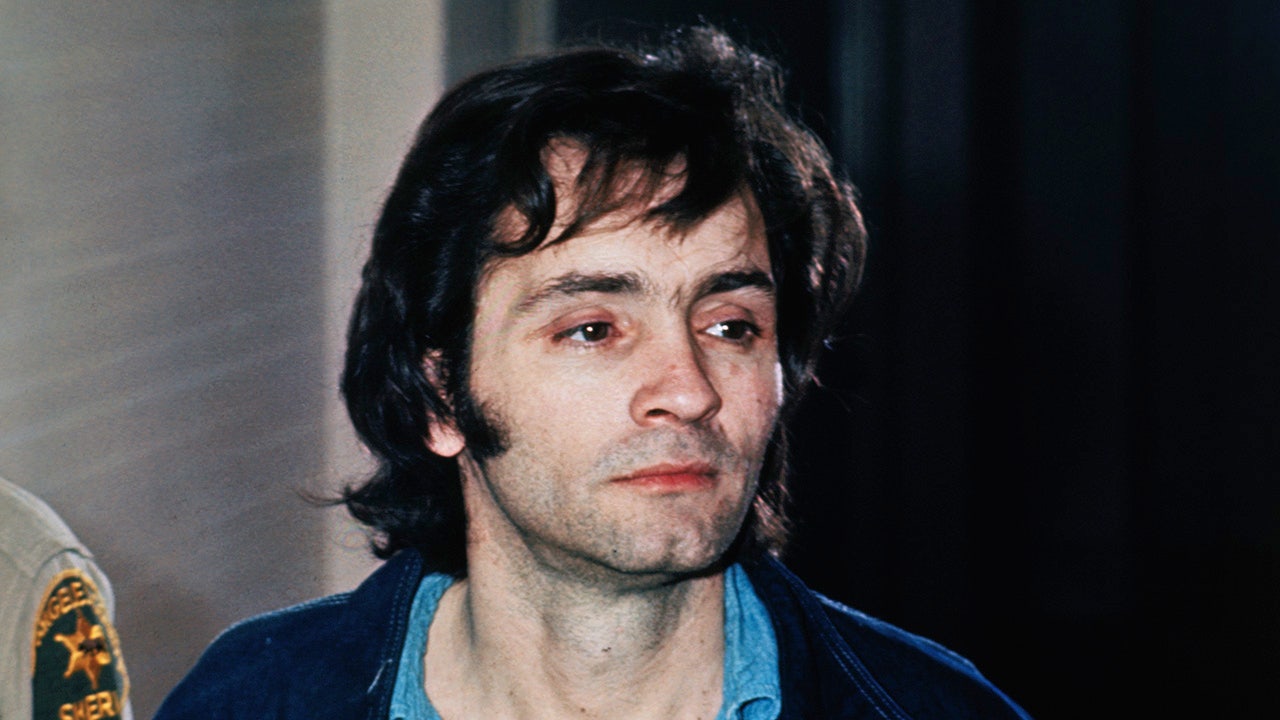
Charles Manson at California Medical Facility in Vacaville, Calif., in August 1980.   (Albert Foster/Mirrorpix/Getty Images)

“I’ve found myself trapped in a number of different true-crime stories, and the Manson murders are peculiar,” Morris told Netflix’s Tudum. “You could encapsulate the mystery in just one question: How is it that Manson managed to convince the people around him that killing was OK?”  

Netflix and Morris did not immediately respond to Fox News Digital’s request for comment. 

Advertisement

Morris explores the widely circulated theory suggesting Manson may have been operating under the influence of the CIA’s controversial MK-ULTRA program, leaning into the cultural interest surrounding mind control, a widespread fascination throughout the 1950s and 1960s. 

However, experts have expressed skepticism about the idea that Manson was acting under government control. 

HIPPIE CULT LEADER CHARLES MANSON DEAD AT 83

Charles Manson is brought into the Los Angeles city jail under suspicion of having masterminded the Tate-LaBianca murders of August 1969.  (Bettmann Archive via Getty Images)

“[Manson] was influenced by what he wanted to do,” former FBI profiler Mary Ellen O’Toole told Fox News Digital. “He was influenced by the fact that he wanted to become a very well-known musician at the time, which is why he made friends with the influential people that he did. But was there this outside force that compelled him to do that? I don’t believe that there was. There was still his personality that was distinct to him [and] was not created by an outside force.”

Advertisement

The CIA has also discredited the theory, first explored by O’Neill, in recent years. 

“The author cannot definitively tie Manson to MK-ULTRA or CHAOS; he can only imply it on circumstantial evidence,” the CIA said in a review of O’Neill’s book. 

O’Neill did not immediately respond to Fox News Digital’s request for comment. 

DANNY TREJO RECALLS MEETING CHARLES MANSON BEHIND BARS IN NEW MEMOIR: HE WAS A ‘SLICK LITTLE WIMP’

(L-R) Susan Denise Atkins, Patricia Krenwinkel and Leslie Van Houten laugh after receiving the death sentence for their part in the Tate-LaBianca killings at the orders of Charles Manson.  (Bettmann Archive via Getty Images)

Advertisement

In 1969, the Manson family carried out the brutal murders of seven people under his watchful eye. Pregnant actress Sharon Tate, Wojciech Frykowski, Jay Sebring, Steven Parent, Abigail Folger and Leno and Rosemary LaBianca were massacred by the family in a string of killings. 

SIGN UP TO GET TRUE CRIME NEWSLETTER

The group carried out five of its murders inside Tate’s home Aug. 9, 1969. One day later, the final victims of the Manson family, the LaBiancas, were fatally stabbed inside their home. 

CULT LEADER CHARLES MANSON CONFESSED TO ADDITIONAL MURDERS IN NEWLY REVEALED PHONE CALL

“[Manson] met up with a lot of his later-to-be followers in the Haight-Ashbury district of San Francisco, which, at that time in the ’60s, was known for being a gathering place for people in very formative years,” O’Toole told Fox News Digital. 

Advertisement

“There was the use of drugs and alcohol, and people came together without a lot of external oversight by a parent or a caregiver, so they were very vulnerable at that point. [Then], here comes Charlie Manson, with his personality and his ability to get people — especially young people — to follow him, and that’s what I’m talking about in regard to the perfect storm.”

A sign at the Spahn Movie Ranch, owned by American rancher George Spahn and the residence of the Manson Family in Los Angeles County, Aug. 28, 1970.  (Michael Ochs Archives/Getty Images)

After the killings, Manson and his “family” moved to Spahn Ranch, located approximately 30 miles north of Los Angeles, where he subjected his followers to outlandish lectures while providing them with drugs and overseeing orgies. 

FOLLOW THE FOX TRUE CRIME TEAM ON X

Authorities arrested Manson three months later as details of the killings rattled Los Angeles and investigators delved into theories about the murders. 

Advertisement

During the trial, prosecutors argued Manson was using his status with his all-white followers in an attempt to ignite a race war, citing his supposed misinterpretation of the Beatles’ 1968 song, “Helter Skelter.” Manson never actually carried out the murders himself, relying entirely on his followers to kill for him. 

MANSON FAMILY MEMBERS SPEAK OUT 50 YEARS LATER IN SHOCKING DOC, RECALL MEETING CULT LEADER: ‘I FELT ACCEPTED’

Charles Manson, who led a cult that committed murders in Los Angeles in the 1960s, is clean-shaven in a close-up photo.  (Bettmann Archive via Getty Images)

“[Manson] really was someone that knew right from wrong,” O’Toole said. “He knew the repercussions and the end results of his actions. He took no responsibility for his actions or the actions of his group, and he was very deliberate in his thinking.” 

In 1971, Manson and three followers — Leslie Van Houten, Susan Atkins and Patricia Krenwinkel — were convicted for their roles in the murders and subsequently sentenced to death. A fourth “family” member, Charles “Tex” Watson, was convicted several months later. 

Advertisement

The four defendants were resentenced to life in prison after a 1972 ruling from the California Supreme Court abolishing the state’s death penalty. 

CALIFORNIA LEGAL BATTLE OVER CHARLES MANSON’S ESTATE WORTH UP TO $1M INCLUDES DNA TESTS, SIGNATURE COMPARISONS

Charles Manson is shown in the custody of Los Angeles police officers.  (Bettmann Archive via Getty Images)

Manson was 83 years old when he died of natural causes Nov. 19, 2017. 

In 2023, Van Houten walked free after serving more than 50 years in a California prison for the killings of the LaBiancas, making her the only member of the Manson family to be released from prison. 

Advertisement

While Manson never actually carried out the murders he was imprisoned for, Peacock’s 2024 “Making Manson” documentary revealed he may have committed more killings himself. 

SHARON TATE’S SISTER SAYS THERE ARE UNSOLVED MANSON MURDERS, NEW DOC INVESTIGATES

Charles Manson travels in a police van to the Santa Monica Courthouse to appear in court for a hearing in the murder of music teacher Gary Hinman in Los Angeles June 25, 1970.  (Michael Ochs Archives/Getty Images)

In a teaser clip, Manson can be heard confessing to additional crimes while on a jailhouse phone call. 

GET REAL-TIME UPDATES DIRECTLY ON THE TRUE CRIME HUB

Advertisement

“There’s a whole part of my life that nobody knows about,” Manson can be heard saying. “I lived in Mexico for a while. I went to Acapulco, stole some cars.” 

Manson goes on to reveal more details about the supposed murders. 

“I just got involved in some stuff over my head, man,” he added. “Got involved in a couple of killings. I left my .357 Magnum in Mexico City, and I left some dead people on the beach.”

“I would never draw the line and say Charlie Manson could manipulate people to do his bidding, but he himself would never do it,” O’Toole said. “I would never draw that line. You can’t simply say that because Charlie hurting other people was part of his repertoire. So, whether he had somebody else do it or he did it himself is certainly something that has to be explored.” 

Advertisement

Fox News Digital’s Ashley Papa and Greg Wehner contributed to this report. 


Read the full article from Here

Continue Reading
Click to comment

Leave a Reply

Your email address will not be published. Required fields are marked *

This site uses Akismet to reduce spam. Learn how your comment data is processed.

Alaska

White House Issues Letter of Support for Gov. Dunleavy’s Alaska LNG Tax Reform Bills – Mike Dunleavy

Published

on


The White House has issued a letter of support for Gov. Dunleavy’s Alaska LNG tax reform bills, noting the national significance of the Alaska LNG project and the importance of tax policy that improves feasibility and attracts private investment.

The letter, from Director of White House Intergovernmental Affairs Alex Meyer, underscores federal recognition of Alaska’s efforts to modernize its tax framework for liquefied natural gas (LNG) development and highlights the importance of these reforms to advancing American energy security and economic growth.

In the letter Meyer said, “Given the scale and complexity of AKLNG, a stable and competitive policy environment is critical to the project’s success. Clear and predictable tax policy will improve feasibility, attract private investment, and help secure final commitments. This approach promotes job creation, expanded economic activity, and durable public revenue.”

“Alaska has long been a cornerstone of America’s energy future, and this support from the White House affirms the importance of getting our LNG tax policy right,” said Governor Dunleavy. “HB 381 and SB 280 provide a clear, predictable, and competitive structure that will help unlock Alaska’s vast natural gas resources, create jobs, and deliver long-term benefits for our state and the nation.”

Advertisement

The volumetric LNG tax bills establish a straightforward tax system based on the volume of gas produced, offering greater certainty to investors and developers and ensuring Alaskans benefit from a secure, low-cost supply of energy.

Governor Dunleavy emphasized that alignment between state and federal leadership is critical to advancing major energy infrastructure projects like Alaska LNG.

“We appreciate the Administration’s recognition of the role Alaska can play in strengthening domestic energy production and supporting our allies abroad,” Dunleavy added.

The Governor continues to work with members of the Alaska Legislature, industry stakeholders, and federal partners to move these bills forward and position Alaska as a global leader in LNG development.


Source link

Advertisement
Continue Reading

Arizona

Bobcat killed by dog in Arizona after attacking multiple people

Published

on

Bobcat killed by dog in Arizona after attacking multiple people


PRESCOTT, Ariz. — The Yavapai County Sheriff’s Office says a bobcat believed to have been involved in multiple attacks in the Prescott area was killed by a dog Monday morning.

On Sunday evening, deputies responded to an attack involving a bobcat in the Inscription Canyon area. A man suffered “significant injuries” and was taken to a hospital for treatment, but the bobcat was not located.

On Monday morning, deputies and animal control officers responded to another incident in which a bobcat reportedly attacked a woman. This attack was more than 7 miles away from the first incident.

A third attack was reported a short time later by a person who was walking in an area nearby. The walker’s German Shepherd dog “heroically intervened, successfully fending off and killing the bobcat,” the sheriff’s office says.

Advertisement

Officials say the dog was injured during the attack and is receiving care from a veterinarian.

Another dog was reportedly attacked by a bobcat, marking the fourth known incident in this string of attacks. Officials are now looking for any other possible victims or pets that may have been attacked.

All three people who were attacked are getting treatment for cuts and bites, and it’s believed that the same bobcat was involved in all of the attacks due to the extreme rarity of these occurrences. However, officials are asking the public to remain cautious.

Anyone with information or additional incident reports, including pets, is asked to contact the Arizona Game and Fish Department. You should seek immediate veterinary care if your animal was attacked, the sheriff’s office says.


Source link

Advertisement
Continue Reading

California

Tom Steyer, California governor candidate, 2026 primary election questionnaire

Published

on

Tom Steyer, California governor candidate, 2026 primary election questionnaire


Ahead of the June primary election, the Southern California News Group compiled a list of questions to pose to the candidates who wish to represent you. You can find the full questionnaire below. Questionnaires may have been edited for spelling, grammar, length and, in some instances, to remove hate speech and offensive language.

Name: Tom Steyer

Current job title: Climate Advocate

Age: 68

Advertisement

Political party affiliation: Democratic

Incumbent: No

Other political positions held: Co-Chair, Governor’s Task Force on Business and Jobs Recovery (2020)

City where you reside: San Francisco

Campaign website or social media: tomsteyer.com

Advertisement

What is your top economic development priority for the state? How will you work with cities to achieve this? (Please answer in 250 words or less.)

My top economic priority is building an economy that works for everyone, not just the billionaires and biggest corporations. As governor, I’ll call a special election to get this done and make sure our economy grows from the bottom up, not the top down.

This starts with fixing the inequities in our tax system created by what I call the “Trump Tax Loophole.” Closing this loophole will force corporations and the billionaires who control them to pay their fair share — even Donald Trump himself. Right now, cities are starved of revenue because large commercial property owners are paying artificially low, outdated tax rates and that holds back local investment in schools, housing and infrastructure. I’ll partner with cities by giving them the resources they need by closing this loophole and returning billions of dollars to local communities.

Affordability continues to be top of mind for Californians. What is one specific area where the state could bring about immediate relief for residents? (Please answer in 250 words or less.)

Advertisement

The fastest way we can deliver real relief is by lowering the cost of housing for both renters and homeowners who are being squeezed every month. That means putting money back into people’s pockets now — expanding the Renter’s Tax Credit while also providing targeted relief to help homeowners stay in their homes and manage rising costs. I will fully enforce California’s Tenant Protection Act to ensure renters are protected statewide, including the cap on excessive rent increases, just-cause eviction standards and relocation assistance for displaced tenants.

At the same time, we need to make sure people can access the support they need, from housing counseling to homelessness prevention, so fewer Californians fall through the cracks. This will provide immediate relief while we build more housing and fix the underlying affordability crisis for the long term. But short-term fixes alone won’t solve this crisis. That’s why we’re committed to building 1 million new homes over the next four years — funded by closing corporate tax loopholes and making sure big corporations finally pay what they owe. Expanding housing supply remains the most durable solution to the affordability crisis and will serve as a cornerstone of this agenda.

Legislative Republicans this year called for a one-year suspension of the state’s gas tax. Meanwhile, another legislative proposal would consider charging drivers based on how much they use the roads as opposed to the fuel consumed. As governor, would you support any of these proposals? How else would you hope to alleviate prices at the pump for California drivers? (Please answer in 250 words or less.)

I support a windfall profits tax on the oil companies that are making billions in extra profits at the expense of California families, and paying it out directly to the citizens of California. The companies that caused this crisis should pay for it. We need to provide immediate relief to Californians, but do it in a way so we can maintain our roads. Any solution that can’t lower costs and maintain our critical infrastructure is not a serious solution.

How do you propose to manage the state’s budget to ensure long-term fiscal stability? What areas would you consider for spending cuts, and, similarly, where would you like to see increased investment and why? (Please answer in 250 words or less.)

Advertisement

I will never balance the budget at the expense of working people — especially not when some of the wealthiest corporations and people on earth aren’t paying their fair share in taxes to the state of California. Long-term fiscal stability starts with fairness: closing the Trump tax loophole created by Proposition 13, which costs California cities, schools and communities $15 to 20 billion a year, is the single biggest step we can take. That revenue would allow us to invest in education, health care, affordable housing and local services without raising taxes on working families. At the same time, I’d ensure every dollar the state spends is accountable and effective, focusing on programs that deliver real results. This approach balances fiscal discipline with bold investments in the people and communities that make California strong.

One of the main concerns cited by opponents of a proposed billionaire tax is that it would push the state’s wealthiest residents to move elsewhere. Should this tax proposal qualify for the ballot and be approved by voters, what would you do as governor to ensure California remains a place where entrepreneurs and innovators want to live, so that the Golden State can continue to benefit as one of the world’s largest economies? And if it doesn’t pass, how would you propose the state pay for health care amid the Trump administration’s funding cuts? (Please answer in 250 words or less.)

California is the best place in the world to start and grow a business. We imagine and build the future here like no place on earth. To keep it that way, locally, we need to expand Film Tax Credits to keep arts and entertainment in Los Angeles and keep an industry in California that employs tens of thousands of people. Broadly, the single most important thing we can do to ensure that entrepreneurs and innovators want to stay in California is to bring down costs — and I have plans to bring down the cost of housing, energy, health care and more.

Regardless of what happens with the specific billionaire tax on the ballot, I’m proposing we close the corporate property tax loophole in Proposition 13, which would bring in $15 to 20 billion every year for California schools, health care and local services. It’s a long-term solution that ensures everyone pays their fair share and that communities get the resources they need year after year.

Speaking of health care, should the state provide free or subsidized health care, such as Medi-Cal, to undocumented immigrants? Should there be any conditions placed on their eligibility? (Please answer in 250 words or less.)

Advertisement

Health care must be a right for every Californian, and that includes undocumented immigrants who are here participating in our society, working in our society, paying taxes and bringing up their families. Ultimately, I’m fighting for a single-payer system, which is the only way to make coverage universal, affordable and equitable. But the answer is not to turn people away from hospitals when they need medical care — access to care shouldn’t depend on income, status or luck. It’s to make corporations and billionaires pay their fair share, and to structurally change the system so we can afford to deliver health care as a right to everybody in California.

Would you continue to implement CARE Court, which is meant to help get people with severe mental illnesses off the streets? What changes, if any, would you make to the program? (Please answer in 200 words or less.)

CARE Courts may play a role in connecting people with severe mental illness to treatment, but they are not a substitute for housing or comprehensive support. My focus as governor would be on preventing people from becoming homeless in the first place and getting those who are on the street off it as fast as possible and into stable, supportive housing. We must treat this emergency with the urgency and depth of policy it deserves. We need to make sure people are paired with real housing, mental health services and case management, because treatment without a home doesn’t work. The priority has to be a full continuum of care — emergency interim housing, permanent supportive housing and mental health services — so people can rebuild their lives safely and sustainably.

As part of combating homelessness, elected officials often talk about the need to prevent people from losing their homes in the first place. What policies or programs should the state adopt to make housing more affordable for renters and homeowners? What do you propose the state do to incentivize housing development and expedite such projects? (Please answer in 250 words or less.)

I have released a comprehensive housing plan that addresses many of these questions. We have to tackle housing affordability on both fronts — keeping people in their homes today and building the homes we desperately need for tomorrow. That means expanding the Renter’s Tax Credit, protecting homeowners from rising costs and making sure renters know their rights and can access homelessness prevention services.

Advertisement

To quickly get unsheltered Californians off the streets, I will conduct a comprehensive spending review and partner with local governments to urgently expand interim bridge housing paired with robust stabilization services, ensuring we match the right type of housing and level of care to the specific needs of every individual.

At the same time, public dollars should bring investments to the table, not scare them away. Housing finance in California is too fragmented, burdensome and restrictive, and adds time, costs and complications that disincentivize the private investments that are vital for affordable housing. We need to cut the red tape that slows development, use publicly controlled land and give cities and developers real incentives to build affordable and mixed-income housing while confronting NIMBYism that too often blocks progress. This is about moving quickly to get people off the streets, into stable homes and finally creating the housing supply California families need.

What is a policy or project from the Newsom administration that you’d like to expand or continue? Is there something you’d change about the approach? (Please answer in 250 words or less.)

Gov. Gavin Newsom has made real progress in positioning California as a global leader in clean energy and climate action, and that’s something I would absolutely build on. We should accelerate investments in clean tech — scaling renewable energy, electric vehicles and energy storage — because that’s how we create good-paying jobs and lead in the industries of the future. I’d focus on expanding these efforts so that every community shares in the benefits, from lower energy costs to cleaner air and new economic opportunities.

Conversely, name a policy or program from the Newsom administration that you’d want to eliminate or make major revisions to and explain the changes. (Please answer in 250 words or less.)

Advertisement

Gov. Gavin Newsom has done a good job standing up to Donald Trump and defending California’s values, and he’s made real progress on some of the toughest issues we face. But what he hasn’t been able to do yet is make billionaires like me and the largest corporations pay their fair share in taxes. As governor, I will. That starts with closing loopholes, especially in our commercial property tax system, so we can generate stable, ongoing funding for schools, health care and local services. It’s about strengthening the foundation we already have and making sure California’s prosperity is shared more broadly.

Artificial intelligence has become a ubiquitous part of our lives. Yet public concerns remain that there aren’t enough regulations governing when or how AI should be used, and that the technology would replace jobs and leave too many Californians unemployed. How specifically would you balance such concerns with the desire to foster innovation and have California remain a leader in this space? (Please answer in 250 words or less.)

I am the first and only candidate in this race to have released a comprehensive AI policy plan because this issue is too important to ignore or get wrong. AI is a threat to our safety, mental health and kids, but if we get it right, we can support our schools, businesses and communities. That’s why my plan ensures companies are held accountable with stronger regulations, requires data centers to pay their own way and creates a “Golden State Sovereign Wealth Fund” by taxing AI-driven profits. That fund will be reinvested directly in Californians — supporting education, job training and new opportunities — so workers benefit from this boom, not just the companies at the top. We cannot let AI be a technology that helps a handful of tech billionaires become tech trillionaires while putting millions of Californians out of work.

Last summer, President Donald Trump not only deployed federal immigration agents to California to carry out his mass deportation policy; he also federalized the National Guard and sent them to Los Angeles. How would you respond as governor should the president deploy more federal agents or troops to California again? (Please answer in 250 words or less.)

ICE, as it exists today, should be abolished and demolished — it’s a criminal organization that has operated without accountability and has caused real harm to families and communities across this state. When an institution is broken from top to bottom, you don’t patch it — you replace it with something that reflects our values and the rule of law. As governor, I’ll use every legal tool to stop federal overreach, protect our residents, stop masked ICE agents from terrorizing California citizens and make sure California stands for dignity, justice and accountability.

Advertisement

What’s a hidden talent you have? (Please answer in 250 words or less.)

Looking into the future.

OK, not literally. But I was a professional investor, and the job of an investor is to try to think about the future, anticipate it and figure out how to respond to it, knowing that you can never actually “know” what’s going to happen. And when we look at the problems that the California government has been having, that the institutional thinking has been having, we really haven’t seen a consistent focus on what’s going to happen — just a focus on what has happened, or what is happening now.


Source link

Advertisement
Continue Reading
Advertisement

Trending