Plus special access to select articles and other premium content with your account – free of charge.
By entering your email and pushing continue, you are agreeing to Fox News’ Terms of Use and Privacy Policy, which includes our Notice of Financial Incentive.
Please enter a valid email address.
The mystery of Charles Manson’s motive in notorious cult killings is getting a fresh look as an FBI criminal profiler reveals a “perfect storm” of factors came together for the infamous murders.
Countless theories about how Manson managed to convince a group of young adults to kill for him have been dissected, but director Errol Morris is offering a new perspective into the mind of the notorious cult leader in his Netflix documentary “CHAOS: The Manson Murders.”
Advertisement
Based on the 2019 book “CHAOS: Charles Manson, the CIA, and the Secret History of the Sixties,” authored by Tom O’Neill and Dan Piepenbring, the documentary delves into the theory Manson may have been influenced by an external force when directing his followers.
NEW CHARLES MANSON MURDER ADMISSIONS COULD POINT TO EVEN DARKER PATTERN FOR PSYCHOPATH: EXPERTS
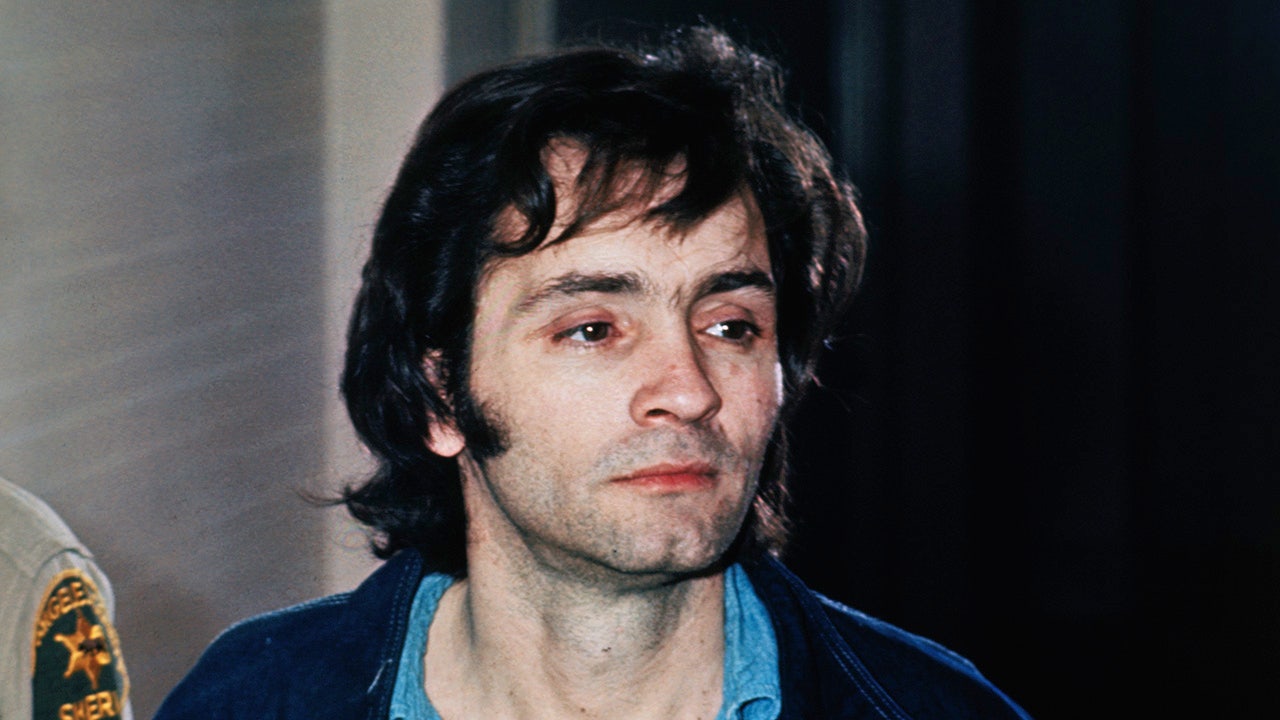
Charles Manson at California Medical Facility in Vacaville, Calif., in August 1980. (Albert Foster/Mirrorpix/Getty Images)
“I’ve found myself trapped in a number of different true-crime stories, and the Manson murders are peculiar,” Morris told Netflix’s Tudum. “You could encapsulate the mystery in just one question: How is it that Manson managed to convince the people around him that killing was OK?”
Netflix and Morris did not immediately respond to Fox News Digital’s request for comment.
Advertisement
Morris explores the widely circulated theory suggesting Manson may have been operating under the influence of the CIA’s controversial MK-ULTRA program, leaning into the cultural interest surrounding mind control, a widespread fascination throughout the 1950s and 1960s.
However, experts have expressed skepticism about the idea that Manson was acting under government control.
HIPPIE CULT LEADER CHARLES MANSON DEAD AT 83
Charles Manson is brought into the Los Angeles city jail under suspicion of having masterminded the Tate-LaBianca murders of August 1969. (Bettmann Archive via Getty Images)
“[Manson] was influenced by what he wanted to do,” former FBI profiler Mary Ellen O’Toole told Fox News Digital. “He was influenced by the fact that he wanted to become a very well-known musician at the time, which is why he made friends with the influential people that he did. But was there this outside force that compelled him to do that? I don’t believe that there was. There was still his personality that was distinct to him [and] was not created by an outside force.”
Advertisement
The CIA has also discredited the theory, first explored by O’Neill, in recent years.
“The author cannot definitively tie Manson to MK-ULTRA or CHAOS; he can only imply it on circumstantial evidence,” the CIA said in a review of O’Neill’s book.
O’Neill did not immediately respond to Fox News Digital’s request for comment.
DANNY TREJO RECALLS MEETING CHARLES MANSON BEHIND BARS IN NEW MEMOIR: HE WAS A ‘SLICK LITTLE WIMP’
(L-R) Susan Denise Atkins, Patricia Krenwinkel and Leslie Van Houten laugh after receiving the death sentence for their part in the Tate-LaBianca killings at the orders of Charles Manson. (Bettmann Archive via Getty Images)
Advertisement
In 1969, the Manson family carried out the brutal murders of seven people under his watchful eye. Pregnant actress Sharon Tate, Wojciech Frykowski, Jay Sebring, Steven Parent, Abigail Folger and Leno and Rosemary LaBianca were massacred by the family in a string of killings.
SIGN UP TO GET TRUE CRIME NEWSLETTER
The group carried out five of its murders inside Tate’s home Aug. 9, 1969. One day later, the final victims of the Manson family, the LaBiancas, were fatally stabbed inside their home.
CULT LEADER CHARLES MANSON CONFESSED TO ADDITIONAL MURDERS IN NEWLY REVEALED PHONE CALL
“[Manson] met up with a lot of his later-to-be followers in the Haight-Ashbury district of San Francisco, which, at that time in the ’60s, was known for being a gathering place for people in very formative years,” O’Toole told Fox News Digital.
Advertisement
“There was the use of drugs and alcohol, and people came together without a lot of external oversight by a parent or a caregiver, so they were very vulnerable at that point. [Then], here comes Charlie Manson, with his personality and his ability to get people — especially young people — to follow him, and that’s what I’m talking about in regard to the perfect storm.”
A sign at the Spahn Movie Ranch, owned by American rancher George Spahn and the residence of the Manson Family in Los Angeles County, Aug. 28, 1970. (Michael Ochs Archives/Getty Images)
After the killings, Manson and his “family” moved to Spahn Ranch, located approximately 30 miles north of Los Angeles, where he subjected his followers to outlandish lectures while providing them with drugs and overseeing orgies.
Authorities arrested Manson three months later as details of the killings rattled Los Angeles and investigators delved into theories about the murders.
Advertisement
During the trial, prosecutors argued Manson was using his status with his all-white followers in an attempt to ignite a race war, citing his supposed misinterpretation of the Beatles’ 1968 song, “Helter Skelter.” Manson never actually carried out the murders himself, relying entirely on his followers to kill for him.
MANSON FAMILY MEMBERS SPEAK OUT 50 YEARS LATER IN SHOCKING DOC, RECALL MEETING CULT LEADER: ‘I FELT ACCEPTED’
Charles Manson, who led a cult that committed murders in Los Angeles in the 1960s, is clean-shaven in a close-up photo. (Bettmann Archive via Getty Images)
“[Manson] really was someone that knew right from wrong,” O’Toole said. “He knew the repercussions and the end results of his actions. He took no responsibility for his actions or the actions of his group, and he was very deliberate in his thinking.”
In 1971, Manson and three followers — Leslie Van Houten, Susan Atkins and Patricia Krenwinkel — were convicted for their roles in the murders and subsequently sentenced to death. A fourth “family” member, Charles “Tex” Watson, was convicted several months later.
Advertisement
The four defendants were resentenced to life in prison after a 1972 ruling from the California Supreme Court abolishing the state’s death penalty.
CALIFORNIA LEGAL BATTLE OVER CHARLES MANSON’S ESTATE WORTH UP TO $1M INCLUDES DNA TESTS, SIGNATURE COMPARISONS
Charles Manson is shown in the custody of Los Angeles police officers. (Bettmann Archive via Getty Images)
Manson was 83 years old when he died of natural causes Nov. 19, 2017.
In 2023, Van Houten walked free after serving more than 50 years in a California prison for the killings of the LaBiancas, making her the only member of the Manson family to be released from prison.
Advertisement
While Manson never actually carried out the murders he was imprisoned for, Peacock’s 2024 “Making Manson” documentary revealed he may have committed more killings himself.
SHARON TATE’S SISTER SAYS THERE ARE UNSOLVED MANSON MURDERS, NEW DOC INVESTIGATES
Charles Manson travels in a police van to the Santa Monica Courthouse to appear in court for a hearing in the murder of music teacher Gary Hinman in Los Angeles June 25, 1970. (Michael Ochs Archives/Getty Images)
In a teaser clip, Manson can be heard confessing to additional crimes while on a jailhouse phone call.
GET REAL-TIME UPDATES DIRECTLY ON THE TRUE CRIME HUB
Advertisement
“There’s a whole part of my life that nobody knows about,” Manson can be heard saying. “I lived in Mexico for a while. I went to Acapulco, stole some cars.”
Manson goes on to reveal more details about the supposed murders.
“I just got involved in some stuff over my head, man,” he added. “Got involved in a couple of killings. I left my .357 Magnum in Mexico City, and I left some dead people on the beach.”
“I would never draw the line and say Charlie Manson could manipulate people to do his bidding, but he himself would never do it,” O’Toole said. “I would never draw that line. You can’t simply say that because Charlie hurting other people was part of his repertoire. So, whether he had somebody else do it or he did it himself is certainly something that has to be explored.”
Advertisement
Fox News Digital’s Ashley Papa and Greg Wehner contributed to this report.
JUNEAU, Alaska (AP) — A man with the same name and party affiliation as Alaska Republican U.S. Sen. Dan Sullivan…
JUNEAU, Alaska (AP) — A man with the same name and party affiliation as Alaska Republican U.S. Sen. Dan Sullivan is eligible for the August primary and can appear on the ballot, a judge ruled Friday.
Superior Court Judge Thomas Matthews’ ruling overturns a June 15 decision by Division of Elections Director Carol Beecher to disqualify the challenger and keep him off the primary ballot. Matthews’ ruling can be appealed to the state Supreme Court.
Attorneys for the state have said Tuesday is the deadline for a final ruling so that ballots for the Aug. 18 primary can be printed.
Advertisement
The controversy over the two Dan Sullivans has underscored the stakes involved in the incumbent’s reelection campaign. The Alaska race is one of about a half dozen U.S. Senate races that are expected to be highly competitive in the fall, and the seat is one Democrats are trying to flip in their efforts to try to regain the majority.
The senator and allies including the National Republican Senatorial Committee have condemned the challenger’s efforts to join the race, arguing his presence could confuse voters. Under Alaska’s election system, the top four candidates from the primary, regardless of party, move on to the ranked choice November general election.
The senator has accused the challenger Sullivan of working with Democrats and the campaign of Democratic former U.S. Rep. Mary Peltola — who is considered the senator’s main opponent — to cause confusion and boost Peltola’s chances. Peltola’s campaign and state Democrats have denied the allegation, as has the challenger.
Sen. Sullivan and Peltola are the highest-profile candidates in the crowded race and the only ones to report raising any money.
Beecher has said she determined the challenger Sullivan is not eligible to run because his candidacy was not filed in good faith and instead was done with an intent to confuse voters. She said he had registered to vote as Daniel J. Sullivan Jr. and in conjunction with his candidacy changed his party affiliation to Republican. She also cited similarities between his campaign website and the senator’s, and his work with a consultant whose clients have included some Democrats. She did not mention finding any evidence of alleged coordination.
Advertisement
In arguing to keep the challenger disqualified, attorneys for the state pushed back on suggestions the ballot could be designed in a way to reduce voter confusion over two candidates with the same name and party running for the same office.
“The Constitution does not require States to place a sham candidate on the ballot and then attempt to mitigate the damage through design choices,” attorney Rachel Witty, with the Alaska Department of Law, and outside attorneys Christopher Murray and Michael Francisco wrote in court filings.
Attorneys for the challenger Sullivan argued that the Constitution lays out three exclusive qualifications for the Senate, addressing only age, citizenship and residency. They said Beecher lacked the legal authority to boot their client off the ballot.
The challenger Sullivan has said that sharing a name and party affiliation with the incumbent gave him “an instant megaphone.” But the retired teacher and former U.S. Forest Service employee, who is 69, said he had considered a run for some time and had grown frustrated with the senator.
He initially was certified on the state’s candidate list as Dan J. Sullivan, with the senator listed as Dan S. Sullivan and identified as the incumbent.