Kansas
Kansas House bill would use driver’s license records to look for voters who are not citizens • Kansas Reflector


TOPEKA — A bill proposed in the Kansas House seeks to remove people who are not U.S. citizens from the state’s voter rolls through temporary driver’s license records, invoking concern for potential disenfranchisement of Kansas voters.
A Kansas Secretary of State’s Office official said the records are “the best tool we have” to identify voters who are not U.S. citizens, of which the true number in Kansas is unknown.
There is no “magic list” disclosing all people who are not citizens in Kansas, said Bryan Caskey, the deputy secretary of state and director of elections, at a Tuesday hearing in the House Elections Committee. But the temporary driver’s license list is about as close as the office can get, he said.
“It is one of the rare pieces of factual, direct evidence of non-U.S. citizens,” Caskey said, “and so that’s why we want the list more often because it’s, quite frankly, one of the best tools that we have to verify non-U.S. citizens being on our voter registration list.”
The Kansas Secretary of State’s Office, which supports House Bill 2020, has received a temporary driver’s license list about six times in the past 15 years, Caskey said.
About 38,000 people in Kansas have active temporary drivers licenses as of December.
Of the state’s more than 2 million voters, state officials found 202 potential matches when comparing a temporary driver’s license list and the voter rolls. About 120 of those were false positives, and 85 warranted additional investigation. About 21 of the 85 have a voting history attached to them and would require even further investigation to determine citizenship status.
Clay Barker, general counsel to the secretary of state’s office, said nothing prevents officials from investigating a case of a potential voter who is not a U.S. citizen.
“There has to be something more than an odd last name, but if you have reason to believe someone’s a noncitizen, you can conduct an investigation and gather more information,” Barker said.
When obtaining a driver’s license, a person must prove residency in Kansas, which could include proof of U.S. citizenship or legal immigration status. In the latter case, a temporary driver’s license is typically issued. The aim of the bill is to compare the lists of people with temporary driver’s licenses to the secretary of state’s voter rolls to determine if people who are not U.S. citizens are participating in Kansas elections.
“The list shall contain the names, addresses, phone numbers, social security numbers, dates of birth, temporary drivers’ license numbers and expiration dates of such licenses,” the text of the bill read. “The secretary of state shall compare such lists with the voter registration rolls and delete any names of noncitizens that appear on the voter rolls.”
However, the Secretary of State’s Office cannot modify voter rolls, a job reserved for county elections officials, and state officials said action cannot be taken unless they receive confirmation from an outside source of a person’s current citizenship status.
Davis Hammet, president of voting rights organization Loud Light, supported the concept of the bill but expressed concern at the Tuesday hearing over its declaratory language and lack of detail.
“The most dangerous thing you could do is assume that you can take two list and perfectly compare them,” Hammet said.
The logistics of how the bill could be administered were missing, Hammet said. He warned oversimplification of legislation could run the risk of disenfranchising valid Kansas voters, as was the case with a law struck down in 2018 that illegally mandated Kansans show documented proof of citizenship to register to vote. The law blocked more than 35,000 Kansans from voting.
Brett Anderson, a Republican precinct committee member in Sedgwick County, questioned the difference between the proposed bill and the struck-down citizenship requirement.
“What has been passed to strengthen non-voter laws in Kansas? Isn’t this setting up for litigation when the main issue of citizenship is still in limbo in Kansas?” he asked in written public testimony.
Rep. Pat Proctor, a Leavenworth Republican and chairman of the House Elections Committee, appeared frustrated with the comparison between the unlawful proof of citizenship requirement and HB 2020. He said this bill isn’t about how voters are registered but how voter rolls are maintained.
“Anyone who tells you that non-citizens aren’t voting in Kansas is lying to you,” he said in a news release distributed before the hearing. “The fact is we don’t know because we aren’t doing much to check.”
In litigation over the proof of citizenship requirement, then-Secretary of State Kris Kobach failed to present evidence of widespread voter fraud. Fewer than 40 people who were not U.S. citizens had registered to vote over a 20-year period.
The American Civil Liberties Union of Kansas expressed concerns over data privacy, pandering to conspiracy theories of illegal voting and inadequate appeals processes.
“HB 2020 plays into conspiracy theories about large numbers of non-citizens voting in Kansas elections, and altering the outcome of those elections,” said Rashane Hamby, director of policy and research for the ACLU of Kansas, in written testimony. “This simply isn’t true.”
Another attempt at legislation targeting people who are not U.S. citizens is set to appear at a Thursday hearing before the same committee. It involves a constitutional amendment that would require voters be citizens, 18 years old and a resident in their assigned voting area. It is already a felony crime for someone who is not a U.S. citizen to claim they are a citizen on a voter registration form.



KSHB 41 reporter Isabella Ledonne reports on stories in Overland Park, Johnson County and topics about government accountability. Share your story idea with Isabella.
—
Saturday marks the final FIFA World Cup 26 match in Kansas City with Argentina set to meet Switzerland on the pitch at Kansas City Stadium.
Kansas City to reduce bus transit frequency, extended hours after World Cup
Public transportation received a big boost during the World Cup.
Johnson County launched JOCO United, and according to leaders, the airport drop and ride service that was implemented for the tournament will stick around.
“It has been very smooth every time,” Johnson County resident Mariah Wickham said. “I’ve been up and down so many times.”
Kansas City, Missouri, also bumped up its transit options, but not all of the those will be sticking around once the final whistle blows.
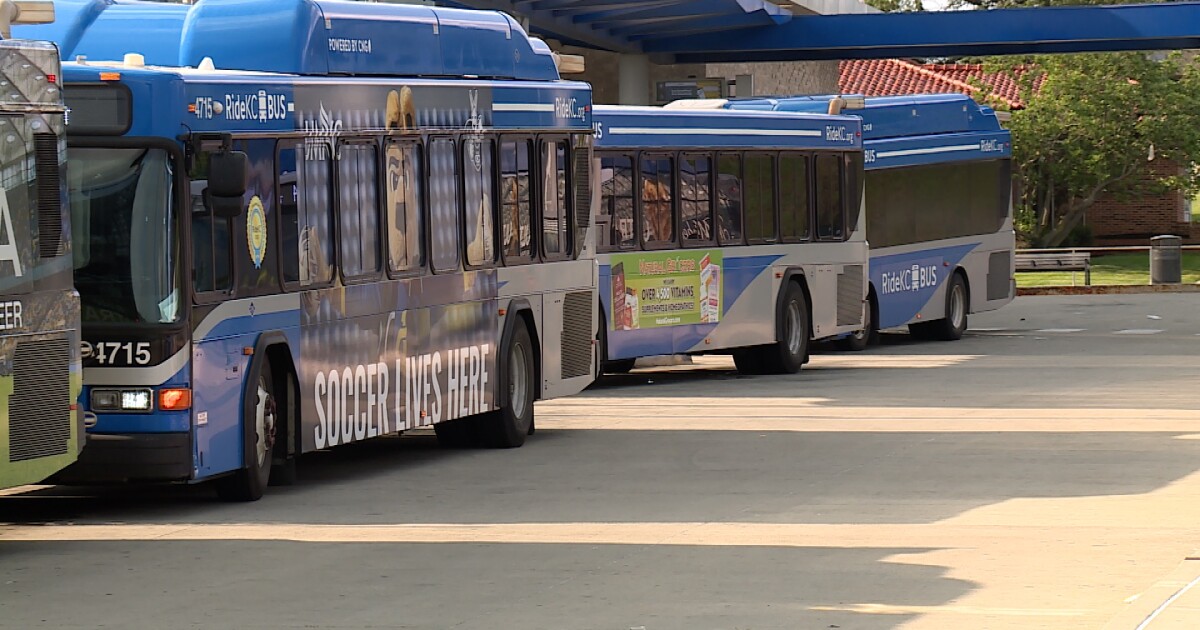
Tens of thousands of people have been using the airport link, streetcar and the buses to get around Kansas City. The city poured millions of dollars into building up its public transit infrastructure. The KCATA added more frequency to bus transit lines and the streetcar, pushing more fans to use public transportation during the tournament.
Brian Luton
“With the World Cup here, I was able to exercise using the streetcar more frequently and that was really fun,” Trish Luancing said. “It wold be nice to not have to drive everywhere and not have to worry about parking.”
But thousands have been relying on public transit for years, regardless of what event was in town.
“It’s been busier since the World Cup,” Jeffrice Jackson, a bus rider, said. “It’s been smooth sailing.”
The KCATA added streetcar ‘bus bridge’ links, extended bus service hours and increased frequency on East-West routes to link riders to the streetcar. It’s benefited both travelers and commuters.
Brian Luton
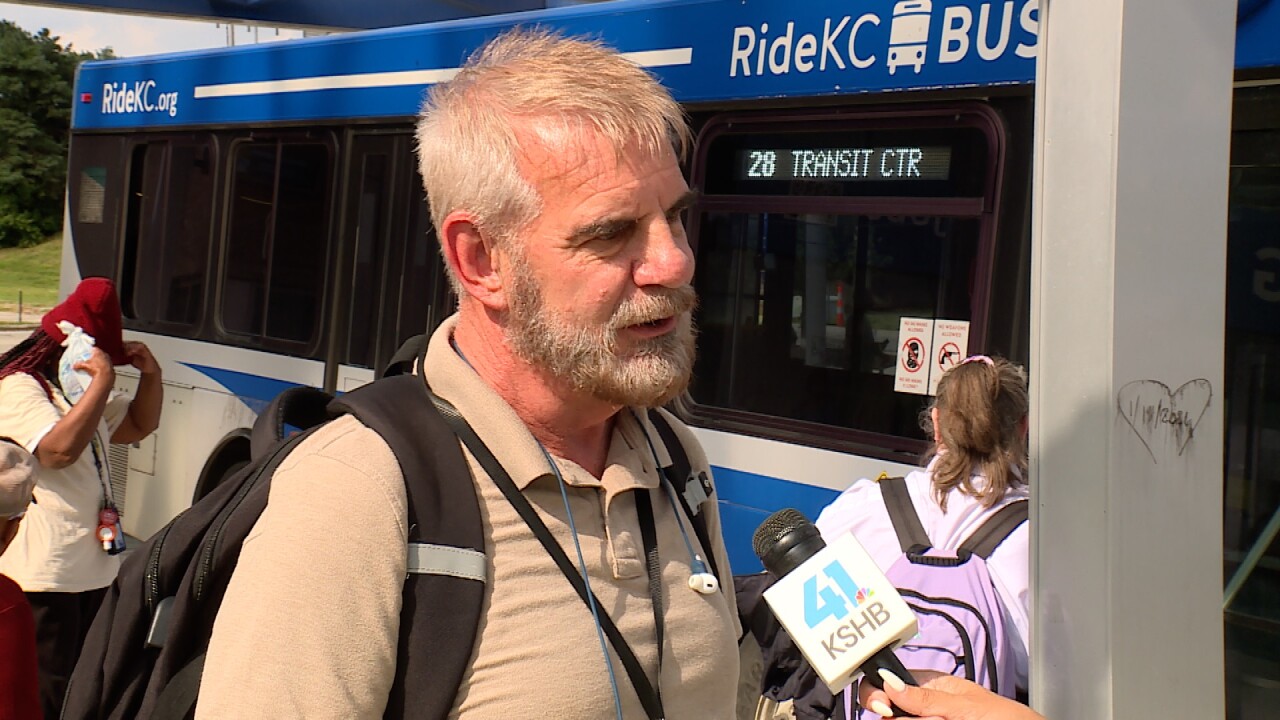
“[Service] has been more consistent with the World Cup than it was previously,” Jerry Breault, a rider said. “We were missing buses or routes because there weren’t enough drivers to drive that route.”
But the add-on’s stop on Sunday, July 12. If the transit authority can’t find more money, more than a dozen routes will be cut, potentially impacting more than 8,000 riders.
“It’s a little frustrating,” Breault said. “A lot of us rely on it just to get back and forth to work, to take care of our daily needs. It looks like we may be having to find alternatives and we’re not very happy about that.”
The KCATA will potentially suspend these weekday and weekend routes by September:
Weekday Route Eliminations:
- 9 – 9th Street, 365 average weekday ridership
- 21 – Cleveland Antioch, 512 average weekday ridership
- 23 – 23rd Street, 266 average weekday ridership
- 25 – Troost Local, 1,460 average weekday ridership
- 27 – 27th Street, 422 average weekday ridership
- 57 – Wornall, 411 average weekday ridership
- 71 – Prospect Local, 464 average weekday ridership
Weekend Route Eliminations:
- 9 – 9th Street, 349 average weekend ridership
- 21 – Cleveland Antioch, 312 average weekend ridership
- 23 – 23rd Street, 312 average weekend ridership
- 25 – Troost Local, 1,431 average weekend ridership
- 27 – 27th Street, 455 average weekend ridership
- 57 – Wornall, 595 average weekend ridership
- 71 – Prospect Local, 982 average weekend ridership
Bus fares came back earlier this summer to offset some of the operation costs, but many have reported issues with the free fare cards and eligibility.
“There’s always funding challenges with the KCATA,” Kansas City, Missouri, Mayor Quinton Lucas said. “How are the fare re-institutions working right now?”
Brian Luton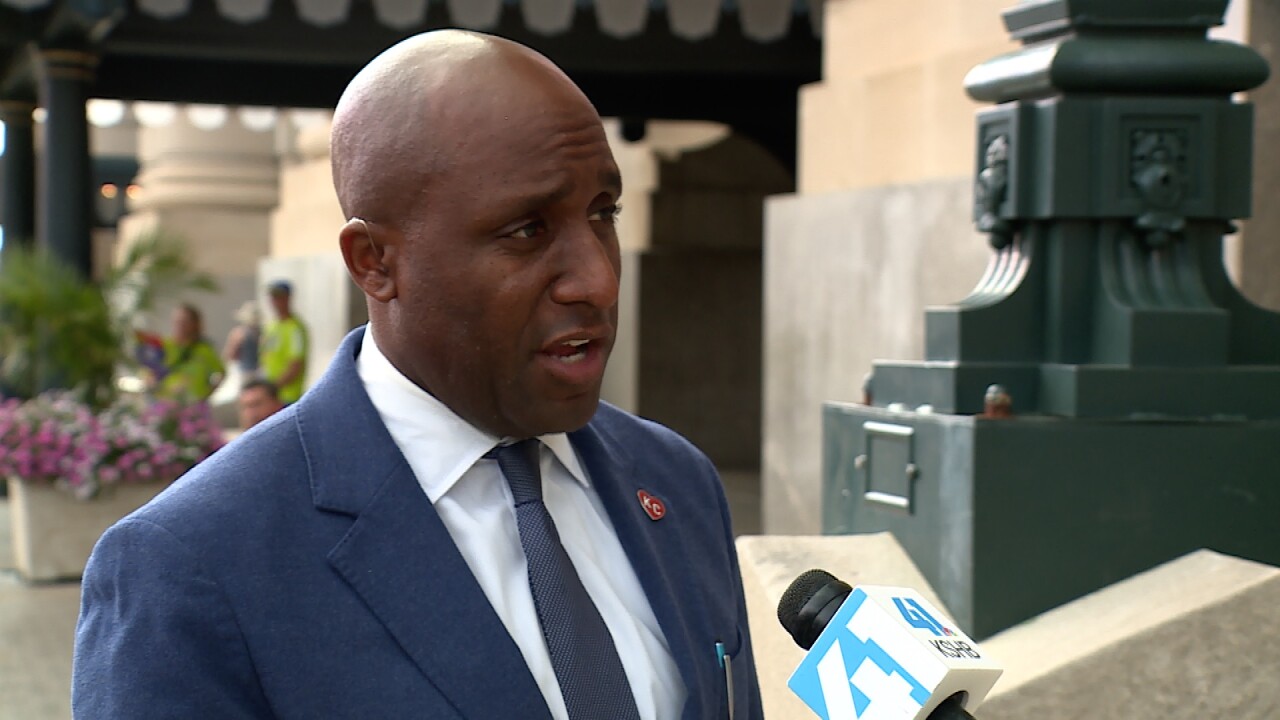
Mayor Lucas told KSHB 41 News Reporter Isabella Ledonne the transit improvements implemented for the World Cup “should continue,” and there are plans to talk with the KCATA commissioners to “make it work”.
“KCATA cannot just be Kansas City supported alone forever,” Mayor Lucas said. “Our approach and our preference is that the region got to see how much they would like [expanded service] during the World Cup. It was always intentional that if they liked it, maybe they would invest and maybe they would want this thing to go further.”
That’s good news to the thousands of daily riders.
Brian Luton
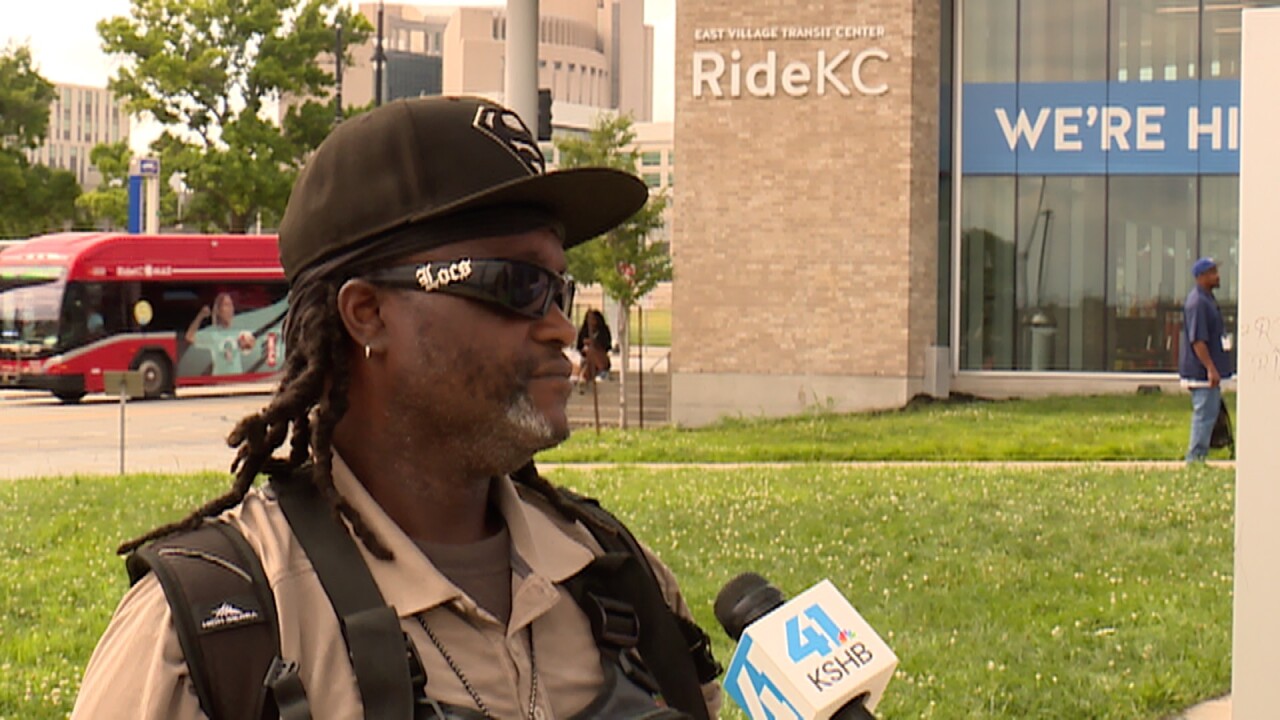
“I think it’s good because it helps people get around if they need to get around,” Jackson said.
The KCATA did not make themselves available for an interview.
—


One of the top prospects in the 2027 boys’ high school basketball recruiting class recently trimmed his list of suitors, and the Kansas Jayhawks find themselves firmly in the mix.
KU is one of eight schools to make the cut for 2027 five-star small forward Demarcus Henry, according to On3 National Basketball Reporter Joe Tipton. His list of eight includes some of the best programs in the country: Kansas, Ohio State, Kentucky, North Carolina, BYU, Arkansas, UConn, and Louisville.
The 6-foot-7 Charlotte, North Carolina, native is one of the best players in the 2027 class. He’s currently ranked as the No. 5 player overall and the No. 1 player at his position, according to the most recent On3.com 2027 player rankings.
As a junior this past year at Compass Prep High School in Chandler, Arizona, Henry averaged 15.5 points, 8.2 rebounds, and 2.2 steals per game as he helped lead his team to a 25-3 record.
He followed that up with an impressive performance at the NBPA Top 100 camp this summer, leading all attendees in scoring (20.0 points per game) and rebounding (9.3 rebounds per game). He was also a member of the 2026 USA Men’s U18 National Team that earned a silver medal at the FIBA U18 AmeriCup earlier this summer in León, Mexico.
When speaking about his game, Henry mentions his versatility and how he’s developed over the past year.
“I’m just very versatile,” Henry told Rivals in a previous interview. “I can play one through four and just help my teammates and hit shots and play defense. I watch a lot of KD (Kevin Durant) and Paul George. How they score it, and how they could shoot off the dribble, shoot off the catch. I’ve gotten tougher and just more aggressive when I transferred AZ Compass and just being able to get downhill, I feel like that’s really developed for me.”
When asked about what he’s looking for in a potential home at the college level, Henry says he wants to be challenged and grow his game for the NBA.
“What I’m looking for in school is someone that just pushes me to be better,” Henry said. “Help me grow into the person I know I can be and someone who will help me reach my potential. I want to play for a coach that will hold me accountable and help me make me uncomfortable and keep growing and keep getting better and just help me reach the NBA, which is my ultimate goal.”
Early Contenders
Right now the early favorite to land Henry may be the basketball program with the least amount of notoriety of the final eight schools – and that is Ohio State.
Henry has a lot of familial ties to the university as his older brother Chris Henry Jr. is a five-star incoming freshman wide receiver for the Buckeyes football team this year, and his older sister Seini Henry is a talented women’s basketball player at Ohio State.
He’s already taken an unofficial visit to the school and has also taken an unofficial visit to BYU. Thus far, they are the only schools to have received a visit.
Follow

The Royals have been linked to shortstop Jacob Lombard out of Gulliver Prep (Fla.) — if he makes it that far — left-hander Gio Rojas out of Stoneman Douglas (Fla.) HS, outfielder Eric Booth Jr. out of Oak Grove (Fla.) HS, UC Santa Barbara right-hander Jackson Flora and Georgia Tech outfielder Drew Burress, among others. Maybe they shake up the board and go with Huntington Beach (Calif.) HS left-hander/outfielder Jacob Grindlinger, who is just 17 years old after reclassifying for this year’s Draft and has legitimate upside as a two-way player. Grindlinger is No. 16 on MLB Pipeline’s Top 250 Draft prospects list and is rising on boards as Draft day nears.
Prep players usually mean a lot of upside but with more risk, while college players bring a higher floor and more experience — often with a chance to move quickly. Over the full Draft, the Royals are going to value both.
“There’s a good mix of high school and college,” Bridges said. “To tell you the truth, our range is pretty broad. There’s a clear-cut four players, five players in this Draft, and then believe it or not, where we’re picking, you can go a number of different directions. So we have a pretty good balance of what we’re looking at, both high school and college.”
-

 Health1 minute ago
Coffee may have powerful effect on liver health, major study suggests
-

 Sports4 minutes ago
Oba Femi vs Brock Lesnar at SummerSlam is a ‘generational matchup,’ WWE legend JBL says
-
 Business16 minutes ago
Billionaire exodus? California drew 10 times more venture capital than any other state this year
-
 Entertainment19 minutes ago
Disney Channel maximalism to pop-star glam: What fans wore to Hilary Duff’s L.A. show
-
 Lifestyle24 minutes ago
L.A. Affairs: It’s hot when a man drives to me. But would this new guy make the trek from the Valley?
-
Politics31 minutes ago
Black mold and $1 wages: Settlement forces immigrant detention centers to protect workers
-
 Science34 minutes ago
Trump administration seeks to limit federal funding that doesn’t ‘advance’ presidential policies
-
 Sports39 minutes ago
Commentary: ‘I don’t want any handouts.’ Amid the Angels’ drought, a starry homecoming for Mike Trout


