Hawaii
Watumull: The Indian family that built a business empire in Hawaii from scratch
Flickr/East-West CenterIn 1915, 29-year-old Indian entrepreneur Jhamandas Watumull arrived in Hawaii’s Honolulu island to set up a retail shop of his import business with his partner Dharamdas.
The two registered Watumull & Dharamdas as a business on Honolulu’s Hotel Street, selling exotic goods like silks, ivory crafts, brassware and other curios from the East.
Dharamdas died of cholera in 1916, prompting Jhamandas Watumull to send for his brother Gobindram to manage their Honolulu store while he took care of their business in Manila. Over the next several years, the brothers would travel between India and Hawaii as they solidified their business.
Today, the Watumull name is ubiquitous on the islands – from garment manufacturing and real estate to education and arts philanthropy, the family is inextricably linked with Hawaii’s rich history.
The first South Asians to move to the island from India, they are now one of its wealthiest families.
“Slowly, slowly, that’s how we did it,” Jhamandas told a local Hawaiian publication in 1973.
Born in pre-independent India, Jhamandas was the son of a brick contractor in Sindh province’s Hyderabad (now in Pakistan). The family was educated but not wealthy. After an accident paralysed his father, Jhamandas’ mother bought his passage to the Philippines where he began working in textile mills. In 1909, he began his own trading business in Manila with his partner Dharamdas.
His grandson JD Watumull says Jhamandas and Dharamdas moved to Hawaii after a drop in their Manila business after the US, which occupied Philippines at the time, curtailed ties with foreign businesses.
Their Hawaii business was renamed East India Store soon after Jhamandas’ brother Gobindram began managing it. In the following years, the business expanded into a major department store with branches in several parts of Asia as well as Hawaii, says SAADA, a digital archive of South Asian American history.
Getty ImagesIn 1937, Gobindram built the Watumull Building in Honolulu’s Waikiki neighbourhood to house the company’s headquarters. According to SAADA, the multi-million-dollar business had expanded to 10 stores, an apartment house and assorted commercial developments by 1957.
The Star-Bulletin newspaper describes products at the store – linens, lingerie, brass and teak wood curios – as woven with “romance and mystery” that transported one “to distant lands and fascinating scenes”.
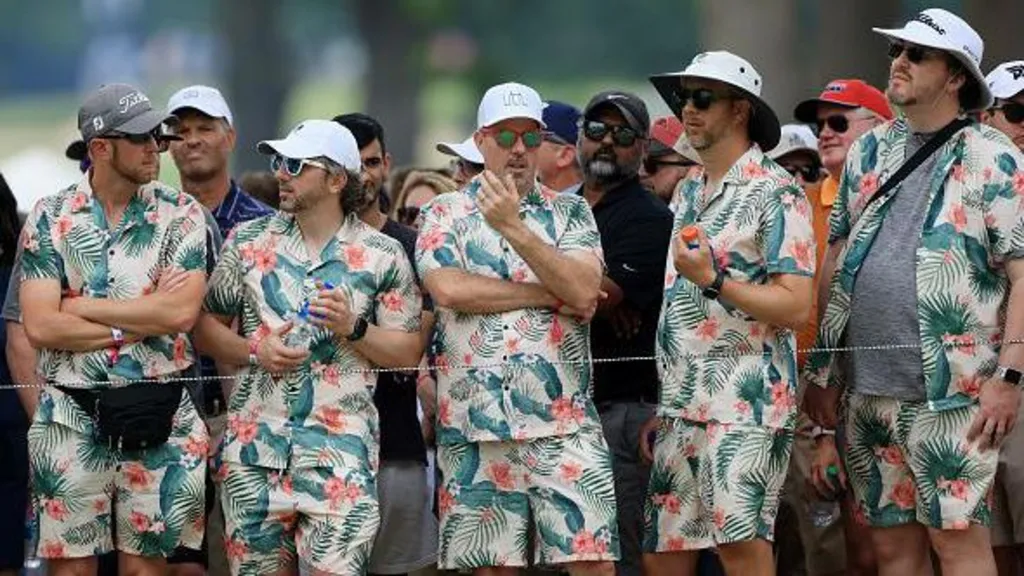
The Aloha shirts
As Hawaii emerged as a popular destination for wealthy tourists in the 1930s, shirts in bold colours with island motifs called the ‘Aloha shirt’ became a sought-after souvenir.
According to Dale Hope, an expert in Hawaiian textile and patterns, the Watumull’s East India Store was one of the first on the island to carry designs with Hawaiian patterns.
The designs were first commissioned in 1936 by Gobindram from his artist sister-in-law Elsie Jensen.
“Instead of Mount Fuji, she’d have Diamond Head, instead of koi [she’d] have tropical fish, instead of cherry blossoms [she’d] have gardenias and hibiscus and all the things we know here,” Hope said.
The designs were sent to Japan where they were handblocked onto raw silk, Nancy Schiffer writes in the book Hawaiian Shirt Designs.
“These subtle floral patterns, modern and dynamic in concept, were the first Hawaiian designs to be produced commercially,” Schiffer notes.
“They were sold by the boat load and were exhibited as far away as London,” William Devenport says in the book Paradise of the Pacific.
Gobindram’s daughter Lila told Hope that the Watumull’s Waikiki store had American movie stars Loretta Young, Jack Benny, Lana Turner and Eddie “Rochester” Anderson coming to buy these shirts.
“More and more we are finding out that Watumull has become a synonym for Hawaiian fashions,” Gulab Watumull said in a 1966 interview in the Honolulu Star-Bulletin.
The Watumulls soon bought the Royal Hawaiian Manufacturing Company, where the first matching family aloha wear was created.
Getty ImagesLong road to citizenship
Despite their success, it would be decades before the Watumull brothers – Jhamandas and Gobindram – received US citizenship. Their early years in the country were marred by discrimination and difficult immigration laws, the Hawaii Business Magazine wrote.
In 1922, Gobindram married Ellen Jensen, an American, whose citizenship was stripped under the Cable Act for marrying an immigrant who was not eligible for US citizenship. Jensen would go on to work with the League of Women Voters to reform the law and regain citizenship in 1931.
Gobindram would become a citizen in 1946 when a law allowing Indians to gain citizenship through naturalisation was enacted.
His brother Jhamandas, meanwhile, continued to split much of his time between India and Hawaii.
During India’s 1947 partition, the Watumull family moved from Sindh to Bombay (now Mumbai), leaving much of their property behind, SAADA says.
Jhamandas’ son Gulab eventually arrived in Hawaii to work in the family business and become its head.
In 1955, the brothers split the business with Jhamandas and Gulab keeping its retail portion while Gobindram’s family took over its real estate section.
Jhamandas moved permanently to Hawaii In 1956, a few years after the death of his wife and one of their sons, and in 1961, became a US citizen.
Getty ImagesIndia connect
Over the years, the family remained invested in the welfare of India and its people. Gobindram was an active member of the Committee for India’s Freedom and often travelled to Washington to support the country’s case for independence, Elliot Robert Barkan writes in Making it in America.
Gobindram’s home in Los Angeles was “a Mecca for people concerned with Indian independence”, Sachindra Nath Pradhan notes in the book India in the United States.
The Watumull Foundation in 1946 sponsored a series of lectures by Dr S Radhakrishnan – who later served as India’s president – at American universities.
Gobindram’s wife Ellen was instrumental in bringing an international parenthood conference to Delhi in 1959, leading to the establishment of the country’s first birth control clinics.
The family’s philanthropy has and continues to include funding for educational institutions in Hawaii and in India, endowments for Honolulu-based art programmes and promoting Indian-Hawaiian exchange.
Getty ImagesMany of the Watumull brothers’ grandchildren now work in and around Hawaii.
In the past few years, as the family business shifted focus to real estate, the last Watumull retail store closed in 2020. The company thanked its customers “for years of good business and good memories”.
Watumull Properties purchased a 19,045 sq m (205,000 sq ft) marketplace in Hawaii last year. JD Watumull, the president of the company, said, “The Hawaiian Islands continue to be our family’s focus today and in the future.”
Follow BBC News India on Instagram, YouTube, Twitter and Facebook.

Hawaii
‘Trashy’: visitors complain over homeless encampment on Waikiki beach
HONOLULU (HawaiiNewsNow) – Feet away from the line of blue umbrellas providing shade for beachgoers at Fort DeRussy Beach Park, there is often a row of tents sheltering homeless people.
Unlike other homeless clusters throughout Waikiki and the rest of Oahu that typically sit on the outskirts of public spaces, the encampment sits right on the beach for all to clearly see.
“I didn’t expect it, I thought it would be a nicer area, cleaner, then you get people like that that affect the area, make it look trashy,” visitor Aiden Moffett said.
Some trash and abandoned belongings appeared to have been left behind this week, but there were hardly any tents after Department of Land and Natural Resources personnel cleared them out between April 1 and 2.
The effort was a part of a monthly, joint operation to remove homeless encampments at Fort DeRussy, as well as the Ala Wai, Hilton Lagoon, and Waikiki Beach.
“Fortunately, there’s not any around here anymore, but I do hate to see it anywhere,” said visitor Patricia Orr.
Several visitors have been complaining about the camp on the military reservation, with some posting about it on social media.
A few guests at the Hale Koa Hotel also mentioned the tents in reviews on TripAdvisor.
One profile from Santa Clarita, California titled their April 16 post, “Need to (get) rid of ghetto tents on beaches,” adding, “This year for the first time, homeless tents line the beach. Imagine renting the highest rate room and stepping out on the lanai to a view of a beach gone ghetto. Shame on you, Hawaii. Your biggest revenues come from tourism. Literally thousands of other vacation destinations exist.”
Other beachgoers were not bothered.
“If it’s not a bunch of trash all around, then I think it’s fine, and if they’re staying in their tents or not causing a mess, then it’s good,” visitor Landen Maley shared.
The U.S. Army Garrison Hawaii told Hawaii News Now:
“U.S. Army Garrison Hawaii is aware of the concerns regarding the encampment located on the beach near the Hale Koa Hotel and understands the impact this situation has on the community. We are working closely with our City and County of Honolulu, State of Hawaii and other local partners to help ensure the area remains safe, orderly, and accessible for all who use it.
Adding to the complexity of this issue, multiple agencies share responsibility for this area. The beach zone—from the beach walk concrete to the high‑water line—is under the jurisdiction of the State of Hawaii Department of Land and Natural Resources, which is responsible for enforcement and any required clearance actions in that space. The area extending from the beach walk concrete to Kalia Road falls under the jurisdiction of U.S. Army Garrison Hawaii.
As part of a coordinated team effort, U.S. Army Garrison Hawaii will continue to support our partners in their response efforts, maintain safety for all users, and assist agencies and private organizations with the expertise to provide care and services to those who do not have a home. Together, we remain committed to addressing this issue in a respectful manner that considers the needs of all affected—those experiencing homelessness, visitors, beachgoers, and the broader community.”
DLNR responded to our request for comment with the following:
“The most recent DLNR cleanup of the Ala Wai, Hilton Lagoon, Ft. Derusy, and Waikiki Beach was April 1-2. Cleanups of this area occur about once a month during the late night to early morning hours and are typically joint operations with DLNR, City and HDOT working together to address multiple jurisdictions jointly. HPD and DOCARE both conduct patrols to support enforcement efforts between cleanups.
The military provides support by having Hale Koa’s security standing by to ensure no personal property goes on federal property. US Army Garrison Hawaiʻi has reached out to DLNR staff to see how the Army can assist further and are looking into options.”
City officials provided the following statement:
“This continues to be a coordinated effort between the City, the State, and our nonprofit partners to address ongoing concerns in the area.
We are working closely with State and DLNR partners to facilitate additional joint operations that will allow us to move forward more effectively.
Our focus remains on balancing compassionate outreach with the need to address illegal activity and restore the area for the broader community.”
Copyright 2026 Hawaii News Now. All rights reserved.
Hawaii
Hawaii Traveler Just Found This 186% Hawaiian Airlines Fee Hike
A reader booking a Hawaii flight just found and wrote to us about one fee that nearly tripled this week, from $35 to $100. But the bigger story is what else readers are finding at booking and onboard, from fees to meals, as Hawaiian’s old terms get replaced with ones the new airline can actually afford to keep.
This $35 fee just became $100.
Hawaiian’s longtime interisland cabin pet fee was $35, a price well below the rest of the airline industry. The cabin pet fee is now $100, whether flying interisland or between Hawaii and the mainland. Checked pets on interisland flights are listed at $60, so even that option now costs more than the old cabin fee many residents and repeat visitors knew. Moving from $35 to $100 is a 186% increase, and a quick interisland roundtrip with a pet now costs $130 more.
The new fee is closer to what mainland carriers already charge for pets in the cabin, where $100 to $150 has long been common. That doesn’t make the increase easier for longtime Hawaii travelers who booked expecting the old Hawaiian price, which was unusually low when measured against the larger airline system Alaska brought with it.
The reader who found out at booking.
One reader put it plainly after finding the new price while trying to make a pet reservation. The frustration was not just the dollar amount. It was the timing, the lack of warning, and another familiar Hawaiian practice that pulled the rug out from under travelers still assuming the old rules applied.
“Alaska is not better in another way. Today I discovered that taking a pet on an inter island flight is now $100 as opposed to $35 with Hawaiian. Had I made my pet reservation just 2 days ago I would have saved $65 per way. Outrageous! This is not in the spirit of Aloha.”
For a traveler making a short island hop, the pet fee can now approach or exceed the passenger fare itself, depending on route, timing, and when the ticket was booked.
The meal that still isn’t.
The pet fee is one data point, and meals are another. Readers are describing gaps between what they expected from Hawaiian and what they received on flights, part of a longer pattern of small Hawaiian touches changing, being repriced, reduced, or still unclear during this week’s transition.
One reader booked a mainland flight under the Hawaiian name and reported the meal didn’t match what was promised.
“I just flew on a ‘Hawaiian’ flight from Hawaii to the mainland and having doubts about service changes, I checked 2 weeks, and then 72 hours in advance to pre-order a meal in premier class seating. It stated meals for that flight were complimentary but we got a bag of snack mix only. It is disappointing to experience these inconsistent changes among the Alaska takeover.”
Comments we have received at Beat of Hawaii say that complimentary meals are still being phased out. Readers are reporting, and employee accounts are pointing in the same direction. Food that once defined Hawaiian’s mainland and long-haul service is being reduced, reworked, or shifted. Alaska sent us a different message this week when we wrote about Hawaiian Air meal service:
“There are no changes to our complimentary meal service in our main cabins. During our PSS transition, several dual‑brand content updates were made to our webpages, and the link referenced in your post was unintentionally directing to an Alaska Airlines pre‑order page. We’re working to correct that now.
Two days later, however, there’s no sign on Hawaiian’s own food page of what complimentary meals in economy still exist. The page only refers to business class meals.
A reader says what BOH has been reporting.
One longtime BOH reader put it in harsher terms than we would have chosen. The loss did not begin on one date. It came through smaller moves, thinner service, and a pricing model that kept asking the question of whether the old Hawaiian Air experience could survive as a standalone airline model.
“I am having trouble understanding why people are mourning the loss of Hawaiian Airlines. It died years ago making incremental changes to their image and service. Flying Hawaiian airlines in their heyday was a special experience. But, like many other things in life right now, there’s little left of what we once knew.”
The old Hawaiian experience had been fading long before Alaska took control, even while many travelers still hoped the brand, the food, the service style, and the Hawaii-specific aspects they still remember fondly would remain intact. Alaska did not create the problems Hawaii travelers are feeling, but the acquisition is forcing the pricing and service reset into public view in a big way. The $35 pet fee moving to $100 is just another example.
The longhaul issues also come into focus.
One reader just described a much 10,000 mile trip on Hawaiian this week, where the food issue became harder to understand because of the route length and total travel time.
“I just got off a 9hr flight from Sydney Australia. We had a light meal on that flight…. a 3hr stop over and now am on a 9-10hr flight to JFK and now I have to purchase food and drinks. Absolutely pathetic for such a long flight.”
The undoubtedly soon to be resolved pattern has three points: an interisland fee increase, a premier-class meal gap, and a long-haul food complaint. Travelers are bringing old Hawaiian expectations into a new system where fees, meals, and what’s included are being reset.
We’ve experienced this ourselves in countless mileage upgrades from economy to business/first class on Hawaiian flights. These were offered at pricing too low to be sustainable, and compared with the rest of the industry. Those cheap mileage upgrades are now gone.
That kind of value built loyalty. But it also created an obvious question for any acquiring airline. Cheap fees, too generous upgrades, included meals, and other unique offerings helped Hawaiian feel different. They also left Hawaiian in terrible financial straits. And they leave Alaska with plenty of places where the larger airline can raise, remove, or reprice things.
Why the old Hawaiian couldn’t last.
For longtime Hawaiian travelers, this part is still uncomfortable. Many of the things people loved were real, but they were priced in a way that was hard to defend commercially once Hawaiian was no longer standing by itself. A bigger carrier absorbs a smaller one and necessarily looks for alignment. The cheaper system moves toward the more expensive one, and not the other way around.
Hawaiian’s “Aloha discount” is what the merger ended. The brand still appears, the Pualani paint job remains, and the word Hawaiian still carries deep meaning for many travelers. But the pricing system underneath is changing. That is how the pet fee increase connects to the meal complaints, the upgrade math, and more.
Hawaiian’s standalone pricing was not sustainable, and that reality is part of what made the acquisition necessary. Travelers can be angry about the loss and still see why the old setup wasn’t going to survive once a larger airline took over.
What to expect.
Don’t assume legacy Hawaiian terms still apply just because the flight is to, from, or within Hawaii. Check at booking, especially pets, bags, seats, food, and upgrade options. Check again too before departure, because readers are already finding gaps between what they expected, what they saw online, and what they report happened onboard.
For meals on mainland and long-haul flights, don’t rely on memory from past Hawaiian trips. Look closely at what is included, what must be pre-ordered, and what may now be sold onboard. If the site and the airline say one thing and the cabin delivers another, that’s the gap readers are now reporting.
Have you booked a Hawaii flight, interisland or mainland, since the merger took hold? What did you expect based on past Hawaiian service, and what did you actually get?
Get Breaking Hawaii Travel News
Hawaii
Aloha in Action benefit concert raises money for flood victims
HONOLULU (HawaiiNewsNow) – Large crowds gathered in Ko Olina on Thursday for a benefit concert to support flood victims from last month’s Kona low storms.
The Aloha in Action benefit concert boasted an all-star lineup, including Jack Johnson, Kokohe Kai, Jason Momoa, Amy Hanaialii and Kimie Miner, to name a few.
“We called it ‘Aloha in Action,’ because, really, that’s what it’s all about. Everyone just showing their aloha, coming together and making sure that we’re doing our part to support others when there is need,” said Kuhio Lewis, president and CEO of the Hawaiian Council.
Proceeds from the concert will go to the Hawaiian Council’s Kakoo Mai fund to benefit residents affected by the flood, with some also going to nonprofit organizations providing support.
So far, organizers said they’ve raised almost $3 million in collective funds.
“It’s going to go to support the nonprofits that are on the ground doing that important work, oftentimes it’s hard to raise the money at the same time, so we’re being that conduit to help them to do that part, raise the money to make sure they’re resourced and supporting our community.”
Lewis said they are using their experience from assisting with the recovery of the 2023 Lahaina wildfires to help flood-impacted residents.
“We learned a lot in helping the Lahaina residents recover, he said. “So when we saw what was going on here, we applied all of our knowledge to helping the residents that were impacted by the floods.”
Organizers say as of earlier Thursday afternoon, 6,500 tickets were sold.
The concert runs until 10 p.m., and tickets are still available.
“Just come down,” he said. “We’re still selling tickets at the door. We don’t want to deny anyone. It’s a great showing of the community coming together.”
There is a charge for parking, cash only.
Copyright 2026 Hawaii News Now. All rights reserved.
-
Austin, TX6 minutes ago
Safeguarding Your Website — BigScoots
-
Alabama12 minutes agoEverything Josh Elander said on a Friday doubleheader sweep of Alabama
-
Alaska18 minutes agoMissing 19-year-old Kelly Hunt found dead in Anchorage
-
Arizona24 minutes agoCardinals’ Carson Beck NFL draft pick slammed as ‘waste’
-
Arkansas30 minutes ago
Gibler, Eaves Combine for Two-Hit Shutout as #24 Arkansas Clinches Series Win against Missouri
-
Colorado42 minutes agoEx-owner of Colorado funeral home where decomposing bodies were found is sentenced to 30 years
-
Connecticut48 minutes agoFairfield police cancel Jennings Beach Carnival over public safety concerns
-
Delaware54 minutes agoPhoto Gallery: Smyrna Boys Lacrosse vs Sussex Central – Milford LIVE! – Local Delaware News, Kent and Sussex Counties
