Northeast
Ivy League murder suspect acted superior, did not expect to be caught: body language expert

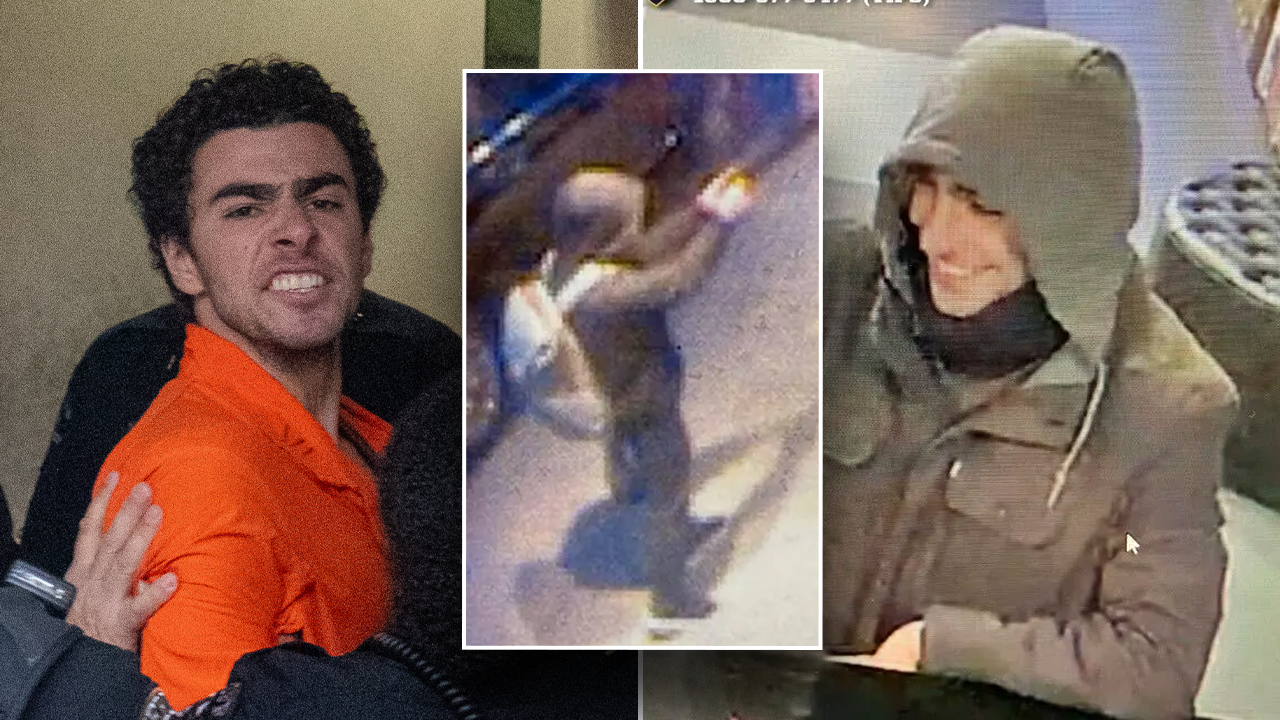
Luigi Mangione’s body language as he was escorted into a Pennsylvania courthouse gives insight into the accused killer’s mindset, according to a body language expert.
Mangione, accused of killing UnitedHealthcare CEO Brian Thompson in Manhattan, was arrested in Altoona, Pennsylvania, on Monday when a McDonald’s customer saw he resembled images of the suspect in the shooting.
Charged in Pennsylvania with forgery and carrying a firearm without a license, he has not waived his right to an extradition hearing to face murder charges in New York.
As he was escorted into Blair County Court on Tuesday by a cadre of officers, the jumpsuit-clad 26-year-old was wide-eyed and had his head on a swivel as he shouted at surrounding reporters. Susan Constantine told Fox News Digital that Mangione showed a “rigidity” that indicated he was fearful.
FRIENDS, ACQUAINTANCES DEFEND MANGIONE FAMILY AS MEDIA DESCENDS ON ALLEGED CEO KILLER’S HOMETOWN
CEO murder suspect Luigi Mangione shouts as officers restrain him as he arrives for his extradition hearing in Hollidaysburg, Pennsylvania on Tuesday, Dec. 10, 2024. (David Dee Delgado for Fox News Digital)
But through that, Mangione showed “a sense of arrogance and pompousness” through “just a slight raise of [his] chin” and the way that he literally looked down his nose at his surroundings.
“Keep in mind what we’re dealing with – a person who has been wronged in his own mind in some sort of way… We don’t know yet exactly all the reasons why,” she said. “We also know he’s adopted some sort of radical belief system, and he also feels that he is the one that needs to act.”
Likewise, Constantine said Mangione’s chin is pointed up in his mugshot photos – both the ones taken in his orange jumpsuit and the one taken in a blue suicide prevention smock.
UNITEDHEALTHCARE CEO MURDER SUSPECT HAS OUTBURST OUTSIDE PENNSYLVANIA COURTHOUSE
A mugshot photo was released by the Pennsylvania Department of Corrections of Luigi Mangione on Monday, Dec. 9, 2024. (PA Department of Corrections)
“Remember I told you that chin is up – when we see the chin up, we can see the Adam’s apple pop out… the Adam’s apple pops up…his nose pops up in the air,” she said. “All of this is pride and arrogance and pompousness – militant and prideful.”
His expression, she said, is a stark contrast from the smiling photograph of the suspect flirting with a hostel employee in New York before the Dec. 4 assassination.
NYPD MATCHES HANDGUN, FINGERPRINTS IN UNITEDHEALTHCARE CEO SLAYING, COMMISIONER SAYS
Luigi Mangione pictured in a Pennsylvania mugshot after his arrest in connection with the murder of UnitedHealthcare CEO Brian Thompson. (Obtained by Fox News Digital)
“This was not the sinister killing [face] – this was him, his charismatic personality, his flirty personality, the one that everybody and his friends and family are all talking about,” Constantine said. “He’s a great guy. They like him. He’s, you know, engaging and he’s, you know, speaks in front of the public and doesn’t have any fear about it. That’s his personality.”
“These types of killers disassociate – it’s called cubing,” Constantine continued. “So when they’re in active pursuit, there is one personality. And then when he’s in relationships, he has another one… he’s able to disassociate from what is the sinister thoughts and ideas and radicalism that’s actually flooding through his mind.
“All of a sudden, that smile turned to a frown [during his perp walk] – the lifted cheeks turn into droopy cheeks. And then he had a more rigid and more tension in his facial expression that was dissimilar to what we have seen in the past. So this was a game over expression.”
A photo obtained by Fox News Digital shows Luigi Mangione. (Obtained by Fox News Digital)
The suspect’s confident stance during the shooting, captured on surveillance footage, is another side to the “cube” – and indicates the planning that went into the attack.
“He had already rehearsed – he was ready for the engagement. This was not something that just happened spontaneously. This is something that he thought out, measured and planned,” Constantine said. “That’s why you see his body language being very much in control. He’s not startled. He knows exactly what he’s going to do. That’s why his countenance is down. His energy level is down because he’s in hyper-focus.”
The suspected gunman in UnitedHealthcare CEO Brian Thompson’s murder, believed to be Luigi Mangione, is seen flirting with a hostel employee on surveillance footage before the Dec. 4 shooting. (NYPD)
Constantine told Fox News Digital that Mangione’s body language – both during his perp walk and in a photograph snapped by police in a holding cell the day before – indicated that he did not expect to be apprehended by police.
“There are behavioral signatures and cognitions of people that are being deceptive,” Constantine said. “[People display] rigidity when [they are] caught. What do they do? They sit up straight, they’re very militant… So when you think about his structure, he’s just very robotic.”
Read the full article from Here

Massachusetts
Will Minogue’s Trump ties, abortion stance make him unelectable in Mass.? – The Boston Globe

Minogue’s words during a recent appearance on WCVB’s “On The Record” — “I’m a Catholic and I am pro-life” — certainly run counter to the careful abortion rights positioning of other Massachusetts Republicans who won the governor’s office over the past three-plus decades.
When Charlie Baker ran for governor in 2014, his first general election campaign ad featured his then-17-year-old daughter saying, “You’re totally pro-choice and bipartisan.” When Mitt Romney ran for governor in 2002, he stated in a debate, “I will preserve and protect a women’s right to choose.” When Bill Weld ran for governor in 1990, he told the Globe, “Count me as ‘modified pro-choice.’”
Over time, these positions evolved in different ways.
Weld went from “modified pro-choice” to showing up at a national GOP convention to lobby against the party’s antiabortion platform. When Romney ran for president, he retreated completely from the stance he’d taken in Massachusetts. Despite Baker’s “totally pro-choice” positioning, he ultimately vetoed a bill that expanded access to abortion, including a provision that would have allowed 16- and 17-year-olds to get an abortion without parental consent. The Legislature overturned that veto, and the measure became law in 2020.
As reported by WBUR, the Minogue campaign put out a statement that said, “Mike Minogue cannot and will not change the law,” without elaborating beyond that.
In 2022, the Supreme Court overturned abortion as a national right, making state law even more critical. Since then, Governor Maura Healey has made the strengthening of abortion protections for patients and providers even more of a signature cause.
Last week’s ruling by a federal appeals court in New Orleans, which halted access to a common abortion drug, mifepristone, through the mail for telehealth patients, once again underscored the political uncertainty around abortion access. Healey, who joined other Democrat-led states in stockpiling the drug to guard against a potential ban of it, quickly issued a statement that said she would “keep standing up to efforts by President Trump and his allies to roll back reproductive rights.”
On Monday, the Supreme Court temporarily restored access to mifepristone. Both sides have a week to respond.
While Minogue can try to argue that abortion is protected in Massachusetts, and there’s nothing he can or would do to change that, these are unpredictable times for reproductive rights. It’s a key issue that puts him at odds with many Massachusetts voters.
His first campaign ad since the GOP convention that endorsed him introduces him as “a new kind of governor.”
By Massachusetts standards, he certainly would be different. He’s much closer to Trump than other recent Republican candidates, having hosted that Vance fund-raiser and donated nearly $1 million to Trump and MAGA candidates in 2024.
Of Massachusetts’ 5 million voters, 1.2 million are registered Democrats, and 423,387 are registered Republicans. Unenrolled or independent voters, who make up 3.2 million registered voters, are key to winning statewide office. Given that Trump’s overall approval rating in the state is about 33 percent, Minogue’s Trump connections are not going to help him much with that crowd.
Polling also shows that the vast majority of Massachusetts voters strongly support abortion rights and are more likely to support elected officials if they work to advance legislation that will prevent the government from interfering with personal decisions about pregnancy.
Minogue will no doubt want to talk about transgender athletes, illegal immigration, the cost of housing and utilities, and the overall issue of economic growth. His allies are also trying to drive Shortsleeve out of the race, and in the WCVB interview, Minogue argued that the overwhelming endorsement he got from the roughly 1,800 delegates who attended the convention shows where the Republican Party is in Massachusetts right now.
And so it does. But is that where most Massachusetts voters are?
There’s a legitimate debate to be had, for sure, about the economic direction of the state.
But to have it, Minogue will have to convince voters to look past his Trump association and his “pro-life” self-description. Meanwhile, a fellow Republican is calling him unelectable — music to Healey’s ears.
Joan Vennochi is a Globe columnist. She can be reached at joan.vennochi@globe.com. Follow her @joan_vennochi.
New Hampshire
NH medical marijuana program added 2,100 new patients last year – Monadnock Ledger-Transcript

More than 2,100 new patients signed up with New Hampshire’s Therapeutic Cannabis Program last year, bringing the total registry to nearly 17,000, according to new state data.
That increase — about 14.5% from the year prior — is the largest since 2021.
Likely driving the growth were changes to state law in 2024 that allowed more people to qualify for medical marijuana use. They can now join the program at doctors’ discretion — which covers any debilitating or terminal condition or symptom, as long as their medical provider agrees the benefits of cannabis could outweigh the risks — or with a diagnosis of generalized anxiety disorder.
More than 900 patients list anxiety as their qualifying condition, according to the report issued this week by the state Department of Health and Human Services, which oversees the program.
“There was certainly an uptick in growth after those bills took effect in late 2024. It hasn’t skyrocketed, but has somewhat accelerated the growth of the program,” said Matt Simon, a lobbyist for GraniteLeaf Cannabis, one of three licensed cannabis providers in the state. “Where we’ve been, this extremely tiny program that was tiny for years, it is steadily growing.”
With 16,846 people, about 1.2% of the population are either certified patients or designated caregivers, who are authorized to buy cannabis on behalf of a patient. That’s close to one in every 84 Granite Staters.
The data released by the state was collected in June 2025. Simon estimates roughly 1,000 more people have joined since then.
The Therapeutic Cannabis Program, established in 2013, is the only way to lawfully consume marijuana in New Hampshire, as recreational use remains illegal. Patients require a doctor’s approval to join and receive a state-issued card that licenses them to buy medical cannabis products from seven dispensaries across the state, operated by three producers: GraniteLeaf Cannabis, Sanctuary Medicinals and Temescal Wellness.
The new data comes as the Trump administration reclassified medical marijuana last month as a less dangerous drug, effectively legitimizing programs run in 40 states, including New Hampshire’s. The change opens the door for more cannabis research and potential tax breaks for producers.

In New Hampshire, program demographics skew older. Nearly a quarter of patients are between 55 and 65 years old, and almost 70% of patients are over the age of 45. Pain is far and away the most common condition that people aim to treat with cannabis.
Patients are concentrated in southern New Hampshire and in towns where dispensaries, also called alternative treatment centers, are located. There are seven across the state in Chichester, Conway, Dover, Keene, Lebanon, Merrimack and Plymouth.
Concord has between 300 and 734 patients, according to the state data. Manchester has the most patients out of any municipality, at 1,150.
Despite the program’s growth, cost and accessibility remain a challenge. Jerry Knirk, a retired surgeon and state representative who now chairs the state’s Therapeutic Cannabis Medical Oversight Board, said New Hampshire’s strict regulatory environment plays a role.
“Part of the issue is we have a very high-quality, highly regulated program with testing of all products and lots of restrictions and things, and that does make things more expensive, but it’s how you keep the quality to be really high,” Knirk said. “We want to have really good quality. Unfortunately, it does make it a little bit harder.
One family of three spent $548 after discounts on a six-week supply of their medicine, which they use for chronic pain and other ailments, the Monitor reported last year.
Limited retail locations also mean that in some parts of the North Country, patients must drive upwards of an hour to obtain their medicine.
“The lack of dispensary locations, well, yeah, that is a problem,” Knirk said.
The oversight board, joined by other advocates, has pushed for laws to alleviate those concerns. Some of the biggest include allowing patients to grow their own medicine at home and letting dispensaries use outdoor greenhouses to cut down on electricity costs.
That legislation is introduced in the State House almost every year but is often torpedoed by Republicans’ concerns over security protocols.
While advocates expected little movement on marijuana policy under Gov. Kelly Ayotte, who opposes legalizing recreational use, the bill to allow greenhouse cultivation is nearing the finish line this session. Former governor Chris Sununu vetoed a similar bill two years ago; Ayotte hasn’t indicated whether she’d sign it.
Simon said that while cost and accessibility are still challenges, patient satisfaction with the program is improving.
“We started in a tough place with a lot of people really not liking the law and the program,” he said. “I think it’s been steady growth and steady improvement. Prices have come down somewhat, and the vibes are better.”
New Jersey
The PATH fare hike just took effect: it’ll now cost you $3.25 to take the train to New Jersey

Commuters traveling between New Jersey and Manhattan are about to pay a little more for their rides. Starting today, the Port Authority of New York and New Jersey has officially implemented a fare increase across the PATH system. It’s another hit for the wallet, but the increase comes with the most significant service expansion the 118-year-old system has seen in decades.
As of today, the base fare for a single ride on the PATH has increased by 25 cents, jumping from $3.00 to $3.25. This adjustment affects all standard payment methods, including TAPP, SmartLink and Pay-Per-Ride MetroCards.
Multi-trip options still offer a better deal for those looking to save. Bundles of 10, 20 or 40 trips via TAPP cards now average $3.10 per ride, up from the previous $2.85. Senior citizens and riders with disabilities will see a smaller adjustment, with reduced-fare tickets increasing by a dime to $1.60.
This is only the first of a series of increases, however, as the Port Authority has outlined a roadmap of 25-cent increases every January through 2029, at which point a single ride will reach $4.00.
The fare hike is immediate, but the payoff for commuters arrives on May 17, when the PATH restores full seven-day service across all four lines for the first time since 2001.
The highlight of these changes is the return of direct Hoboken–World Trade Center weekend service, ending a nearly 25-year hiatus. Additionally, the time-consuming “Hoboken detour” for Jersey City riders is being eliminated during peak weekend hours. Between 10am and 9pm, the Journal Square–33rd St and Hoboken–33rd St lines will run every 10 minutes, while the Hoboken–WTC line will run every 20 minutes.
Port Authority Executive Director Kathryn Garcia noted that these changes mark a “larger turning point” for the system. The increased revenue is earmarked for critical infrastructure upgrades and system reliability.
“These game-changing service enhancements and improved fare payment options are continuing to provide more frequent and reliable service to our customers,” said PATH Director/General Manager Clarelle DeGraffe. “Having seven-day service on all our lines is a blueprint for more frequent, faster, and more reliable service for our customers.”
Beyond weekend changes, the agency is also tackling late-night frustration; Friday night service will now run every 20 minutes until 2am, finally replacing the dreaded 40-minute wait times.
For the thousands of daily riders, the higher price may be unwelcome, but the tradeoff is more convenience and reliability, and dramatic future improvements. Find out more at www.panynj.gov.
New fares on the PATH trains
- 1-Trip Total Access PATH Payment (TAPP), 1-Trip SmartLink, PATH SingleRide Ticket, Pay-Per-Ride MetroCard: $3.25 per ride
- PATH 2-Trip MetroCard: $6.50, or $3.25 per ride
- 10-Trip on TAPP Card: $31, or $3.10 per ride20-Trip on TAPP Card: $62, or $3.10 per ride
- 40-Trip on TAPP Card: $124, or $3.10 per ride
- Reduced Fare: $1.60, or $1.60 per ride
- TAPP Unlimited 1-Day Pass: $12.50
- TAPP Unlimited 7-Day Pass: $42.75
- TAPP Unlimited 30-Day Pass: $131.50
-

 Michigan16 seconds ago
Bridge Michigan welcomes four interns for the summer of 2026 – Bridge Michigan
-

 Massachusetts6 minutes ago
Will Minogue’s Trump ties, abortion stance make him unelectable in Mass.? – The Boston Globe
-

 Minnesota12 minutes ago
Several vehicles damages by large rocks, oil thrown off I-35 bridge near Rush City, sheriff says
-

 Mississippi18 minutes ago
Free food, discounts, gifts for National Teacher Appreciation Week in MS
-

 Missouri24 minutes ago
Lane of I-70 near St. Charles Road closes for emergency repairs
-

 Montana30 minutes ago
Montana days grow longer throughout May
-

 Nebraska36 minutes ago
Nebraska Correctional System names inspector general
-

 Nevada42 minutes ago
Nevada, California, Arizona propose water plan pushing cuts to 20%