Connect with us

Midwest

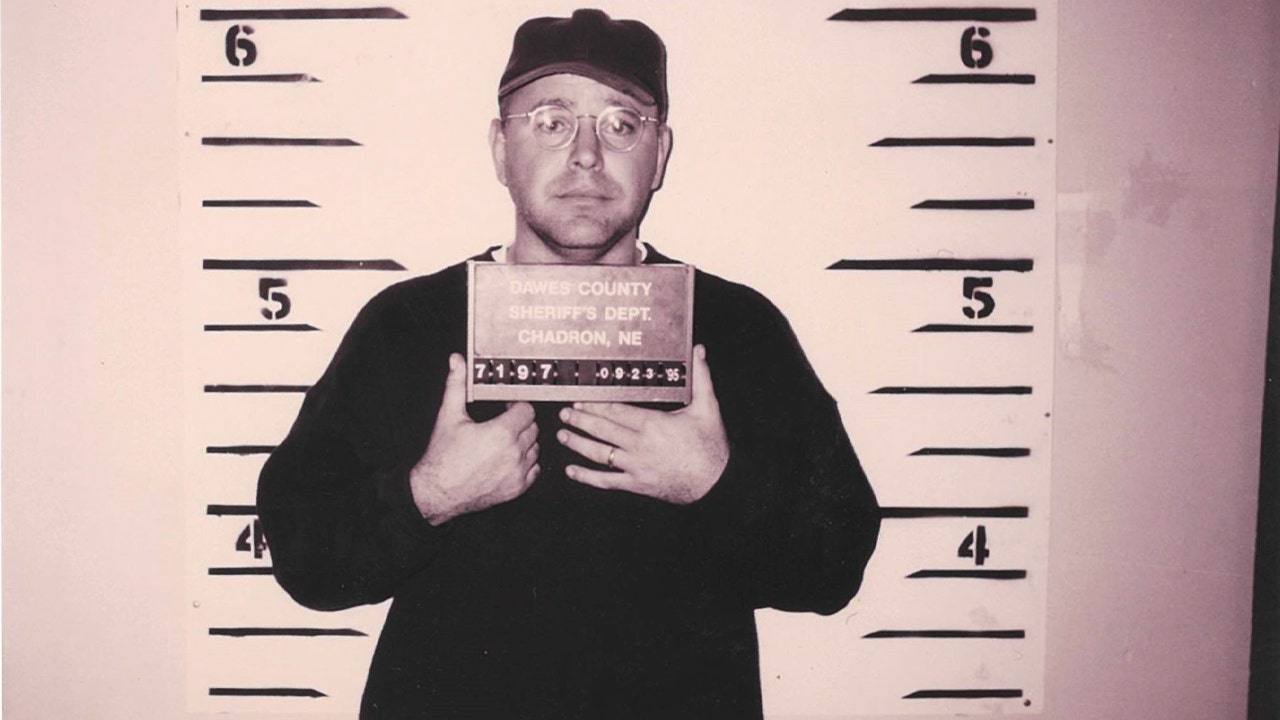
Kamala Harris' running mate Tim Walz pictured in 1995 Nebraska mugshot after DUI arrest

Published

on

Kamala Harris' running mate Tim Walz pictured in 1995 Nebraska mugshot after DUI arrest
Join Fox News for access to this content

Plus special access to select articles and other premium content with your account – free of charge.

By entering your email and pushing continue, you are agreeing to Fox News’ Terms of Use and Privacy Policy, which includes our Notice of Financial Incentive.

Please enter a valid email address.

Having trouble? Click here.

Minnesota Gov. Tim Walz became a national figure this week after Vice President Kamala Harris selected him as her 2024 running mate to challenge former President Trump and Ohio Sen. JD Vance.

His past became an immediate topic of interest — and a booking photo obtained by Fox News Digital shows the new vice presidential candidate pictured shortly after a 1995 arrest in Nebraska after state troopers pulled him over for speeding and suspicion of drunken driving.

Advertisement

The Dawes County Sheriff’s Office said Walz had been arrested on Sept. 23, 1995, after state police pulled him over on suspicion of driving under the influence of alcohol.

KAMALA HARRIS’ VP PICK TIM WALZ PREVIOUSLY CHARGED WITH DUI IN NEBRASKA

Minnesota Gov. Tim Walz, the Democrats’ 2024 vice presidential candidate, is pictured in a 1995 booking photo following a DUI arrest in Dawes County, Nebraska. (Dawes County Sheriffs Office)

Court documents allege that Walz, 28 at the time, who was a high school teacher and football coach at the time, was speeding above 80 mph. He failed a breath test with a .128 blood-alcohol level. The limit back then was .1 in many parts of the country, including Nebraska. It is now .08.

He also failed a field sobriety test, but his lawyer blamed the incident on a combination of his client’s bad hearing and that the state trooper didn’t turn his siren on right away.

Advertisement

It was “a little bit bizarre,” the lawyer, Russell Harford, claimed in court. Walz believed “somebody was after him.”

VICE PRESIDENT HARRIS NAMES MINNESOTA GOV TIM WALZ AS HER RUNNING MATE

Vice President Kamala Harris and Minnesota Gov. Tim Walz appear onstage together during a campaign event at Girard College in Philadelphia on Tuesday. Harris ended weeks of speculation about who her running mate would be, selecting the 60-year-old Midwestern governor over other candidates.  (Andrew Harnik/Getty Images)

Walz was booked into the county jail and later released on bond. The case ended in a plea deal where he admitted to a reduced charge of reckless driving.

Walz, now 60, paid a $200 fine and reportedly no longer drinks alcohol.

Advertisement

IT’S OFFICIAL: VICE PRESIDENT KAMALA HARRIS FORMALLY WINS THE DEMOCRATIC PRESIDENTIAL NOMINATION

Harris revealed Walz as her running mate on Tuesday. She became the presumptive Democratic Party’s 2024 presidential nominee after President Biden backed out of the race following a disastrous debate performance, disappointing polls and concerns about whether he is capable of continuing to lead the country.

Minnesota Gov. Tim Walz listens as President Biden speaks at Dutch Creek Farms in Northfield, Minnesota, on Nov. 1, 2023.  (AP Photo/Andrew Harnik)

Walz, a longtime National Guardsman and Nebraska native, was elected to the House of Representatives after a career in education. He took office as Minnesota’s governor in 2019 and won re-election in 2022.

Advertisement

Walz and his Republican vice presidential hopeful counterpart, Ohio Sen. JD Vance, are both Mountain Dew consumers, specifically Diet Mountain Dew. 

“Make it a Diet Mountain Dew and I’m sold,” Walz said in a 2023 X post in response to convenience store chain KwikTrip, which wrote, “idk who needs to hear this but 52 oz of diet coke is a perfect way to start the morning.” 

Fox News’ Gabriele Regalbuto contributed to this report.

Read the full article from Here

Advertisement
Continue Reading
Click to comment

Leave a Reply

Your email address will not be published. Required fields are marked *

This site uses Akismet to reduce spam. Learn how your comment data is processed.

Milwaukee, WI

Here’s how Milwaukee high school students can learn to drive for $35 this summer

Published

on

Here’s how Milwaukee high school students can learn to drive for  this summer


Summer is almost here, and so is registration for another round of $35 driver’s education classes for Milwaukee Public Schools students. 

Each semester, Milwaukee Recreation offers MPS Drive, a driver’s education program for Milwaukee Public Schools students ages 15 to 17.

Registration for July classes opened May 5. Students can take classes in person, online or both, in addition to getting their driving hours behind the wheel with an instructor.

Advertisement

Here’s what you need to know about the upcoming driver’s education classes and how you can join.

How do I sign up?

You can sign up through the Milwaukee Recreation registration site here. 

Students signing up for MPS Drive already have an account, according to Nicole Jacobson, citywide programs manager. Students should sign in using the first seven digits of their student ID. Their pin should be their last name with the first letter capitalized.

Students interested in the community-based program will need to be signed up through a parent’s account. To create a parent’s account, you’ll need a username, email and password. You will be asked to provide your name, address, phone number, date of birth and information for any other family members interested in Milwaukee Recreation activities. 

Once signed in, pick the class format, dates, time and location that works best for you, then click ‘add to selection list’ and ‘add to cart.’

Advertisement

Who can take classes?

Any student attending Milwaukee Public Schools between the ages of 15 and 17 and a half can sign up through MPS Drive. Students at some schools chartered through MPS can join as well. 

To verify if your student’s charter school is eligible, call     414-647-6050.

Where are the classes?

Classes are available in person within some high schools, a hybrid format using both online and in-person classes or an entirely asynchronous online course that students have 90 days to complete. 

All classes, including online courses, will include behind-the-wheel lessons with six hours of observation and six hours of driving, Jodie Donabar, driver’s education supervisor at Milwaukee Recreation, said.

How much does it cost?

The program has a $35 fee, which is used to cover the costs of the driver’s permit. This fee includes classroom education and practice time behind the wheel.

Advertisement

What if I’m over the age limit?

If you’re over the age limit, you can take your test without completing a driver’s education program when you turn 18. You will need to pass the written permit test, which you can prepare for by studying the Wisconsin Motorists’ Handbook, and take practice permit tests. 

After you receive your permit, you can practice driving with someone who holds a Class D driver’s license that is not probationary. You can then schedule a road test at the Wisconsin Department of Motor Vehicles. 

Those 18 and older can ask for tutoring help with the written permit test from local driving schools. You can also take a class at a private driving school, which costs on average $500 to $700. 


Alex Klaus is the education solutions reporter for the Milwaukee Neighborhood News Service and a corps member of Report for America, a national service program that places journalists in local newsrooms to report on under-covered issues and communities. Report for America plays no role in editorial decisions in the NNS newsroom.

This <a target=”_blank” href=”https://milwaukeenns.org/2026/05/05/heres-how-milwaukee-high-school-students-can-learn-to-drive-for-35-this-summer/”>article</a> first appeared on <a target=”_blank” href=”https://milwaukeenns.org”>Milwaukee Neighborhood News Service</a> and is republished here under a <a target=”_blank” href=”https://creativecommons.org/licenses/by-nd/4.0/”>Creative Commons Attribution-NoDerivatives 4.0 International License</a>.<img src=”https://i0.wp.com/milwaukeenns.org/wp-content/uploads/2025/07/cropped-NNS-Favicon.png?resize=150%2C150&amp;ssl=1″ style=”width:1em;height:1em;margin-left:10px;”>

Advertisement

<img id=”republication-tracker-tool-source” src=”https://milwaukeenns.org/?republication-pixel=true&post=159197&amp;ga4=G-HGM4XK3QCM” style=”width:1px;height:1px;”><script> PARSELY = { autotrack: false, onload: function() { PARSELY.beacon.trackPageView({ url: “https://milwaukeenns.org/2026/05/05/heres-how-milwaukee-high-school-students-can-learn-to-drive-for-35-this-summer/”, urlref: window.location.href }); } } </script> <script id=”parsely-cfg” src=”//cdn.parsely.com/keys/milwaukeenns.org/p.js”></script>


Source link

Continue Reading

Minneapolis, MN

Rosy Simas on Creating a Space for Peace in Minneapolis

Published

on

Rosy Simas on Creating a Space for Peace in Minneapolis


MINNEAPOLIS — On February 12, Trump-appointed “border czar” Tom Homan announced the “end” of Operation Metro Surge, during which more than 4,000 federal agents aggressively targeted immigrant communities in the Twin Cities, causing massive chaos throughout the area and killing Renee Good and Alex Pretti. It seemed meaningful that the same day as Homan’s announcement, Minnesota-based interdisciplinary artist Rosy Simas opened A:gajë:gwah dësa’nigöëwë:nye:’ (i hope it will stir your mind) at the Walker Art Center. The contemplative installation slows the viewer down, inviting a soft sense of communion with objects such as salt bottles made from woven corn husks, each hung from a grid on the ceiling in honor of one of Simas’s relatives, and offering a site of peace amid fear and confusion.

The exhibition is inspired by her fifth great-grandfather’s half-brother Handsome Lake (Ganyodaiyo’), who experienced a vision after years of war and began teaching his people about working from the Seneca notion of a “good mind” in the early 1800s. The aforementioned sensory work, on view through July 5, is part of a two-part project, which also includes performances on May 13–16. Simas is most known for her choreography, but she has long explored visual art in tandem with dance, at times mounting installation exhibitions and performances concurrently, as she does with this project. She’s also been gaining national recognition as a visual artist, recently earning a Creative Capital Award for that side of her practice. Here, she discusses her latest endeavor.


Rosy Simas outside of her exhibition (photo Ben Johnson, courtesy the artist)

Hyperallergic: How has the work changed since January?

Rosy Simas: The installation became more subtle. It was always intended to be a space that didn’t provoke, but maybe evoked. It is a space for people to rest their nervous systems, but also to inhabit a space made by a Haudenosaunee artist reflecting on what it means to try to create from a place of generating peace. I am interested in response, as opposed to reaction.

Advertisement
Salt bottles made with twined horn husks part of Rosy Simas: A:gajë:gwah dësa’nigöëwë:nye:’ (i hope it will stir your mind)

H: What is your experience of opening an exhibition in the midst of a federal occupation?

RS: When we knew that it was becoming more difficult for people to just exist around here, asking people to gather, that was sort of a no-brainer — that is not something that we can do. This isn’t a “just push through” moment. At the same time, I think having these kinds of spaces is really important during what feels like an oppressive occupation. It’s not even about a safe space. It’s a space where people can be with themselves.

Making work for a museum gallery is really difficult for me, because I like to think of the work as iterative, even within the time that it’s being shared. So for me, it’s difficult to put something up and let it be there until July, because things change.

 Treaty cloth panels and speaker in Rosy Simas: A:gajë:gwah dësa’nigöëwë:nye:’ (i hope it will stir your mind)

H: You tend to want to go in there and shift things around?

RS: Yeah, the static nature of exhibitions is really challenging for me. That is part of why we’re doing so many community engagement activities around it, and also why there are two shows. The performance has more of a presentational aspect to it, where there is something being shared that has more dynamic ebb and flow, and it is also intended to draw an audience’s focus into what’s happening with the performers themselves — what they are expressing and what they are sharing.

That’s different from creating an environment for people to be inside of, where they can be with their own individual experience. There’s still something relational being asked of the people who go into the gallery. They’re asked to contemplate what I’ve put forward in terms of materials and what those materials mean. But it’s a little different than performance, where they’re being asked to exist in relationship to the performers.

 Detail of treaty cloth panels in Rosy Simas: A:gajë:gwah dësa’nigöëwë:nye:’ (i hope it will stir your mind)

H: One of the things that I experienced with the exhibition was the different spaces that you move through. You’re being invited to sit or to visit each station in an active way. It seemed almost like it’s choreography for the participant who’s viewing the work.

RS: In Haudenosaunee world, we do everything counterclockwise. There is an invitation to come in, turn to your right, and see the embroidery and the first set of treaty cloth panels. And then to see the salt bottles, the deerskin lace, the treaty panels with the corn husk, and end up back where the language pillar is, where you can feel the vibration of the language — how it feels through a sense of touch, and not just a sense of hearing. Nobody’s telling people to come in and move counterclockwise, but people are invited in that way.  

Advertisement

My work as a body-based moving artist here is an important reference. The corn husk panels are hanging from a grid, and that’s intentional. The grid is made to reflect the way that I think as someone who primarily makes work in a theater setting: The way that the panels hang references how I think about stage design and how we experience performance in space. 

Embroidered treaty cloth panels in Rosy Simas: A:gajë:gwah dësa’nigöëwë:nye:’ (i hope it will stir your mind)

H: On social media, you commented about the need for visibility for Native, BIPOC, and queer voices. Why is creating a space for that presence so important right now? 

RS: Those voices are the ones that are being suppressed in all of this. We have to keep making work. There are people who haven’t been leaving their houses. There were people who became paralyzed and were unable to do their work. I have had serious moments of paralysis, for six to eight hours at a time, and that has been going on since January. And it’s not just because of this recent occupation, but it’s cumulative in many ways. 

Installation view of Rosy Simas: A:gajë:gwah dësa’nigöëwë:nye:’ (i hope it will stir your mind)

H: The space feels sacred. Was that something that you were going for? 

RS: I don’t know that I would use that term, but what your experience of the space and how it feels to you is probably the most important thing to me. 

It’s the same as making the dance work. From the first residency until now, the ideas around the dance work — not the meaning behind it, but the way that it’s presented and the space around it — shift depending on what environment we’re currently living in. And in Minneapolis since January, we’ve been experiencing a very particular environment, and my work happened to be made in that timeframe. I’ve put a lot of thought into creating a space that I think people need right now, in this very time. 

Advertisement


Source link

Continue Reading

Indianapolis, IN

Franklin Middle School’s ‘Welcome to Reality’ event prepares students for adulthood

Published

on

Franklin Middle School’s ‘Welcome to Reality’ event prepares students for adulthood


FRANKLIN, Ind. (WISH) — Franklin Community Middle School will host its annual Welcome to Reality event on Friday, offering eighth-grade students a hands-on, immersive experience designed to prepare them for the financial and personal responsibilities of adulthood.

Welcome to Reality is an interactive simulation that places students in the role of a 28-year-old working adult. Prior to the event, students select a career based on their grade point average and are assigned a corresponding salary.

During the event, students navigate through a series of stations including housing, transportation, utilities, and food. Students are required to make real-life financial decisions and manage a check registry to track expenses.

“This event is absolutely pivotal in the transition to high school for our students,” Monica Anderson, FCMS school counselor said. “The students experience, in real time, how their education can impact their future.”

Advertisement

Community members play a critical role in the simulation by facilitating transactions and serving as tour guides for students throughout the event.

The event is scheduled in groups throughout the school day:

  • 8:15 a.m. – 9:45 a.m.
  • 10:00 a.m. – 11:30 a.m.
  • 1:00 p.m. – 2:30 p.m.


Source link

Continue Reading
Advertisement

Trending
