
Connect with us

West

Illegal deported 3 times returns to California and lights deadly house fire with mom, children inside: source

Published

on

Illegal deported 3 times returns to California and lights deadly house fire with mom, children inside: source

FIRST ON FOX: Authorities in California have arrested a thrice-deported illegal immigrant in connection with a deadly house fire that killed a mom and two of her three of her children last month, according to a law enforcement source.

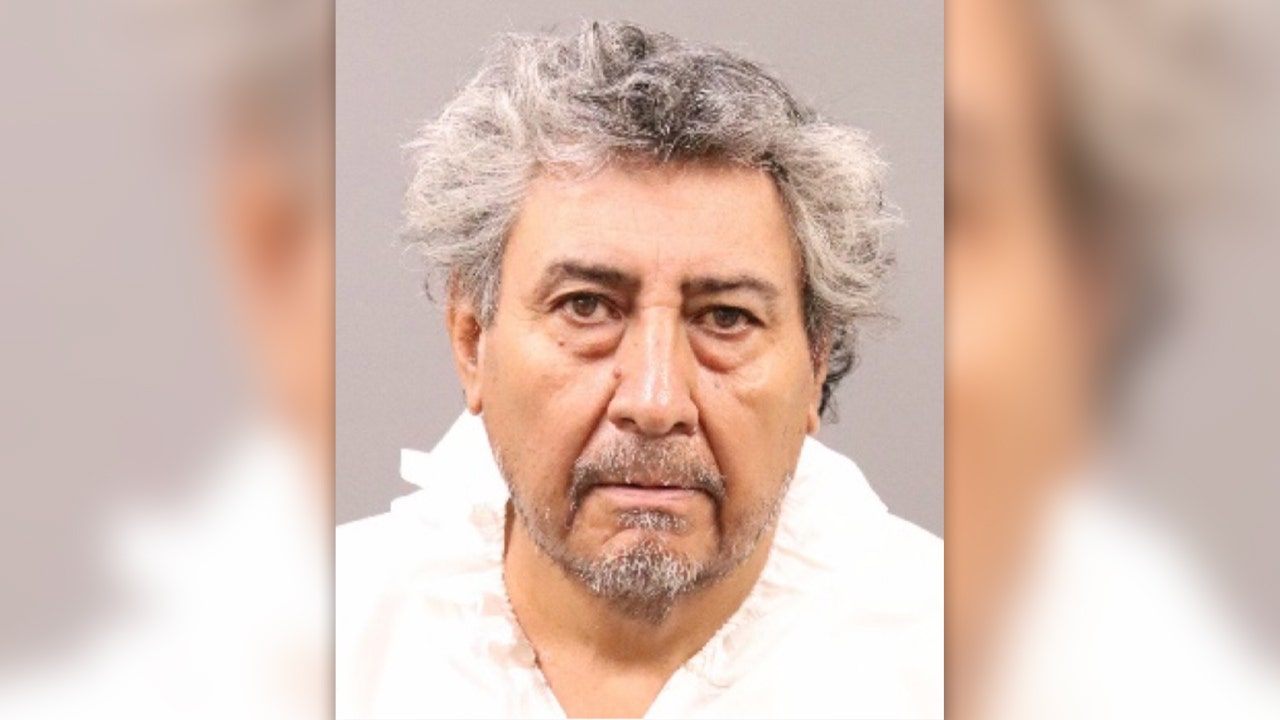
Stockton police announced the arrest of Jose Carmen Cardona, 59, Friday morning.

A source with knowledge of the investigation tells Fox News Digital the suspect has been deported three times and returned to the U.S. anyway.

ILLEGAL IMMIGRANT SUSPECTED IN MARYLAND MOM RACHEL MORIN’S MURDER FACES MAXIMUM PENALTY IF CONVICTED

Jose Carmen Cardona pictured in a booking photo after his arrest Friday on arson and murder charges in connection with a house fire that killed a mom and two young boys. (Stockton Police Department)

Advertisement

The victims have been identified as Lisbeth Gutierrez-Salazar, 32, and her two sons, Juan Gutierrez-Salazr, 10, and Julian Cardona-Gutierrez, 7.  A third boy whose name was not immediately released is the only one who escaped.

They were all asleep in their mobile home when Cardona allegedly set it on fire.

Cardona was dating the mother, but he was not the father of the children, police said.

SUSPECT IN NEW ORLEANS TOUR GUIDE MURDER IN US ILLEGALLY, HAS CRIMINAL HISTORY: ICE

Stockton police officers discuss a case outside a pair of parked cruisers in this file photo. (David Paul Morris/Bloomberg via Getty Images)

Advertisement

He fled the area and police requested help from the U.S. Marshal Service after obtaining an arrest warrant on June 28, according to authorities.

A nationwide manhunt came to an end Friday with his capture in Modesto, about 30 miles away from the crime scene.

U.S. Marshal for the Eastern District of California Lasha Boyden said that Cardona was arrested without incident at a bus stop.

José Carmen Cardona, 59, was taken into custody in Modesto on Friday, the San Joaquin County District Attorney’s office announced in a press conference. (San Joaquin County District Attorney’s office )

Cardona faces charges of murder, attempted murder and child endangerment, as well as special circumstances allegations of multiple murder, arson and torture, which make him eligible for the death penalty.

Advertisement

Boyden shared her condolences with the family and called Cardona a “violent offender.”

“I hope that the capture of this violent offender will bring some sense of justice to you and your loved ones,” Boyden said in a news conference Friday afternoon. “This horrific act of violence was felt by all not just in the Central Valley but across our nation.”

Jose Carmen Cardona, a 59-year-old Hispanic male, was booked into the San Joaquin County Jail for homicide. (Stockton Police Department)

He is due in court Monday for arraignment.

Advertisement

In the meantime, he’s being held without bail at the San Joaquin County Jail in French Camp, California.

Read the full article from Here

Continue Reading
Click to comment

Leave a Reply

Your email address will not be published. Required fields are marked *

This site uses Akismet to reduce spam. Learn how your comment data is processed.

Alaska

Senators express skepticism about passing Alaska LNG bill before session’s end

Published

on

Senators express skepticism about passing Alaska LNG bill before session’s end


Sen. Bill Wielechowski, D-Anchorage, Senate President Gary Stevens, R-Kodiak, and Sen. Cathy Giessel, R-Anchorage, talk to the media after Dunleavy’s 2024 State of the State address in Juneau. (Sean Maguire/ADN)

Facing pressure from Alaska Gov. Mike Dunleavy to quickly finalize a bill to support the Alaska LNG megaproject, key members of the Senate on Tuesday expressed skepticism that they’ll finish the task before the session ends later this month.

Senate President Gary Stevens told reporters that he doesn’t think the lawmakers can finalize a bill by May 20, which could open the door to an immediate special session, or whenever the governor chooses to call one.

Senators are being asked to move quickly, creating the possibility of unexpected outcomes if a bill is passed now, said Stevens, a Kodiak Republican.

“There’s a lot of work yet to do, and I think you’re seeing the concern around this table of the mistakes we could easily make,” he said during a press conference alongside other leaders of the Senate Majority.

Advertisement

The concerns came one day after Dunleavy urged lawmakers in both chambers to quickly pass a bill to give the LNG developer Glenfarne a substantial property tax break, so North Slope gas can be delivered to Southcentral Alaska and overseas to large Asian buyers.

The governor argued Alaska LNG will generate billions of dollars in production taxes, gas royalties and other revenues, create thousands of jobs, lower energy costs and resolve a looming shortage of locally produced gas.

Dunleavy indicated that the Senate and House resources committees burdened the bill he introduced in March with excessive costs that would block the project. Although Dunleavy floated the idea of introducing his bill early in the session, he didn’t formally introduce it until March.

Those committee substitutes would sharply increase the alternative volumetric tax the governor had proposed to tax natural gas shipments in order to bring in more state revenue. That new “alternative volumetric tax” would replace the state’s property tax for the project.

Dunleavy said he will only support a bill that allows the project to receive financing to move forward. He said he would call a special session if a bill he doesn’t think makes the project workable fails to pass the Legislature.

Advertisement

Members of the Senate Resources Committee said Tuesday they lack a clear picture of the important financial details they need to determine what size of tax break the project should receive, if any.

Some of the missing pieces, they say, include a recent update to the project’s $46 billion price tag, a figure that’s been around for more than a decade, and a better understanding of the estimated cost of gas to Alaska ratepayers.

Before the project can receive a tax reduction, the developer needs “to help us with this bill, giving us actual numbers so that we can credibly set a realistic AVT, alternative volumetric tax,” said Sen. Cathy Giessel, R-Anchorage and chair of Senate Resources.

Adam Prestidge, with project developer Glenfarne, told Senate Resources on Tuesday morning the company can share financial details with lawmakers if the state takes a stake in the project, under confidentiality agreements or confidential executive sessions.

He said that publicly releasing the project’s cost estimate would put the project at a competitive disadvantage at a time when it’s negotiating agreements with contractors for work, and purchase agreements with entities that would buy and sell the gas, he said.

Advertisement

In such cases, he’s seen the “counterparty try to back calculate what they think the cost of the product is that we’re selling, using what they’ve seen as public information, and it creates a real challenge for being able to commercialize the product,” he said.

Giessel said confidential agreements are problem for lawmakers.

“Confidential executive sessions put us at a real disadvantage because now we have to craft a bill based on what you’ve told us privately, and yet we can’t tell the public what those numbers are,” she said. “It doesn’t work very well.”

Sen. Bill Wielechowski, D-Anchorage, and vice chair of Senate Resources, said he won’t vote on a bill that could remove potentially $1 billion in annual property tax revenue — referring to Dunleavy’s original version — without having solid numbers on the project.

“From my perspective, this bill should not go to the floor because, me personally, I don’t want to commit generations of Alaskans to billions of dollars in tax breaks without firm numbers,” he said.

Advertisement

Tim Fitzpatrick, a spokesperson with Glenfarne, said in a statement Tuesday that “the state, along with other potential investors, will have the information needed to make an informed investment decision.”

“The state has no financial risk in Alaska LNG and as testimony has made clear, publicly releasing sensitive cost information harms the project’s competitive position and ability to deliver reliable, low-cost energy for Alaskans,” he said.

“Alaska is rapidly running out of reliable, affordable energy, and state and local policymakers and the legislature’s own consultants have highlighted the need for tax reform for over a decade, during which no project has progressed,” he said.


Source link

Advertisement
Continue Reading

Arizona

Defensive lapse, walks cost Pirates in shutout loss to Arizona

Published

on

Defensive lapse, walks cost Pirates in shutout loss to Arizona


Source link

Continue Reading

California

Contributor: California law limiting bail is clear. Will judges keep ignoring it?

Published

on

Contributor: California law limiting bail is clear. Will judges keep ignoring it?


Gerald Kowalczyk tried to buy a hamburger with credit cards he found on the floor. Then, while presumed innocent, he spent months in a California jail — not because a judge determined he was dangerous, not because he threatened anyone, but because the court set bail at $75,000 for a man who couldn’t afford it, then simply denied bail altogether, in defiance of the law. Last week, the California Supreme Court unanimously said no more. The court held that pretrial liberty is the norm; incarceration before conviction for any crime is the rare, carefully limited exception. If courts choose to condition freedom on a monetary payment it “must” be “an amount that is reasonable.”

For years, California courts ran an unconstitutional shadow detention system. The mechanics were straightforward: Set bail at an amount the defendant cannot pay and the result is the same as ordering detention outright. As the court explained in its Kowalczyk ruling, pretrial detention requires strong evidence of a serious charge and “clear and convincing evidence establishing a substantial likelihood that the defendant’s release would result in great bodily harm to others.” Instead, as Justice Joshua P. Groban explains in concurrence, courts have used money bail to detain poor people accused of nonviolent offenses with “devastating repercussions for their employment, education, housing, access to public benefits, immigration status, and family stability.”

This wasn’t a bug. It was the system.

Last week’s ruling closes that loophole — unambiguously and unanimously. Courts can no longer use unaffordable bail as a backdoor detention order. Where detention isn’t authorized, bail must be set at an attainable amount, based on the defendant’s actual circumstances. The ruling builds directly on the Humphrey precedent from 2021, a California Supreme Court decision that first held wealth-based detention unconstitutional and a case I helped bring.

Advertisement

I know how hard these victories are to win. I also know how easily they can be ignored.

Even after Humphrey was decided, across Santa Clara, San Mateo and Alameda counties, judges asked about a defendant’s financial circumstances exactly once out of nearly 250 observed cases. In more than 95% of hearings, judges cited no legal standard at all when ordering detention. More than 90% of people jailed pretrial were charged with offenses that didn’t even qualify for detention under the California Constitution: shoplifting, driving without a license, vandalism. These findings came from Silicon Valley De-Bug, a community organization whose members spent years watching what happens in arraignment courtrooms.

The system didn’t follow the rules set out in Humphrey. We must ensure the system makes good on the unanimous ruling in Kowalczyk.

Start with public defense. California is one of just two states that contributes no funding to trial-level public defense, leaving the 58 counties with no state standards or oversight. The result is a patchwork of wildly unequal and inadequate representation. Last week’s ruling requires courts to make individualized findings about flight risk, public safety, alternative release conditions and ability to pay — which means defense attorneys must be present at or before arraignment, prepared to make ability-to-pay arguments, demand findings and challenge unaffordable bail on the record. In counties where public defenders carry caseloads of 100 or more, that is not happening. It cannot happen without resources.

Then there is the question of alternatives. The ruling requires judges to consider conditions of release — drug treatment, check-ins, social services referrals, in serious cases ankle monitoring — before resorting to money bail or detention. But these options exist only where counties have invested in pretrial services outside of law enforcement, programs such as San Francisco’s Pretrial Diversion Project. Most haven’t. A constitutional right to alternatives is hollow without alternatives for judges to choose from.

Advertisement

Finally, the Judicial Council, which makes policy for California courts, should establish monitoring standards, reporting requirements and training protocols that ensure courts no longer impose unnecessary or unconstitutional pretrial incarceration.

Kenneth Humphrey spent 250 days in jail for $5 and a bottle of cologne. Gerald Kowalczyk spent months inside for a hamburger. Behind each of them are tens of thousands of Californians who spent similar time behind bars unjustly, who lost jobs and homes and custody of their children, because the system treated their poverty as grounds for imprisonment.

The Supreme Court has now said clearly what our Constitution has since 1849: Pretrial liberty is the norm. Pretrial detention is the carefully limited exception. There is a good reason for the presumption of innocence: 1 in 3 California arrests does not lead to any conviction, and upending people’s lives by jailing them pretrial is so destabilizing it actually increases future crime.

Let’s ensure this presumption of innocence means something in practice if you, or your loved one, need it.

Chesa Boudin is the former district attorney of San Francisco and the executive director of the Criminal Law & Justice Center at UC Berkeley School of Law.

Advertisement


Source link

Continue Reading
Advertisement

Trending
