West
Washington Senate approves $8M to combat addiction among Native Americans, but some say it is not enough

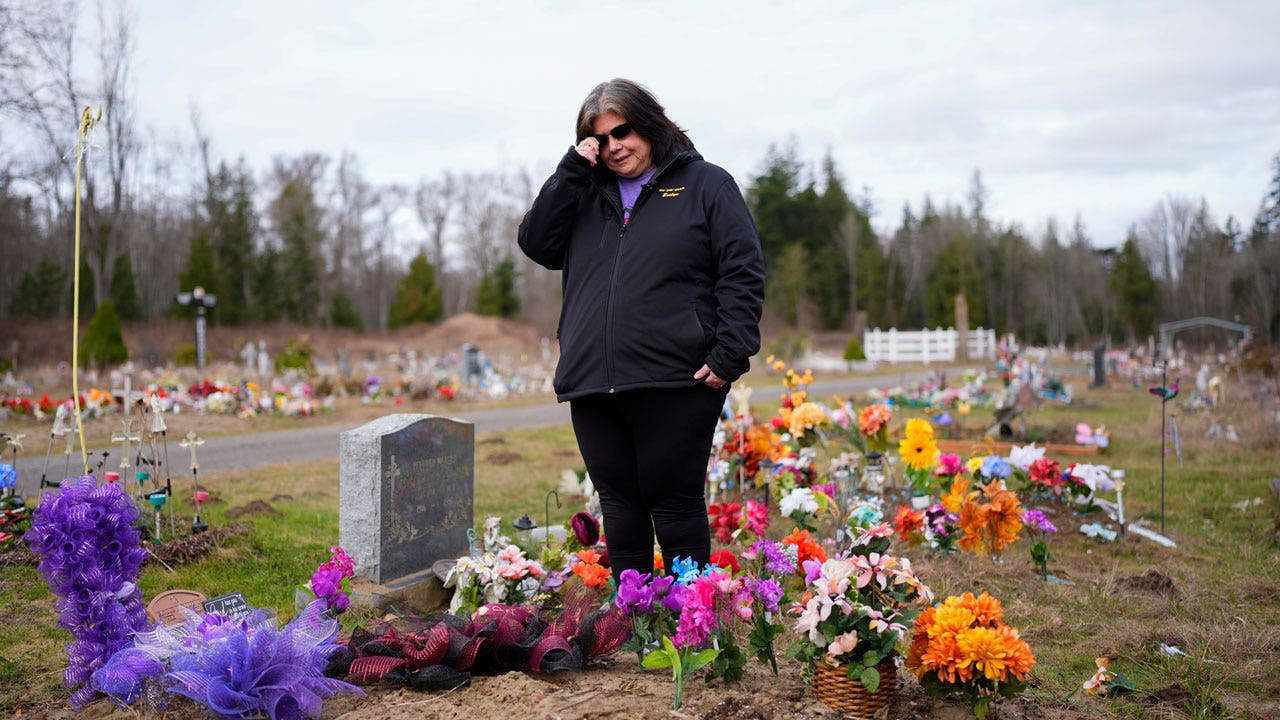
Evelyn Jefferson walks deep into a forest dotted with the tents of unhoused Lummi Nation tribal members and calls out names. When someone appears, she and a nurse hand out the opioid overdose reversal medication Naloxone.
Jefferson, a tribal member herself, knows how critical these kits are: Just five months ago, her own son died of an overdose from a synthetic opioid that’s about 100 times more potent than fentanyl. The 37-year-old’s death was the fourth related to opioids in four days on the reservation.
“It took us eight days to bury him because we had to wait in line, because there were so many funerals in front of his,” said Jefferson, crisis outreach supervisor for Lummi Nation. “Fentanyl has really taken a generation from this tribe.”
CRISIS IN THE NORTHWEST: POLICE STRUGGLE AS FENTANYL’S GRIP IN RURAL OREGON BECOMES ‘NEXUS’ OF DAILY RESPONSES
A bill before the Washington Legislature would bring more state funding to tribes like Lummi that are trying to keep opioids from taking the next generation too. The state Senate unanimously approved a bill this week that is expected to provide nearly $8 million total each year for the 29 federally recognized tribes in Washington, funds drawn in part from a roughly half-billion-dollar settlement between the state and major opioid distributors.
The approach comes as Native Americans and Alaska Natives in Washington die of opioid overdoses at five times the state average, according to 2021-2022 Centers for Disease Control and Prevention data that includes provisional numbers. The rate in Washington is one of the highest in the U.S. and more than three times the rate nationwide — but many of the state’s Indigenous nations lack the funding or medical resources to fully address it.
Lummi Nation, like many tribes, faces an additional challenge when it comes to keeping outside drug dealers off their land: A complicated jurisdictional maze means tribal police often can’t arrest non-tribal members on the reservation.
Evelyn Jefferson, a crisis outreach supervisor for Lummi Nation, stands at her son’s grave at the Lummi Nation cemetery on tribal reservation lands, Thursday, Feb. 8, 2024, near Bellingham, Wash. (AP Photo/Lindsey Wasson)
“What do we do when we have a non-Lummi, predatory drug dealer on our reservation with fentanyl, driving around or on their property and are selling drugs?” said Anthony Hillaire, tribal chairman.
Against the backdrop, tribes such as the Lummi Nation, about 100 miles (161 kilometers) north of Seattle, say the proposed funding — while appreciated — would barely scratch the surface. The tribe of about 5,300 people on the shores of the Salish Sea has already suffered nearly one overdose death a week this year.
Lummi Nation needs $12 million to fully finance a 16-bed, secure medical detox facility that incorporates the tribe’s culture, Hillaire said, and money to construct a new counseling center after damage from flooding. Those costs alone far exceed the annual total that would be designated for tribes under the legislation. The Senate has proposed allotting $12 million in its capital budget to the facility.
“We’re a sovereign nation. We’re a self-governed tribe. We want to take care of ourselves because we know how to take care of ourselves,” he said. “And so we usually just need funding and law changes — good policies.”
The proposed measure would earmark funds deposited into an opioid settlement account, which includes money from the state’s $518 million settlement in 2022 with the nation’s three largest opioid distributors, for tribes battling addiction. Tribes are expected to receive $7.75 million or 20% of the funds deposited into the account the previous fiscal year — whichever is greater — annually.
Republican state Sen. John Braun, one of the bill’s sponsors, has said he envisions the funds being distributed through a grant program.
“If this ends up being the wrong amount of money or we’re distributing it inequitably, I’m happy to deal with this,” he said. “This is just going to get us started, and make sure we’re not sitting on our hands, waiting for the problem to solve itself.”
Opioid overdose deaths for Native Americans and Alaska Natives have increased dramatically in the past few years in Washington, with at least 100 in 2022 — 75 more than in 2019, according to the most recent numbers available from the Washington State Department of Health.
In September, Lummi Nation declared a state of emergency over fentanyl, adding drug-sniffing dogs and checkpoints, while revoking bail for drug-related charges.
The tribe has also opened a seven-bed facility to help members with withdrawal and get them on medication for opioid use disorder, while providing access to a neighboring cultural room where they work with cedar and sage. In its first five months, the facility treated 63 people, the majority of whom are still on the medication regimen today, said Dr. Jesse Davis, medical director of the Lummi Healing Spirit Opioid Treatment program.
But truly thwarting this crisis must go beyond just Lummi Nation working on its own, said Nickolaus Lewis, Lummi councilmember.
“We can do everything in our power to protect our people. But if they go out into Bellingham, they go out anywhere off the reservation, what good is it going to do if they have different laws and different policies, different barriers?” he said.
The tribe has urged Washington Gov. Jay Inslee and President Joe Biden to declare states of emergency in response to the opioid crisis to create a bigger safety net and drive additional vital resources to the problem.
In the encampment in Bellingham, Jefferson estimates there are more than 60 tribal members, some she recognizes as her son’s friends, while others are Lummi elders. She suspects many of them left the reservation to avoid the tribe’s crackdown on opioids.
When she visits them, her van filled with food, hand warmers and clothing to hand out, she wears the shirt her niece gave her the day after her son died. It reads, “fight fentanyl like a mother.”
“It’s a losing battle but, you know, somebody’s got to be there to let them know — those addicts — that somebody cares,” Jefferson said. “Maybe that one person will come to treatment because you’re there to care.”
Read the full article from Here


LAS VEGAS, N.M. (KRQE) – Las Vegas police and firefighters are warning residents that they are on the lookout for illegal fireworks this Independence Day. Following the area’s severe drought conditions and elevated risk of wildfire, the City of Las Vegas said they will be strictly enforcing fireworks laws.
Banned fireworks this year include aerial devices like bottle rockets, roman candles, and mortars, as well as any ground firecrackers that make loud noises.


SCOTUS upholds state bans on transgender athletes in female sports
The Supreme Court ruled that states can bar transgender women and girls from competing on female sports teams.
States can ban transgender women and girls from competing on female sports teams, the U.S. Supreme Court decided in a June 30 ruling celebrated by Oregon’s Republican candidate for governor and criticized by Democrats.
The decision is another setback for the LGBTQ+ community from the high court, which has issued a series of recent rulings against transgender Americans.
The court said West Virginia’s and Idaho’s bans on female transgender athletes do not violate either the Constitution or a federal law barring sex discrimination in education.
Writing for the majority, Justice Brett Kavanaugh said schools “may determine eligibility for women’s and girls’ sports based on biological sex.”
“Separate sports teams for biological males and biological females are reasonable,” he wrote.
In a partial dissent that was joined by her two liberal colleagues, Justice Sonia Sotomayor said she would have given the student challenging West Virginia’s law a chance to show that the ban should not apply to her.
“In opting otherwise, the majority extends great sympathy to those it favors: the young cisgender girls and women who play sports,” she wrote. “Because the majority, however, inflicts a hardship on those it disfavors without giving them the fair and full opportunity the Constitution requires to litigate their contentions, I respectfully dissent.”
Twenty-seven states have passed similar bans, saying they are trying to ensure fairness and address safety concerns for non-transgender women. Similar proposals have not been successful in Oregon.
The transgender students who challenged the laws said hormone therapy and other medical treatments they’ve taken have blocked any physiological advantages from being born male. The laws, they said, should not apply to them for that reason.
The students were also banking on a landmark 2020 Supreme Court decision protecting transgender employees from workplace discrimination.
But since that unexpected 6-3 decision by a conservative court, the justices have often ruled against transgender Americans. That includes their 2025 decision that states can ban gender-affirming care for transgender minors.
Sen. Christine Drazan, Oregon Republican gubernatorial candidate, celebrates ruling
Oregon Republicans have proposed legislation to ban transgender students’ participation in sports.
Sen. Christine Drazan, R-Canby, who will face off against Gov. Tina Kotek in November, raised the issue during an April Republican gubernatorial debate.
“We’ve got to get politics off of our sports fields. No more boys in girls’ sports, no more men in girls’ locker rooms,” Drazan said.
Rep. Ed Diehl, R-Scio, and Chris Dudley, who unsuccessfully ran for the Republican Party’s gubernatorial nomination, promoted similar stances while campaigning.
Drazan issued a statement June 30 in support of the Supreme Court’s ruling.
“This ruling is a victory for fairness, common sense and for the progress achieved by generations of women who fought for and earned the right to compete,” Drazan said. “Girls and young women across Oregon are still competing on an unfair and unsafe playing field.”
Drazan said she’s always supported women’s right to compete and as governor would do everything she could to ensure girls can have a chance to compete.
Diehl also thanked the court for the ruling on social media, saying in part, “this ruling upholds Equal Protection and clarifies Title IX does not force male athletes onto girls’ teams.”
OSAA reviewing ruling, Oregon Democrats speak against court decision
The Oregon School Activities Association, which oversees high school sports and other extracurriculars in Oregon, said it was reviewing the ruling with its legal team.
OSAA’s policies allow students to participate on the team that aligns with their gender identity.
“The association will work with the Oregon Department of Education on the ruling’s impacts on state law and OSAA policy in order to provide updated guidance to member schools as needed,” a spokesperson said in a statement to the Statesman Journal. “The OSAA remains committed to ensuring interscholastic activities remain a safe and welcoming environment for all student-athletes.”
Kotek’s office did not provide comment by deadline.
Two Democratic state representatives issued statements against the justices’ decision.
“Today’s ruling is a devastating departure from decades of civil rights progress. By inviting discrimination, the court has empowered a coordinated effort to push transgender people out of public life altogether. We cannot go backwards on the road to inclusivity,” Rep. Jules Walters, D-West Linn, said.
Rep. April Dobson, D-Happy Valley, similarly criticized the ruling and said she would fight to defend Oregon’s laws.
Kyndall Mason, executive director of Basic Rights Oregon, a nonprofit group that advocates for LGBTQ rights, said in part the group wants to “assure Oregonians that trans kids are still allowed to play in our state.”
Anastasia Mason covers state government for the Statesman Journal. Reach her at acmason@statesmanjournal.com or 971-208-5615.

State Sen. Todd Weiler previously shared a six-post thread about opponents of the Box Elder data center allegedly being paid by China.
(Rick Egan | The Salt Lake Tribune) Sen. Todd Weiler, R-Woods Cross, says a few words during a ceremonial bill signing to highlight landmark legislation that establishes Utah as a national leader in protecting kids online, in the Gold Room at the Capitol, on Friday, April 4, 2025.
-

 New Mexico3 minutes ago
Las Vegas police and fire to enforce zero-tolerance illegal firework ban
-

 North Carolina6 minutes ago
NC budget plan could boost Durham schools, workforce
-

 North Dakota11 minutes ago
Storm damage closes roads in Ramsey County
-

 Ohio18 minutes ago
Four arrested, 16 children removed from southeast Ohio home
-

 Oklahoma21 minutes ago
Oklahoma AG announces settlement that would cut PSO rate increase from 15% to 1%
-

 Oregon26 minutes ago
Oregon leaders celebrate, slam Supreme Court ruling on trans athletes
-

 Pennsylvania33 minutes ago
What to know as Pennsylvania’s state budget deadline arrives
-

 Rhode Island36 minutes ago
Foulkes still holds 20-point lead over McKee, but gap is narrowing

