West
Washington Senate approves $8M to combat addiction among Native Americans, but some say it is not enough

Evelyn Jefferson walks deep into a forest dotted with the tents of unhoused Lummi Nation tribal members and calls out names. When someone appears, she and a nurse hand out the opioid overdose reversal medication Naloxone.
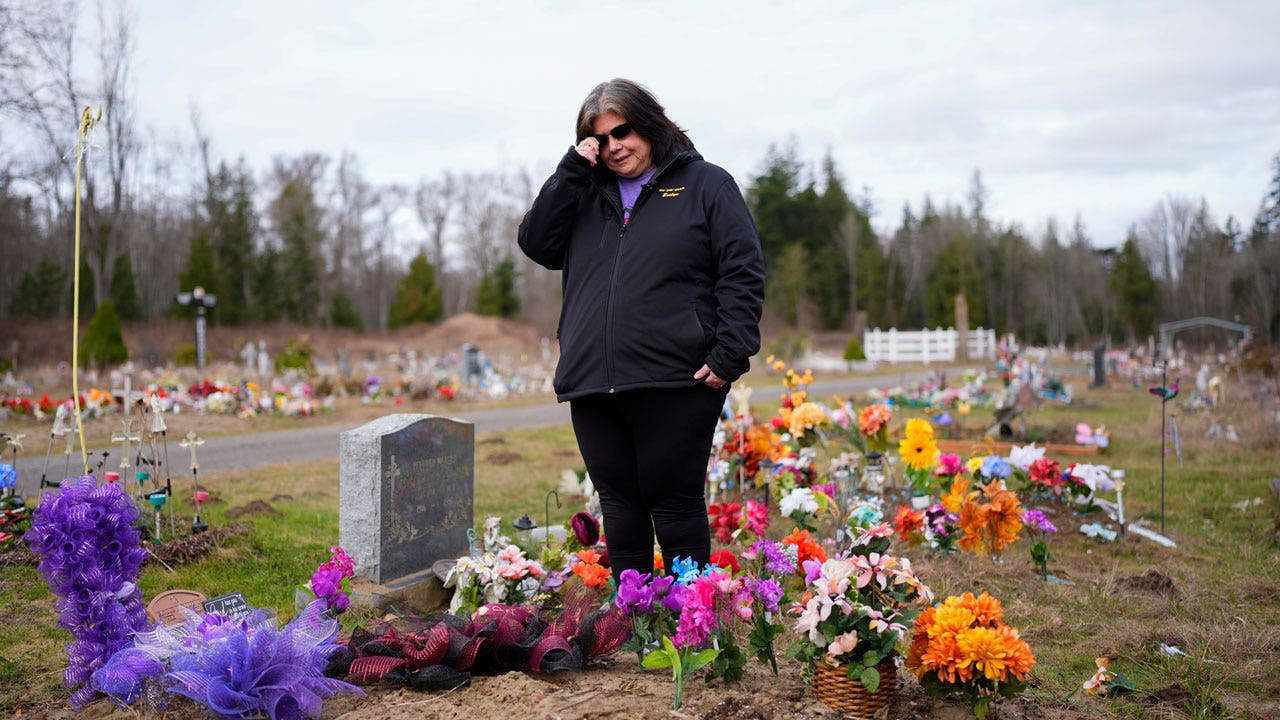
Jefferson, a tribal member herself, knows how critical these kits are: Just five months ago, her own son died of an overdose from a synthetic opioid that’s about 100 times more potent than fentanyl. The 37-year-old’s death was the fourth related to opioids in four days on the reservation.
“It took us eight days to bury him because we had to wait in line, because there were so many funerals in front of his,” said Jefferson, crisis outreach supervisor for Lummi Nation. “Fentanyl has really taken a generation from this tribe.”
CRISIS IN THE NORTHWEST: POLICE STRUGGLE AS FENTANYL’S GRIP IN RURAL OREGON BECOMES ‘NEXUS’ OF DAILY RESPONSES
A bill before the Washington Legislature would bring more state funding to tribes like Lummi that are trying to keep opioids from taking the next generation too. The state Senate unanimously approved a bill this week that is expected to provide nearly $8 million total each year for the 29 federally recognized tribes in Washington, funds drawn in part from a roughly half-billion-dollar settlement between the state and major opioid distributors.
The approach comes as Native Americans and Alaska Natives in Washington die of opioid overdoses at five times the state average, according to 2021-2022 Centers for Disease Control and Prevention data that includes provisional numbers. The rate in Washington is one of the highest in the U.S. and more than three times the rate nationwide — but many of the state’s Indigenous nations lack the funding or medical resources to fully address it.
Lummi Nation, like many tribes, faces an additional challenge when it comes to keeping outside drug dealers off their land: A complicated jurisdictional maze means tribal police often can’t arrest non-tribal members on the reservation.
Evelyn Jefferson, a crisis outreach supervisor for Lummi Nation, stands at her son’s grave at the Lummi Nation cemetery on tribal reservation lands, Thursday, Feb. 8, 2024, near Bellingham, Wash. (AP Photo/Lindsey Wasson)
“What do we do when we have a non-Lummi, predatory drug dealer on our reservation with fentanyl, driving around or on their property and are selling drugs?” said Anthony Hillaire, tribal chairman.
Against the backdrop, tribes such as the Lummi Nation, about 100 miles (161 kilometers) north of Seattle, say the proposed funding — while appreciated — would barely scratch the surface. The tribe of about 5,300 people on the shores of the Salish Sea has already suffered nearly one overdose death a week this year.
Lummi Nation needs $12 million to fully finance a 16-bed, secure medical detox facility that incorporates the tribe’s culture, Hillaire said, and money to construct a new counseling center after damage from flooding. Those costs alone far exceed the annual total that would be designated for tribes under the legislation. The Senate has proposed allotting $12 million in its capital budget to the facility.
“We’re a sovereign nation. We’re a self-governed tribe. We want to take care of ourselves because we know how to take care of ourselves,” he said. “And so we usually just need funding and law changes — good policies.”
The proposed measure would earmark funds deposited into an opioid settlement account, which includes money from the state’s $518 million settlement in 2022 with the nation’s three largest opioid distributors, for tribes battling addiction. Tribes are expected to receive $7.75 million or 20% of the funds deposited into the account the previous fiscal year — whichever is greater — annually.
Republican state Sen. John Braun, one of the bill’s sponsors, has said he envisions the funds being distributed through a grant program.
“If this ends up being the wrong amount of money or we’re distributing it inequitably, I’m happy to deal with this,” he said. “This is just going to get us started, and make sure we’re not sitting on our hands, waiting for the problem to solve itself.”
Opioid overdose deaths for Native Americans and Alaska Natives have increased dramatically in the past few years in Washington, with at least 100 in 2022 — 75 more than in 2019, according to the most recent numbers available from the Washington State Department of Health.
In September, Lummi Nation declared a state of emergency over fentanyl, adding drug-sniffing dogs and checkpoints, while revoking bail for drug-related charges.
The tribe has also opened a seven-bed facility to help members with withdrawal and get them on medication for opioid use disorder, while providing access to a neighboring cultural room where they work with cedar and sage. In its first five months, the facility treated 63 people, the majority of whom are still on the medication regimen today, said Dr. Jesse Davis, medical director of the Lummi Healing Spirit Opioid Treatment program.
But truly thwarting this crisis must go beyond just Lummi Nation working on its own, said Nickolaus Lewis, Lummi councilmember.
“We can do everything in our power to protect our people. But if they go out into Bellingham, they go out anywhere off the reservation, what good is it going to do if they have different laws and different policies, different barriers?” he said.
The tribe has urged Washington Gov. Jay Inslee and President Joe Biden to declare states of emergency in response to the opioid crisis to create a bigger safety net and drive additional vital resources to the problem.
In the encampment in Bellingham, Jefferson estimates there are more than 60 tribal members, some she recognizes as her son’s friends, while others are Lummi elders. She suspects many of them left the reservation to avoid the tribe’s crackdown on opioids.
When she visits them, her van filled with food, hand warmers and clothing to hand out, she wears the shirt her niece gave her the day after her son died. It reads, “fight fentanyl like a mother.”
“It’s a losing battle but, you know, somebody’s got to be there to let them know — those addicts — that somebody cares,” Jefferson said. “Maybe that one person will come to treatment because you’re there to care.”
Read the full article from Here


Photo by Elman Studio.
June 30, 2026 (Washington, D.C.) – The Washington Chorus (TWC), DC’s most dynamic choral ensemble, celebrates its 65th anniversary during the 2026-2027 season. Through thought-provoking pairings of classic major choral works, artistic collaborations, and groundbreaking premieres, TWC celebrates its history of providing an inclusive community where choral music connects, reflects, and inspires everyone while continuing its mission of creating transformative musical experiences that bring people together through the joy of choral music.
“Our 65th season showcases TWC’s commitment to honoring choral tradition while embracing the living voices shaping American music today,” said TWC Artistic Director Eugene Rogers. “We look forward to serving the entire D.C. community, bringing new audiences into our special anniversary celebration through this repertoire and outstanding guest artists.”
The season begins with TWC’s guest appearance with the National Symphony Orchestra for Beethoven’s Ninth Symphony, conducted by Gianandrea Noseda at Wolf Trap’s Filene Center on Friday, August 14, 2026 at 8:00 p.m. On Thursday, October 15, 2026 at 7:30 p.m. at Joseph Myerhoff Symphony Hall; Saturday, October 17, 2026 at 8:00 p.m. at Music Center at Strathmore; and Sunday, October 18, 2026 at 3:00 p.m. at Meyerhoff TWC joins Marin Alsop and the Baltimore Symphony Orchestra for John Adam’s On the Transmigration of Souls as part of the BSO’s Alsop Conducts Tchaikovsky’s Pathétique concert.
The Washington Chorus’s own season kicks off with two weekends of A Candlelight Christmas concerts in December, continuing its beloved holiday tradition now reimagined in new venues across the city. This cherished program brings together The Washington Chorus with the National Capital Brass and Percussion Ensemble, alongside award-winning music director, organist, and conductor Paul Byssainthe Jr., soprano Colleen Daly, and jazz-mezzo Christie Dashiell. The program will also feature the premiere of a new work by Evelyn Simpson-Curenton. Blending timeless carols with vibrant new voices, A Candlelight Christmas offers a warm and luminous celebration of the season – honoring tradition while embracing the rich musical spirit of our community. Venue and performance info are listed below.
In the new year, The Washington Chorus presents A Song Flung Up to Heaven: Honoring 65 Years of TWC on Sunday, February 28, 2027 at 3:00 p.m. at DAR Constitution Hall. The program juxtaposes two major works from contrasting origins – Nkeiru Okoye’s When the Caged Bird Sings and Poulenc’s Gloria – that treat sacred themes with a striking blend of reverence and theatricality. Together, these two major works meld European and American musical traditions into a powerful, life-affirming concert experience with a deep connection to spiritual rituals, while each composer’s innovation imbues them with new discoveries and uncovers mysteries of the human condition.
The centerpiece of this performance is the East Coast premiere of Dr. Nkeiru Okoye’s dramatic work When the Caged Bird Sings – a “musical ceremony” fusing many genres, including opera, musical theater, spoken word, and choral singing, and American musical styles including gospel, spirituals, traditional anthems, and jazz. Okoye’s evocative new piece celebrates the spirit of rising above expectations and transforming adversity into triumph through the milestones in the life of one Black woman. Partly in tribute to the activist and poet laureate Maya Angelou, the work celebrates and explores the transformative ability of the human spirit, commemorating those who have paved a path for future generations. The concert opens with a cornerstone of 20th-century sacred music, Francis Poulenc’s Gloria, which first premiered in 1961, the same year as TWC’s founding.
In May, TWC partners with the National Philharmonic to present Requiem and Renewal featuring Mozart’s monumental Requiem. This will be preceded by Jocelyn Hagen’s large-scale symphonic work, What the Soul Already Knows, on Saturday, May 8, 2027 at 7:30 p.m. at Music Center at Strathmore. Jointly commissioned by Pacific Chorale under the direction of Robert Istad and The Washington Chorus, the work will have its East Coast premiere as part of TWC’s 65th Anniversary Season.
Rooted in an exploration of the sacred – in both the physical world and the unseen – the work invites listeners to reflect on the deep interconnectedness of all life. At its core, What the Soul Already Knows is a meditation on our shared humanity and the potential for beauty that arises when we live in alignment with gratitude, unity, and service. The title received inspiration from the book Sacred Earth, Sacred Soul by Celtic spiritual teacher John Philip Newell, whose writings illuminate the sacred as present not only in heaven, but within the earth and all living beings. Both Hagen’s and Mozart’s works are meditations on the soul in a program that asks: What is the soul, what is sacred, and how should we live – before and beyond death?
Closing the season is a theatrical version of Giuseppe Verdi’s Requiem with the Baltimore Symphony Orchestra and conducted by its Artistic Director Jonathon Heyward on Friday, June 11, 2027 at 8:00 p.m. at Joseph Meyerhoff Symphony Hall; Saturday, June 12, 2027 at 6:00 p.m. at Music Center at Strathmore; and Sunday, June 13, 2027 at 3:00 p.m. at Joseph Meyerhoff Symphony Hall. This staged performance of Verdi’s masterpiece is our third collaboration with Heyward and the BSO’s multi-year Verdi Opera Initiative.
Performance Information
Beethoven’s Ninth Symphony
Friday, August 14, 2026 at 8:00 p.m.
Filene Center, Wolf Trap | 1551 Trap Road | Vienna, VA 22182
Tickets: $57 – $132
Link: wolftrap.org/show/26filene/081426/
Program:
Beethoven – The Consecration of the House – Overture
Beethoven – Elegiac Song, Op. 118
Beethoven – Symphony No. 9
Artists:
National Symphony Orchestra
Gianandrea Noseda, conductor
Tessa McQueen, soprano
Cecelia McKinley, alto
Demetrious Sampson, tenor
Jonathan Patton, baritone
The Washington Chorus
Eugene Rogers, artistic director
_______________________________
Alsop Conducts Tchaikovsky’s Pathétique
Thursday, October 15, 2026 at 7:30 p.m.
Joseph Meyerhoff Symphony Hall | 1212 Cathedral Street | Baltimore, MD 21201
Saturday, October 17, 2026 at 8:00 p.m.
Music Center at Strathmore | 5301 Tuckerman Lane | North Bethesda, MD 20852
Sunday, October 18, 2026 at 3:00 p.m.
Joseph Meyerhoff Symphony Hall | 1212 Cathedral Street | Baltimore, MD 21201
Tickets: Subscriptions are on sale now, with single tickets on sale August 2026
Link: my.bsomusic.org/20342/20381
Program:
Barber – Adagio for Strings
John Adams – On the Transmigration of Souls
Tchaikovsky – Symphony No. 6, “Pathétique”
Artists:
Baltimore Symphony Orchestra
Marin Alsop, conductor
The Washington Chorus
Eugene Rogers, artistic director
_______________________________
A Candlelight Christmas
Saturday, December 11, 2026 at 3:00 p.m.
Sunday, December 12, 2026 at 3:00 p.m.
Cramton Auditorium, Howard University | 2455 6th St NW | Washington, DC 20059
w/Howard University Chorale
Friday, December 18, 2026 at 7:30 p.m.
Saturday, December 19, 2026 at 11:00 a.m. & 3:00 p.m.
Lisner Auditorium, George Washington University | 730 21st St NW | Washington, DC 20052
Monday, December 21, & Tuesday, December 22, 2026 at 7:30 p.m.
Music Center at Strathmore | 5301 Tuckerman Lane | North Bethesda, MD 20852
Link: thewashingtonchorus.org/2026-27-season
Program:
Evelyn Simpson-Curenton – NEW WORK (World Premiere)
Artists:
Eugene Rogers, conductor
Christie Dashiell, soloist (Dec. 11, 12, 21 & 22)
Howard University Concert Choir (Dec. 11 & 12)
Eric Poole, conductor
National Capital Brass and Percussion Ensemble
Paul Byssainthe Jr., organ & piano (Dec. 18 -22)
Reservoir High School (Dec. 18 & 19)
Gregory Knauf, conductor
South Loudon Youth Chorale (Dec. 21 & 22)
Laura Lazarevich, conductor
_______________________________
A Song Flung Up to Heaven: Honoring 65 Years of TWC
Sunday, February 28, 2027 at 3:00 p.m.
DAR Constitution Hall | 1776 D Street NW | Washington, D.C. 20006
Link: thewashingtonchorus.org/2026-27-season
Program:
Poulenc – Gloria
Nkeiru Okoye – When the Caged Bird Sings
Artists:
Eugene Rogers, conductor
Denyce Graves, narrator
Cyrus Chestnut, piano
Angela Brown, soprano
Christie Dashiell, jazz mezzo
Issachah Savage, tenor
Michael Preacely, baritone
The Washington Chorus
Howard University Chorale
Dr. Eric Poole, director
_______________________________
Requiem and Renewal
Saturday, May 8, 2027 at 7:30 p.m.
Music Center at Strathmore | 5301 Tuckerman Lane | North Bethesda, MD 20852
Tickets: Single tickets are on sale beginning Thursday, July 23, 2026
Link: nationalphilharmonic.org/event/what-the-soul-already-knows-requiem-renewal/
Program:
Jocelyn Hagen – What the Soul Already Knows
Mozart – Requiem in D Minor
Artists:
National Philharmonic
The Washington Chorus
Eugene Rogers, conductor
Rabihah Dunn, soprano
Ashley Dixon, mezzo-soprano
Brian Giebler, tenor
Alan Williams, baritone
_______________________________
Heyward Conducts Verdi’s Requiem
Friday, June 11, 2027 at 8:00 p.m.
Joseph Meyerhoff Symphony Hall | 1212 Cathedral Street | Baltimore, MD 21201
Saturday, June 12, 2027 at 6:00 p.m.
Music Center at Strathmore | 5301 Tuckerman Lane | North Bethesda, MD 20852
Sunday, June 13, 2027 at 3:00 p.m.
Joseph Meyerhoff Symphony Hall | 1212 Cathedral Street | Baltimore, MD 21201
Tickets: Subscriptions are on sale now, with single tickets on sale August 2026
Link: my.bsomusic.org/overview/20358
Program:
Giuseppe Verdi – Requiem
Artists:
Baltimore Symphony Orchestra
Jonathon Heyward, conductor
The Washington Chorus
Eugene Rogers, artistic director
___________________________
About The Washington Chorus
The Washington Chorus (TWC) is one of the foremost symphonic choruses in the nation and a cultural leader in our nation’s capital—creating joyous and transformative choral music since 1961. TWC is noted for the superb artistry of its performances and recordings of the entire range of the choral repertoire. A three-time nominated and two-time Grammy Award-winner, the 220-voice Chorus presents performances annually across the DMV region. TWC is also a longtime artistic partner and collaborator with many of the nation’s leading organizations and artists, including the National Symphony Orchestra (NSO), National Philharmonic (NatPhil), Washington Performing Arts (WPA), and the Baltimore Symphony Orchestra (BSO). TheWashingtonChorus.org
About Eugene Rogers
Lauded for leading performances of “pure magic” (Washington Post), conductor Eugene Rogers is at the vanguard of American musicians, recognized for his musical and educational leadership around the world. Rogers is a committed conductor, teacher, arranger, and industry thought leader, championing timely new works, bringing historically overlooked music to life, and supporting next-generation talents.
Rogers is a two-time Michigan Emmy Award winner, a 2017 Sphinx Medal of Excellence recipient, and was nominated for a Grammy Award in 2015. Musical America magazine has named him one of the top music industry professionals, and his work has been profiled on CNN, PBS, and on radio stations and in print and online publications across the world.
Since 2020, Rogers has served as Artistic Director of The Washington Chorus. He is also the Founding Director for EXIGENCE, a professional vocal ensemble affiliated with the world-renowned Sphinx Organization, highlighting artistry within Black and Latinx communities. Alongside his own appearances as guest conductor for orchestra, chorus, and opera, he has also proudly acted as chorus master to leading conductors including Gianandrea Noseda, Marin Alsop, Jonathan Heyward, Joe Hisaishi, and James Conlon.
Rogers is a Professor of Music and the Director of University Choirs at the University of Michigan School of Music, Theatre, and Dance. He is a former board member of Chorus America and is the former national chair of the Diversity Initiatives Committee for the American Choral Directors Association. Rogers is also active as an arranger, with publications including the Eugene Rogers Choral Series with ECS Publishing and the EXIGENCE Choral Series for Mark Foster Publishing.


Wyoming State Historic Sites Superintendent Sharie Mooney Shada made an appearance on Sheridan Media’s Public Pulse to speak on the upcoming Immersion in Crow Culture program at Fort Phil Kearny on July 16.
The event begins at 6 p.m. Thursday, July 16 at the Fort Phil Kearny Interpretive Center.
S. Mooney Shada
The rangers host free, family-friendly evening talks and presentations throughout the summer. Shada said the Native American Student Interpretive Ranger Program has enriched the visitor experience at Fort Phil Kearny. In its fourth year at the fort, the program allows a perspective from the indigenous side of history.
Keep up with events at Fort Phil Kearny by clicking here.

Streetsblog has migrated to a new comment system. New commenters can register directly in the comments section of any article. Returning commenters: your previous comments and display name have been preserved, but you’ll need to reclaim your account by clicking “Forgot your password?” on the sign-in form, entering your email, and following the verification link to set a new password — this is required because passwords could not be carried over during the migration. For questions, contact tips@streetsblog.org.
-

 Washington6 minutes ago
Concert News: The Washington Chorus Celebrates 65th Anniversary During 2026-2027 Season
-

 Wisconsin9 minutes ago
Wisconsin Unveils Culver’s Uniform Patch in New Video Ahead of 2026 CFB Season
-

 West Virginia14 minutes ago
Putnam County man identified as victim in homicide investigation – WV MetroNews
-

 Wyoming21 minutes ago
Free Crow Culture Program at Fort Phil Kearny
-

 Crypto24 minutes ago
UK investors sue Binance in London for £150 million
-

 Finance29 minutes ago
What the Supreme Court’s campaign finance ruling means for the 2026 election
-

 Fitness36 minutes ago
I pushed myself too hard at the gym – and ended up in the hospital
-

 Movie Reviews44 minutes ago
Young Washington (Christian Movie Review) – The Collision

