World
Standing With History to Say Goodbye


I never had the chance to say hello. But I stood in line to say goodbye.
After Pope Francis died, my editors asked me to fly to Italy in advance of a move next month to take up the post of Rome bureau chief. I recently finished an eight-year tour in Tokyo and had thought I would cover the twilight of Francis’s term.
Instead, after arriving Thursday night to help report on the funeral and upcoming Conclave to elect Francis’ successor, I wandered over to St. Peter’s Square on Friday morning. I wasn’t planning to linger. I hadn’t picked up my press badge yet, and had read my colleagues’ stories about people waiting for hours to pass before Pope Francis’ coffin.
Once I joined the flow of the faithful, I didn’t want to leave the line. I felt an undeniable pull to stay.
It was a holiday in Italy and many locals stood to wait along with thousands of tourists and pilgrims. I heard Italian, Spanish, English and many other languages. There were nuns in their habits, older people in wheelchairs, youth groups dressed in identical T-shirts and carrying matching drawstring backpacks.
Despite the heavy police presence, the order was loose, with some people weaving in and out and passing ahead, as if on a congested freeway on a weekend. There was not much grumbling, perhaps in deference to the solemn reason we were there.
I heard a group from Croatia chant a prayer, repeating after a leader who spoke into a small microphone. We passed through metal detectors to enter the square. A volunteer wearing a lime green vest directed us with a desultory wave, pointing one way and intoning “Papa,” and gesturing in the opposite for “uscita,” — exit.
The mood was more tranquil cheer than mournful. In some ways, it was like any long line, where a mother handed her phone to a restless young daughter to distract her with a video game. At one throttle point, a woman harangued the volunteer holding us back with her arm. The volunteer smiled her way through a skilled de-escalation.
I noticed a man wearing a polo shirt with an insignia from the Oakland sheriff’s department. A long line being an easy place to start a conversation, I asked him if he was from California, since I grew up not far from Oakland. Michigan, he said.
The man, Shawn Hopkins, 57, a sheriff’s deputy in Pontiac, was on a short vacation with his mother and his sister, Katrina, 60, who had traveled from Florida. His mother, Julya Hopkins, 85, converted to Catholicism when she was 20 and married their father; it had been her dream to come to Rome.
Mr. Hopkins, who attended Catholic schools and has been a police officer for 37 years, told me that his work schedule prevented him from regularly making it to mass, but his childhood in the faith tethered him here.
Mr. Hopkins also wanted to honor his partner, who was lost in the line of duty last year. He gave me a medal commemorating his partner, Deputy Sheriff Bradley J. Reckling. He had swapped them for badges all week with police officers around the city.
As for the pope, he said, “Seemed like a decent guy. I didn’t get that into the politics of it all.”
Francis was a divisive pontiff: many loved him, many wished he did far more, and some believed he was too liberal and already had done too much.
Paying respects did not require agreement. Katrina Hopkins, who said Francis was “kind,” observed that people stood in line “not so much because they are faithful but because they want community.” This was the pope’s last gift, she said, bringing us all together.
I met a young woman from Taiwan, Chelsea Yu, 27, who described how strangely emotional it had been to see the pope’s body.
She had spent the last few months exploring death, visiting a cremation temple in Nepal and contemplating how to prepare for the eventual passing of her grandparents. Nothing approached the gravity of death. Seeing the pope in his coffin made her feel genuine grief, in part because she admired his values of inclusiveness and calls to protect the environment.
Inside the basilica, people hoisted their phones for photos of the opulence, until a security guard sternly ordered us to stow our devices. Just before I stepped in front of the altar, a baby dressed in a suit and cradled by his father grabbed the handle on my belt bag, yanking me close. I was reassured by this vibrant sign of new life.
I had stood in line for two and a half hours and had five seconds to bid farewell. I caught a brief glimpse of the pope in his red cassock, lying in the simple coffin he requested, tilted slightly forward but not on an elevated bier. Two members of the Pontifical Swiss Guard flanked the coffin, stiff as the Queen’s Guards at Buckingham Palace.
I am not religious, but I bowed my head and pressed my hands together. Addio, holy father.



World
Madonna Teams Up With Sabrina Carpenter at Coachella for Transcendent Duets: ‘Vogue,’ ‘Like a Prayer’ and New Song

After rumors swirled that she would appear at Coachella weekend one, Madonna made a cameo during Sabrina Carpenter’s headlining performance on Friday night, emerging near the end of the set to perform “Vogue,” “Like a Prayer” and a new duet.
Carpenter was midway through “Juno” — typically the song on her “Short ‘n Sweet” tour where she’d “arrest” a different celebrity — to bring out Madonna. The pop queen emerged through the middle of the stage to sing “Vogue,” joining Carpenter to debut a new duet that’s rumored to be on the singer’s upcoming album “Confessions II.” Then, Madonna took the mic to give an extended address to the audience.
“So 20 years ago today I performed at Coachella,” said Madonna. “I was in the dance tent and it was the first time I performed ‘Confessions on a Dance Floor Pt. 1’ in America, and that was such a thrill for me, so you can imagine what a thrill it is to be back 20 years later in the same boots, with the same corset, the jacket I had on earlier, a Gucci jacket. So it’s like a full circle moment, you know? Very meaningful for me.”
After Madonna gave an astrology lesson (literally), the two joined forces to duet on her classic “Like a Prayer,” with backup dancers dressed in habits sauntering down from the back of the stage. “The great thing about music is that it brings people together. Am I right?” said Madonna. “It’s the one place that people have to put their differences aside. Put their shit down and everyone just have a good time togehter, right? So I am thrilled to be a part of that healing experience of bringing people together. I just want to say, four lines from my ‘Confessions 1’ record. It goes like this. Can we get together? I really, I really want to be with you. Come on check it out with me, I hope you, I hope you feel the same way too.”
As she said, Madonna’s appearance during Carpenter’s set comes 20 years after her Coachella debut in 2006, when she popped up at the Sahara Tent instead of the main stage to perform cuts from “Confessions on a Dance Floor.” She later returned to the desert for a surprise cameo during Drake’s closing set in 2015, singing “Human Nature” and “Hung Up” and, in one of the most talked-about moments that year, kissed Drake.
The timing of Madonna’s return to Coachella aligns with the announcement of her upcoming album “Confessions II” earlier this week. The project, slated for July 3 via Warner Records, marks her first full-length album in seven years and her reunion with Stuart Price, the producer of the original “Confessions on a Dance Floor.” Earlier on Friday, Madonna premiered the song “I Feel So Free” on iHeartRadio’s Pride Radio, giving a first taste of the project.
Leading up to her Coachella performance last weekend, Carpenter dropped the video for “House Tour,” the latest single off of last year’s “Man’s Best Friend.” In the clip, she has a girls’ night out with Margaret Qualley and Madelyn Cline, ransacking a stranger’s house and stealing a Grammy.
Carpenter previously performed at Coachella in 2024, foreshadowing that she’d one day take top billing during a custom outro for “Nonsense”: “Made his knees so weak he had to spread mine / He’s drinking my bathwater like it’s red wine / Coachella, see you back here when I headline.” This year’s headlining gig comes after a busy few years for the singer, who kicked off her “Short ‘n Sweet” tour — her first arena trek — in September 2024. She stayed on the road through the end of 2025, when she closed the tour with six nights at Los Angeles’ Crypto.com Arena just a week before she was celebrated as Variety‘s Hitmaker of the Year.
World
Trump’s favorite field marshal: Who is Pakistan’s powerful army chief Asim Munir with deep intel ties

Mark Dubowitz says Trump holds ‘maximum leverage’ over Iran as ceasefire begins
Mark Dubowitz, CEO of the Foundation for Defense of Democracies, analyzes President Trump’s firm Iran policy following a two-week ceasefire agreement. He highlights the regime’s weakened state after 15 months of Trump’s administration, making Iran’s 10-point peace plan with “ridiculous demands” unlikely to be accepted. Dubowitz discusses the choice facing Iran’s new regime.
NEWYou can now listen to Fox News articles!
President Donald Trump publicly thanked what he called Pakistan’s “great prime minister and field marshal, two fantastic people!!!” in a Truth Social post Friday praising Prime Minister Shehbaz Sharif and Pakistan’s military chief, Asim Munir.
Sharif quickly responded on X, “On behalf of the people of Pakistan, Field Marshal Syed Asim Munir, and on my behalf, I express my deep and profound appreciation for your kind and gracious words.”
The public exchange capped a remarkable rise for Munir, who has become one of the few foreign officials trusted both by Trump and by Iran’s security establishment.
TRUMP AGREES TO 2-WEEK CEASEFIRE IF IRAN OPENS STRAIT OF HORMUZ
In this photo released by the Inter Services Public Relations, Pakistan’s Chief of Defense Forces and Army Chief Gen. Asim Munir, center, Pakistan Naval Chief Admiral Naveed Ashraf, left, and Pakistan Air Force Chief Air Chief Marshal Zaheer Ahmed Babar attend a guard of honor ceremony at the joint military command headquarters in Rawalpindi, Pakistan, Monday, Dec. 8, 2025. (Inter Services Public Relations via AP)
Munir recently became the first foreign military leader to visit Iran since the latest escalation between the United States and Iran, according to Pakistani and Iranian reports. Arriving in full military uniform, he was warmly greeted by Iranian Foreign Minister Abbas Araghchi and held meetings with senior Iranian military officials.
Retired Pakistani Gen. Ahmed Saeed told Fox News Digital that Munir has for months served as an informal back channel between Washington and Tehran, Iran, as the Trump administration tries to negotiate an end to the conflict, Iran’s nuclear program and the naval blockade in the Persian Gulf.
Few foreign figures appear to have closer ties both to Trump and to Iran’s military hierarchy.
That has raised a striking question: How did the same man become close both to Trump and to some of Iran’s most powerful commanders?
Saeed, who said he has known Munir personally for years, told Fox News Digital that Munir began building ties with Iran while serving as Pakistan’s director general of military intelligence in 2016 and 2017.
“He has been interacting with the leadership. He has been interacting with the intelligence community. He has been interacting with the IRGC,” or the Islamic Revolutionary Guard Corps, Saeed said.
According to Saeed, Munir built ties not only with the Islamic Revolutionary Guard Corps but also with Iran’s regular army and intelligence apparatus. Saeed said Munir had longstanding contact with former Islamic Revolutionary Guard Corps Quds Force commander Qassem Soleimani, who was killed in a U.S. strike in 2020, commander Hossein Salami, who was killed in an Israeli strike in June 2025, and other Iranian military figures.
JD VANCE SAYS THE BALL IS ‘IN IRAN’S COURT’ AFTER PAKISTAN PEACE TALKS STALL
Few foreign figures appear to have closer ties both to Trump and to Iran’s military hierarchy. (Iranian Presidency / Handout/Anadolu via Getty Images)
“He continues to be a figure internationally who has personal interactions, a personal equation in the intelligence community in Iran, in the military hierarchy in Iran, in the diplomatic corps of Iran and also on the side of the political leadership,” Saeed said.
That longstanding relationship appears to explain why Iran welcomed him so warmly, even as he remains in direct contact with Trump and his team.
Foundation for Defense of Democracies’ Bill Roggio told Fox News Digital that, “Trump should not trust the Pakistanis. Pakistan was a perfidious ‘ally’ in Afghanistan, backing the Taliban while pretending to be our friends. Munir’s ties to the IRGC should be a massive red flag for the Trump admin.”
Munir’s relationship with Trump dates back to the India–Pakistan crisis of May 2025. Munir played a key role in helping de-escalate the confrontation, and afterward Pakistan formally nominated Trump for the Nobel Peace Prize, a move widely viewed by Pakistani analysts as encouraged by Munir.
Pakistan’s Asim Munir has become one of the few foreign officials trusted by both President Donald Trump and Iran’s security establishment, according to Pakistani analysts and officials. (Jacquelyn Martin / POOL / AFP via Getty Images)
Since then, Trump repeatedly has praised him. Trump has called Munir an “exceptional man,” a “great fighter” and “my favorite field marshal.”
Pakistani officials and media reports say the two men now speak directly.
Pakistani analyst Raza Rumi told Fox News Digital that Munir’s appeal to Trump is not surprising.
“Trump has long shown a preference for strong, decisive leaders,” Rumi said. “Munir fits that mold as a centralized authority figure who can deliver outcomes.”
WHY TRUMP, IRAN SEEM LIGHT-YEARS APART ON ANY POSSIBLE DEAL TO END THE WAR
Iran’s Parliament Speaker Mohammad Bagher Qalibaf and Foreign Minister Abbas Araghchi were greeted by Pakistan Foreign Minister Ishaq Dar and Army Chief Field Marshal Gen. Asim Munir upon their arrival at Nur Khan airbase in Rawalpindi, Pakistan, April 11, 2026. (Pakistan Ministry of Foreign Affairs/AP)
Rumi described Munir as “a disciplined, institution-first leader with a strong emphasis on order, hierarchy and strategic clarity.”
“Unlike more publicly charismatic military figures, his style is relatively understated, shaped by intelligence work and operational experience rather than overt political signaling,” Rumi said.
Munir’s background helps explain both his style and his influence.
Munir studied at the Fuji School in Japan, the Command and Staff College in Quetta, the Malaysian Armed Forces College in Kuala Lumpur, and Pakistan’s National Defence University, where he earned an master of philosophy degree n public policy and strategic security management, according to Pakistan’s Geo News. Munir was the first army chief in Pakistan to receive the Sword of Honour, the military’s highest distinction for a cadet. The outlet also described him as an avid reader, traveler and sportsman.
Munir is also a Hafiz-e-Quran, meaning he has memorized the entire Quran by heart.
A former head of both Pakistan’s Military Intelligence and Inter-Services Intelligence agencies, Munir spent years overseeing Pakistan’s most sensitive regional relationships, including with Iran, Afghanistan and India.
TRUMP AGREES TO 2-WEEK CEASEFIRE IF IRAN OPENS STRAIT OF HORMUZ
Vice President JD Vance shakes hands with Pakistani Deputy Prime Minister and Foreign Minister Mohammad Ishaq Dar in Islamabad on April 12, 2026, after talks on Iran. Pakistan’s Interior Minister Mohsin Naqvi, Chief of Defence Forces Chief of Army Staff Field Marshall Asim Munir, and U.S. Embassy Charge d’Affaires Natalie A. Baker look on as Vance prepares to board Air Force Two. (Jacquelyn Martin/AP)
In 2025, after the India-Pakistan crisis, he was elevated to field marshal, the first Pakistani officer to hold the rank since former military ruler Ayub Khan.
Pakistani officials say that later that year, he also was given the newly created title of chief of defense forces, further cementing his authority above the country’s military branches.
Munir rarely gives interviews, but his speeches offer clues to his worldview.
WHO ACTUALLY RUNS IRAN RIGHT NOW? THE KEY POWER PLAYERS AS TRUMP CLAIMS TALKS TO ‘TOP’ OFFICIAL
A former head of both Pakistan’s Military Intelligence and Inter-Services Intelligence agencies, Munir spent years overseeing Pakistan’s most sensitive regional relationships, including with Iran, Afghanistan and India. (Iranian Presidency / Handout/Anadolu via Getty Images)
At the Margalla Dialogue in Islamabad in November 2024, he warned that “absence of proper regulations for freedom of expression is leading to the deterioration of moral values in societies worldwide.”
The remark reflected a broader emphasis on order, discipline and centralized authority.
Rumi said Munir operates from “a transactional, state-centric worldview rather than an ideological one.”
Yet critics argue that his rise has come at a cost to Pakistan’s democracy.
After becoming army chief in 2022, Munir focused heavily on domestic politics, including what critics described as a crackdown on political opposition and an unprecedented concentration of military power, according to The Guardian, which reported that key negotiations with the United States and Iran have been coordinated not from Islamabad, Pakistan’s civilian capital, but from Rawalpindi, the headquarters of the military.
CLICK HERE TO DOWNLOAD THE FOX NEWS APP
A broken frame of Pakistan’s field marshal and army chief, Asim Munir, hangs on the wall after an attack at the Cadet College Wana, a military-linked school, in the South Waziristan district near the Pakistan-Afghanistan border, Nov. 13, 2025. (Aamir Qureshi / AFP via Getty Images)
Critics say that reflects a broader reality: Pakistan’s foreign policy is increasingly being run by the army rather than the elected government.
Rumi said Munir’s rise reflects “the military increasingly eclipsing civilian leadership in Pakistan.”
As the current negotiations continue, much appears to rest on Munir. Saeed said that is because Munir has spent years building trust on both sides and is unlikely to stop now.
“Knowing our field marshal, and from my own personal knowledge of him, he is relentless. He would not give up,” Saeed said.

When US Vice President JD Vance converted to Catholicism in 2019, he chose Saint Augustine as his patron.
ADVERTISEMENT

ADVERTISEMENT
On Tuesday, speaking at a Turning Point USA event, Vance invoked the tradition of the fifth-century theologian and one of the most important Church fathers to push back against Pope Leo XIV’s criticism of the war in Iran.
The White House number two warned the pontiff to “be careful when he talks about matters of theology,” citing “more than a 1,000-year tradition of just war theory” in his defence.
Meanwhile, the supreme pontiff of the Catholic Church was in the Algerian port city of Annaba, paying homage at the basilica not far from where St Augustine died and was initially interred.
Hippo Regius, as it was known in the bishop’s time, is where St Augustine wrote most of what became the intellectual basis of the just war principles Vance was claiming to defend. Pope Leo XIV is the first pontiff to hail from the Augustinian order.
Whether Vance knew what the Holy Father’s itinerary was that day, his office did not say.
Vance was not the first member of the administration to weigh in.
Days earlier, US President Donald Trump had posted on Truth Social and later reiterated to the press that Pope Leo XIV was “weak on crime” and “terrible for foreign policy,” suggesting the pontiff believed Tehran should be allowed to develop nuclear weapons.
The pope never made any comments regarding the Islamic Republic’s right to nukes.
The post came after the pope had called Trump’s threat to destroy Iran’s “whole civilisation” “truly unacceptable”.
Pope Leo XIV responded the following morning on board the papal plane to Algiers. “I’m not afraid of the Trump administration or of speaking out loudly about the message of the Gospel,” he said.
“I will continue to speak out loudly against war, looking to promote peace, promoting dialogue and multilateral relationships among the states to look for just solutions to problems.”
What the doctrine says
Just war theory, rooted in St Augustine and further elaborated on by Thomas Aquinas in his Summa Theologiae, sets out strict conditions for the moral use of military force.
The threat must be lasting, grave and certain, and success must be realistically achievable. Most importantly, all other means of resolution must be genuinely exhausted, and the harm caused must not exceed the harm it seeks to prevent.
Put simply, the purpose of this set of rules is to prevent those engaged in war from being the final judges of their own righteousness.
“The just war doctrine doesn’t merely ask whether your cause feels just,” Joseph Capizzi, Dean of the School of Theology and Religious Studies at the Catholic University of America, told Euronews. “As we all know, everybody thinks their situation is just.”
“It understands that most people think of their causes as just. But it is a means by which you can distinguish legitimately just causes of war from illegitimate causes of war.”
The doctrine has also shifted in how it is applied. For most of its history, it was used by priests to authorise their rulers’ wars. Spurred on by world wars and the discovery of nuclear weapons, the modern papacy has used it in the other direction.
“Before, just war doctrine was used often by national clergy to give permission to their emperor or their king to go to war,” Massimo Faggioli, professor of ecclesiology at Trinity College Dublin told Euronews.
“Right now, it is used mostly — I would say almost always — to say ‘well, no, this military intervention doesn’t meet those criteria.’”
Writing as the Roman Empire crumbled, St Augustine had already posed the question of what is righteous in one of the most well-known open checks on power in Catholic moral thought.
“Justice removed,” he asked in The City of God, “what are kingdoms but great bands of robbers?”
Vance has cited The City of God as “the best criticism of our modern age” he has ever read, deeply affecting his religious outlook and thoughts on domestic and foreign policy.
Vatican’s track record
The administration’s framing of Pope Leo XIV as a pacifist who simply does not understand that force is sometimes necessary contradicts the pontiff’s and the Church’s track record, experts say.
Before his election just last year, the pontiff was a registered Republican voter. While he has criticised the Iran war, the Holy Father has shown support for Ukraine’s right to self-defence.
In recent decades, past popes also carefully deliberated the context before commenting on any given conflict.
The Holy See quietly regarded the post-September 11 intervention in Afghanistan as meeting just war criteria, as the US went after Taliban extremists and Al-Qaeda’s Osama bin Laden.
Yet Pope John Paul II opposed both the 1991 Gulf War and 2003 invasion of Iraq not as a pacifist, but on the grounds that last resort had not been demonstrated. Pope Leo XIV’s position on Iran is in line with his predecessors, according to theologians.
“To accuse the pope of being a pacifist is really absurd,” Faggioli said. “Vance and Trump are accusing the pope of thinking about war like a European Catholic. But that’s not true.”
“He is using just war doctrine — and the American cardinals who have spoken against the war in Iran, they have used just war doctrine in ways that Europeans would not. So this is, in some sense, an intra-American debate.”
There is also the matter of what Vance actually said — not just about just war, but about the pope’s remit, after he suggested Pope Leo XIV should confine himself to morality and stay out of foreign policy, Faggioli explained.
“Vance is one of those typical Catholics who thinks that morality is only sexual morality,” Faggioli said. “When he said the pope should stick only to morality, he meant sexual morality — as if war were not a matter of morality. Of course it is.”
Thousand-year tradition and its tenets
The US bishops and other Catholic Church clergy indeed did not stay quiet. On Wednesday, Chairman of the USCCB Committee on Doctrine Bishop James Massa issued a statement in support of the Holy Father’s position, but also the Catholic Church as a whole.
“A constant tenet of that thousand-year tradition is a nation can only legitimately take up the sword ‘in self-defence, once all peace efforts have failed,’” Massa, auxiliary bishop of Brooklyn, wrote.
“When Pope Leo XIV speaks as supreme pastor of the universal Church, he is not merely offering opinions on theology. He is preaching the Gospel and exercising his ministry as the Vicar of Christ.”
Unlike in other public exchanges in recent times with those opposing Washington’s view, the Trump administration has struggled to find the usual levers, experts say. “It’s very hard for them to use the usual tactics to delegitimise the pope, because he is American,” Faggioli said.
“They can’t call him a communist, they can’t call him a radical leftist — his record as a theologian doesn’t support that.”
Euronews contacted several Catholic institutions and theologians for perspectives to further outline the Trump administration’s application of just war doctrine, but none agreed to speak on the record.
‘A consistent lesson of our faith’
On Thursday, from a peace meeting in Cameroon — a country not without its own existing tensions — the pope said, “Woe to those who manipulate religion and the very name of God for their own military, economic, and political gain, dragging that which is sacred into darkness and filth.”
The post on X from his official Pontifex account drew nearly 10 million views in English alone by Friday evening.
Capizzi urged against reading every papal statement as aimed at Washington, however. “You’re in Cameroon, on a continent marked by severe religious conflict; that comment has a much broader application.”
Still, according to Capizzi, the Holy Father’s words are meant for all of the faithful.
“Any believer who appeals to God — as though God is on their side — ought to do so with great fear and trembling,” he said. “That is a consistent lesson of our faith: that a believer is the person who has a healthy fear of God and of God’s judgment of his or her actions. And that includes the way he or she speaks about God.”
The same day at the Pentagon, US Secretary of Defence Pete Hegseth led a worship service and read what he described as a prayer recited by Combat Search and Rescue crews during the Iran operation.
He introduced it as “CSAR 25:17,” meant to reflect Ezekiel 25:17. What followed was nearly verbatim the monologue delivered by Samuel L Jackson’s hitman in Quentin Tarantino’s Pulp Fiction, in the scene immediately before his character Jules Winnfield commits a murder.
The actual Ezekiel 25:17 is considerably shorter and less specific. Tarantino’s version was itself adapted from a 1973 Japanese martial arts film.
‘Nothing against the pope’
Trump won around 55% of US Catholic votes in 2024. A poll conducted in late March, jointly by Republican pollster Shaw & Co Research and Democratic pollster Beacon Research, found his approval among Catholics had fallen to 48%, with 52% disapproving.
A Fox News poll found US Catholics opposed to military action in Iran by 10 points and against Trump’s conduct toward Iran by 20. A separate NBC survey found US registered voters now view the pope more favourably than the president by a net margin of 46 points.
On Thursday, Trump told reporters he has “nothing against the pope” and is “all about the Gospel,” while continuing to state Pope Leo XIV was in favour of Tehran having nuclear weapons.
Trump also said his preference remained with the pope’s brother Louis, who lives in Florida. “Louis is all MAGA. He gets it, and Leo (XIV) doesn’t,” Trump said.
“If I wasn’t in the White House, Leo wouldn’t be in the Vatican,” he reiterated.
The night before, police had surrounded the New Lenox home of a different brother of the pope, John Prevost, following a bomb threat. K9 explosive-detection units found nothing. The investigation remains ongoing.
The greater picture
For Faggioli, the dispute is a symptom of something that has been building for years: not a domestic row about one war, but a contest over what Christianity means and who speaks for it.
“America always had a religious understanding of itself as a nation, but presidents were very cautious about not looking like messianic figures — at least in life,” Faggioli said.
“Trump has exploited the creation of a vacuum of secularisation in America, and he has filled that vacuum with a certain degree of messianism — and some American Christians are happy about that.”
“Trumpism is a form of political messianism. He sees himself — and many people see in him — someone with a divine mission: a political Messiah who will deliver salvation to America, to Americans, to Christianity. And he is serious when he posts those things.”
Capizzi, for his part, was more of the belief that the US president would eventually mend bridges with the Holy See. “I actually consider this a hopeful sign — that it’s touching and impacting President Trump, despite what he’s saying and what he’s posted.”
“This conversation has shown that the Church retains her moral authority,” he said.
“This is a teaching moment. Catholics and others are getting to see that these doctrines are over a thousand years old, that we have thought about these questions for a very long time, and there is a moral gravity behind these claims.”
As for the pope, John Prevost said something crucial about his brother before any of this began. “I don’t think he’ll stay quiet for too long if he has something to say,” he told the New York Times last year. “He won’t just sit back.”

Maine Township Residents OK Purchase Of Building For Food Pantry – Journal & Topics Media Group

Forward Maban Jabriel Becomes Maryland’s Fourth Transfer In

Before-and-after images show severity of Black Lake flooding

‘An impossible choice’: With little federal help to combat rising costs, Head Start looks to Massachusetts for more help – The Boston Globe

ICE agent assault charge marks a ‘milestone’ for Minnesota prosecutors

Florida High School Football Rankings: Top 25 teams – Oct. 21

How old is Bo Nix? What to know about Oregon quarterback ahead of 2024 NFL Draft

Cleary's 21 help Le Moyne down Central Connecticut State 69-64 in OT

99th annual Pony Swim held in Virginia

Indiana Members Credit Union announced as new anchor tenant at Bottleworks District

BBQ lovers beware: Middle East conflict might disrupt your summer plans this year

White House vs the pope: What is behind the Catholic just war doctrine

What’s it like to negotiate with Iran? We asked people who have done it

Grieving mothers scorch Dem lawmaker after he pivots during hearing to attack ‘MAGA Republicans’

Pressure mounts on Peru’s election authorities amid presidential race delay
-

 Ohio4 days ago
‘Little Rascals’ star Bug Hall arrested in Ohio
-

 Arkansas1 week ago
Arkansas TV meteorologist Melinda Mayo retires after nearly four decades on air
-

 Politics4 days ago
Dem fundraising giant in the hot seat as GOP lawmakers demand answers over dodged subpoena
-
 Science4 days ago
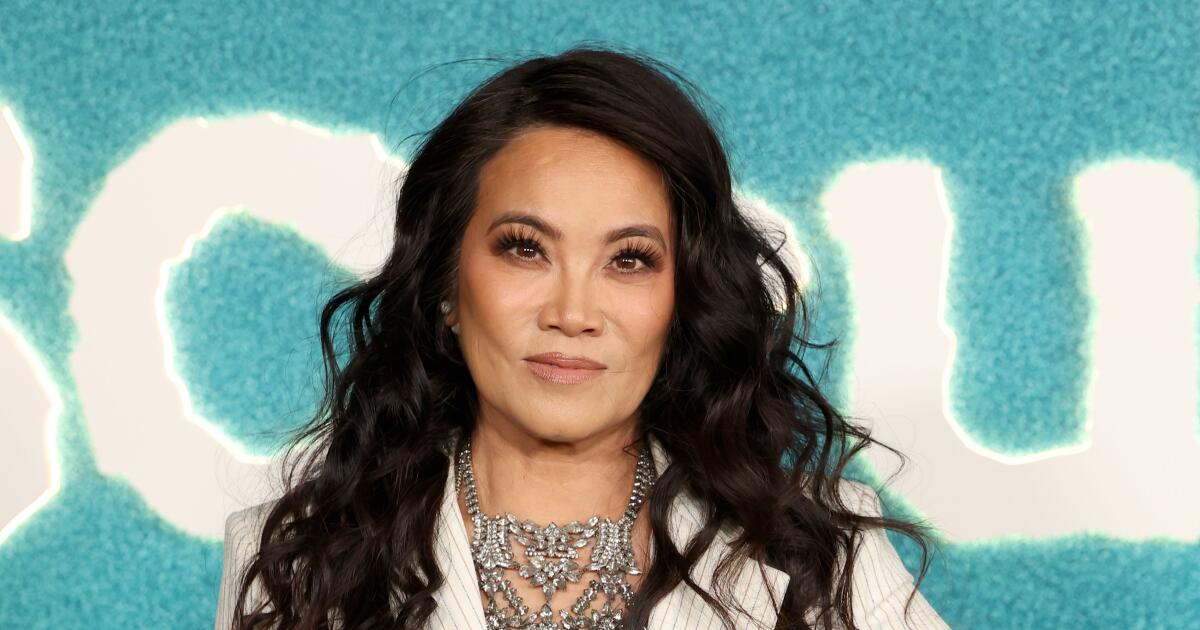
‘Dr. Pimple Popper’ Sandra Lee had a stroke last fall. Here’s how the TV doc is bouncing back
-

 Health1 week ago
Woman discovers missing nose ring traveled to her lungs, causing month-long cough
-

 Politics7 days ago
Trump blasts Spanberger ahead of Virginia meetings, says state faces tax base exodus like New York, California
-

 San Francisco, CA6 days ago
President Trump terminates Presidio Trust
-

 Technology1 week ago
Is the ‘Holy Grail of batteries’ finally ready to bless us with its presence?