Washington
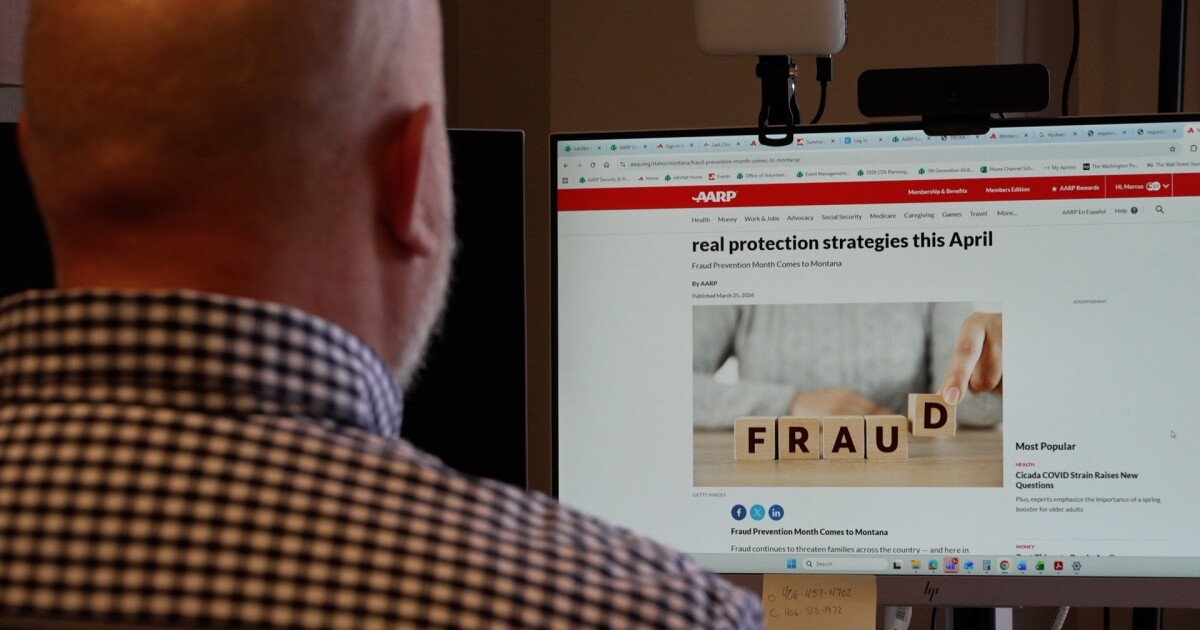
Suspect arrested in $400K gold bar scam


Police arrested a man suspected of taking a Bethesda, Maryland, couple for $400,000 in a gold bar scam.
A text message reading “Contact us about an unauthorized charge on your Apple account” led the couple down a scam rabbit hole, police said. They were led to believe they were talking by phone to real Apple employees and eventually, according to police, they spoke with 23-year-old Yongxian Huang, who allegedly pretended to be an employee of the Federal Trade Commission.
The couple was told their money had been compromised by criminals and needed to be converted to gold and put into government safekeeping to keep it from being used to make child pornography and purchase missiles for Russia, police said.
They were convinced to give two purchases of gold bars worth more than $367,000, as well as a wire transfer of more than $41,000, investigators said.
“If you get these messages, you are not required to answer the phone,” Montgomery County Police Detective Sean Petty said. “You aren’t required to click that message and give your information away.”
With the victims’ help, detectives coordinated a final drop of $81,000 in gold bars on Nov. 14. Huang accepted the package from a detective pretending to be the female victim, police said.
Investigators followed him up Interstate 95 to his home in Brooklyn, New York, where New York Police Department detectives arrested him.
He awaits extradition to Maryland, as does 26-year-old Yash Shah, arrested this week in Baldwin, New York.
Shah’s accused of scamming an 88-year-old Montgomery County woman and her 61-year-old daughter out of $2.3 million in a similar scheme in 2023.
Recovery is almost impossible.
The fact this keeps happening despite extensive news coverage means families should consider it a table topic when they get together for the holidays, Petty said.
“This can easily be a 5, 10-minute conversation just checking in with your loved ones, your aging individuals, making sure that they’re not getting these phone calls, these text messages, and responding positively to them,” he said.
Montgomery County police worked with the Baltimore Field Office of the FBI on this case.
News4 sends breaking news stories by email. Go here to sign up to get breaking news alerts in your inbox.



Washington
Washington State Democratic Party draws criticism over reparations, antisemitism language

OLYMPIA, Wash. — Party platforms are typically lengthy documents intended to define political values, not enact law.
But language adopted by the Washington State Democratic Party is drawing scrutiny from Republicans, some Jewish community leaders, and even some Democrats who say they were left out of the conversation.
The debate centers on two planks in the party’s newly approved platform: one supporting continued work on a state reparations study and another linking a recent rise in antisemitism, in part, to actions by the Israeli government.
Stephen Reed, a spokesperson for the Washington State Democratic Party, said the platform is developed every two years by delegates selected from communities across the state.
“They develop the platform. They write all the planks. They debate the planks,” Reed said.
Last month, the Washington State Democratic Party announced that more than 1,000 delegates at its 2026 convention in Spokane unanimously adopted language supporting reparations for descendants of victims of U.S. chattel slavery. The party described the move as the first such addition to a state Democratic Party platform.
The approved language says Democrats support “the study and implementation of reparative action, remedies and reconciliation” for descendants. The party also said Democrats had previously passed a 2024 resolution urging Washington leaders to create and fund a statewide study on reparations, which is currently underway and being managed by the Department of Commerce. A final report with recommendations is due in June 2027.
Reed said the party’s platform does not settle the question of whether Washington should provide direct payments as reparations, noting that other proposals include offering free college tuition to descendants.
But it is the platform’s language on antisemitism that has prompted criticism from both inside and outside the party. The approved platform states: “There has been a dramatic resurgence in antisemitism in recent years on all sides of the political spectrum, due in part to actions taken by the Israeli government. History shows us the dangerous repercussions suffered when collective action to combat antisemitism and promote understanding is not taken. We must ensure that the Jewish community is protected from misinformation, harassment, and violence.”
It is unclear whether the Washington State Jewish Democratic Caucus was consulted before the language was adopted. The Jewish Federation of Greater Seattle criticized the provision.
“By ascribing the rise of antisemitism in the United States, even partially, to the actions of the Israeli government, the Washington State Democratic Party has rationalized, and given cover to, the actions of antisemites rather than full-throatedly condemning them. At a time where the Jewish community, which makes up only 2% of the U.S. population, is the target of nearly 70% of religion-based hate crimes, we urge the Washington State Democratic Party to do everything in its power to reduce antisemitism rather than justify it,” Solly Kane, president and CEO of the Jewish Federation of Greater Seattle, said in a statement to KOMO News.
The State GOP, which is no stranger to incorporating national public policy into its regional platform either, criticized the Democrats.
“I read the Washington State Democratic Party platform, and it’s a banquet of trust-fund leftist nonsense,” Washington GOP Chair Jim Walsh said. “A lot of it is just not grounded in any real policy issue facing Washington families.”
Walsh said the platform contains “very little coherent stuff about tax reform or safe communities or improving K-12 schools,” while highlighting what he called “a very bizarre commitment to reparations for slavery.”
Asked why the Washington Republican Party’s 2024 platform includes language calling for limiting federal funding for programs that support critical race theory or The 1619 Project and for ending birthright citizenship, Walsh said, “We’re talking about not spending public resources. That means forcing taxpayers to pay for programs of various controversial sorts.”
“There is really no moral equivalence here,” he added.
Reed said he personally interprets the Democratic platform’s language as criticism of the Israeli government, not of Jewish people.
“I take this language personally to mean that the government of Israel is engaging in actions that are making Israel less safe, that are causing untold harm in the Palestinian community, especially among civilians,” Reed said. “That simply isn’t the right behavior for an ally of the United States.”
Reed acknowledged that the language has prompted concern and debate. He said the party has a Jewish caucus and that party officials tried to provide proposed platform language to caucuses before the convention, but he conceded the process may have fallen short.
“We did our best, and we hear that we may have come up short in those outreach efforts to give them enough time to digest everything,” Reed said. “If we fell short, we apologize to those communities.”
Reed said party platforms are designed to show voters where the party’s grassroots stand, even when the issues are complicated, controversial, or beyond the scope of state government.
“It’s a statement of values,” Reed said. “This lets Washingtonians know where the Democratic Party’s grassroots are, how they’re thinking, and the values they’re going to bring.”

Over the course of the next few weeks, we will be taking an in-depth look at the Bengals’ 2026 opponents. The Bengals play in Washington on Monday Night Football in Week 11 against the Commanders.
2025
The Commanders went 5-12 last season, finishing third in the NFC East a year after making a run to the NFC Championship Game. QB Jayden Daniels played in just seven games due to injury after winning NFC Offensive Rookie of the Year in 2024. Veteran Marcus Mariota started eight games, going 2-6, while now-Bengal Josh Johnson logged two starts under center.
Washington’s offense averaged 20.9 points per game last season, ranking 22nd in the league. Without their second overall pick quarterback, the Commanders struggled to pass the ball, averaging 184.1 passing yards per game, good for 24th in the league. The team’s top receiver Terry McLaurin played in 10 games as he too struggled with injuries. As a result, former San Francisco 49er Deebo Samuel led Washington with 72 receptions for 727 yards and five touchdowns.
The Commanders were more effective on the ground, ranking fourth in yards per carry (4.7) and yards per game (134.7). Washington primarily featured two backs: rookie Jacory Croskey-Merritt and Chris Rodriguez. Croskey-Merritt paced the team in attempts (175), yards (805) and touchdowns (eight) while Rodriguez added 112 carries for 500 yards and six scores.
On the other side of the ball, the Commanders allowed 26.5 points per game, the sixth most in the NFL, and 384.3 yards per game, the most in the league. Washington allowed the third-most rushing yards per game (141.8) and fifth-most yards per carry (4.8). The defense allowed 242.5 yards per game through the air, the fifth most. The unit struggled to force turnovers as well, notching the second-fewest takeaways in the NFL with 10.
Offseason Changes
Head coach Dan Quinn had to replace both coordinators this offseason, as the team decided to mutually part ways with former offensive coordinator Kliff Kingsbury and let go of defensive coordinator Joe Whitt Jr. The Commanders hired two first-time coordinators in David Blough (OC) and Daronte Jones (DC).
Washington overhauled its defense this offseason, starting with the defensive line. The Commanders signed former Ravens and Chargers DE Odafe Oweh to a four-year deal, former Texans DT Tim Settle Jr. to a three-year deal and former Jaguars and Patriots DE K’Lavon Chaisson to a one-year deal. They also drafted DE Joshua Josephs from Tennessee in the third round of the 2026 NFL Draft.
The team added LB Leo Chenal from the Chiefs in free agency and spent the seventh overall pick in the draft on LB Sonny Styles Jr. from Ohio State. On the back end, Washington signed S Nick Cross and CB Amik Robertson.
On the offensive side of the ball, Washington let Rodriguez walk in free agency and signed former Browns RB Jerome Ford and former Buccaneers RB Rachaad White instead. It added depth to the receiver room with one-year deals for Dyami Brown and Van Jefferson and used a second-round pick on Clemson WR Antonio Williams. The Commanders also signed TE Chig Okonkwo to a three-year contract from the Titans.

Donald Trump’s plans to build a skyline-altering arch in the nation’s capital won initial approval Thursday from a key federal commission, but its members put off a decision on whether a federal law that limits building heights should be applied to this project.
Despite overwhelming public opposition, the National Capital Planning Commission voted to approve preliminary site and building plans for the 250ft (76m) arch the Republican president wants to build on a traffic circle at the Virginia end of the Memorial Bridge from Washington.
The project, one of several being pursued by Trump in his quest to reshape parts of the nation’s capital to his liking, moved a step closer to reality with the vote.
Staff had recommended in its report on the project that the commission grant such approval and request a series of changes so the arch would comply with the Height of Buildings Act. The suggested changes included redistributing the heights among the main structure of the arch, the habitable roof, where an observation deck is planned, and the statues that would top it.
But commissioners, led by chair Will Scharf, voted to continue deliberations on whether the law indeed applies.
The staff report said the commission has long applied the law in its approval process. Scharf said the applicant, which is the interior department, had, as requested, provided a legal analysis that he said makes a “compelling argument” that the law “is not binding on the federal government”.
The interior department oversees the federal land where the arch would be built.
Eight of the 12 commissioners, including Scharf and two others appointed by Trump, voted for preliminary approval. One was against, and the remaining three commissioners voted present.
“This is a complex project,” Scharf said before the vote. He said a vote on final approval could come at the agency’s next meeting, in September.
All 12 commissioners listened to a summary of the staff report and its recommendations, and heard from several dozen people who had signed up to testify about the project.
As the commissioners met, construction continued at the White House on a $400m ballroom Trump is building there and crews draped tarps over the stone columns at the north entrance to the mansion, where work is being done to scrape off layers of paint.
Some of those who testified against Trump’s project opposed building a celebratory arch so close to Arlington national cemetery. Others suggested it would be more appropriate for a neighborhood near the Capitol and sporting venues.
Opponents say the arch is too big and would disrupt the carefully designed view between the Lincoln Memorial and Arlington national cemetery that was meant to symbolize the reunification of the north and the south after the civil war.
The arch would be more than twice as tall as the Lincoln Memorial, which is 99ft (30m) tall, and close to half the height of the Washington Monument, at about 555ft (169m) tall.
Concerns about vehicular traffic and pedestrian safety also were expressed on Thursday. Others insisted that Congress must approve the arch – a position Trump disagrees with.
The US Commission of Fine Arts, a separate federal agency, approved the design for the arch in May. The National Capital Planning Commission oversees construction on federal land in the city and began reviewing the arch plan in June.
Trump had said last year that the arch could be paid for with unused funds from the hundreds of millions of dollars he said he has raised from corporations, donors and other wealthy people to pay to build a new $400m ballroom at the White House.
But, as it turns out, some public money will be used for the ballroom project, as well as the arch. The White House has not released a cost estimate for the arch.
-

 Detroit, MI2 minutes ago
Metro Detroit weather forecast, July 10, 2026 — 11 p.m. Update
-

 San Francisco, CA12 minutes ago
Classical music series helps reconnect downtown San Francisco community
-

 Dallas, TX17 minutes ago
Dallas police officers, paramedics recall saving woman stuck in a ravine for days;
-

 Boston, MA27 minutes ago
Red Sox win 7th straight game just hours after landing in New York
-
 Denver, CO32 minutes ago
One tree at a time: Denver nonprofit works to close shade gap as heat dome threatens neighborhoods
-

 Seattle, WA39 minutes ago
VIDEO: West Seattle Summer Fest 2026 day 1, evening report
-

 San Diego, CA42 minutes ago
The World’s Number One Wellness Retreat is Right in Our Backyard
-
 Milwaukee, WI47 minutes ago
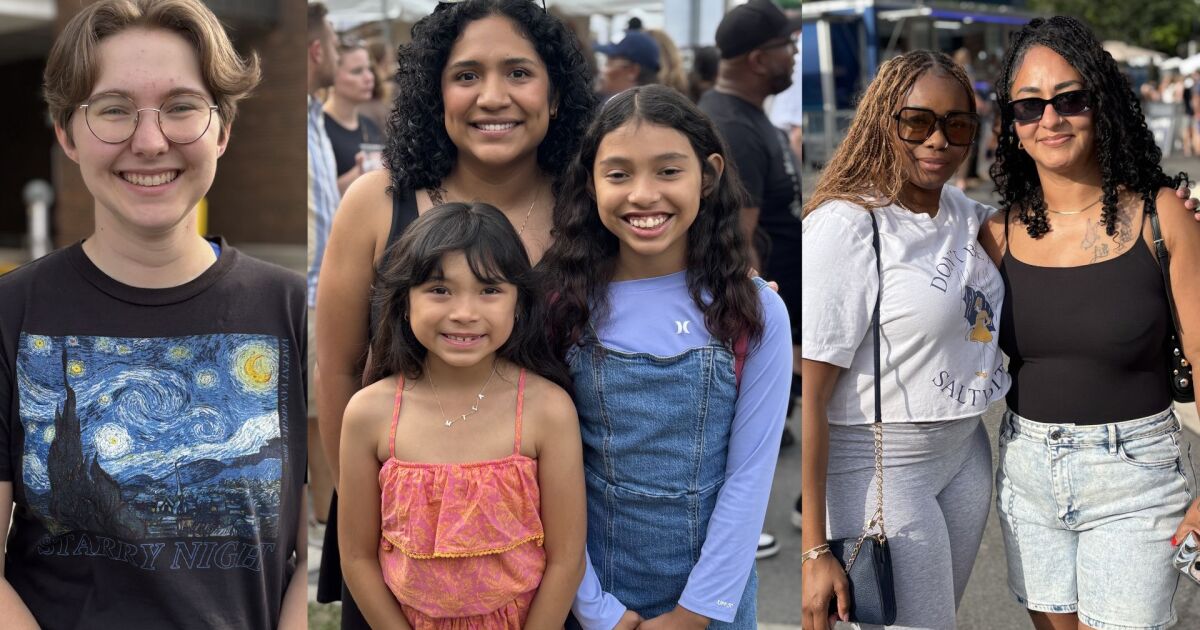
Festivalgoers say Milwaukee’s summer events fill a gap in downtown entertainment

