West
Washington Senate approves $8M to combat addiction among Native Americans, but some say it is not enough

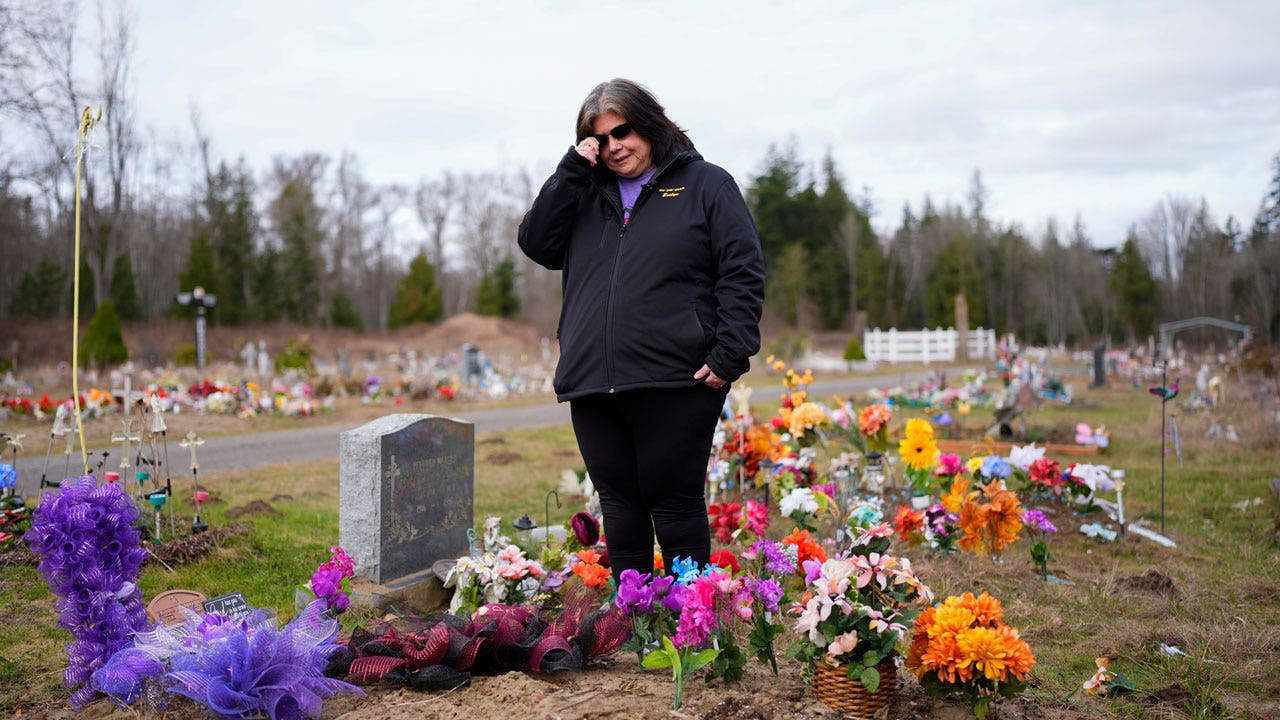
Evelyn Jefferson walks deep into a forest dotted with the tents of unhoused Lummi Nation tribal members and calls out names. When someone appears, she and a nurse hand out the opioid overdose reversal medication Naloxone.
Jefferson, a tribal member herself, knows how critical these kits are: Just five months ago, her own son died of an overdose from a synthetic opioid that’s about 100 times more potent than fentanyl. The 37-year-old’s death was the fourth related to opioids in four days on the reservation.
“It took us eight days to bury him because we had to wait in line, because there were so many funerals in front of his,” said Jefferson, crisis outreach supervisor for Lummi Nation. “Fentanyl has really taken a generation from this tribe.”
CRISIS IN THE NORTHWEST: POLICE STRUGGLE AS FENTANYL’S GRIP IN RURAL OREGON BECOMES ‘NEXUS’ OF DAILY RESPONSES
A bill before the Washington Legislature would bring more state funding to tribes like Lummi that are trying to keep opioids from taking the next generation too. The state Senate unanimously approved a bill this week that is expected to provide nearly $8 million total each year for the 29 federally recognized tribes in Washington, funds drawn in part from a roughly half-billion-dollar settlement between the state and major opioid distributors.
The approach comes as Native Americans and Alaska Natives in Washington die of opioid overdoses at five times the state average, according to 2021-2022 Centers for Disease Control and Prevention data that includes provisional numbers. The rate in Washington is one of the highest in the U.S. and more than three times the rate nationwide — but many of the state’s Indigenous nations lack the funding or medical resources to fully address it.
Lummi Nation, like many tribes, faces an additional challenge when it comes to keeping outside drug dealers off their land: A complicated jurisdictional maze means tribal police often can’t arrest non-tribal members on the reservation.
Evelyn Jefferson, a crisis outreach supervisor for Lummi Nation, stands at her son’s grave at the Lummi Nation cemetery on tribal reservation lands, Thursday, Feb. 8, 2024, near Bellingham, Wash. (AP Photo/Lindsey Wasson)
“What do we do when we have a non-Lummi, predatory drug dealer on our reservation with fentanyl, driving around or on their property and are selling drugs?” said Anthony Hillaire, tribal chairman.
Against the backdrop, tribes such as the Lummi Nation, about 100 miles (161 kilometers) north of Seattle, say the proposed funding — while appreciated — would barely scratch the surface. The tribe of about 5,300 people on the shores of the Salish Sea has already suffered nearly one overdose death a week this year.
Lummi Nation needs $12 million to fully finance a 16-bed, secure medical detox facility that incorporates the tribe’s culture, Hillaire said, and money to construct a new counseling center after damage from flooding. Those costs alone far exceed the annual total that would be designated for tribes under the legislation. The Senate has proposed allotting $12 million in its capital budget to the facility.
“We’re a sovereign nation. We’re a self-governed tribe. We want to take care of ourselves because we know how to take care of ourselves,” he said. “And so we usually just need funding and law changes — good policies.”
The proposed measure would earmark funds deposited into an opioid settlement account, which includes money from the state’s $518 million settlement in 2022 with the nation’s three largest opioid distributors, for tribes battling addiction. Tribes are expected to receive $7.75 million or 20% of the funds deposited into the account the previous fiscal year — whichever is greater — annually.
Republican state Sen. John Braun, one of the bill’s sponsors, has said he envisions the funds being distributed through a grant program.
“If this ends up being the wrong amount of money or we’re distributing it inequitably, I’m happy to deal with this,” he said. “This is just going to get us started, and make sure we’re not sitting on our hands, waiting for the problem to solve itself.”
Opioid overdose deaths for Native Americans and Alaska Natives have increased dramatically in the past few years in Washington, with at least 100 in 2022 — 75 more than in 2019, according to the most recent numbers available from the Washington State Department of Health.
In September, Lummi Nation declared a state of emergency over fentanyl, adding drug-sniffing dogs and checkpoints, while revoking bail for drug-related charges.
The tribe has also opened a seven-bed facility to help members with withdrawal and get them on medication for opioid use disorder, while providing access to a neighboring cultural room where they work with cedar and sage. In its first five months, the facility treated 63 people, the majority of whom are still on the medication regimen today, said Dr. Jesse Davis, medical director of the Lummi Healing Spirit Opioid Treatment program.
But truly thwarting this crisis must go beyond just Lummi Nation working on its own, said Nickolaus Lewis, Lummi councilmember.
“We can do everything in our power to protect our people. But if they go out into Bellingham, they go out anywhere off the reservation, what good is it going to do if they have different laws and different policies, different barriers?” he said.
The tribe has urged Washington Gov. Jay Inslee and President Joe Biden to declare states of emergency in response to the opioid crisis to create a bigger safety net and drive additional vital resources to the problem.
In the encampment in Bellingham, Jefferson estimates there are more than 60 tribal members, some she recognizes as her son’s friends, while others are Lummi elders. She suspects many of them left the reservation to avoid the tribe’s crackdown on opioids.
When she visits them, her van filled with food, hand warmers and clothing to hand out, she wears the shirt her niece gave her the day after her son died. It reads, “fight fentanyl like a mother.”
“It’s a losing battle but, you know, somebody’s got to be there to let them know — those addicts — that somebody cares,” Jefferson said. “Maybe that one person will come to treatment because you’re there to care.”
Read the full article from Here


Alaska transportation officials on Tuesday identified the likely winner of a bidding process for building a $350 million vessel to replace the state’s 62-year-old Tustumena ferry.
The M/V Tustumena has been connecting communities along the Aleutian chain to Southcentral Alaska since 1964. Alaska leaders for years have been discussing plans to replace the ferry with a newer vessel.
But the process of constructing a new ferry has been repeatedly delayed and hampered amid shifts in state and federal administration priorities.
U.S. Sen. Lisa Murkowski was instrumental in adding funding to a bipartisan federal infrastructure bill in 2021 to build new ferries for Alaska. Funding from that bill, signed into law by former President Joe Biden, will be the primary way the state plans to pay for the new vessel.
The Alaska Department of Transportation and Public Facilities said Tuesday that it is nearing the conclusion of a monthslong bidding process, and had identified a Louisiana-based shipbuilder to construct the new ferry at a cost of just under $350 million.
That is an increase from 2021, when Gov. Mike Dunleavy announced a plan to replace the Tustumena by 2027 at a cost of up to $250 million. Both the price tag and the timeline have since been altered. The vessel is not expected to be complete until 2029, according to the latest plan.
In a written statement, Dunleavy said Tuesday that replacing the Tustumena reflects his administration’s “commitment to rebuilding this critical transportation network.”

During Dunleavy’s eight-year tenure, ridership and state revenue from the Alaska Marine Highway System have seen significant decline, with an aging fleet and difficulty in recruiting and retaining workers.
After several false starts, the state began seeking bids for the construction of the Tustumena replacement in January. The bidding process was initially intended to conclude in May, but was extended to provide more time for bidders to complete their proposals, according to state officials.
The department did not share how many bids it had received or details on the other bids.
The requirements for the new vessel include a 330-foot-long ship with a range of 4,000 nautical miles, and a capacity of 250 passengers and 28 crew plus 58 vehicles. That would be larger than the current vessel, which has the capacity to carry 160 passengers and up to 34, 20-foot vehicles.
Transportation officials said Tuesday that Thoma-Sea Marine Constructors, the Louisiana-based shipbuilder, has a 14-day window to submit all remaining requirement documentation. The award won’t be formalized until that process is complete.
Thoma-Sea recently completed work on the Arctic Fjord, a Seattle-based factory trawler operating in the Bering Sea. The Alaska transportation department stated that the project demonstrates the company’s “ability to successfully deliver complex vessels designed for Alaska’s demanding operating environment.”
The ferry system’s Marine Director Craig Tornga said in a statement that the step toward constructing the Tustumena replacement vessel “represents more than a new ship — it represents renewed confidence in the future of the Alaska Marine Highway System.”
“The replacement vessel will provide improved reliability, enhanced safety, increased operational flexibility, and modern efficient systems that will better serve our passengers, crews, and the communities that depend on us. We look forward to working with the men and women of Thoma-Sea Marine Constructors to deliver a high-performance vessel,” Tornga said in a statement.

The Pocket Fire burning north of Sedona and sending smoke and ash into Flagstaff has been tricky for firefighters to access because of the steep and narrow terrain through canyons and along cliffsides. These same landscape features mean that many others watching the fire’s rapid progress from afar have worried with little information about which of their favorite hiking trails and scenic viewpoints near Oak Creek Canyon may not look the same again in their lifetimes.
On June 30, the fire perimeter had exceeded 15,000 acres after growing about 4,000 acres overnight. This expansion took the shape of a finger jutting to the west from near the southern edge of the fire while the northern edge broadened along Forest Service Road 9042, where firefighter crews worked to hold it.
For residents of Kachina Village, the community most in the path of the fire’s recent growth and one known to be particularly vulnerable to fire, that northern progress being redirected east and west along the firebreak road was something to celebrate.
For others, fears and questions about singed trails, camping spots, homes and businesses remain.
What is clear is that parts of the distant edge of the popular West Fork trail, which starts at West Fork Trailhead off of U.S. 89A through Oak Creek Canyon and follows West Fork Oak Creek as it twists and turns between stunning red rock canyon walls, are within the Pocket Fire’s active perimeter. The popular panoramic vista from the “Edge of the World” viewpoint in East Pocket off Forest Road 231 was also enveloped by the fire in its early days.
But that doesn’t necessarily mean these areas are unrecoverable as scenic and beloved recreation spots. Wildfires frequently burn discontinuously through forested landscapes, as embers send out new sparks to distant forest patches. So the damage severity from the Pocket Fire in many places is not yet known.
After the Dragon Bravo fire burned 150,000 acres near the North Rim of the Grand Canyon in 2025, a Burn Area Emergency Response team concluded months later that only 1% of the 71,000 park-managed acres within the perimeter showed evidence of a “high severity” burn. The rest had better odds of ecological recovery.
To prevent a need for too much of that in one of the Sedona area’s most treasured spots, though, crews on the Pocket Fire have worked out a “really solid plan to protect all of our identified values and to keep fire out of the bottom of Oak Creek Canyon,” said operations section chief trainee Clyde England of the Southwest Incident Management Team in his morning briefing about the fire on June 30.
England emphasized that crews were focused on keeping the fire out of the West Fork drainage, by conducting backburning efforts and building a buffer on the east side, while limiting progress north toward Kachina Village. They are also working with the Arizona Department of Transportation to remove hazard trees along the roadway, so there is “one less risk we have to worry about” if the fire does jump down into Oak Creek Canyon.
“I want to reiterate that the threat component is still there, as fire is coming down into West Fork,” England said. “There is still a potential for the fire to find some fuels and get some alignment with the winds out of the canyon. We don’t anticipate it. That’s why we still got a big presence up there, just in case some unforeseen event pushes some fire out up on the ridge into that (eastern) corner.”
Another area the team is watching is along the southern edge of the fire in Dry Creek near Bear Sign Canyon, the site of a popular 7-mile hiking trail that passes through “a carpet of ferns with views of white Coconino sandstone cliffs,” according to a nearby business offering lodging for hikers. England said the team has been able to “insert people” into that area over the past few days to build hand lines and work with helicopters on bucket drops to help prevent the fire from spreading to the Seven Canyons area and Enchantment Golf Resort.
The historic Fernow Cabin, a former U.S. Forest Service guard station, is also safe so far, England said, thanks to defensive firing by crews over the weekend that will continue for a few more days to keep the structure intact.
On the northwest edge of the fire, a containment line along Forest Service road 231 is “looking really good,” England said, with a recent expansion of the fire map there reflecting defensive fire efforts rather than wildfire growth. That effort will help protect the power lines to communities in Oak Creek from damage. Fire retardant drops and reinforced dozer and hand lines have helped prevent the fire from progressing over the 536 or 535 roads.
“If we can get it down in this canyon, use the weather patterns, the fuels, the rocky terrain to our advantage, we can find a way to choke that out,” England said. “So our ops are all looking good, our confidence is there.”
Addressing the southwestern corner of the Pocket Fire perimeter, England struck a more somber tone, acknowledging expansion of flames across Round Top Mountain toward Secret Canyon.
That’s the reality of wildfire in the American Southwest, scientists say, in an age of the drying and warming influences of climate change combined with ever-expanding human development and juxtaposed against federal funding cuts.
“The anticipation is that some of this fire will be on the landscape for a while,” he said. “There’s just no access and no way to get folks into that country. You might see that fire and that smoke for a while.”
Joan Meiners is the climate news and storytelling reporter at The Arizona Republic and azcentral.com. Send tips or questions to joan.meiners@arizonarepublic.com or follow her work on Instagram at @joan_bikes_arizona.
Have a news tip? Contact The Arizona Republic and azcentral.com at newstips@arizonarepublic.com.

BAKERSFIELD, Calif. (KBAK/KBFX) California voters will face a high-profile “billionaire tax” measure on the November ballot, a proposal supporters say would raise new revenue, but critics warn could push some of the state’s wealthiest residents to leave.
If passed, the measure would impose a one-time 5% tax on California billionaires living in the state as of Jan. 1, 2026.
Tal Eslick, owner of Vista Consulting, said, “I think there is this effort, especially on the part of progressive state leaders, to somehow, you know, go after billionaires or maybe even the trillionaires that may exist in the future.”
Billionaire tax measure heads to California’s November ballot, with Kern County watching (AP Photo/Jeff Chiu, File)
Political analysts say a proposal like this could encourage some of California’s wealthiest residents to relocate, potentially taking investment and business activity with them.
Eslick said, “And for that matter, they can come back occasionally to visit and do a little bit of business, but live in a state that is a little more accommodating for them from a tax standpoint.”
Questions have also been raised about what the impact could be for Kern County if billionaires leave the state.
Sherod Waite, CEO of Moneywise Guys, said, “It’s questionable how much revenue would actually be generated from the tax and how much revenue would be lost from those people exiting the state. It’s questionable. It’s a gamble.”
Waite said billionaires leaving could reduce state revenue that could be used in Kern County.

Billionaire tax measure heads to California’s November ballot, with Kern County watching (AP Photo/Jeff Chiu, File)
“Think of all the support services that the state offers to the entire state, including us here in Kern County, that are paid for by tax dollars,” he said.
Gov. Gavin Newsom has been outspokenly against a state wealth tax and is instead proposing a national tax policy that would tax anyone with a net worth of $100 million.
Newsom said, “It’s time for a national billionaire’s tax and a new social contract. Just think of this, just ten percent of people own 2/3’s of the nation’s wealth.”
Eslick said Newsom’s position can be difficult to square.
“It’s a naturally confusing sort of position to be opposed to the tax in California but be supportive of it at a national level. But I think that’s him walking a treacherous political road,” he said.
Billionaire tax measure heads to California’s November ballot, with Kern County watching (AP Photo/Jae C. Hong, File)
In a statement regarding the measure, Assemblyman Stan Ellis said in part, “This would hurt Kern’s energy, Agriculture, manufacturing, and working families through lost investment, fewer jobs and unstable state funding.”
-

 Austin, TX2 minutes ago
Three of Texas’ 10 Most Wanted Sex Offenders arrested in Houston, Plano, and Hidalgo
-
 Alabama7 minutes ago
Former Alabama wide receiver on pace to go from good to ‘truly elite’ in the upcoming NFL season
-

 Alaska14 minutes ago
Alaska moves to award $350M contract to replace 62-year-old Tustumena ferry
-

 Arizona17 minutes ago
What areas are affected by the Pocket Fire near Oak Creek Canyon?
-

 Arkansas22 minutes ago
Northwest Arkansas-based Community Clinic aims to acquire multiple Baptist Health-Fort Smith clinics | River Valley Democrat-Gazette
-

 California29 minutes ago
Billionaire tax measure heads to California’s November ballot, with Kern County watching
-

 Colorado32 minutes ago
Smokey skies and critical fire danger conditions continue in southern Colorado
-

 Connecticut37 minutes ago
US Supreme Court to consider challenge to Connecticut assault weapons ban

