Connect with us

West

Surprise witness in Idaho student murders says she 'saw Bryan there' on deadly night

Published

on

Surprise witness in Idaho student murders says she 'saw Bryan there' on deadly night
NEWYou can now listen to Fox News articles!

A surprise second eyewitness has emerged in the Idaho student murders case and could testify against Bryan Kohberger at trial later this year.

A woman claiming to be the Idaho DoorDash driver who dropped off food to victim Xana Kernodle minutes before a home invasion stabbing spree killed her, her boyfriend, and two roommates, has emerged as an unexpected eyewitness to testify at Kohberger’s upcoming murder trial, and she told police she saw him at the scene.

The purported driver revealed herself in a police bodycam video from an alleged DUI stop taken in September 2024 and posted weeks later to the YouTube account, Officer Axon, which publishes law enforcement videos obtained through public records requests.

KEY FIGURES BROM BRYAN KOHBERGER’S PENNSYLVANIA YOUTH SUMMONED TO IDAHO FOR STUDENT MURDERS TRIAL

Advertisement

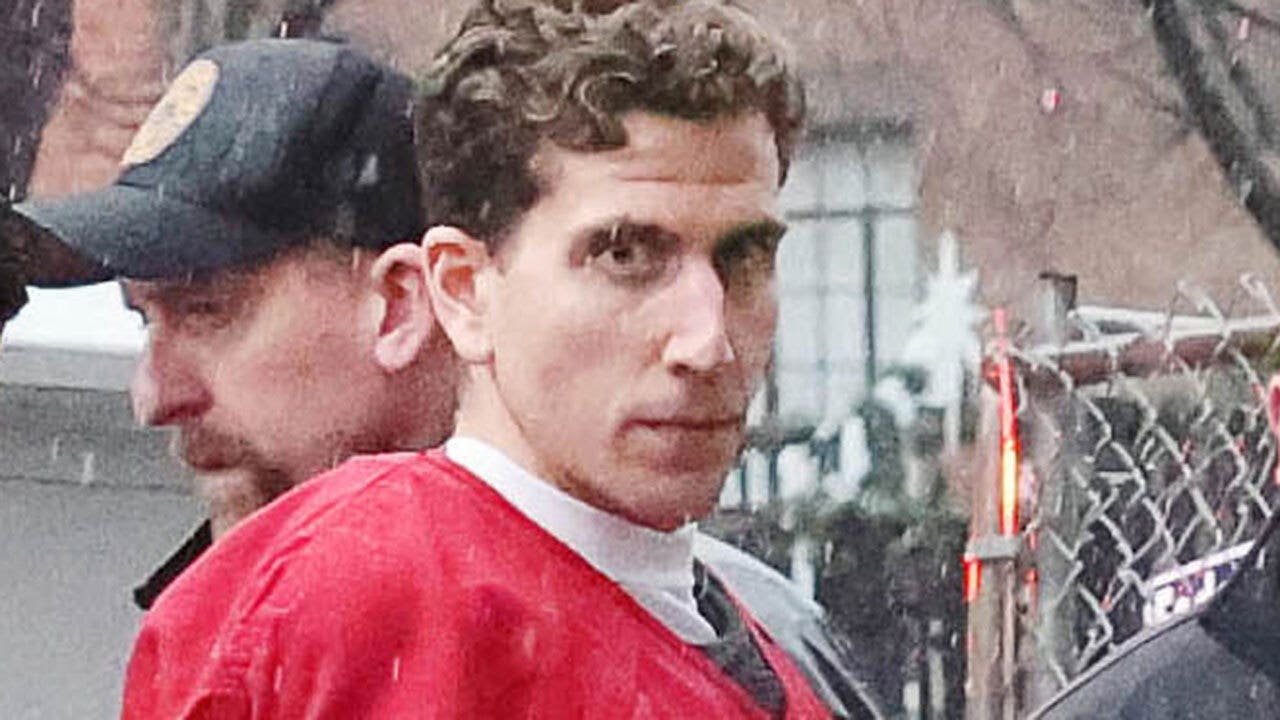
Bryan Kohberger arrives at Monroe County Courthouse in Pennsylvania in advance of an extradition hearing. He’s charged with the murders of four University of Idaho students. (The Image Direct for Fox News Digital)

Web sleuths picked up on it, and her connection to the Kohberger case was reported in the Idaho Statesman Tuesday.

“I have to testify in a big murder case here… because I’m the DoorDash driver, so yeah,” she says in the video. 

An officer asks which case.

“The murder case with the college girls,” she says. “I’m the DoorDash driver. I saw Bryan there. I parked right next to him.”

Advertisement

She is not named in redacted court documents and may suffer from credibility issues after police in Pullman, Washington, accused her of driving while high on drugs.

BRYAN KOHBERGER DEFENSE SUGGESTS ‘ALTERNATE PERPETRATORS’ IN IDAHO MURDERS, JOINING INFAMOUS LEGAL STRATEGY

Madison Mogen, top left, smiles on the shoulders of her best friend, Kaylee Goncalves, as they pose with Ethan Chapin, Xana Kernodle, and two other housemates in Goncalves’ final Instagram post, shared the day before the four students were stabbed to death. (@kayleegoncalves/Instagram)

DoorDash is among dozens of companies that police sought information from during their investigation, Fox News Digital has previously reported.

Kernodle received a delivery less than 10 minutes before the attack, which happened just after 4 a.m. on Nov. 13, 2022.

Advertisement

GET REAL-TIME UPDATES AT THE FOX NEWS TRUE CRIME HUB

A surviving roommate, who is identified only by her initials in court documents, told police early on in the investigation that she came face to face with a masked man with bushy eyebrows before he left the house without attacking her.

Bryan Kohberger, who is accused of killing four University of Idaho students in November 2022, walks past a video display as he enters a courtroom to appear at a hearing in Latah County District Court, Wednesday, Sept. 13, 2023, in Moscow, Idaho. (AP Photo/Ted S. Warren, Pool)

FOLLOW THE FOX TRUE CRIME TEAM ON X

The attack also killed Ethan Chapin, who was Kernodle’s 20-year-old boyfriend, and two 21-year-old roommates, Madison Mogen and Kaylee Goncalves.

Advertisement

All four were University of Idaho students, and all four suffered multiple stab wounds from a large knife, according to authorities.

Police found a Ka-Bar sheath under Mogen’s body that prosecutors allege has Kohberger’s DNA on it. Police allege they linked a suspect vehicle and Kohberger’s phone pings to the scene as well. 

The 30-year-old suspect, who is from Pennsylvania, was studying for a Ph.D. in criminology at Washington State University, just a 10-mile drive from the crime scene.

SIGN UP TO GET THE TRUE CRIME NEWSLETTER

Advertisement

A judge entered not guilty pleas on Kohberger’s behalf at his arraignment in May 2023. He faces four counts of first-degree murder and one of felony burglary. He could face the death penalty if convicted.


Read the full article from Here

Continue Reading
Click to comment

Leave a Reply

Your email address will not be published. Required fields are marked *

This site uses Akismet to reduce spam. Learn how your comment data is processed.

New Mexico

Meta threatens to pull Facebook and Instagram from New Mexico over child safety trial requirements

Published

on

Meta threatens to pull Facebook and Instagram from New Mexico over child safety trial requirements


Tech giant Meta is threatening to cut off access to its social media platforms in New Mexico as a response to the state’s legal effort to compel changes to child safety protocols on the platform.

Meta and the state of New Mexico are expected to proceed to the second stage of their trial next week after a jury recently issued a $375 million award to the state after finding that the company misled consumers about the safety of its platforms and protections for children against sexual predators.

Advertisement

The next phase of the trial will concern what actions the parent company of Facebook, Instagram and WhatsApp must take to address those issues.

Among the remedies New Mexico is seeking is to impose a requirement that Meta meet a 99% accuracy threshold in verifying that children on its platform are at least 13 years old. Meta has pushed back on that requirement, arguing in a court filing that it’s unfeasible and would require it to “comply with impossible obligations.”

META VOWS APPEAL OF ‘LANDMARK’ SOCIAL MEDIA VERDICTS, WARNS OF FREE SPEECH EROSION

Meta is warning that it may be forced to pull its apps from New Mexico if the state prevails in requiring the social media giant to implement certain safeguards. (Arda Kucukkaya/Anadolu via Getty Images)

Meta’s legal team said in a filing that New Mexico’s “requests for relief are so broad and so burdensome, that if implemented it might force Meta to withdraw its apps entirely from the State of New Mexico as an alternative way of complying with the injunction.”

Advertisement

“It does not make economic or engineering sense for Meta to build separate apps just for New Mexico residents,” Meta’s lawyers added. “Nor could Meta guarantee the perfection the State demands, making it impractical for Meta to operate in New Mexico.”

EXPERT WARNS OF MASSIVE RECKONING FOR SOCIAL MEDIA COMPANIES: ‘GIANT CASE OF KARMA’

Ticker Security Last Change Change %
META META PLATFORMS INC. 611.91 -57.21 -8.55%

The company has argued that it’s being unfairly singled out in comparison to other social media platforms that are popular with young people. It also previously signaled it will appeal the $375 million civil judgment against it.

New Mexico pushed back on Meta’s assertion that it would be impractical to comply with the safeguards it’s seeking for social media apps.

META ORDERED TO PAY $375M AFTER JURY FINDS PLATFORM ENABLED CHILD PREDATORS IN LANDMARK NEW MEXICO CASE

Advertisement

Meta is the parent company of apps including Facebook, Instagram and WhatsApp. (Reuters/Dado Ruvic/Illustration)

“Meta is showing the world how little it cares about child safety,” said New Mexico Attorney General Raúl Torrez. “Meta’s refusal to follow the laws that protect our kids tells you everything you need to know about this company and the character of its leaders.” 

“We know Meta has the ability to make these changes. For years the company has rewritten its own rules, redesigned its products, and even bent to the demands of dictators to preserve market access. This is not about technological capability. Meta simply refuses to place the safety of children ahead of engagement, advertising revenue, and profit,” Torrez added.

GET FOX BUSINESS ON THE GO BY CLICKING HERE

New Mexico is also seeking that Meta implement safer recommendation algorithms that don’t prioritize engagement over child well-being, restrictions on end-to-end encryption for minors, prominent warning labels about the platform’s risks, permanent bans for adults engaging in or facilitating the exploitation of children, and an independent oversight regime through a court-appointed child safety monitor.

Advertisement


Source link

Continue Reading

Oregon

Pain at the pump: Gas prices jump nearly 20 cents in Oregon & Washington since last week

Published

on

Pain at the pump: Gas prices jump nearly 20 cents in Oregon & Washington since last week


Average gas prices have gone up nearly 20 cents a gallon in Oregon and Washington in the past week as tensions in the Middle East continue.

Washington state has the third most expensive gas in the country at an average of $5.57 a gallon for regular, followed by Oregon at fourth in the U.S. with roughly $5.15 per gallon for regular.

The average price for regular in the U.S. is $4.30 a gallon. AAA says the price of oil has surged to more than $100 a barrel, with no indication of when the Strait of Hormuz will be back open.

National Gas Price Comparison for 2023-26 as of April 30, 2026 – Graphic courtesy AAA

Advertisement

A poll found that half of all Americans expect gas prices to rise even higher in the next year.

That same poll from ABC and Ipsos said some Americans are changing their behaviors because of the higher gas prices.

About 4 in 10 people are driving less (44%) or have cut back on other household expenses (42%) to compensate.

More than a third have changed their travel or vacation plans, the poll said, and about 15% of people said they’ve considered buying an electric vehicle.

Pump prices are now the highest they’ve been during this time of year since 2022, when Russia’s invasion of Ukraine pushed crude oil prices above $100 per barrel.

Advertisement

The poll found that about a quarter (23%) of all Americans are falling behind financially, which is up from 17%in February, before gas prices started to spike.

Comment with Bubbles

JOIN THE CONVERSATION (1)

About half of those who took the poll said they have just enough to maintain their standard of living, while 24% said they are getting ahead – down from 28% in February.


Source link

Advertisement
Continue Reading

Utah

‘It’s past the eleventh hour’: Utah and other Colorado River states call for mediation as current plans near expiration

Published

on

‘It’s past the eleventh hour’: Utah and other Colorado River states call for mediation as current plans near expiration


ST. GEORGE — As negotiations over the Colorado River remain at a standstill, Utah and other states in the Upper Basin are asking for outside help.

Potash Road runs along the Colorado River in Moab on Friday, April 10, 2026. Photo by Bethany Baker/The Salt Lake Tribune)

Negotiators from Utah, Colorado, New Mexico and Wyoming called for “immediate mediation” among the seven states that share the Colorado River and the federal government, according to a statement from the Upper Colorado River Commission last week.

“It’s past the eleventh hour. It’s 11:59,” Estevan López, New Mexico’s negotiator, said during a commission meeting on April 21 while discussing the looming deadline for new operating plans for the river that provides water to roughly 40 million people.

Current guidelines for managing the river system and its reservoirs during dry times expire this year. The Bureau of Reclamation is currently going through an environmental review process and has said it must have a new plan in place by Oct. 1. If the states reach consensus, the bureau has said they will choose that as its preferred path forward.

Advertisement

The states have failed to agree, though, missing two federal deadlines over the past six months.

“I think it would be worth all of us stepping back from this and seeking to get a mediated solution to solve this really difficult problem,” López said.

So far, the bureau has facilitated negotiations among the states. López acknowledged the agency’s “good” attempts but also said that the bureau is “not an independent entity in this discussion.”

“Reclamation has a really important interest in the outcome,” he said. “They obviously operate the reservoirs. Reclamation and the Secretary of Interior are the river master in the Lower Basin. Interior serves in a trust responsibility for the tribes throughout the basin.”

Glen Canyon Dam in Page, Ariz., on Tuesday, May 20, 2025. Photo by Trent Nelson/The Salt Lake Tribune

Utah’s negotiator, Gene Shawcroft, said that he agreed with López and that “it’s extremely disappointing” that the states haven’t reached a resolution yet.

“It’s critical for us to continue to work together,” he added. “A seven-state solution will still be much better than any other alternative.”

Advertisement

The Upper Basin states are in discussions with the bureau and the Lower Basin states — Arizona, California and Nevada — about developing a mediation process currently, the commission said in an email to The Tribune on Wednesday.

John Entsminger, Nevada’s negotiator, said he’s “open to bringing on an independent mediator” but that he’s also disappointed that the states’ seven representatives “can’t come up with a common-sense solution.”

“But mediation beats litigation,” he added. “So if there’s a chance this helps break the logjam, then tell me when and where to be.”

The idea of a mediator has surfaced in river negotiations “a handful of times” over the past two decades, Entsminger said. But in the past the negotiators were able to come to “a mutually agreeable solution where everybody gives a little,” he added.

That hasn’t happened this time around. “I think it’s become more difficult for the states to agree, because the magnitude of the problem has increased,” he said.

Advertisement
Despite getting a little more snow than most other resorts, Beaver Mountain begins showing the effects of the hottest winter in state history on Friday, March 20, 2026. Photo by Francisco Kjolseth/The Salt Lake Tribune

Much of the Colorado River Basin experienced its worst snowpack and hottest winter on record. The bureau and Upper Basin states reached an agreement to release up to 1 million acre-feet of water from Flaming Gorge this year to prevent Lake Powell from reaching minimum power pool — the level at which the dam can no longer generate hydropower or sustainably send water downstream.

California proposed a mediator last year, JB Hamby, California’s negotiator, told The Tribune in an email.

“However, effective mediation requires common ground, and the system cannot wait,” he added. “Current conditions require immediate, measurable water reductions from every state.”

The Arizona Department of Water Resources said it had no comment at this time.

How a third party could help

Bringing in a mediator “makes total sense” to help states get past politics and personalities and reach a solution, said John Berggren, a regional policy manager on Colorado River issues for Western Resource Advocates.

“I kind of wish it would have happened two-plus years ago,” he added, “but some of the fundamental challenges that they’re facing come down to trust and communication … and not taking each other’s proposals seriously.”

Advertisement

The drawn out negotiations have put states in an unpredictable situation that makes finding a solution more difficult, said Danya Rumore, director of the Environmental Dispute Resolution Program at the University of Utah.

Negotiators from the seven Colorado River Basin states share updates on the river negotiations at the Colorado River Water Users Association Conference in Las Vegas on Thursday, Dec. 18, 2025. Photo by Brooke Larsen/The Salt Lake Tribune

“Our options get more limited,” she said. “People are more likely to be entrenched. We get more fear in the conversation, and that makes it harder to actually productively deal with it. It doesn’t make it impossible, it just gives you one more thing you have to contend with.”

A trained third-party facilitator — or team of facilitators — would ideally create a process that helps people learn how to productively work through conflict while also integrating the complex science, legal frameworks and uncertainties involved in this issue, Rumore said.

“If somebody can’t understand the legal elements of what’s going on there, they don’t understand the scientific elements enough to be able to facilitate those conversations, that can create huge challenges,” she added.

Rumore and her co-workers jokingly call themselves “the group mom.” That means both getting things done and seeing what’s emotionally happening in the room.

“We have to stay regulated,” she said. “We have to stay present. We have to not go into this crisis thinking mode. And that’s going to help us get a good outcome.”

Advertisement

If the states do bring in a third party, Entsminger said he hopes it’s “somebody that could inject some objectiveness into the entire process because we’ve got some entrenched people. There’s no doubt about that.”

He said he thinks the states will come up with a short-term, two- or three-year operating plan this year while they continue hashing out a long-term plan.

This article is published through the Colorado River Collaborative, a solutions journalism initiative supported by the Janet Quinney Lawson Institute for Land, Water, and Air at Utah State University. See all of our stories about how Utahns are impacted by the Colorado River at greatsaltlakenews.org/coloradoriver


Source link

Advertisement
Continue Reading
Advertisement

Trending
